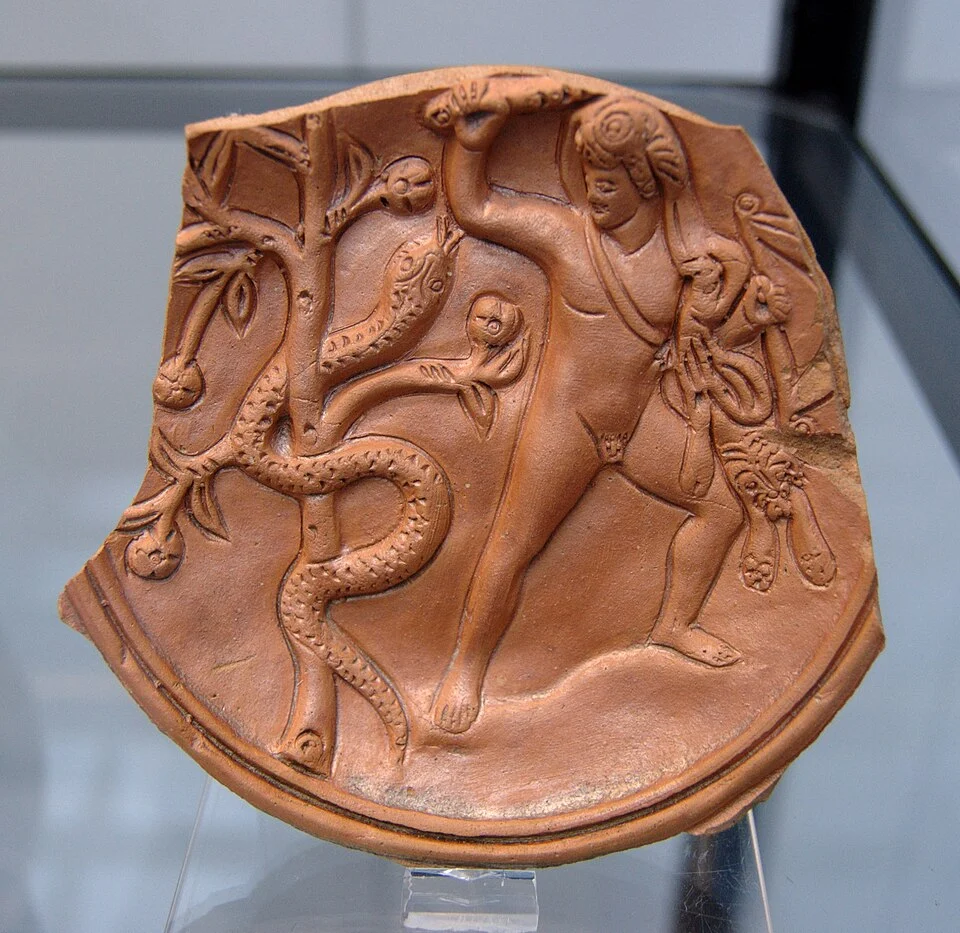
Ladon
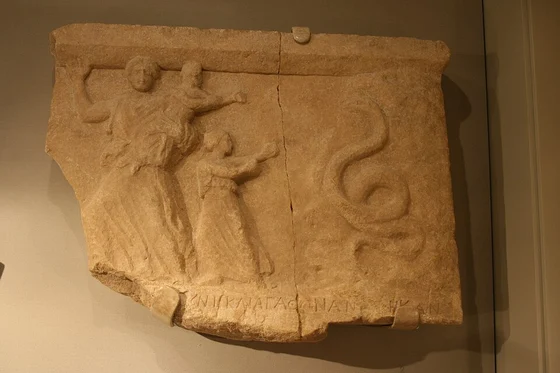
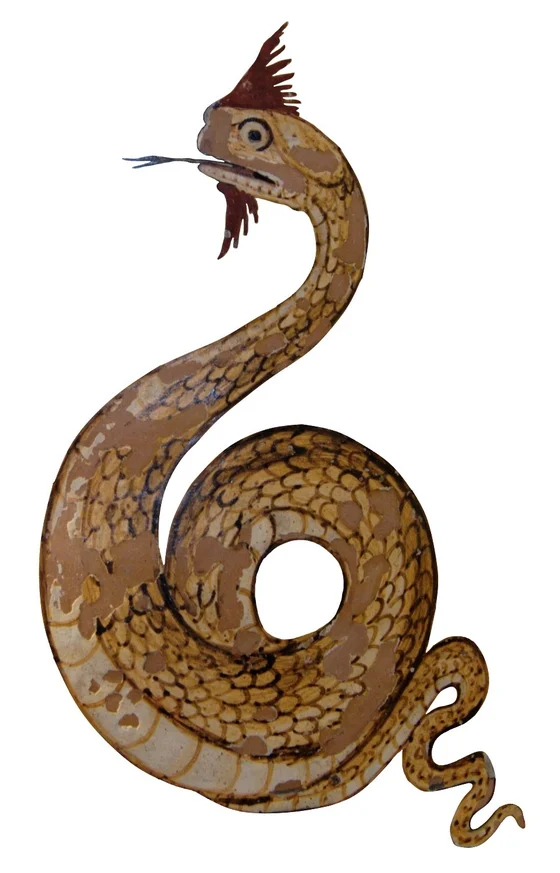
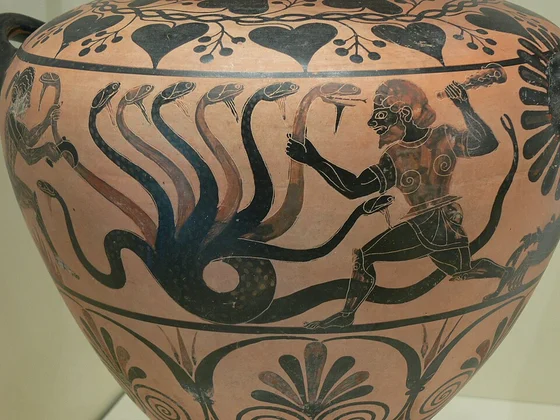
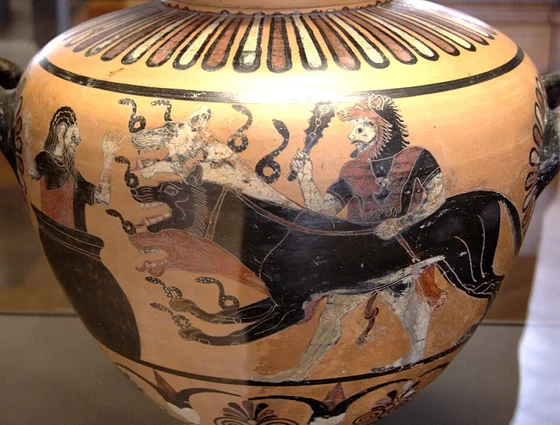
Image associated with the exact linked encyclopedia article; consult credited file description for its interpretation.
Overview
The Library’s account describes an immortal dragon with a hundred heads and many different voices guarding the golden apples alongside the Hesperides. The apples are connected with the marriage of Zeus and Hera. Heracles must discover where they are and how to obtain them, so the guardian forms part of a difficult problem of access rather than merely a beast to be hunted.
The account allows more than one route to the apples, including the involvement of Atlas. This is a reminder that familiar monster-slaying pictures need not summarize every literary version. The selected passage supplies the guardian’s role and many-headed form, while the name Ladon is established through other ancient witnesses. Its identity should remain distinct from river figures that bear the same name.
Hesiod’s Theogony places the apple-guarding snake among the offspring of Ceto and Phorcys. It guards gold-bearing fruit at the distant limits of the earth. This brief archaic notice supplies neither the name Ladon nor a hundred heads. The Library instead makes its guardian a child of Typhon and Echidna, locating the apples with Atlas among the Hyperboreans rather than in Libya. These are different genealogical and geographical witnesses.
The Library’s complete labour ends with Atlas collecting three apples while Heracles supports the heavens. When Atlas tries to leave him carrying that burden, Heracles asks for a moment to arrange a pad for his head; Atlas takes the weight back and the hero departs with the fruit. The narrator also records an alternative in which Heracles obtains the apples himself by killing the guarding snake. Athena eventually restores the apples to their proper place after Eurystheus receives them.
Apollonius Rhodius explicitly calls the serpent Ladon. The Argonauts reach the garden after Heracles has killed it: its body lies against an apple tree, with only the tail tip still moving. The arrows carry the Lernaean Hydra’s poison, and flies die upon the wounds. The mourning Hesperides initially disappear into the ground, then appear through trees in response to Orpheus’s request for water. Aegle condemns the killer who has taken their apples, but directs the thirsty travellers to the spring he opened. The episode gives the guardian mourners and an aftermath, rather than repeating the labour solely from the victorious hero’s perspective.
Origins & earliest records
Selected textual witnesses: Hesiod, Theogony 333–336; Apollonius Rhodius, Argonautica 4.1393–1460; Pseudo-Apollodorus, Library 2.5.11. The apple guardian’s parents, location and encounter differ between these accounts.
Records & interpretation
Theogony gives a short genealogical notice without the name Ladon. Argonautica names Ladon and narrates the discovery of its body. Library supplies the hundred-headed, many-voiced guardian and alternative routes to the apples. The cited historical English translations preserve these as separate literary witnesses.
Selected bibliography
Documented works and useful reading. This is not a list of every appearance.
- 01
The Library, Book II, 2.5.11
Complete eleventh-labour account: Typhon/Echidna parentage, Hyperborean location, Atlas route, alternative snake-killing route and Athena’s restoration of the apples.
- 02
Theogony 333–336
Ceto and Phorcys’s apple-guarding snake; no Ladon name or head count in this notice.
- 03
Argonautica 4.1393–1460
Complete garden encounter: named Ladon slain by Heracles, Hydra-poisoned wounds, mourning Hesperides and the Argonauts’ search for water.
- 04
The Library (Bibliotheca)
Pseudo-Apollodorus, The Library, James George Frazer translation, Loeb Classical Library 121–122; Harvard University Press / William Heinemann, 1921.
Family, evolution & connections
Textual genealogy: selected children of Typhon and Echidna in Library
Explicit named parentage in Library 2.3.1, 2.5.10, 2.5.11 and 3.5.8.
Scroll sideways to see all branches. With a keyboard, focus the tree and use the arrow keys.
- Parents: Typhon and Echidna
Combine four explicit parentage statements within one named work, keeping each creature under the stated Typhon–Echidna pair. This is a selected version attributed to Pseudo-Apollodorus. The Hesperides' dragon is identified with the Ladon profile, although this passage calls it the dragon rather than using that name. Hesiod gives that dragon different parents; the alternative remains separate. Sphinx means the Greek figure. Fosterers, killers and owners are not parents.
Textual genealogy: golden-apples dragon in Theogony
The dragon guarding the golden apples, Theogony lines 333–336.
Scroll sideways to see all branches. With a keyboard, focus the tree and use the arrow keys.
- Parents: Ceto and Phorcys
Use the explicitly repeated Ceto–Phorcys parentage of the guarding snake in Evelyn-White's translation. The poem describes the dragon without naming Ladon; the local Ladon profile covers this guardian. This parentage conflicts with the Typhon–Echidna pair in Library 2.5.11, so the two source versions are separate trees. This is not a biological phylogeny and does not settle all later traditions.
Echidna
The Library describes the hundred-headed guardian of the Hesperides’ apples as offspring of Typhon and Echidna. That genealogy differs from Hesiod’s assignment of the guardian serpent to Ceto and Phorcys. This link preserves the Library’s version and makes the disagreement visible instead of selecting parents by visual similarity.
Ceto and Phorcys
Theogony explicitly gives Ceto and Phorcys as parents of the dragon guarding the golden apples, the figure covered by the Ladon profile. The passage does not use Ladon’s name. Pseudo-Apollodorus instead names Typhon and Echidna as that guardian’s parents; these are separate source versions, not additional interchangeable parents in one harmonized genealogy.
Typhon
Library 2.5.11 identifies the immortal hundred-headed dragon guarding the golden apples as offspring of Typhon and Echidna. The passage does not name the dragon Ladon, so this follows the profile’s identification of the garden guardian while retaining that naming limit. Hesiod instead assigns his apple-guarding snake to Ceto and Phorcys; those versions are kept separate.
Located primary passages
Specific passages supporting details in this entry, grouped by their published witness.
The Library, Book II, 2.5.11
Pseudo-Apollodorus, The Library, James George Frazer translation, Loeb Classical Library 121–122; Harvard University Press / William Heinemann, 1921.
- The apple guardian is an immortal hundred-headed dragon descended from Typhon and Echidna.
- The apple guardian speaks in many different voices.
- The compiler also records a variant where Hercules kills the guardian snake and plucks the apples himself.
This documents a particular ancient compilation and translated version. The apple guardian is described here but not named Ladon in this passage; three-headed Cerberus differs from the fifty-headed Hesiod witness.
References
Sources supporting this profile. Linked pages have their own scope and editorial standards.
- Primary textThe Library, Book II: 2.5.11 (Theoi Classical Texts Library or Project Gutenberg transcription)Research access: 2026-10-05
- ReferenceTheoi: Hesperian Dragon—ancient passages including the name LadonResearch access: 2026-10-05
- Primary textHesiod, Theogony: Evelyn-White translationResearch access: 2026-10-05
- Primary textApollonius Rhodius, Argonautica IV: Seaton translationResearch access: 2026-10-05
Image credits
Reference illustrationLadon
Image associated with the exact linked encyclopedia article; consult credited file description for its interpretation.