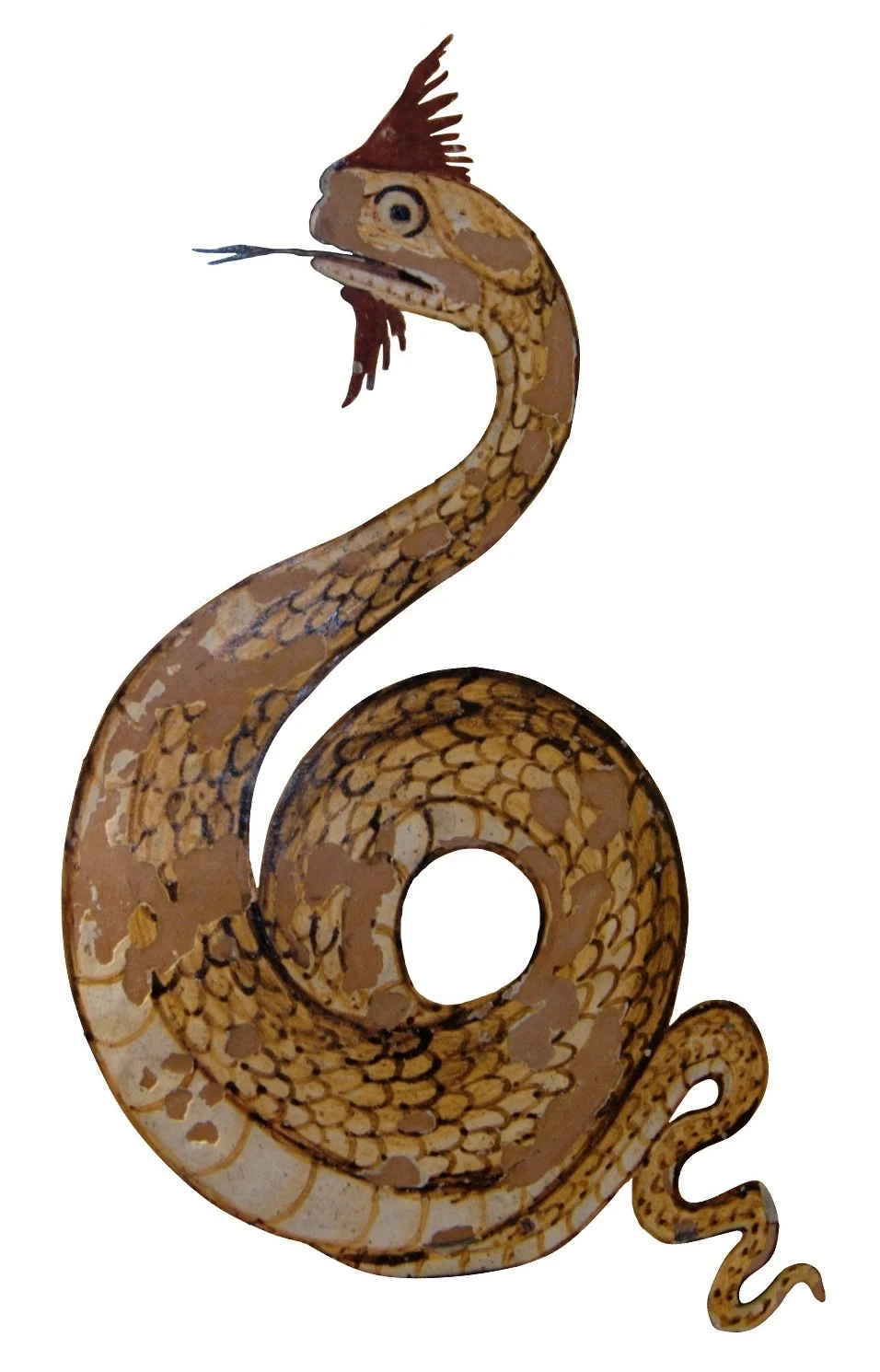
Colchian Dragon
Image associated with the exact linked encyclopedia article; consult credited file description for its interpretation.
Overview
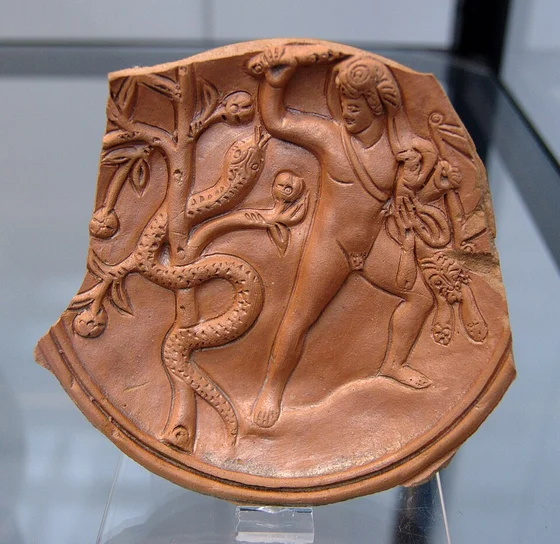
In the Library, the fleece that Jason seeks remains protected by a dragon. Medea brings him to it at night and uses her drugs to lull the guardian to sleep. Once the obstacle is disabled, they take the fleece and leave with the Argonauts. The scene makes her knowledge and action essential to the expedition’s successful theft.
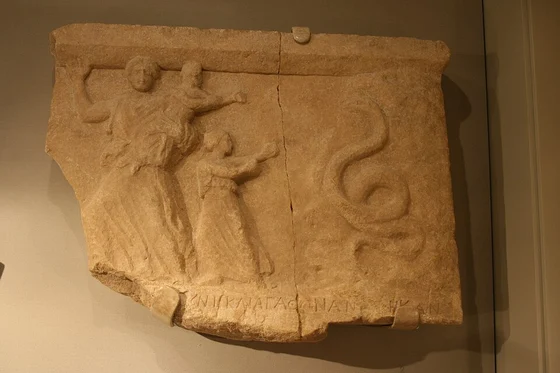
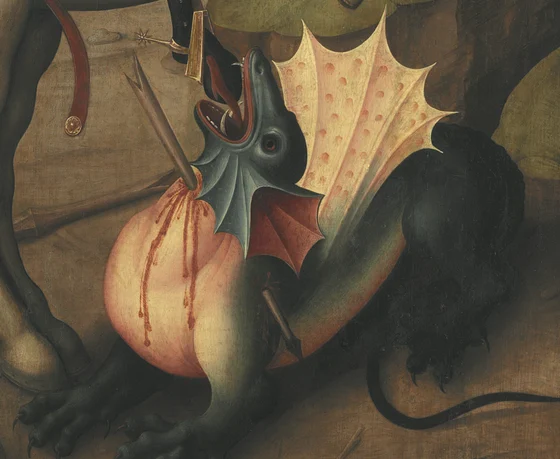
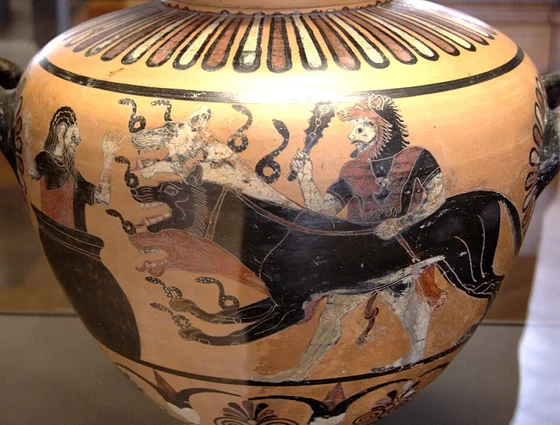
The guardian belongs to a specific object and royal setting in Colchis. Later works and images develop the encounter differently, so a battle scene should not be substituted for this account’s sleep episode. The text also connects Jason’s trials with dragon’s teeth that produce armed opponents, but those teeth have their own narrated provenance. Keeping the episodes distinct avoids turning every serpent in the expedition into one creature.
Apollonius Rhodius gives the encounter a more expansive physical setting. The serpent’s vigilant eyes detect Medea and Jason approaching the oak in Ares’s grove. It stretches its neck and hisses loudly enough to disturb distant households along the rivers: mothers shield their startled babies. Its scaly coils rise one after another, compared with successive twists of smoke. Medea calls upon Sleep and the queen of the underworld, and her song begins to relax the creature’s long spine, although its raised jaws still threaten both visitors.
She then applies her preparation to its eyes with a fresh juniper sprig. Its head drops and its coils extend through the woods. Jason removes the fleece while Medea continues treating the guardian’s head until he calls her away. When they reach the ship at dawn, Jason credits the maiden’s counsel for their success. This passage depicts sedation and theft, without reporting the dragon’s death. In the Library, the teeth sown in Jason’s earlier trial come from the dragon of Cadmus, received through Athena; they are not teeth taken from this sleeping guardian.
Origins & earliest records
Apollonius Rhodius, Argonautica 4.109–205, and Pseudo-Apollodorus, Library 1.9.23. Both selected accounts give Medea an essential role in overcoming the Golden Fleece’s guardian.
Records & interpretation
Argonautica describes the guardian’s movement, sound and magical sedation within the complete fleece-taking episode. Library gives a shorter drug-induced sleep account and separately identifies the dragon teeth used in Jason’s trial.
Selected bibliography
Documented works and useful reading. This is not a list of every appearance.
- 01
The Library, Book I, 1.9.23
Complete Colchian trials and fleece-taking section; distinguishes Cadmus’s dragon teeth from the sleeping fleece guardian.
- 02
Argonautica 4.109–205
Complete approach, vigilant serpent, Medea’s song and eye treatment, fleece removal and return to the ship.
- 03
The Library (Bibliotheca)
Pseudo-Apollodorus, The Library, James George Frazer translation, Loeb Classical Library121–122; Harvard University Press / William Heinemann,1921.
Family & connections
A source-supported family tree or inspiration record has not yet been compiled for this profile. Related reading below indicates a connection in subject matter, not a proven lineage or creative influence.
Located primary passages
Specific passages supporting details in this entry, grouped by their published witness.
The Library, Book I, 1.9.23
Pseudo-Apollodorus, The Library, James George Frazer translation, Loeb Classical Library121–122; Harvard University Press / William Heinemann,1921.
- A sleepless dragon guards the Golden Fleece on an oak in the grove of Ares at Colchis.
- Medea brings Jason to the fleece at night and puts its dragon guardian to sleep with drugs before their escape.
Version-specific ancient compilation, not an earliest-attestation assertion. Compound episode claim was checked in full; the brief evidence excerpt is not the entire supporting passage.
Encyclopedia background
An additional attributed reference, separate from the editorial profile above.
Read the open encyclopedia overview
Dragons (Greek: δράκοι) play a significant role in Greek mythology. Though the Greek drakōn often differs from the modern Western conception of a dragon, it is both the etymological origin of the modern term and by extension the source of many surviving Indo-European myths and legends about dragons.
Text from Wikipedia contributors, “Dragons in Greek mythology”. CC BY-SA 4.0. Extracted introduction; formatting changed. Retrieved 5 October 2026. The source article may have changed since retrieval.
References
Sources supporting this profile. Linked pages have their own scope and editorial standards.
- Primary textThe Library, Book I: 1.9.23 (Theoi Classical Texts Library or Project Gutenberg transcription)Research access: 2026-10-05
- Primary textApollonius Rhodius, Argonautica IV: Seaton translationResearch access: 2026-10-05
Image credits
Reference illustrationColchian Dragon
Image associated with the exact linked encyclopedia article; consult credited file description for its interpretation.