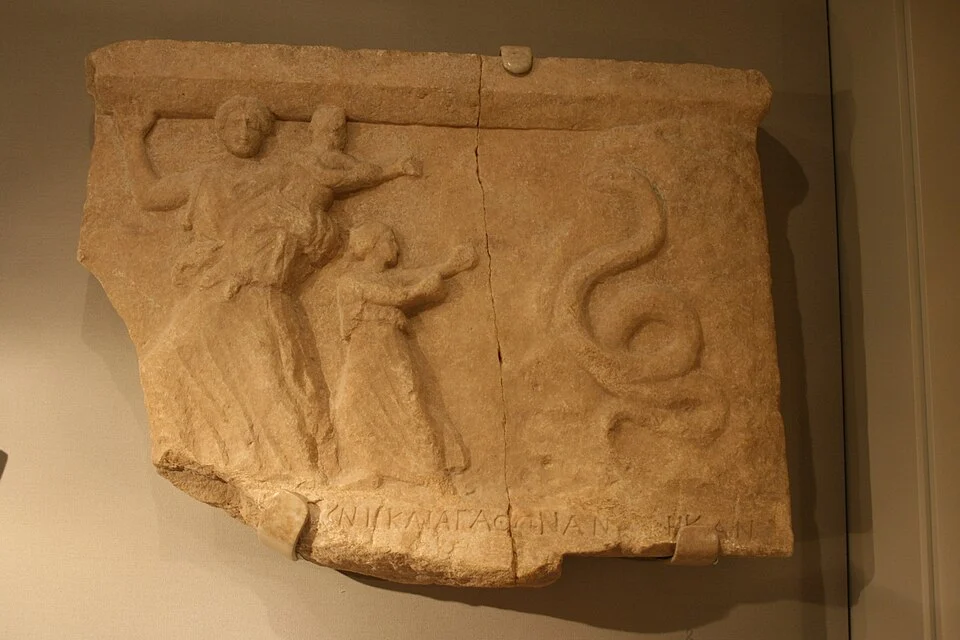
Python
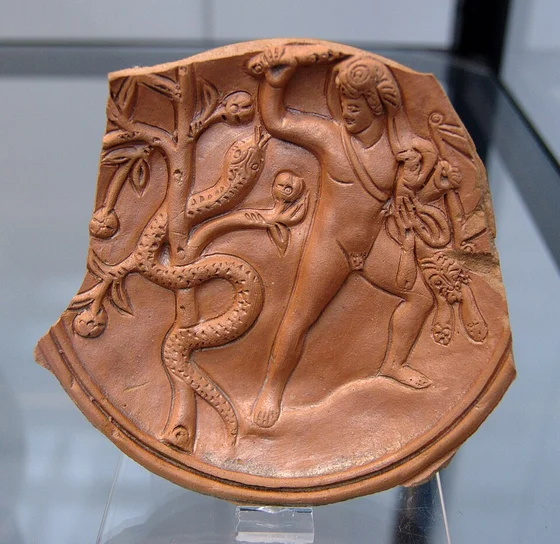
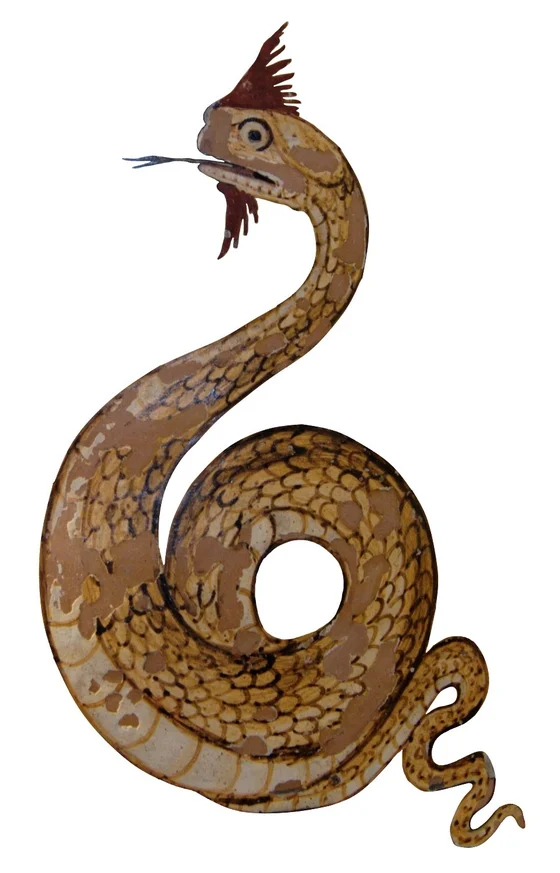
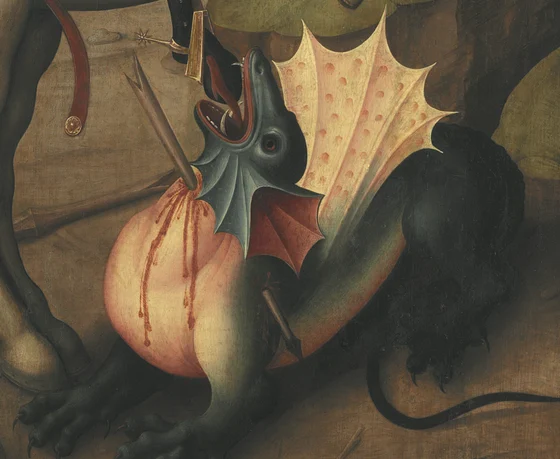
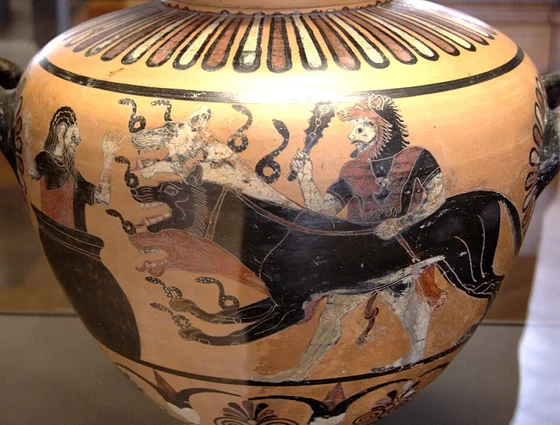
Image associated with the exact linked encyclopedia article; consult credited file description for its interpretation.
Overview
In the Library’s short account, Apollo approaches Delphi, where Themis has been associated with prophecy. Python is the snake guarding the oracle and prevents the god’s approach to its opening. Apollo kills the guardian and takes over the oracle, making the serpent’s defeat part of an account of divine authority and a sacred location.
The brevity of the passage leaves many details unstated. Other works connect the serpent with additional episodes and explanations, and those should be cited as separate witnesses rather than assumed here. Python’s identity is defined by a particular place and confrontation, not by the modern biological genus bearing the same name. The story’s cultural significance cannot be reduced to identifying which ordinary snake might have inspired it.
The Homeric Hymn to Apollo presents a great female dragon beside a spring near the newly established sanctuary. She harms people and their sheep and has fostered Typhaon, whom Hera entrusted to her after bearing him apart from Zeus. Fostering is the relationship stated here: the dragon is not Typhaon’s mother. Apollo wounds her with an arrow, and the poem describes her gasping, writhing and dying in blood. His boast tells her to decay where she lies; the subsequent rotting supplies the poem’s explanation for the name Pytho and Apollo’s Pythian title. The passage does not call the dragon Python.
The hymn frames this killing within Apollo’s search for a sanctuary. Telphusa first persuades him to build elsewhere so that she can retain her own reputation. After the dragon’s death he returns, accuses the spring of deception and covers its water with fallen rock. This territorial sequence differs from the Library’s brief account of a named snake barring access to Themis’s oracle.
Ovid supplies another origin for the named Python. Following the great flood, warmed, damp earth generates new animals, including a serpent spread across a mountainside. Apollo expends nearly his whole quiver killing it, and establishes the Pythian games to preserve the victory’s memory. Their early victors receive oak foliage because the laurel has not yet appeared in the poem’s narrative. Apollo then boasts of his achievement to Cupid, whose answering challenge begins the Daphne episode. These events belong to Ovid’s sequence of transformations, rather than to the hymn’s fostering story.
Origins & earliest records
Homeric Hymn 3 to Apollo 244–387; Ovid, Metamorphoses 1.416–465; Pseudo-Apollodorus, Library 1.4.1. The hymn’s unnamed female dragon and the named Python of the later accounts are compared without silently merging their roles or origins.
Records & interpretation
The anonymous hymn narrates a spring-side dragon’s death, fostering of Hera’s Typhaon and the derivation of Pytho. Ovid names Python and places its origin after the flood. The Library names the oracle guardian and records Apollo’s takeover of Delphi. Historical English translations are cited separately.
In the literature
“Kaa was not a poison snake”
“Kaa’s Hunting”, first encounter with Kaa
Kipling contrasts constriction and venom through a fictional python; period wording preserved.
Selected bibliography
Documented works and useful reading. This is not a list of every appearance.
- 01
The Library, Book I, 1.4.1
Complete named Python notice within the account of Apollo’s birth, prophetic training and takeover of Themis’s Delphi oracle.
- 02
Homeric Hymn 3 to Apollo, 244–387
Complete Telphusa and dragon sequence, including Hera’s Typhaon fostering digression and Pytho naming explanation; the dragon is female and unnamed.
- 03
Metamorphoses 1.416–465
Post-flood generation of Python, archery victory, oak-crowned Pythian games and Apollo’s boast to Cupid.
- 04
The Library (Bibliotheca)
Pseudo-Apollodorus, The Library, James George Frazer translation, Loeb Classical Library121–122; Harvard University Press / William Heinemann,1921.
Family & connections
A source-supported family tree or inspiration record has not yet been compiled for this profile. Related reading below indicates a connection in subject matter, not a proven lineage or creative influence.
Located primary passages
Specific passages supporting details in this entry, grouped by their published witness.
The Library, Book I, 1.4.1
Pseudo-Apollodorus, The Library, James George Frazer translation, Loeb Classical Library121–122; Harvard University Press / William Heinemann,1921.
- Python guards the Delphic oracle and blocks Apollo’s approach; Apollo kills the serpent and takes over the oracle.
Version-specific ancient compilation, not an earliest-attestation assertion. Compound episode claim was checked in full; the brief evidence excerpt is not the entire supporting passage.
Encyclopedia background
An additional attributed reference, separate from the editorial profile above.
Read the open encyclopedia overview
In Greek mythology, Python (Ancient Greek: Πύθων; gen. Πύθωνος) was the serpent, sometimes represented as a medieval-style dragon, living at the center of the Earth, believed by the ancient Greeks to be at Delphi. He was killed by the god Apollo.
Text from Wikipedia contributors, “Python (mythology)”. CC BY-SA 4.0. Extracted introduction; formatting changed. Retrieved 5 October 2026. The source article may have changed since retrieval.
References
Sources supporting this profile. Linked pages have their own scope and editorial standards.
- Primary textThe Library, Book I: 1.4.1 (Theoi Classical Texts Library or Project Gutenberg transcription)Research access: 2026-10-05
- Primary textHomeric Hymn to Apollo: Evelyn-White translationResearch access: 2026-10-05
- Primary textOvid, Metamorphoses I: Brookes More translationResearch access: 2026-10-05
Image credits
Reference illustrationPython
Image associated with the exact linked encyclopedia article; consult credited file description for its interpretation.