Dragon
Image associated with the exact linked encyclopedia article; consult credited file description for its interpretation.
Overview
European literary dragons differ in body, powers and purpose. The final adversary in Beowulf, the elephant-killing serpent of the Aberdeen Bestiary, and the dragon subdued by Saint George belong to distinct works. Reading their actions separately avoids combining fire, wings, poison, treasure and captive princesses into compulsory features of every dragon.
In J. Lesslie Hall’s 1892 Beowulf translation, the king has ruled for fifty winters when a long-guarded treasure is disturbed. A fugitive escaping mistreatment enters the mound and takes a decorated vessel to his lord. The dragon has occupied the hoard for three hundred winters; its previous human owners have already died. It notices the intruder’s footprint, searches for the missing cup and waits for night before attacking. Its fiery flights destroy buildings, including Beowulf’s home, and it returns to the mound before daylight. Thus the threat grows from a specific intrusion into an old store of wealth, rather than an unexplained assault by a wandering animal.
Beowulf has an iron shield made because wood cannot withstand the flames. He approaches with eleven companions and the reluctant guide, but proposes to fight alone. His sword proves inadequate, and most of his followers flee. Wiglaf remembers the king’s gifts and comes to his aid; his own shield burns, forcing him beneath Beowulf’s protection. When Nægling breaks, the dragon bites Beowulf’s neck. Wiglaf strikes lower on the creature, weakening its fire, and Beowulf cuts it with his knife. The two together kill their opponent, but the king’s wound swells and its poison proves fatal. The scene makes loyalty and collective responsibility central to the victory.
The ending continues beyond the combat. Wiglaf brings treasure for the dying king to see, then rebukes the men who abandoned him. The dragon’s body is pushed into the water, while the recovered gold is placed in Beowulf’s burial mound, again unavailable for ordinary use. The community mourns a protector whose final success has also removed him. Hall’s notes identify several disputed readings; the account here follows his selected rendering rather than presenting every detail as an uncontested translation of the Old English.
Aberdeen MS24, folios 65v–66r, gives a contrasting bestiary description. Its dragon is the greatest serpent, with a crest, small mouth and breathing passages. Its principal weapon is its tail: it strikes, coils around victims and suffocates even elephants. The prose explicitly says that it needs no poison. Ethiopia and India are named as its hot countries of origin. The compiler interprets its crest as pride and its entangling coils as the Devil’s deceptions. The university’s commentary notes that the miniature adds conspicuous teeth and wings beyond the prose description. This image–text distinction matters: the painted anatomy should not silently replace the written one, or turn the Beowulf dragon’s poisonous bite into a feature shared by this bestiary account.
The Golden Legend’s Saint George episode places another dragon in a large pond near Silene in Libya. Its harmful breath drives the townspeople to supply sheep, then human victims chosen by lot. When the king’s daughter is selected, her father cannot buy an exemption. George wounds the animal with his spear; the princess binds its neck with her girdle and leads it into the city. Its submission comes before its death. George calls for baptism, then beheads the dragon, whose body requires four ox-drawn carts to remove. He refuses the king’s reward and directs it to the poor. This is a Christian rescue and conversion narrative, not Beowulf’s hoard dispute. The selected English text descends through Caxton’s translation and a later edited presentation; the story’s Libyan setting does not make it a record of an observed African species.
Origins & earliest records
The surviving Beowulf manuscript, British Library Cotton MS Vitellius A XV, was made around 1000; the poem’s composition date remains disputed. Aberdeen MS24 dates to around 1200. The Golden Legend supplies a later medieval literary witness transmitted through translations and editions. These are dates of selected documents, not the beginning of dragon stories, and do not establish an uninterrupted descent from every earlier serpentine monster.
Records & interpretation
Manuscripts, printed translations and illustrations document these literary traditions. The British Library records the Beowulf manuscript’s survival despite the 1731 fire. The narratives’ burning attacks, poison, suffocating coils and miraculous submission are attributed claims within their works, not authenticated biological observations. This profile supplies no zoological classification or asserted fossil origin for dragons.
In the literature
“When the dragon awoke, the strife was renewed there;”
Section XXXII, “The Hoard and the Dragon”, line 66 · J. Lesslie Hall
The hoard-guarding dragon wakes after a cup has been stolen. Hall’s translated line, not an earliest-attestation claim.
“That bitterest bale-woe in his bosom was raging, Poison within.”
SectionXXXVII The Fatal Struggle, translated lines21–22 · J. Lesslie Hall
Beowulf’s dragon-inflicted wound burns with venom after the fight; this witness differs from Aberdeen’s non-poisonous dragon.
“and St. George slew the dragon and smote off his head,”
Opening dragon episode: after city baptism, before body removal in four carts · William Caxton
George kills the wounded and led dragon after the people’s baptism, rather than at the initial spear attack.
Selected bibliography
Documented works and useful reading. This is not a list of every appearance.
- 01
Beowulf
Hall’s 1892 translation: sections XXXI–XXXIII establish the reign, hoard and raids; XXXV–XXXIX cover combat, death and rebuke; XLII–XLIII describe disposal and burial. Located XXXIV approach passage also inspected. Notes preserve disputed readings.
- 02
Aberdeen Bestiary, MS24, folios 65v–66r
Complete dragon prose across both folios and the university’s image commentary; elephant encounter, absent poison and Christian allegory distinguished from painted additions.
- 03
The Golden Legend, Of Saint George, Martyr: opening dragon episode
Complete opening episode through George’s departure. Reader’s headings and explanatory glosses are modern additions; no first surviving dragon-version date asserted.
- 04
Beowulf: An Anglo-Saxon Epic Poem
Exact contiguous excerpt checked against the linked primary e-text on 2026-10-05; only whitespace normalized. English translation from the Heyne-Socin text, 1892; year refers to this translation.
- 05
Aberdeen Bestiary MS24 — De draconibus, folios65v–66r
AberdeenBestiary MS24 c.1200, complete De draconibus text across65v–66r and corresponding university commentary inspected via modern translation and Latin transcription. Modern English translation and commentary are not public-domain medieval prose.
- 06
The Golden Legend — Of Saint George, Martyr, opening dragon episode
GoldenLegend, OfSaintGeorgeMartyr, complete opening dragon episode through George’s departure read in the selected historical Caxton English text, with modern reader headings and inline explanatory glosses distinguished. Host labels Caxton1483; electronic tradition attributed to Ellis/TempleClassics1900, exact print impression not independently established here.
Family & connections
A source-supported family tree or inspiration record has not yet been compiled for this profile. Related reading below indicates a connection in subject matter, not a proven lineage or creative influence.
Located primary passages
Specific passages supporting details in this entry, grouped by their published witness.
Beowulf: An Anglo-Saxon Epic Poem
Exact contiguous excerpt checked against the linked primary e-text on 2026-10-05; only whitespace normalized. English translation from the Heyne-Socin text, 1892; year refers to this translation.
- The hoard-guarding dragon wakes after a cup has been stolen. Hall’s translated line, not an earliest-attestation claim.
J.LesslieHall’s1892 translation is an English literary witness of Beowulf, not its original OldEnglish text or an independently verified earliest dragon attestation. Matching stays within the specified literary profile and does not cross franchise, culture or animal-species boundaries.
Primary source witness
Anonymous Beowulf, J.LesslieHall English translation1892 from Heyne–Socin. Complete selected sectionsXXXI–XXXIX andXLII–XLIII independently read, including their local notes; sectionsXL–XLI and whole OldEnglish poem not claimed read.
- After Beowulf’s fifty-year reign, a night-flying fire-dragon guards the hoard for three hundred winters. A fugitive takes a cup to secure pardon; the awakened dragon searches for the intruder and burns the country, including Beowulf’s hall. Beowulf commissions an iron shield and approaches with eleven companions and the reluctant thief as guide. His weapon fails, his companions flee and Wiglaf joins him; a later bite pierces the king’s neck. Wiglaf’s lower strike weakens the fire and Beowulf’s knife cuts the dragon through. Venom burns the king’s wound; he sees treasure, directs his burial and dies. Wiglaf rebukes the deserters. The body of the dragon is pushed into the water and the recovered treasure is buried in Beowulf’s memorial mound, again useless to mortals.
Hall’s1892 rendering, not a fresh OldEnglish edition or earliest attestation. Notes identify disputed readings; exact numbers and story anatomy are local to this witness. Complete poem and sectionsXL–XLI not claimed read. Existing Hall bibliography retained without duplicate.
Aberdeen Bestiary MS24 — De draconibus, folios65v–66r
AberdeenBestiary MS24 c.1200, complete De draconibus text across65v–66r and corresponding university commentary inspected via modern translation and Latin transcription. Modern English translation and commentary are not public-domain medieval prose.
- The largest serpent emerges from caves, has a crest and small mouth, and relies on its tail rather than a poisonous bite. It ambushes elephants, binds their legs and suffocates them; Ethiopia and India are its stated homes. An extended Christian comparison aligns its actions with the Devil’s pride and entanglement in sin. The university commentary distinguishes the painter’s wings and conspicuous teeth from the prose account.
Complete De draconibus across65v–66r; illustration commentary65v
University’s modern translation and commentary are paraphrased; medieval prose and painting distinguished. Proposed python identification is commentary, not established identification of a mythic animal. Adjacent general-serpent and basilisk sections are separate.
The Golden Legend, Of Saint George, Martyr: opening dragon episode
GoldenLegend, OfSaintGeorgeMartyr, complete opening dragon episode through George’s departure read in the selected historical Caxton English text, with modern reader headings and inline explanatory glosses distinguished. Host labels Caxton1483; electronic tradition attributed to Ellis/TempleClassics1900, exact print impression not independently established here.
- At Silene in Libya a lake dragon poisons the surroundings and threatens the city. Two daily sheep are replaced by a person and sheep when supplies fail; a lottery eventually selects the king’s daughter after many children and young people have died. George wounds the dragon with a spear and has her lead it by her girdle into the city. After the king and people are baptised, George beheads it; four ox-carts remove the body. The king establishes a church with a healing fountain. George refuses money, directs it to poor people, instructs the king and departs.
OfSaintGeorgeMartyr, complete opening dragon episode, before The Arrest and Torture of St.George
Only the complete opening dragon episode is recorded, not every life in the GoldenLegend. Modern explanatory glosses and headings separated from historical prose. No original first-dragon-version date or uniform European dragon anatomy asserted.
Encyclopedia background
An additional attributed reference, separate from the editorial profile above.
Read the open encyclopedia overview
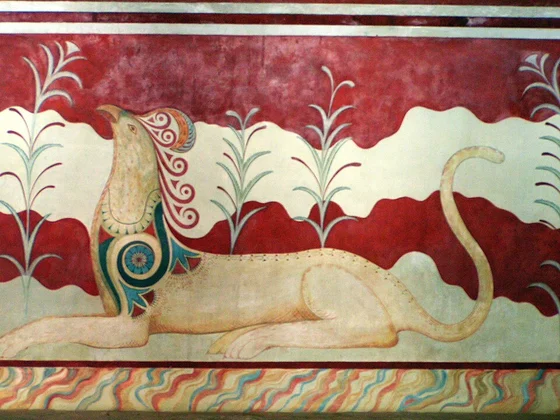
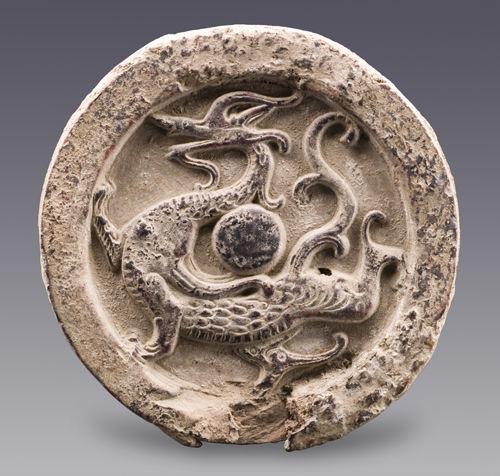
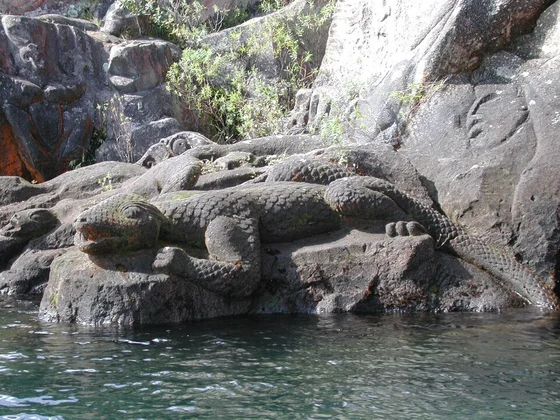
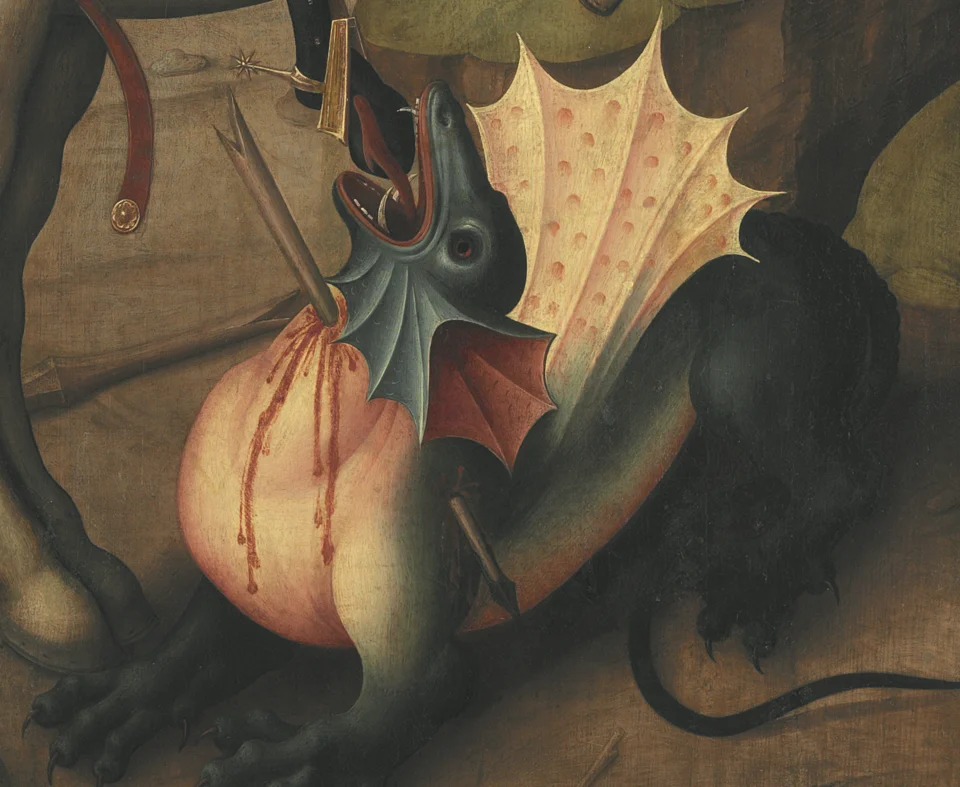
A dragon is a mythical creature found in the folklore of cultures throughout the world. It is roughly serpentine in form, and often possesses features drawn from different animals, such as wings and claws. In nearly all cultures, it is conceived of as a powerful and awe-inspiring creature.
Dragon-like creatures appear in ancient Mesopotamian art, where they could be hostile or benevolent. In East Asia, dragons were usually regarded as positive beings; Chinese dragons were thought to govern the rain, the sea, and other forms of water, and from the Han dynasty onwards they were emblems of imperial power. Ancient Greek drakontes were large serpents endowed with supernatural qualities; in myth they were defeated by heroes or gods, whereas in cult they were gentle figures associated with healing and wealth. In the Western tradition, dragons have been depicted as fire-breathing embodiments of evil, associated with death. Dragons have featured in works of modern fiction by writers such as J. R. R. Tolkien, Ursula K. Le Guin, and George R. R. Martin.
Text from Wikipedia contributors, “Dragon”. CC BY-SA 4.0. Extracted introduction; formatting changed. Retrieved 5 October 2026. The source article may have changed since retrieval.
References
Sources supporting this profile. Linked pages have their own scope and editorial standards.
- Primary textBeowulfResearch access: 2026-10-05
- Primary textAberdeen Bestiary,dragon account and image commentaryResearch access: 2026-10-05
- Primary textAberdeen Bestiary,dragon continuationResearch access: 2026-10-05
- Historical literary translation with modern editorial apparatusSaint George, Golden Legend: attributed historical English textResearch access: 2026-10-05
- Edition metadataFordham Medieval Sourcebook: Golden Legend edition and transmission noticeResearch access: 2026-10-05
- Custodial manuscript descriptionBritish Library: Beowulf manuscript, Cotton MS Vitellius A XVResearch access: 2026-10-05
Image credits
Reference illustrationDragon
Image associated with the exact linked encyclopedia article; consult credited file description for its interpretation.