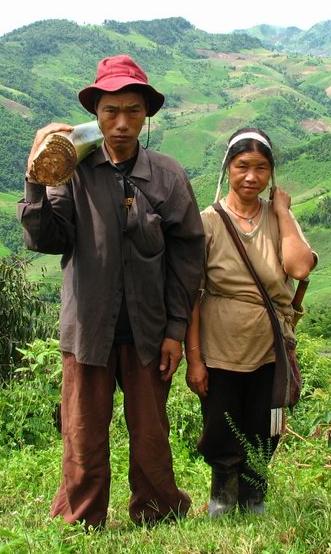
Homo sapiens
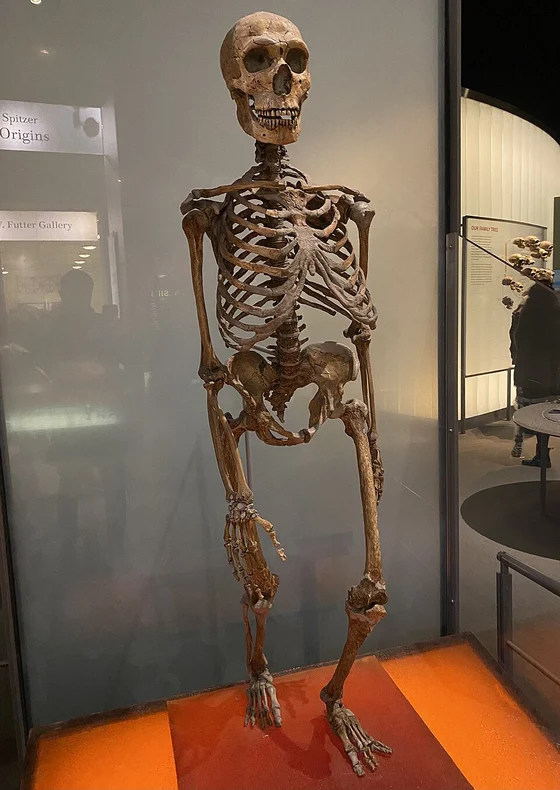
Image associated with the exact linked encyclopedia article; consult credited file description for its interpretation.
Overview
Homo sapiens emerged through an African evolutionary history documented by fossils, genetics and archaeology. Characteristic anatomy includes combinations of cranial and skeletal features rather than one trait appearing everywhere at the same moment. The species later spread across the world, encountering other human lineages and adapting through biological, technological and social processes.
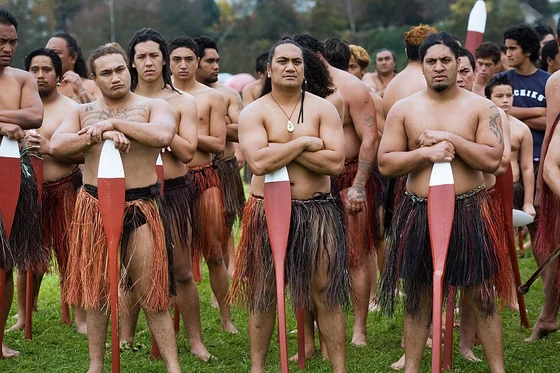
Language, cooperation and transmitted knowledge support immense cultural diversity within this one species. Modern peoples and ethnic identities are historical and social communities, not separate biological races or evolutionary ranks. Ancient gene flow and population variation matter scientifically without turning cultural categories into fixed natural taxa. Nor does a single origin date capture the gradual development of anatomy and behaviour across interconnected populations and the different kinds of evidence used to reconstruct that history.
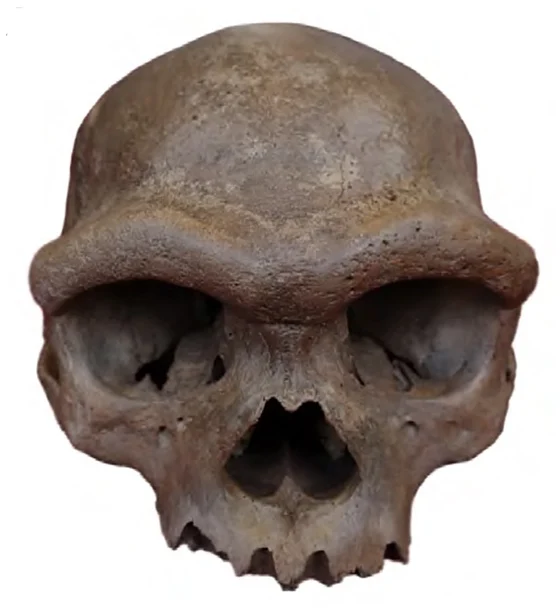
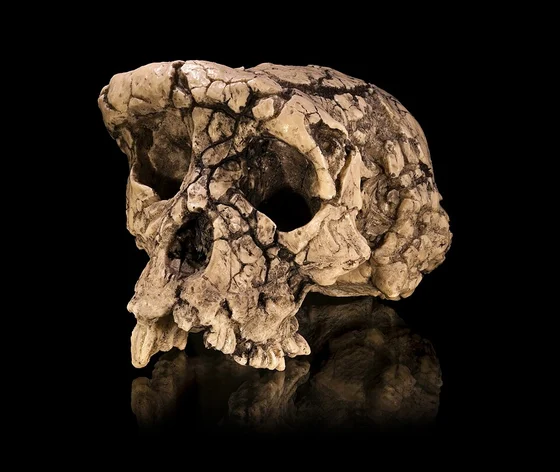
Jebel Irhoud in Morocco shows why human origins cannot be reduced to the appearance of a single modern-looking feature. Hublin and colleagues’ 2017 anatomical study described a combination of relatively modern facial and dental characteristics with an elongated braincase. The newly excavated assemblage included adults and younger individuals. Their analysis placed these fossils near the beginning of the Homo sapiens lineage while emphasising gradual anatomical change and an African history extending beyond one isolated region. Reconstructed skull shape is an interpretation of preserved and missing parts, not an observation of a complete living individual.
The companion dating study by Richter and colleagues measured heated flints associated with the fossils. Its weighted thermoluminescence estimate for layer 7 was 315,000 ±34,000 years, with uncertainty reported at one standard deviation. This dates a geological and archaeological context through the time since heating; it is not a direct measurement of every skeleton’s age. The study also evaluated uranium-series and electron-spin-resonance estimates for a tooth, illustrating how different samples and assumptions constrain the same site.
Omo I in Ethiopia has a different kind of age constraint. Vidal and colleagues’ 2022 study correlated the volcanic KHS Tuff above the fossil-bearing deposits with an eruption of Shala volcano. Geochemical comparisons used glass composition rather than visual resemblance alone. Argon dating of crystals from the eruption deposits yielded 233,000 ±22,000 years, reported at two standard deviations. Because Omo I lies below that ash, this provides a minimum-age constraint, not an exact date for the person’s death.
The Omo research also tested earlier attempts to correlate ash layers across Ethiopian sites. It found that the Herto fossils did not lie beneath the same tephra horizon as Omo I, and identified obtaining a robust maximum age for Omo I as unfinished work. These distinctions matter when comparing fossils: a contextual estimate, a minimum age and an anatomical classification answer different questions. Their uncertainties should remain visible instead of being collapsed into one precise birthday for our species.
Origins & earliest records
Fossil evidence places the emergence of Homo sapiens in Africa around 300,000 years ago, with details of population structure and trait development still investigated. This is a broad evolutionary estimate, not the birthdate of one first modern person. Naming the species in modern taxonomy is entirely separate from its biological emergence.
Evidence & interpretation
Fossils establish anatomical combinations; genetics records population relationships and gene flow; archaeology documents activities and material traditions. Each evidence type has its own preservation and interpretation limits. All living humans are one species, while cultural identities need historical and community evidence rather than being inferred from skull measurements or ancient ancestry percentages.
Selected bibliography
Documented works and useful reading. This is not a list of every appearance.
- 01
Homo sapiens
Selected institutional scientific reading; not a complete bibliography.
- 02
New fossils from Jebel Irhoud, Morocco and the pan-African origin of Homo sapiens
Main anatomical report read in the authors’ institutional PDF; Nature 546, 289–292. Detailed supplementary analyses not independently reproduced.
- 03
The age of the hominin fossils from Jebel Irhoud, Morocco, and the origins of the Middle Stone Age
Main dating results, Table 1 and thermoluminescence principle inspected in the institutional proof. Nature 546, 293–296; not a complete supplementary-methods review.
- 04
Age of the oldest known Homo sapiens from eastern Africa
Complete main report read. Summary adapted with attribution under CC BY 4.0 (https://creativecommons.org/licenses/by/4.0/); original measurements not recomputed.
Family, evolution & connections
Selected hominin population branching
Simplified population topology supported by the nuclear-genome analysis of Reich and colleagues (2010).
Scroll sideways to see all branches. With a keyboard, focus the tree and use the arrow keys.
- Shared ancestral hominin population
- Shared Neanderthal–Denisovan branch
Comparison of ancient Denisovan and Neanderthal nuclear DNA with present-day human genomes. This branching summary omits documented gene flow between populations; it is not a complete evolutionary ladder or a classification of present-day human peoples. Mitochondrial histories differ. No direct ancestral fossil or divergence date is claimed.
Monotremes and selected therian mammals
Mammalian subtree of the seven-species phylogenomic reconstruction in Zhou and colleagues (2021), Extended Data Figure 2a.
Scroll sideways to see all branches. With a keyboard, focus the tree and use the arrow keys.
Fourfold-degenerate sites from 7,946 one-to-one orthologues; non-mammalian outgroups omitted here. Only sampled representative species are displayed. A short-beaked echidna represents the sampled echidna genome, not all echidna diversity. Internal nodes denote shared ancestry, not living species transforming into one another. No dates or branch lengths are shown.
Seven sampled species in the 2021 monotreme genome study
All seven representative species in Extended Data Figure 2a; broader mammalian diversity is not sampled.
Scroll sideways to see all branches. With a keyboard, focus the tree and use the arrow keys.
RAxML tree from concatenated fourfold-degenerate sites of 7,946 one-to-one orthologues; chicken and green lizard specified as outgroups. The figure combines a phylogenetic backbone with calibrated times and gene-family counts. This rendering transfers only branching, omitting dates, expansion/contraction counts and chromosome reconstruction. Representatives are sister lineages, not direct ancestors; it does not display relationships among human peoples.
Selected fossil hominins — a 2015 Bayesian summary
Eight terminals pruned from Figure 1; chimpanzee/gorilla outgroups and other hominins omitted.
Scroll sideways to see all branches. With a keyboard, focus the tree and use the arrow keys.
- Selected hominin terminals
- Remaining sampled terminals
- Selected branches — original node PP 0.25
- Selected branches — original node PP 0.59
- Selected branches — original node PP 0.22
- Selected branches — original node PP 0.59
- Published pair — PP 0.92
- Homo heidelbergensis
Dated Bayesian craniodental analysis: 380 characters, 20 hominins and two outgroups; MrBayes 3.2.3, corrected Mk/gamma model, uncorrelated clock and birth–death prior. Four 10-million-generation runs, 25% burn-in. PP labels retain original nodes after pruning. This historical summary contains weakly supported branches, not settled ancestry. Fossil dating uses scored specimens, not necessarily species first appearances. Missing data and alternative taxonomic groupings matter. Pruning excludes Australopithecus sediba, originally paired with H. habilis, and distinct H. ergaster. No direct ancestor, divergence date or genomic admixture history is inferred.
Selected hominins — Dembo 2016 hypothesis
Nine-tip pruning of Figure 2’s dated Bayesian summary.
Scroll sideways to see all branches. With a keyboard, focus the tree and use the arrow keys.
- Selected hominins
- Ramidus branch
- Afarensis branch
- Habilis branch
- Asian erectus branch — posterior 0.27
- Naledi branch — posterior 0.36
- H. naledi
- Remaining sampled group — posterior 0.94
- Pair — posterior 0.50
- H. heidelbergensis
391 craniodental characters, 24 taxa; corrected Mk/gamma, relaxed clock, birth–death prior; four 20-million-generation runs, 25% burn-in. Original node probabilities are retained, not recomputed. Many branches are weak. Omitted tips include Au. sediba beside H. habilis, H. antecessor beside the sapiens group, and distinct African/Georgian erectus samples. Asian erectus alone maps to the broader profile. Bayes-factor tests did not identify a unique naledi sister. This historical morphology-based tree predates independent naledi dating; no ages or direct ancestors are inferred. It differs from the 2015 matrix and is not merged with it.
Taxonomic classification
A hierarchy of classified groups, not a chain of direct ancestors.
Neanderthals
The nuclear-genome analysis places modern humans outside the shared Neanderthal–Denisovan branch among these sampled groups. It also documents gene flow, so a simple branching diagram omits important later connections. Neanderthals are neither a developmental stage of living humans nor a biological category corresponding to a present-day people.
Denisovans
The Denisovan nuclear genome shares a more recent common ancestry with sampled Neanderthals than with modern humans, while retaining a distinct population history. Genetic contributions to some modern human ancestors complicate a strictly branching picture. The connection concerns ancient populations and evidence, not rankings or divisions of present-day human peoples.
Dembo 2016 Figure 2 morphological hypothesis
Adding naledi and revised character scores changes the matrix. Weak branches and multiple possible naledi sister taxa remain; the historical summary does not identify direct fossil ancestors.
Encyclopedia background
An additional attributed reference, separate from the editorial profile above.
Read the open encyclopedia overview
Humans (Homo sapiens, meaning 'thinking man' or 'wise man') are the most abundant and widespread species of primates, characterized by bipedalism, minimal body hair, and large, complex brains enabling the development of advanced technology, culture, and language. Humans are highly social beings and tend to live in complex social structures composed of many cooperating and competing groups, from families and kinship networks to political states. Social interactions between humans have established a wide variety of values, social norms, and rituals, which bolster human society. Curiosity and the human desire to understand and influence the environment have motivated humanity's development of science, philosophy, religion, mythology, and other fields of knowledge.
Humans have a large and highly developed prefrontal cortex, the region of the brain associated with higher cognition. They are intelligent beings, capable of episodic memory, flexible facial expressions, self-awareness and a theory of mind. The human mind is capable of introspection (metacognition), private thought, imagination, volition, and forming views on existence. Humans can also mentally travel through time (chronesthesia), which signifies episodic foresight. These attributes have allowed them to achieve large technological advancements through reason and the transmission of knowledge to future generations. In anthropology, the cumulative preservation and advancement of knowledge across generations is known as the ratchet effect.
Humans are omnivorous, capable of consuming a wide variety of plant and animal material, and have used fire to prepare and cook food. They can survive for up to eight weeks without food, and three or four days without water. Humans are generally diurnal, sleeping on average seven to nine hours per day. Human childbirth is dangerous, with a high risk of complications and death. Both the mother and the father typically provide care for human offspring, who are helpless at birth.
Genes and the environment influence human biological variation in appearance, physiology, immune system, mental abilities, body size, and lifespan. Though humans vary in many traits, any two humans are on average over 99% genetically similar, with the most genetically diverse populations from Africa. The greatest degree of genetic variation exists between males and females. The genetic difference between males and females is around 1% to 2%. On average, males have greater body strength and females generally have a higher body fat percentage. Females undergo menopause and become infertile potentially decades before the end of their lives. They also have a longer life span in almost every population around the world. The division into male and female gender roles has varied historically, and challenges to predominant gender norms have recurred in many societies.
Humans evolved from other hominins in Africa several million years ago. Although some scientists equate humans with all members of the genus Homo, in common usage it generally refers to Homo sapiens, the only extant member. Homo sapiens emerged around 300,000 years ago and migrated out of Africa, gradually replacing local populations of archaic humans. Early humans were hunter-gatherers, before the invention of agriculture and domestication of animals led to permanent settlement in the Fertile Crescent and other cradles of civilization. As food surpluses enabled populations to become larger and denser, forms of governance developed, the use of writing became necessary, and a number of civilizations rose and fell. Humans have continued to expand, with over 8.3 billion humans occupying almost all regions of Earth in 2026, and have even visited the Moon. This expansion, combined with industrialization, has led to environmental destruction and pollution that significantly contributes to the ongoing mass extinction of many other forms of life.
Text from Wikipedia contributors, “Human”. CC BY-SA 4.0. Extracted introduction; formatting changed. Retrieved 5 October 2026. The source article may have changed since retrieval.
References
Sources supporting this profile. Linked pages have their own scope and editorial standards.
- MuseumHomo sapiensResearch access: 2026-10-05
- MuseumOne Species, Living WorldwideResearch access: 2026-10-05
- Primary scientific researchJebel Irhoud: original anatomical reportResearch access: 2026-10-05
- Primary scientific researchJebel Irhoud: original dating reportResearch access: 2026-10-05
- Primary scientific researchOmo I: original tephrochronology reportResearch access: 2026-10-05
Image credits
Reference illustrationHomo sapiens
Image associated with the exact linked encyclopedia article; consult credited file description for its interpretation.