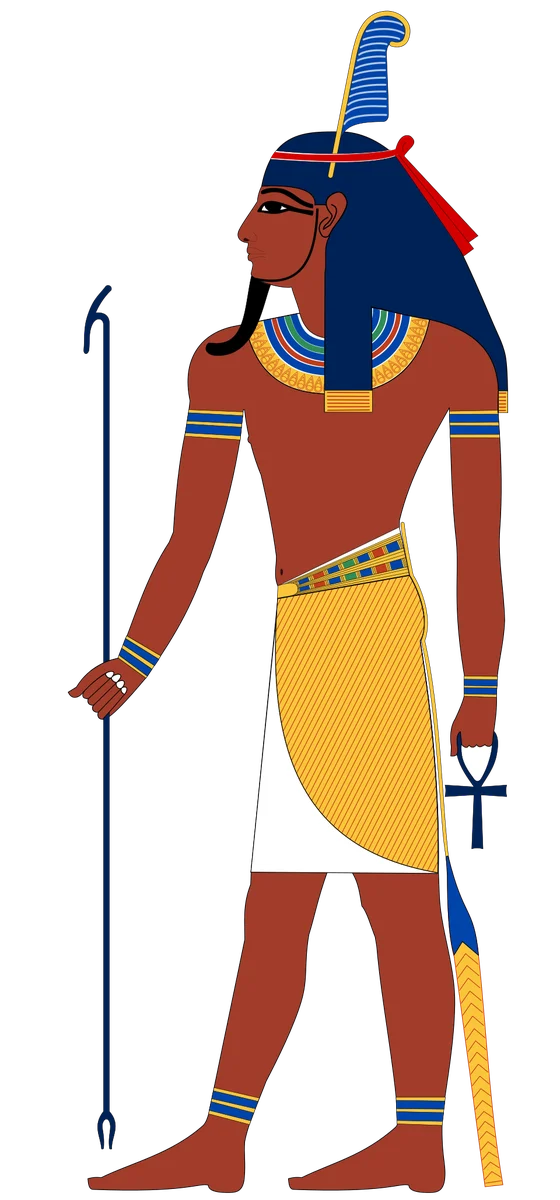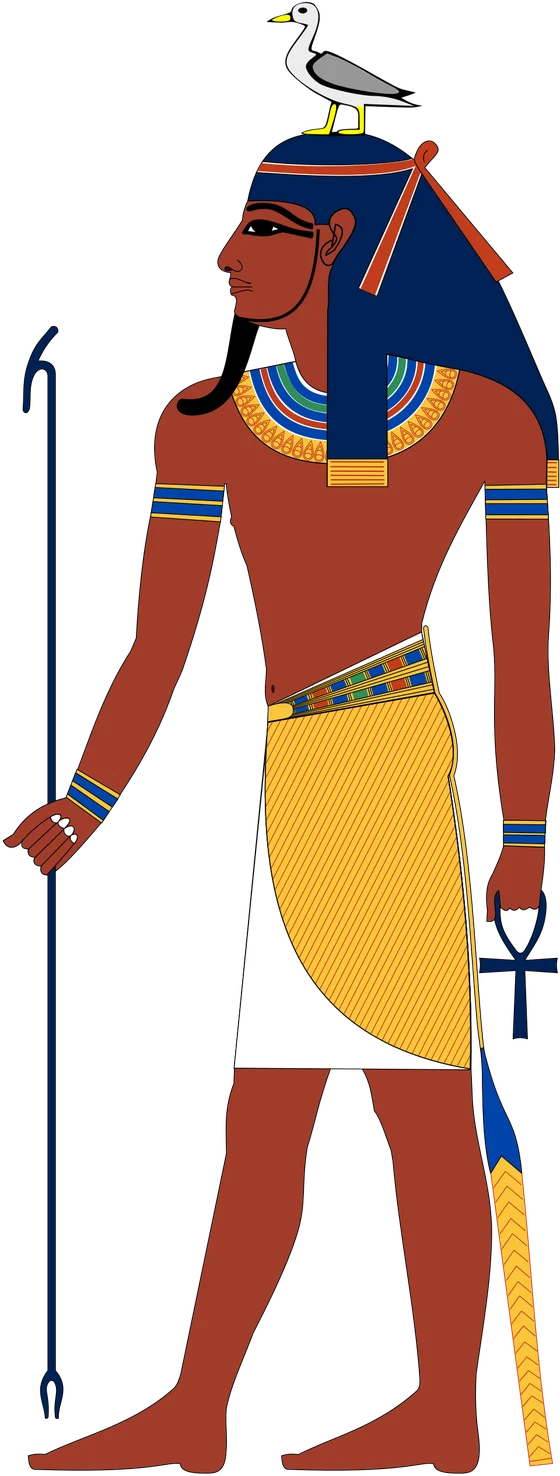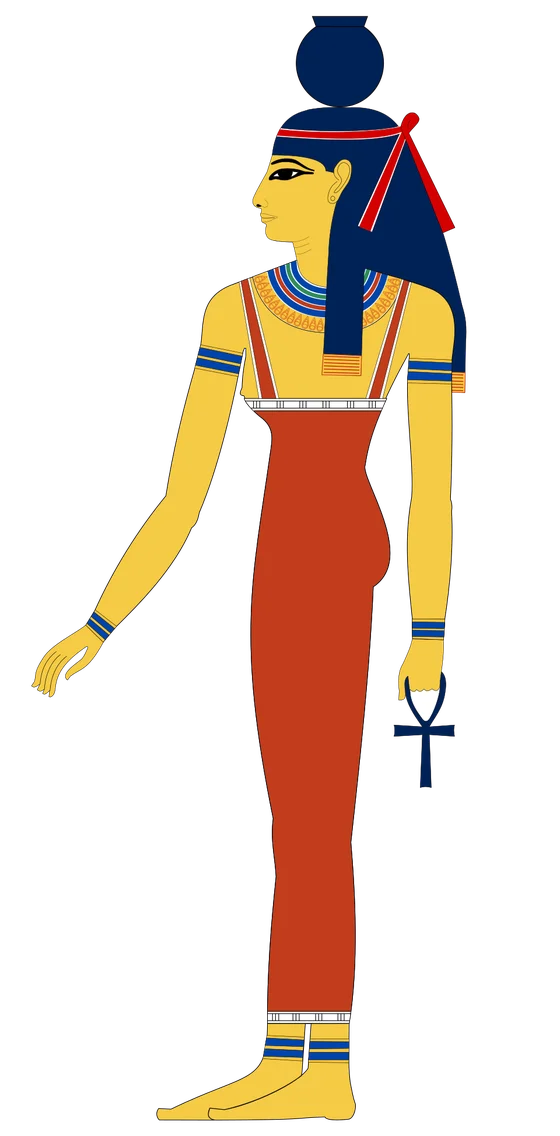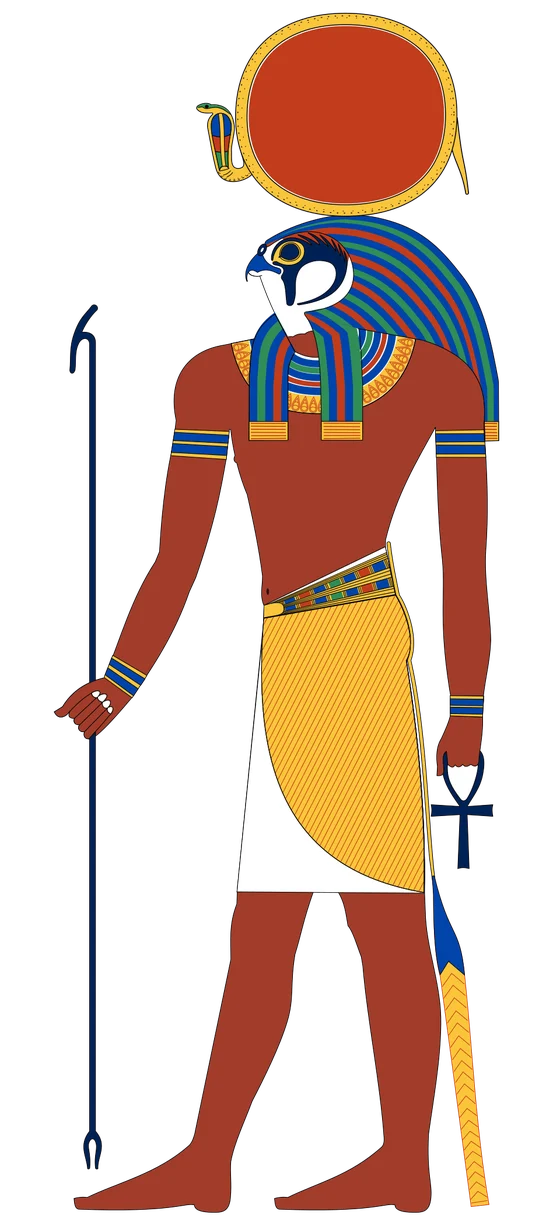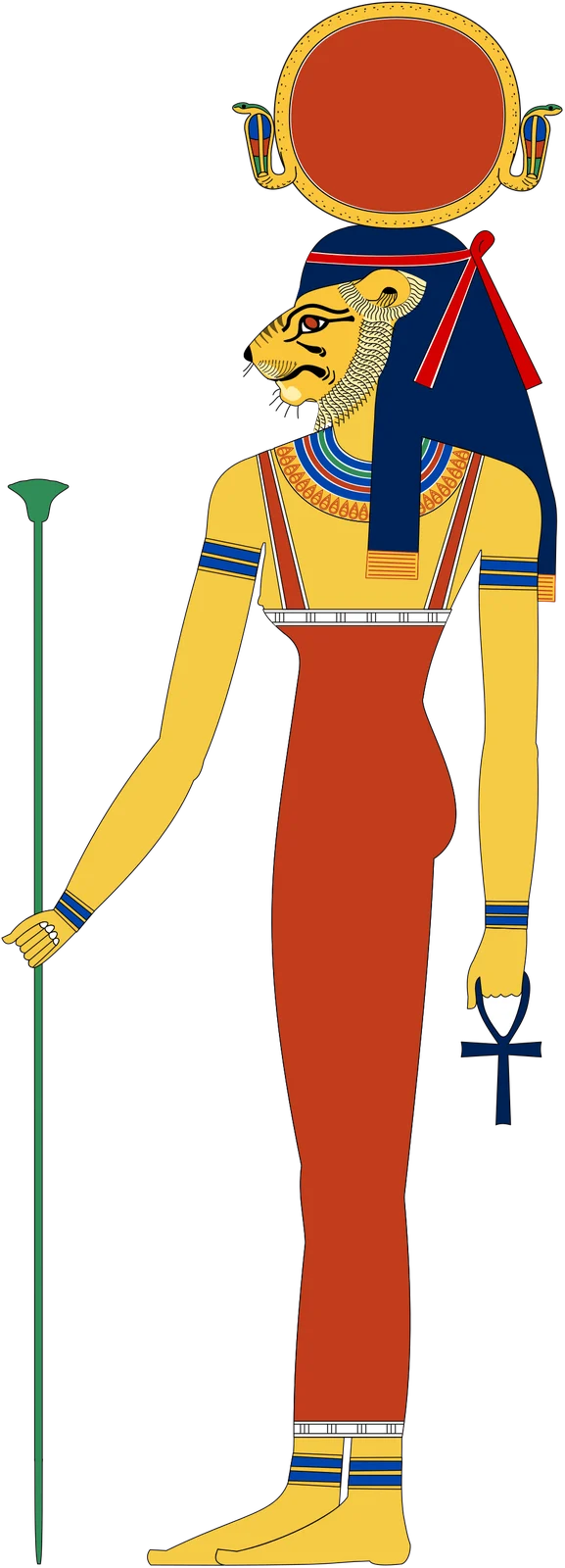
Tefnut, modern vector interpretation
Modern vector interpretation of Egyptian deity iconography, based on historical representations; not a photograph or an original ancient painting. See the credited file description for shared iconography and artistic liberties.
Overview
Tefnut appears with Shu among the creator’s first offspring, then becomes a parent of Keb and Nut in the divine genealogy. The edition interprets her through moisture or waters above the heavens, while assigning Shu an atmospheric role. The securely attested point is the translated family sequence. More elaborate modern accounts of a lioness who travels abroad are outside this entry’s selected witness and are not imported into its description.
The creation sequence does not stop at the birth of Shu and Tefnut. Their union produces Keb and Nut, making the first pair parents of the divided earth and sky. Tefnut’s position therefore connects the creator’s bodily generation to the wider family from which the Osiris and Horus narratives develop.
Origins & earliest records
Budge’s edition presents a version of the creation story from papyrus 10,188 and discusses earlier textual comparisons; the edition date is not an origin date.
Records & interpretation
The selected attestation is Creation narrative in Budge’s translated collection. It documents a textual or ritual representation; commentary and later classical accounts are labeled where used. It does not establish zoological existence, a first oral telling, or a uniform belief shared by all Egyptians.
In the literature
“Shu and Tefnut rejoiced from out of the inert watery mass”
History of Creation—A; paragraph beginning “[These are] the words which the god Neb-er-tcher spake after he…” · E. A. Wallis Budge
The creator produces Shu and Tefnut; they emerge from the watery mass and return his Eye, in the first creation version.
Selected bibliography
Documented works and useful reading. This is not a list of every appearance.
- 01
Legends of the Gods: The Egyptian Texts
Selected witness: Creation narrative. Historical translation and commentary; not an exhaustive bibliography.
- 02
Legends of the Gods: The Egyptian Texts, edited with Translations
London,1912; historical English text edited by E.A.WallisBudge. Ancient narrative/ritual translation, separate from modern introduction and footnotes.
Family, evolution & connections
Textual genealogy: Creation A in Budge's Egyptian text translation
Selected divine generations explicitly enumerated in the translated History of Creation A.
Scroll sideways to see all branches. With a keyboard, focus the tree and use the arrow keys.
- Joint parents: Shu and Tefnut
- Joint parents: Geb (Seb/Keb) and Nut
- Heru-khent-an-maati (Blind Horus in this translation)
Follow the translator's named production of Shu and Tefnut, their joint offspring Geb and Nut, and the latter pair's enumerated children. Paired nodes identify two parents; they are not single organisms. A divine genealogy in one translated recension, not biological evolution or a harmonized account of all Egyptian traditions. Creation B differs. The source's Heru-khent-an-maati, glossed Blind Horus, remains an unlinked named node to avoid confusing him with later Horus parentage. Budge's historical translation and commentary are not a modern consensus edition.
Creation B’s different named generation in Budge’s translation
The translated History of Creation B in Budge’s 1912 Legends of the Gods, not his introductory harmonization.
Scroll sideways to see all branches. With a keyboard, focus the tree and use the arrow keys.
Retain the explicit final statement that Shu and Tefnut brought forth Osiris, Heru-khenti-an-maa, Set, Isis and Nephthys. Creation A explicitly inserts Geb and Nut as parents of this group; B’s displayed wording does not, and that difference is preserved. Joint root groups two divine producers, not one organism. The Horus name remains unlinked to avoid conflating distinct Horus parentage. This historical translated recension is not biological evolution or a modern critical edition. The shared leaf set with Creation A is intentional: these are substantively different textual witnesses, not duplicated topology.
Located primary passages
Specific passages supporting details in this entry, grouped by their published witness.
Legends of the Gods: The Egyptian Texts
London,1912; historical English text edited by E.A.WallisBudge. Ancient narrative/ritual translation, separate from modern introduction and footnotes.
- The creator produces Shu and Tefnut; they emerge from the watery mass and return his Eye, in the first creation version.
Specific ancient textual version in a historical English witness; names Uatchet/Nekhebet/Seb/Nu are historical renderings, not separate beings. Plutarch’s version and bracketed restorations must not be universalized. Ritual speech is literary evidence, not an instruction to perform healing or protective practices.
Encyclopedia background
An additional attributed reference, separate from the editorial profile above.
Read the open encyclopedia overview
Tefnut (Ancient Egyptian: tfn.t; Coptic: ⲧϥⲏⲛⲉ tfēne) is a deity in Ancient Egyptian religion, the feminine counterpart of the air god Shu. Her mythological function is less clear than that of Shu, but Egyptologists have suggested she is connected with moisture, based on a passage in the Pyramid Texts in which she produces water, and on parallelism with Shu's connection with dry air. She was also one of the goddesses who could function as the fiery Eye of Ra.
Text from Wikipedia contributors, “Tefnut”. CC BY-SA 4.0. Extracted introduction; formatting changed. Retrieved 5 October 2026. The source article may have changed since retrieval.
References
Sources supporting this profile. Linked pages have their own scope and editorial standards.
- Primary-text translation and historical commentaryLegends of the Gods — Creation narrativeResearch access: 2026-10-05
Image credits
Thematic illustrationTefnut, modern vector interpretation
Modern vector interpretation of Egyptian deity iconography, based on historical representations; not a photograph or an original ancient painting. See the credited file description for shared iconography and artistic liberties.