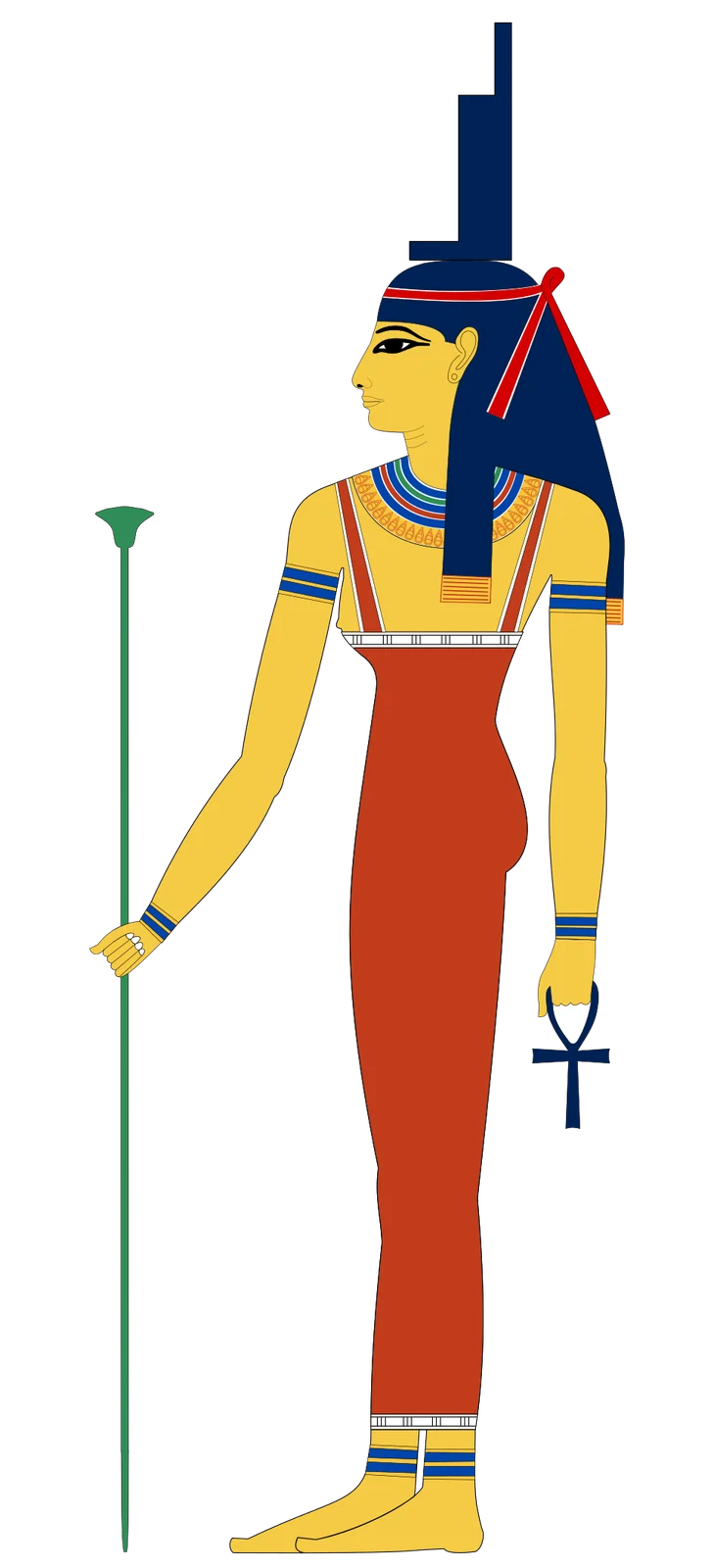
Isis
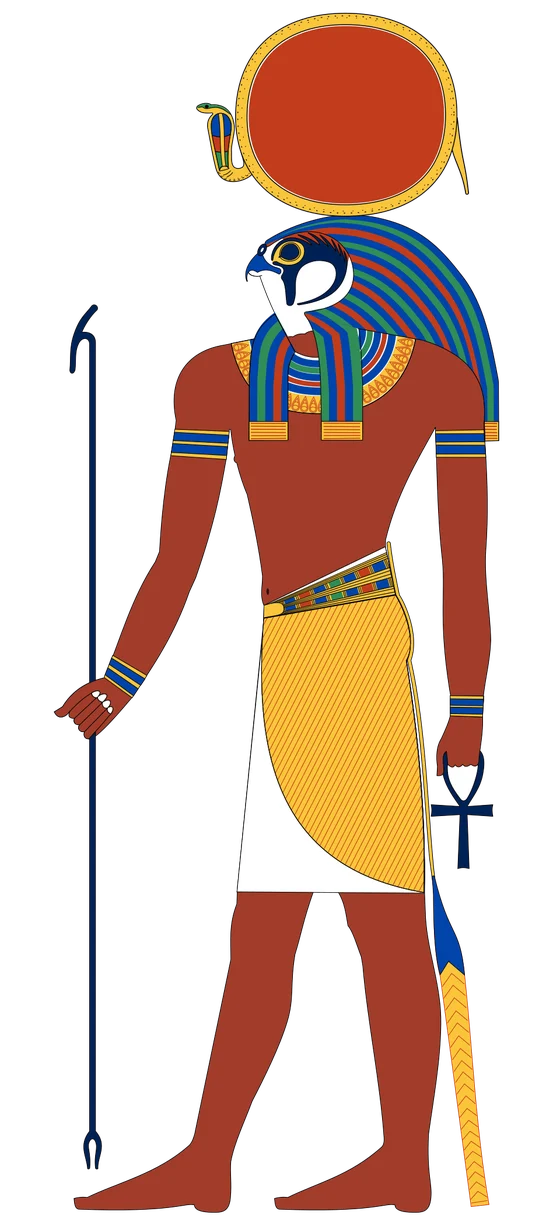
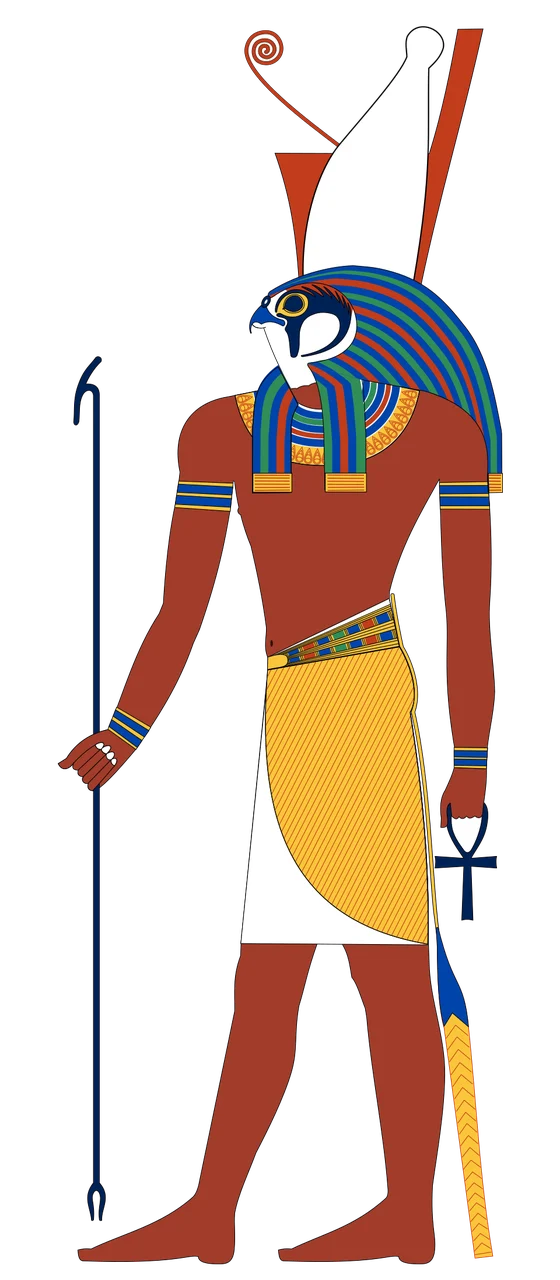
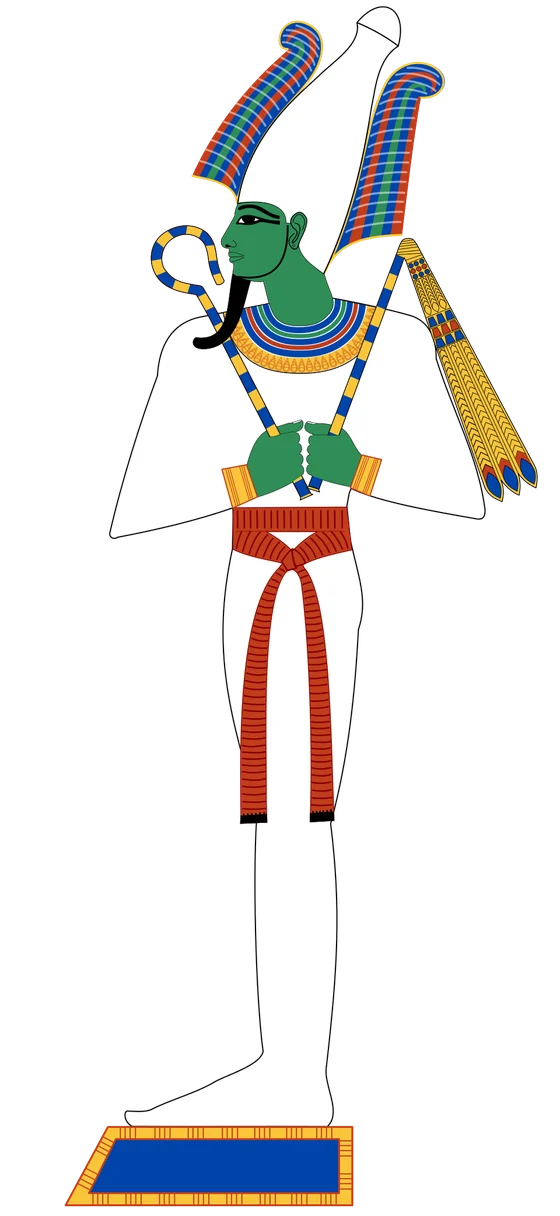
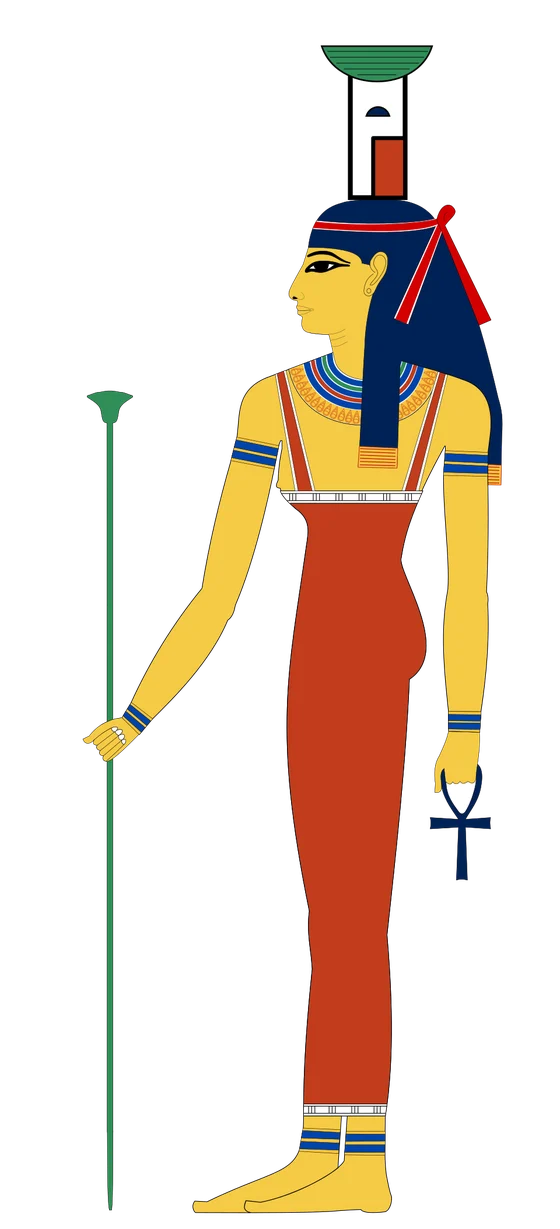
Modern vector interpretation of Egyptian deity iconography, based on historical representations; not a photograph or an original ancient painting. See the credited file description for shared iconography and artistic liberties.
Overview
In the serpent episode Isis is introduced in a woman’s form with knowledge of powerful words and a desire to gain Ra’s protected name. She creates an unfamiliar serpent that strikes him on his daily route. When the afflicted god calls his children, she approaches as a healer but insists that the hidden name must be disclosed. Ra’s catalogue of creative achievements and solar forms does not satisfy her. He finally allows his name to leave his body and enter hers; only then do her words overcome the poison. This episode makes effective knowledge, rather than physical combat, the means by which she obtains authority over a greater god.
The translated Hymn to Osiris presents a different bodily representation. Isis searches tirelessly for her slain brother, flying across the earth with cries of grief. Her feathers give light and her wings make air. Her spoken power and bodily assistance raise his helpless members, and she obtains the essence from which an heir comes into being. She nurses Horus in solitude until he grows strong enough to take his place in the divine succession. Winged lamentation and maternal protection are therefore concrete features in this hymnic witness, not simply generic labels added to her name.
The Metternich Stele material adds protective speech under conditions of vulnerability. In the scorpion-escort episode, refusal of shelter brings retaliation against another household’s child; Isis intervenes to save that child instead of allowing the vengeance to continue. Elsewhere her own hidden son is overcome by venom. Her appeal reaches the solar boat, whose movement stops while Thoth descends to restore him. The texts coordinate the mother’s appeal and words with Thoth’s intervention rather than reducing the recovery to an isolated power held by one figure. Budge also supplies a separate classical account of Isis’s search for Osiris; its narrative setting is identified as classical material alongside the Egyptian hymn and magical stele.
Origins & earliest records
Budge prints translated Egyptian material alongside an account from classical writers. The publication is a selected textual collection, not evidence for the first appearance of Isis worship.
Records & interpretation
Budge’s historical translation: The Legend of Ra and Isis; Hymn to Osiris and a Legend of the Origin of Horus; Metternich Stele narratives in the death-and-restoration of Horus section.
In the literature
“my name shall come forth from my body and go into hers.”
The Legend of Ra and Isis; paragraph beginning “The Chapter of the divine (or, mighty) god, who created himself,…” · E. A. Wallis Budge
Isis constructs the serpent from Ra’s spittle and dust, then obtains his secret name as the condition for removing its poison.
Selected bibliography
Documented works and useful reading. This is not a list of every appearance.
- 01
Legends of the Gods: The Egyptian Texts
The Legend of Ra and Isis; Hymn to Osiris and a Legend of the Origin of Horus; Metternich Stele narratives in the death-and-restoration of Horus section.
- 02
Legends of the Gods: The Egyptian Texts, edited with Translations
London,1912; E.A.WallisBudge historical English translations; narrative body distinguished from editorial introduction and footnotes.
Family, evolution & connections
Textual genealogy: Creation A in Budge's Egyptian text translation
Selected divine generations explicitly enumerated in the translated History of Creation A.
Scroll sideways to see all branches. With a keyboard, focus the tree and use the arrow keys.
- Joint parents: Shu and Tefnut
- Joint parents: Geb (Seb/Keb) and Nut
- Heru-khent-an-maati (Blind Horus in this translation)
Follow the translator's named production of Shu and Tefnut, their joint offspring Geb and Nut, and the latter pair's enumerated children. Paired nodes identify two parents; they are not single organisms. A divine genealogy in one translated recension, not biological evolution or a harmonized account of all Egyptian traditions. Creation B differs. The source's Heru-khent-an-maati, glossed Blind Horus, remains an unlinked named node to avoid confusing him with later Horus parentage. Budge's historical translation and commentary are not a modern consensus edition.
Creation B’s different named generation in Budge’s translation
The translated History of Creation B in Budge’s 1912 Legends of the Gods, not his introductory harmonization.
Scroll sideways to see all branches. With a keyboard, focus the tree and use the arrow keys.
Retain the explicit final statement that Shu and Tefnut brought forth Osiris, Heru-khenti-an-maa, Set, Isis and Nephthys. Creation A explicitly inserts Geb and Nut as parents of this group; B’s displayed wording does not, and that difference is preserved. Joint root groups two divine producers, not one organism. The Horus name remains unlinked to avoid conflating distinct Horus parentage. This historical translated recension is not biological evolution or a modern critical edition. The shared leaf set with Creation A is intentional: these are substantively different textual witnesses, not duplicated topology.
Osiris
The Pyramid Text passages discussed by Budge connect Isis’s conception to Osiris and call Horus the son who avenges his father. This is a source-specific spousal and parental relationship. The child must remain distinguishable from the other Horus named among the preceding generation in Creation A.
Located primary passages
Specific passages supporting details in this entry, grouped by their published witness.
Legends of the Gods: The Egyptian Texts
London,1912; E.A.WallisBudge historical English translations; narrative body distinguished from editorial introduction and footnotes.
- Isis constructs the serpent from Ra’s spittle and dust, then obtains his secret name as the condition for removing its poison.
Budge’s historical translation of a particular ancient text; uncertain readings, lacunae and variant names retained. Mythic healing claims are narrative content, not medical instructions.
Encyclopedia background
An additional attributed reference, separate from the editorial profile above.
Read the open encyclopedia overview
Isis was a major goddess in ancient Egyptian religion whose worship spread throughout the Greco-Roman world. Isis was first mentioned in the Old Kingdom (c. 2686 – c. 2181 BCE) as one of the main characters of the Osiris myth, in which she resurrects her slain brother and husband, the divine king Osiris, and produces and protects his heir, Horus. She was believed to help the dead enter the afterlife as she had helped Osiris, and she was considered the divine mother of the pharaoh, who was likened to Horus. Her maternal aid was invoked in healing spells to benefit ordinary people. Originally, she played a limited role in royal rituals and temple rites, although she was more prominent in funerary practices and magical texts. She was usually portrayed in art as a human woman wearing a throne-like hieroglyph on her head. During the New Kingdom (c. 1550 – c. 1070 BCE), Isis took on traits that originally belonged to Hathor, the preeminent goddess of earlier time. Isis was portrayed wearing Hathor's headdress, a sun disk between the horns of a cow.
In the first millennium BCE, Osiris and Isis became the most widely worshipped Egyptian deities, and Isis absorbed traits from many other goddesses. Rulers in Egypt and its southern neighbor Nubia built temples dedicated primarily to Isis, and her temple at Philae was a religious center for Egyptians and Nubians alike. Her reputed magical power was greater than that of all other gods, and she was said to govern the natural world and wield power over fate itself.
In the Hellenistic period (323–30 BCE), when Egypt was ruled and settled by Greeks, Isis was worshipped by Greeks and Egyptians, along with a new god, Serapis. Their worship diffused into the wider Mediterranean world. Isis's Greek devotees ascribed to her traits taken from Greek deities, such as the invention of marriage and the protection of ships at sea. As Hellenistic culture was absorbed by Rome in the first century BCE, the cult of Isis became a part of Roman religion. Her devotees were a small proportion of the Roman Empire's population but were found all across its territory. Her following developed distinctive festivals such as the Navigium Isidis, as well as initiation ceremonies resembling those of other Greco-Roman mystery cults. Some of her devotees said she encompassed all feminine divine powers in the world.
The worship of Isis was ended by the rise of Christianity in the fourth through sixth centuries CE. Her worship may have influenced Christian beliefs and practices such as the veneration of Mary, but the evidence for this influence is ambiguous and often controversial. Isis continues to appear in Western culture, particularly in esotericism and modern paganism, often as a personification of nature or the feminine aspect of divinity.
Text from Wikipedia contributors, “Isis”. CC BY-SA 4.0. Extracted introduction; formatting changed. Retrieved 5 October 2026. The source article may have changed since retrieval.
References
Sources supporting this profile. Linked pages have their own scope and editorial standards.
- Primary-text translation and historical commentaryLegends of the Gods — Snake-bite; origin and healing of Horus; Isis and OsirisResearch access: 2026-10-05
Image credits
Thematic illustrationIsis
Modern vector interpretation of Egyptian deity iconography, based on historical representations; not a photograph or an original ancient painting. See the credited file description for shared iconography and artistic liberties.