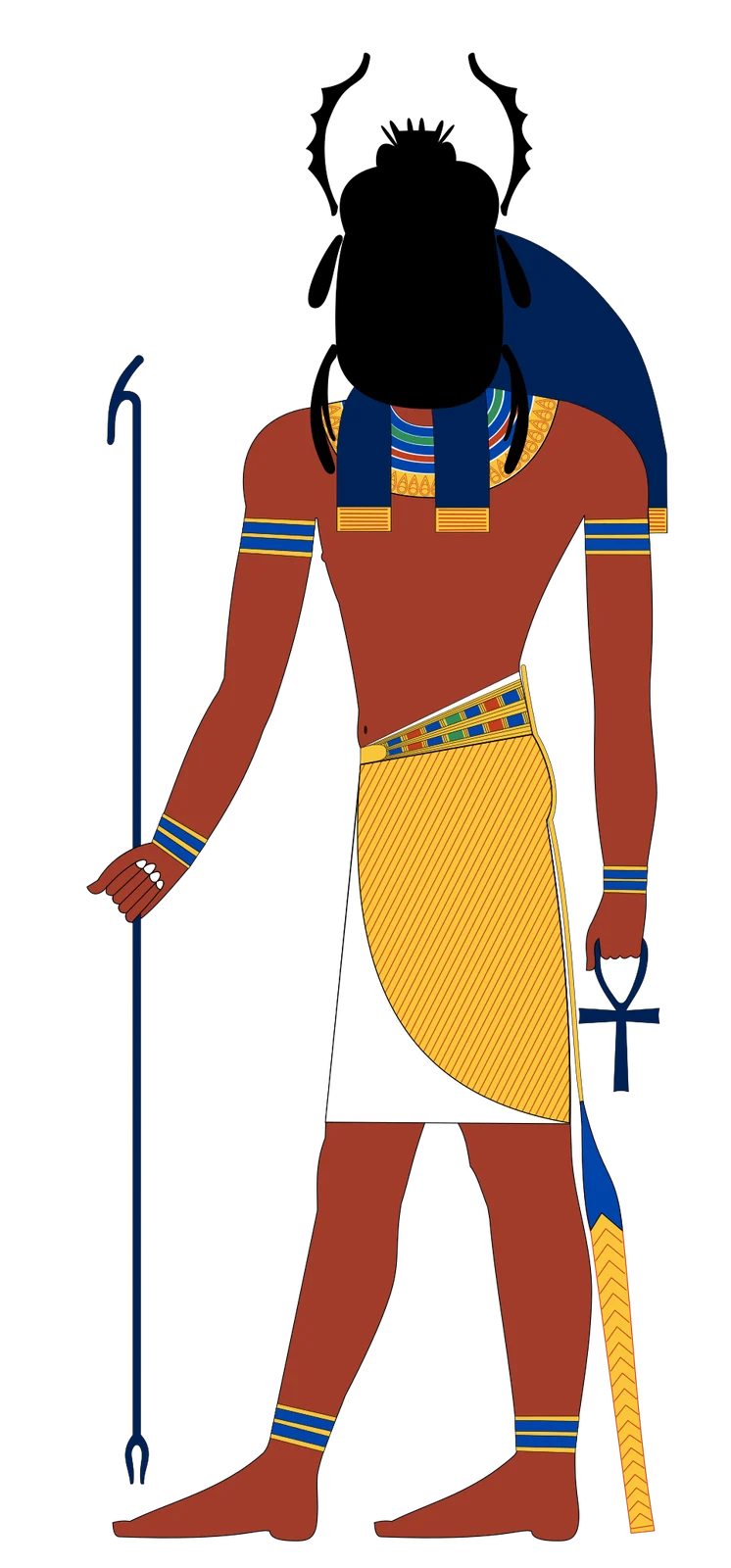
Khepri
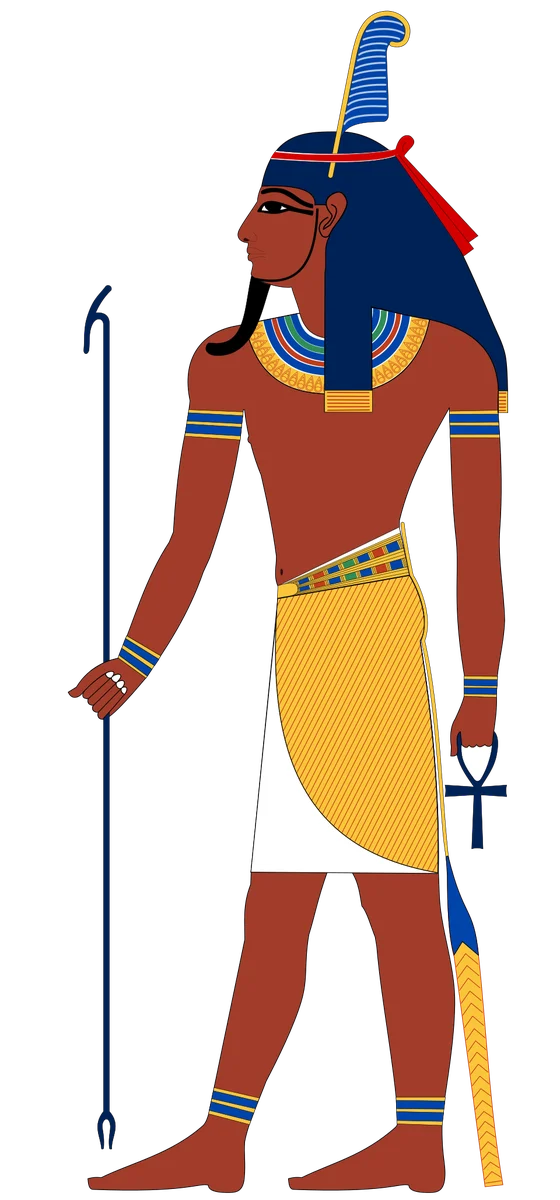
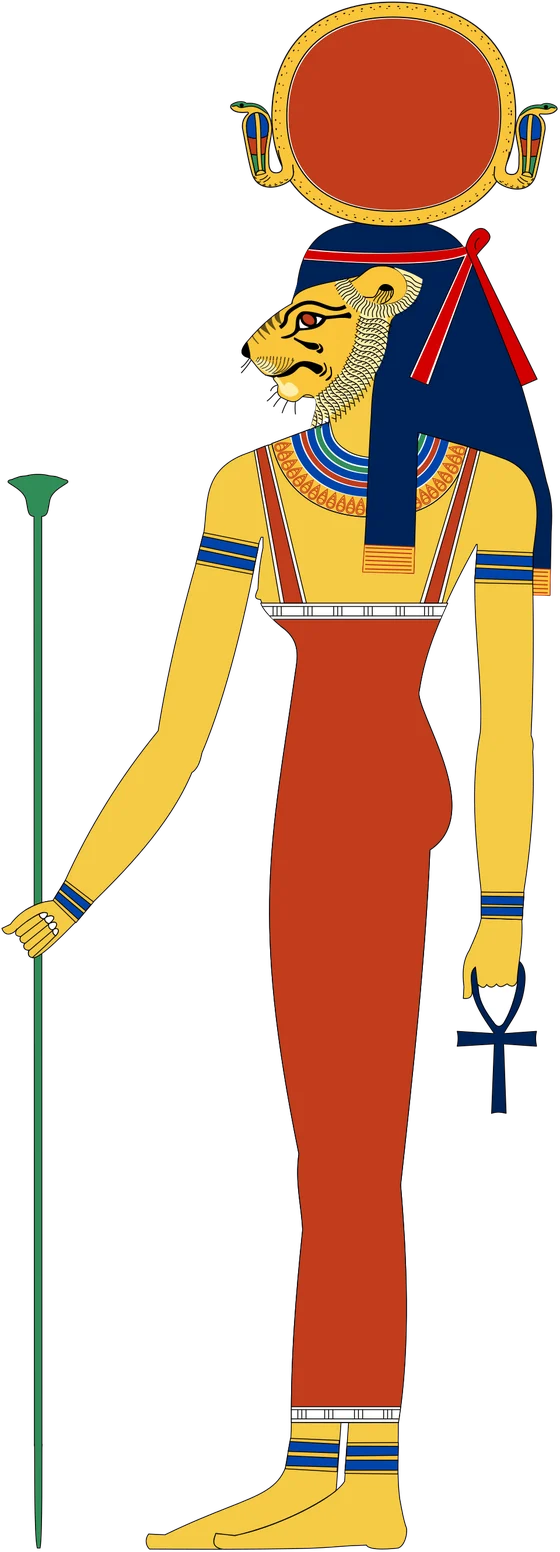
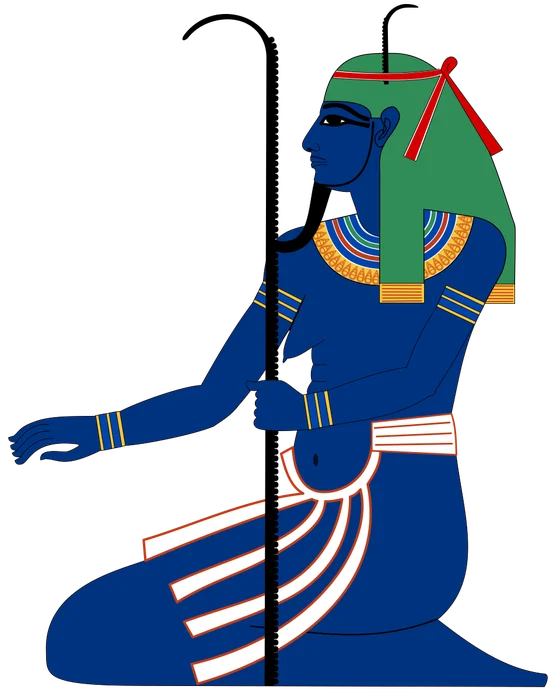
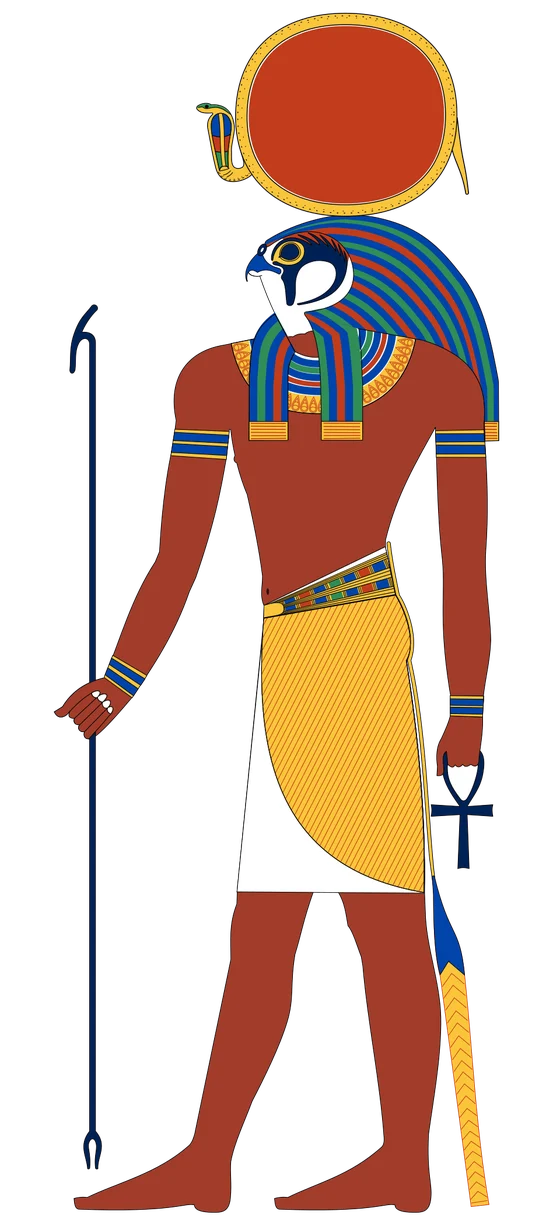
Modern vector interpretation of Egyptian deity iconography, based on historical representations; not a photograph or an original ancient painting. See the credited file description for shared iconography and artistic liberties.
Overview
Budge’s translation uses Khepera for the creator who comes into being before the formed world and generates further divine beings. Speech and self-generation matter more in this episode than combat: the creator establishes a place to stand and brings a divine family into existence. The account connects creation with transformation. It should not be treated as proof that every Egyptian creation account followed this sequence, or as a literal zoological description of a beetle.
A blue-green faience amulet in Toledo, object 1925.544, depicts a winged scarab. The museum links its beetle form with Khepri, the rising sun and renewed life; the added wings extend the protective imagery into flight and resurrection. This material witness supplies the represented animal form independently of the creation passage’s spoken self-generation.
Origins & earliest records
The creation text is presented from British Museum papyrus 10,188; Khepera is the edition’s spelling. Khepri is used here as a searchable modern name, not as a separate being.
Records & interpretation
The selected attestation is Creation narrative, Khepera in Budge’s translated collection. It documents a textual or ritual representation; commentary and later classical accounts are labeled where used. It does not establish zoological existence, a first oral telling, or a uniform belief shared by all Egyptians. A separate museum object/catalogue supports the represented animal form and visual details; this is material/iconographic evidence, not an observation of a living supernatural organism.
In the literature
“I forthwith came into being under the form of things which are”
History of Creation—B; paragraph beginning “[These are] the words of the god Neb-er-tcher, who said: "I…” · E. A. Wallis Budge
The creator brings himself into being as Khepera through his own spoken name in the second creation version.
Selected bibliography
Documented works and useful reading. This is not a list of every appearance.
- 01
Legends of the Gods: The Egyptian Texts
Selected witness: Creation narrative, Khepera. Historical translation and commentary; not an exhaustive bibliography.
- 02
Legends of the Gods: The Egyptian Texts, edited with Translations
London,1912; historical English text edited by E.A.WallisBudge. Ancient narrative/ritual translation, separate from modern introduction and footnotes.
Family, evolution & connections
Textual genealogy: Creation A in Budge's Egyptian text translation
Selected divine generations explicitly enumerated in the translated History of Creation A.
Scroll sideways to see all branches. With a keyboard, focus the tree and use the arrow keys.
- Joint parents: Shu and Tefnut
- Joint parents: Geb (Seb/Keb) and Nut
- Heru-khent-an-maati (Blind Horus in this translation)
Follow the translator's named production of Shu and Tefnut, their joint offspring Geb and Nut, and the latter pair's enumerated children. Paired nodes identify two parents; they are not single organisms. A divine genealogy in one translated recension, not biological evolution or a harmonized account of all Egyptian traditions. Creation B differs. The source's Heru-khent-an-maati, glossed Blind Horus, remains an unlinked named node to avoid confusing him with later Horus parentage. Budge's historical translation and commentary are not a modern consensus edition.
Shu
Budge's translation of History of Creation A states that Neb-er-tcher, speaking in the form of Khepera, brings forth Shu and Tefnut from himself. This edge preserves that explicit divine relationship in a named recension. It is not ordinary biological reproduction, and it does not silently substitute a genealogy drawn from another Egyptian text.
Tefnut
History of Creation A names Tefnut alongside Shu as issue of the creator speaking in the form of Khepera. This records the passage's own divine generation without merging all forms of the sun god or importing later parentage traditions. The relationship belongs to this translated narrative rather than to a scientific evolutionary tree.
Located primary passages
Specific passages supporting details in this entry, grouped by their published witness.
Legends of the Gods: The Egyptian Texts
London,1912; historical English text edited by E.A.WallisBudge. Ancient narrative/ritual translation, separate from modern introduction and footnotes.
- The creator brings himself into being as Khepera through his own spoken name in the second creation version.
Specific ancient textual version in a historical English witness; names Uatchet/Nekhebet/Seb/Nu are historical renderings, not separate beings. Plutarch’s version and bracketed restorations must not be universalized. Ritual speech is literary evidence, not an instruction to perform healing or protective practices.
Encyclopedia background
An additional attributed reference, separate from the editorial profile above.
Read the open encyclopedia overview
Khepri (Egyptian: ḫprj, also transliterated Khepera, Kheper, Khepra, Chepri) is a scarab-faced god in ancient Egyptian religion who represents the rising or morning sun. By extension, he can also represent creation and the renewal of life.
Text from Wikipedia contributors, “Khepri”. CC BY-SA 4.0. Extracted introduction; formatting changed. Retrieved 5 October 2026. The source article may have changed since retrieval.
References
Sources supporting this profile. Linked pages have their own scope and editorial standards.
- Primary-text translation and historical commentaryLegends of the Gods — Creation narrative, KheperaResearch access: 2026-10-05
- Museum object catalogueToledo Museum of Art — Winged Scarab Amulet 1925.544Research access: 2026-10-05
Image credits
Thematic illustrationKhepri
Modern vector interpretation of Egyptian deity iconography, based on historical representations; not a photograph or an original ancient painting. See the credited file description for shared iconography and artistic liberties.