Nun
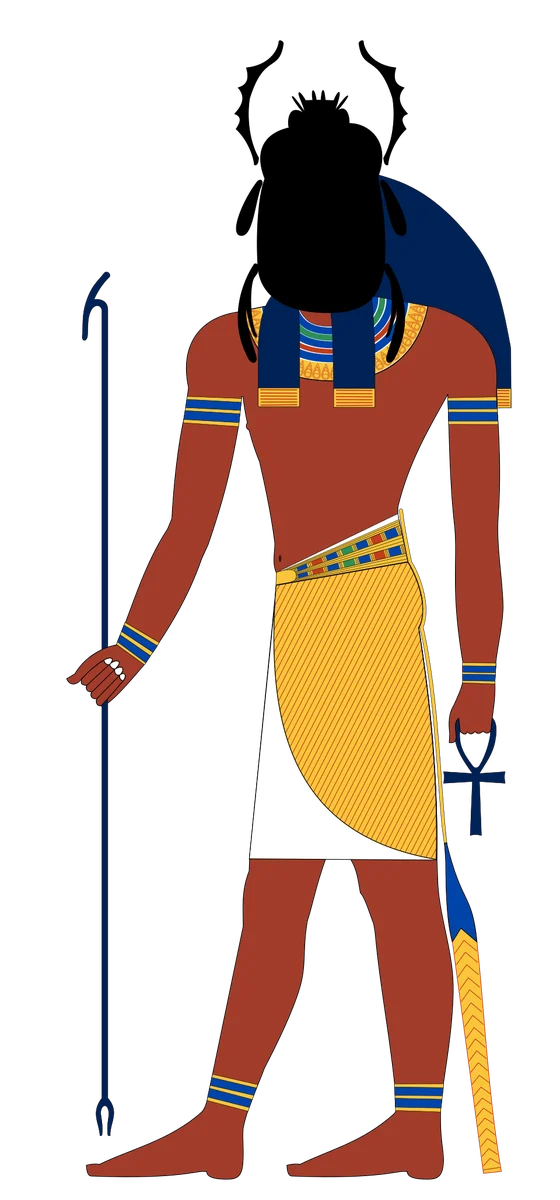
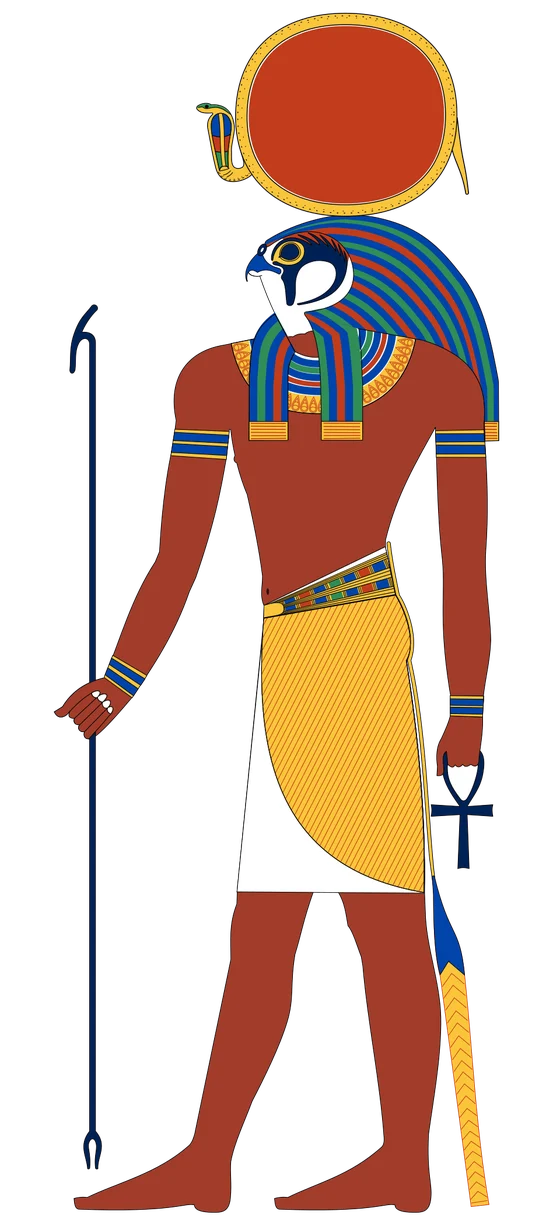
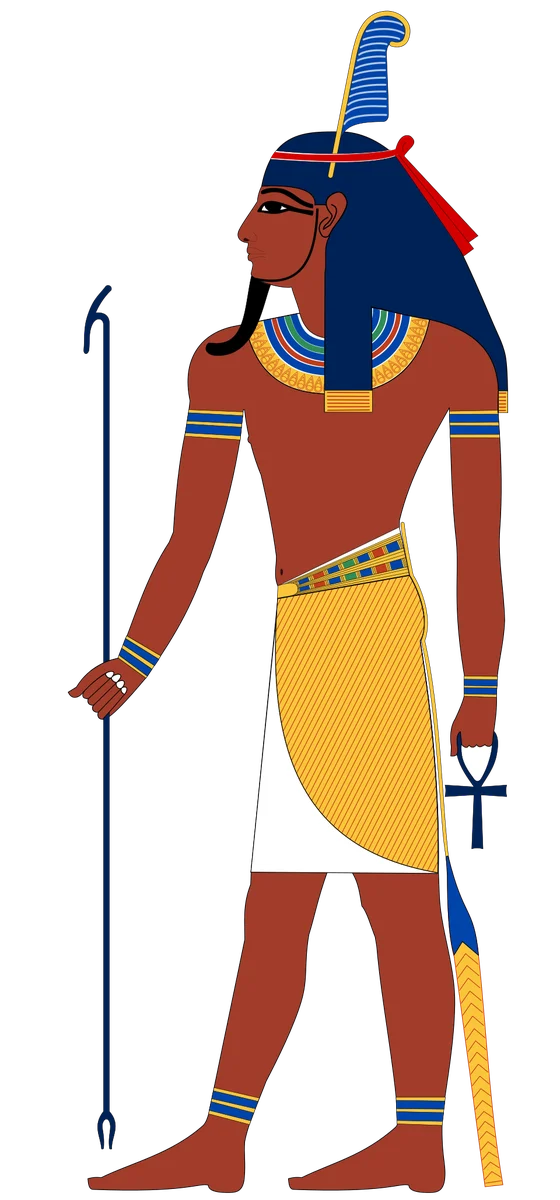
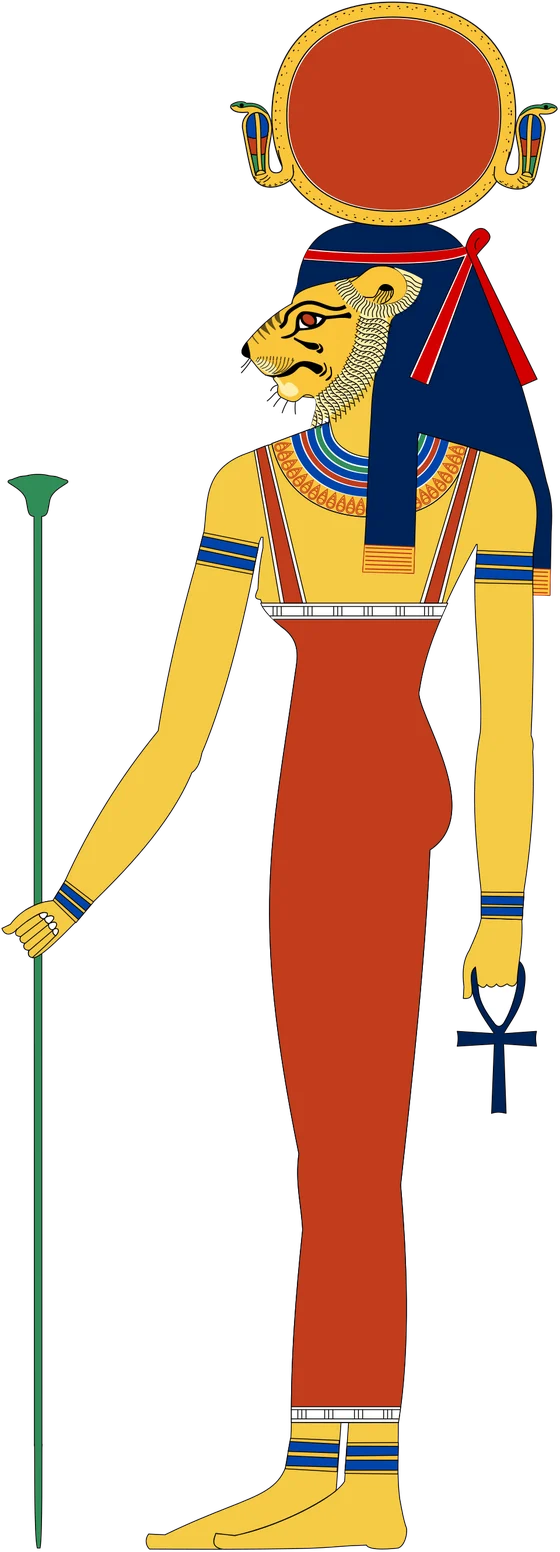
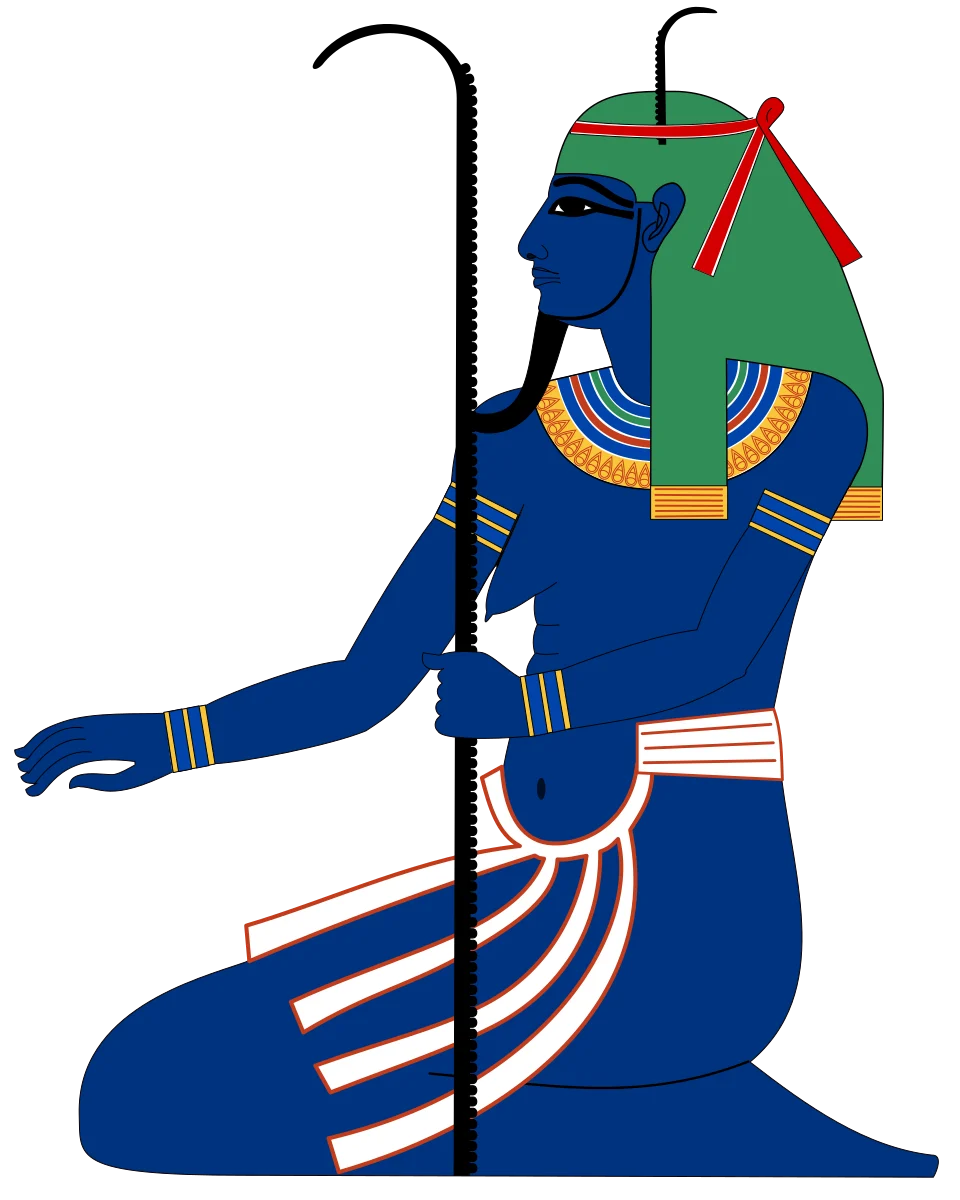
Modern vector interpretation of Egyptian deity iconography, based on historical representations; not a photograph or an original ancient painting. See the credited file description for shared iconography and artistic liberties.
Overview
The creator emerges within Nu’s unformed waters in the creation account. In the destruction narrative, Nu also participates in the divine consultation that precedes Ra’s response to human rebellion. The two appearances show why a watery cosmic condition and a speaking divine figure can be associated in Egyptian narrative. This is not a separate water monster discovered in the Nile, nor a scientific description of the ocean’s geological origin.
In the destruction episode, Ra does not decide alone: he consults a company that includes Nu before sending out his Eye. The primordial water figure thereby moves from the background of creation to the role of a divine elder who advises an existing ruler. The two chapters assign different actions to the associated cosmic presence.
Origins & earliest records
Nu and Nun are grouped as one name. The selected collection prints distinct creation and destruction witnesses, so their roles are described with chapter context.
Records & interpretation
The selected attestation is Creation narrative and destruction of mankind, Nu in Budge’s translated collection. It documents a textual or ritual representation; commentary and later classical accounts are labeled where used. It does not establish zoological existence, a first oral telling, or a uniform belief shared by all Egyptians.
In the literature
“I myself raised them up from out of Nu”
History of Creation—A; paragraph beginning “[These are] the words which the god Neb-er-tcher spake after he…” · E. A. Wallis Budge
The creation narrative situates the creator’s first acts in Nu’s inert watery existence before earth or a standing-place is available.
Selected bibliography
Documented works and useful reading. This is not a list of every appearance.
- 01
Legends of the Gods: The Egyptian Texts
Selected witness: Creation narrative and destruction of mankind, Nu. Historical translation and commentary; not an exhaustive bibliography.
- 02
Legends of the Gods: The Egyptian Texts, edited with Translations
London,1912; historical English text edited by E.A.WallisBudge. Ancient narrative/ritual translation, separate from modern introduction and footnotes.
Family & connections
A source-supported family tree or inspiration record has not yet been compiled for this profile. Related reading below indicates a connection in subject matter, not a proven lineage or creative influence.
Located primary passages
Specific passages supporting details in this entry, grouped by their published witness.
Legends of the Gods: The Egyptian Texts
London,1912; historical English text edited by E.A.WallisBudge. Ancient narrative/ritual translation, separate from modern introduction and footnotes.
- The creation narrative situates the creator’s first acts in Nu’s inert watery existence before earth or a standing-place is available.
Specific ancient textual version in a historical English witness; names Uatchet/Nekhebet/Seb/Nu are historical renderings, not separate beings. Plutarch’s version and bracketed restorations must not be universalized. Ritual speech is literary evidence, not an instruction to perform healing or protective practices.
Encyclopedia background
An additional attributed reference, separate from the editorial profile above.
Read the open encyclopedia overview
A nun is a woman who vows to dedicate her life to prayer, religious service and contemplation, typically living under vows of poverty, chastity, and obedience in the enclosure of a monastery or convent. The term is often used interchangeably with religious sisters, who do take simple vows but live an active vocation of prayer and charitable work in the wider society.
In Christianity, nuns are found in the Catholic, Oriental Orthodox, Eastern Orthodox, Lutheran, and Anglican and some Presbyterian traditions, as well as other Christian denominations. In the Buddhist tradition, female monastics are known as Bhikkhuni, and take several additional vows compared to male monastics (bhikkhus). Nuns are most common in Mahayana Buddhism, but have more recently become more prevalent in other traditions.
Text from Wikipedia contributors, “Nun”. CC BY-SA 4.0. Extracted introduction; formatting changed. Retrieved 5 October 2026. The source article may have changed since retrieval.
References
Sources supporting this profile. Linked pages have their own scope and editorial standards.
- Primary-text translation and historical commentaryLegends of the Gods — Creation narrative and destruction of mankind, NuResearch access: 2026-10-05
Image credits
Thematic illustrationNun
Modern vector interpretation of Egyptian deity iconography, based on historical representations; not a photograph or an original ancient painting. See the credited file description for shared iconography and artistic liberties.