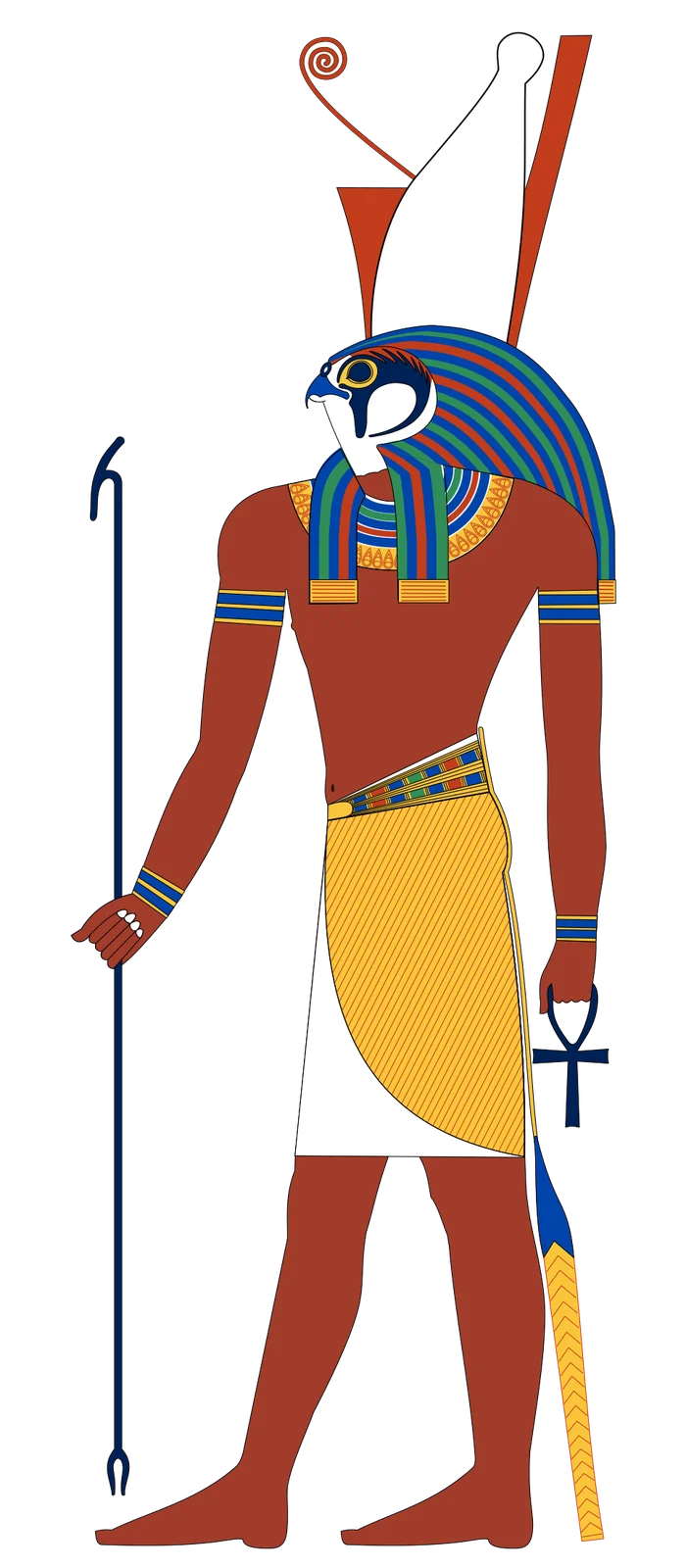
Horus
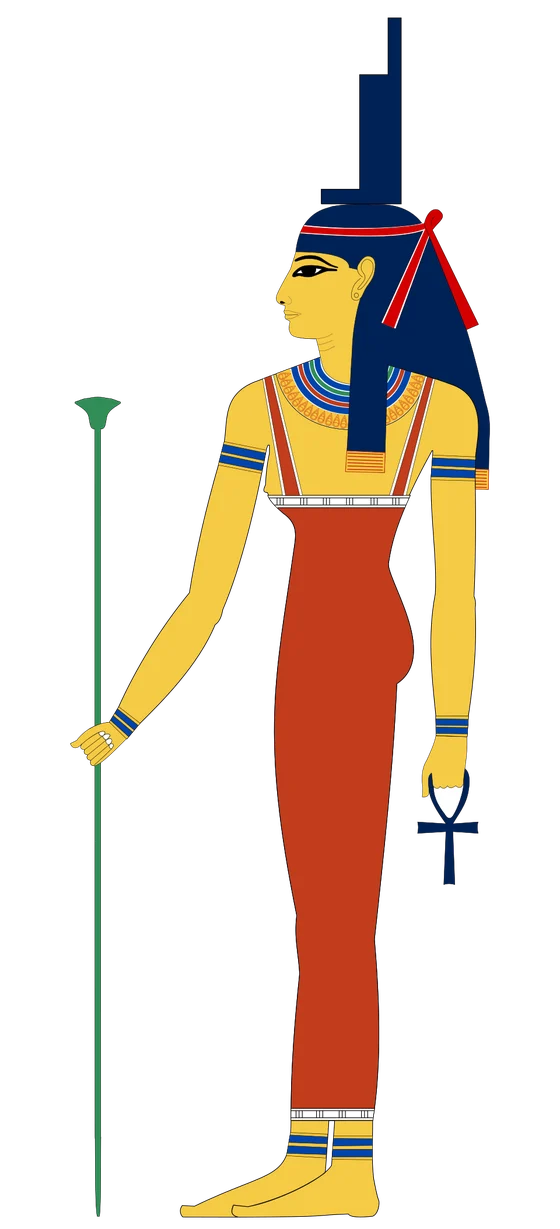
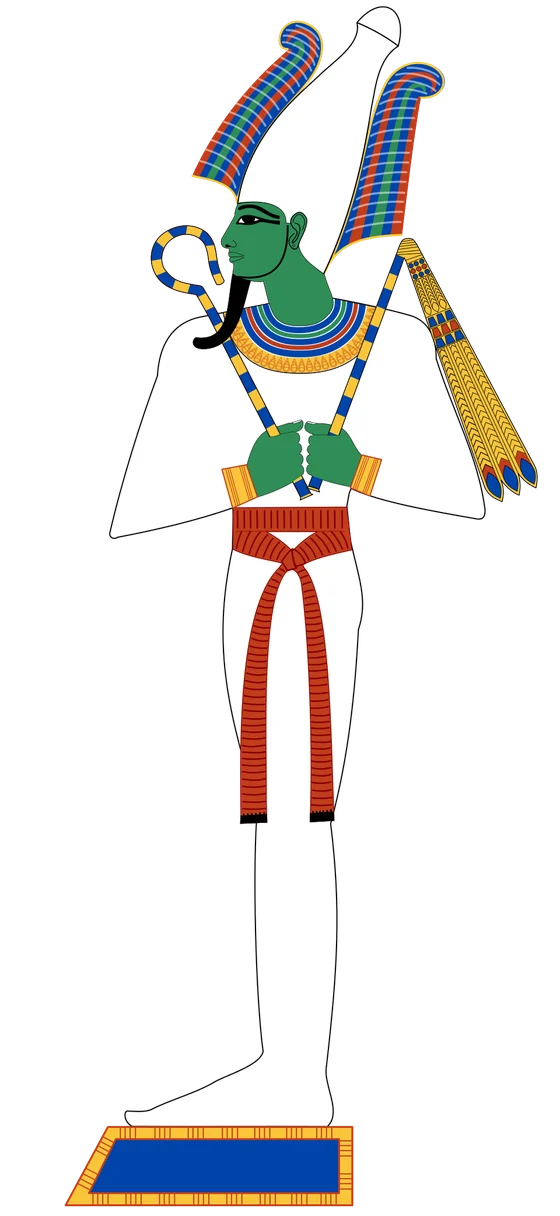
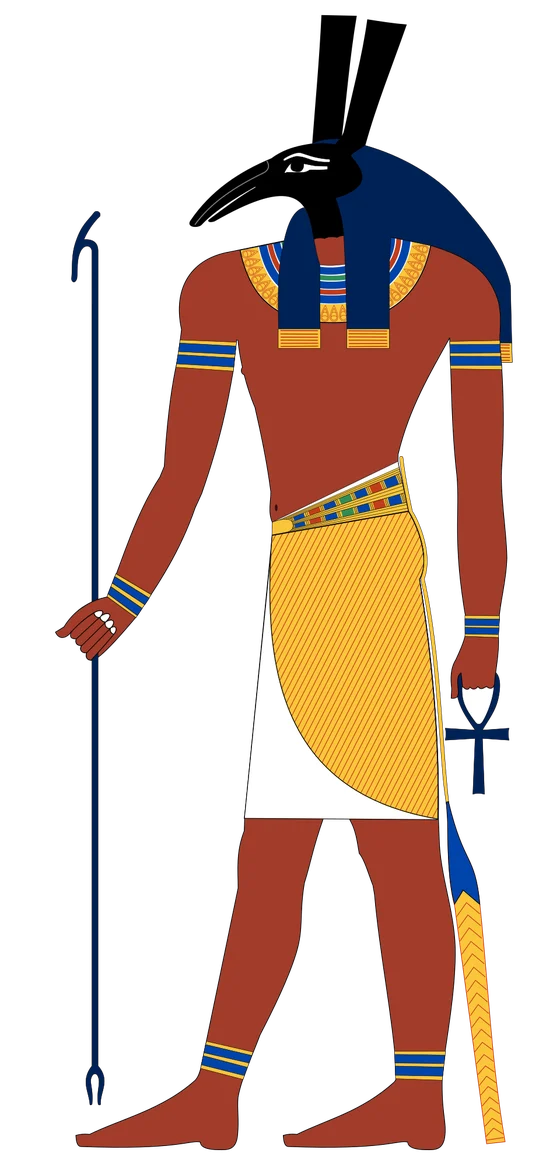
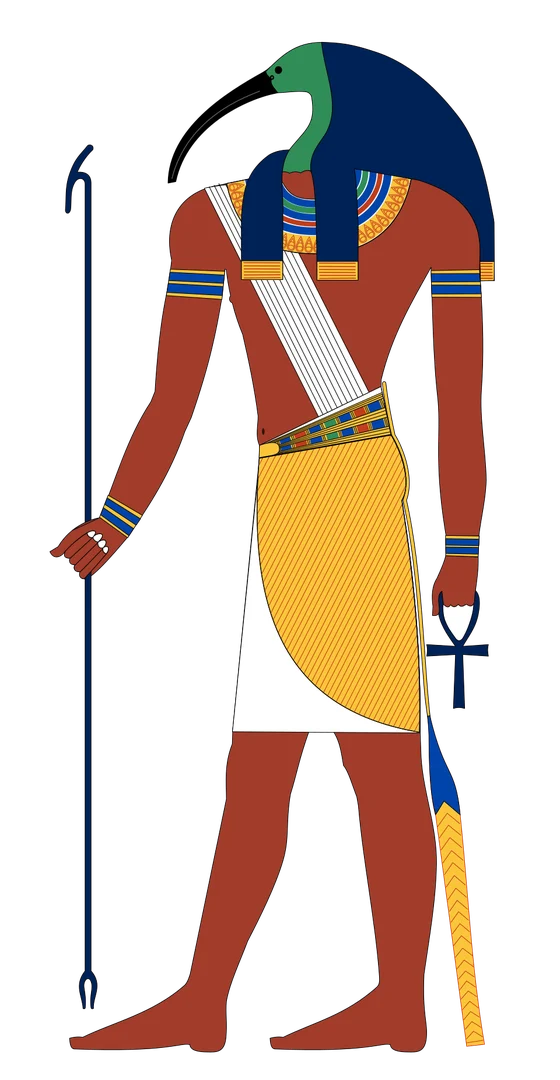
Modern vector interpretation of Egyptian deity iconography, based on historical representations; not a photograph or an original ancient painting. See the credited file description for shared iconography and artistic liberties.
Overview
Horus of Behutet fights the enemies of Ra in the winged-disk story, while Horus the child of Isis suffers poisoning in a separate protective narrative. Their shared name does not make the episodes successive stages of one uncontested biography. The selected texts connect divine combat, inheritance and healing. This profile groups the associated witnesses for orientation, while retaining the difference between the adult local defender and the vulnerable child.
The British Museum’s limestone figure EA 51100 represents a falcon-headed Horus wearing Roman military dress. His feathering merges visually with armor scales, while a belt and cloak mark the body as a soldier. This later material form differs from both the poisoned child and the winged-disk defender, showing how representation changes with context.
Origins & earliest records
The collection’s separate chapters preserve distinct Horus material. Local epithets are not split into extra profiles to increase the creature count.
Records & interpretation
The selected attestation is Horus of Edfu; origin, death and resurrection of Horus in Budge’s translated collection. It documents a textual or ritual representation; commentary and later classical accounts are labeled where used. It does not establish zoological existence, a first oral telling, or a uniform belief shared by all Egyptians. A separate museum object/catalogue supports the represented animal form and visual details; this is material/iconographic evidence, not an observation of a living supernatural organism.
In the literature
“Horus liveth for his mother Isis”
The Death and Resurrection of Horus; concluding Thoth speech near numberedline251; paragraph beginning “Then spake Thoth unto the great gods who dwell in the…” · E. A. Wallis Budge
After the protective spells, Horus is declared alive and the poison powerless, permitting Ra’s boat to continue its journey.
Selected bibliography
Documented works and useful reading. This is not a list of every appearance.
- 01
Legends of the Gods: The Egyptian Texts
Selected witness: Horus of Edfu; origin, death and resurrection of Horus. Historical translation and commentary; not an exhaustive bibliography.
- 02
Legends of the Gods: The Egyptian Texts, edited with Translations
London,1912; E.A.WallisBudge historical English translations; narrative body distinguished from editorial introduction and footnotes.
Family & connections
A source-supported family tree or inspiration record has not yet been compiled for this profile. Related reading below indicates a connection in subject matter, not a proven lineage or creative influence.
Located primary passages
Specific passages supporting details in this entry, grouped by their published witness.
Legends of the Gods: The Egyptian Texts
London,1912; E.A.WallisBudge historical English translations; narrative body distinguished from editorial introduction and footnotes.
- After the protective spells, Horus is declared alive and the poison powerless, permitting Ra’s boat to continue its journey.
Budge’s historical translation of a particular ancient text; uncertain readings, lacunae and variant names retained. Mythic healing claims are narrative content, not medical instructions.
Encyclopedia background
An additional attributed reference, separate from the editorial profile above.
Read the open encyclopedia overview
Horus (), also known as Heru, Har, Her, or Hor () in Ancient Egyptian, is one of the most significant ancient Egyptian deities who served many functions, most notably as the god of kingship, healing, protection, the sun, and the sky. He was worshipped from at least the late prehistoric Egypt until the Ptolemaic Kingdom and Roman Egypt. Different forms of Horus are recorded in history, and these are treated as distinct gods by Egyptologists. These various forms may be different manifestations of the same multi-layered deity in which certain attributes or syncretic relationships are emphasized, not necessarily in opposition but complementary to one another, consistent with how the Ancient Egyptians viewed the multiple facets of reality. He was most often depicted as a falcon, most likely a lanner falcon or peregrine falcon, or as a man with a falcon head.
The earliest recorded form of Horus is the tutelary deity of Nekhen in Upper Egypt, who is the first known national god, specifically related to the ruling pharaoh who in time came to be regarded as a manifestation of Horus in life and Osiris in death. The most commonly encountered family relationship describes Horus as the son of Isis and Osiris, and he plays a key role in the Osiris myth as Osiris's heir and the rival to Set, the murderer and brother of Osiris. In another tradition, Hathor is regarded as his mother and sometimes as his wife.
Practicing interpretatio romana, Claudius Aelianus wrote that Egyptians called the god Apollo "Horus" in their own language. However, Plutarch, elaborating further on the same tradition reported by the Greeks, specified that the one "Horus" whom the Egyptians equated with the Greek Apollo was in fact "Horus the Elder", a primordial form of Horus whom Plutarch distinguishes from both Horus and Harpocrates.
Text from Wikipedia contributors, “Horus”. CC BY-SA 4.0. Extracted introduction; formatting changed. Retrieved 5 October 2026. The source article may have changed since retrieval.
References
Sources supporting this profile. Linked pages have their own scope and editorial standards.
- Primary-text translation and historical commentaryLegends of the Gods — Horus of Edfu; origin, death and resurrection of HorusResearch access: 2026-10-05
- Museum object catalogueBritish Museum — limestone Horus figure EA 51100Research access: 2026-10-05
Image credits
Thematic illustrationHorus
Modern vector interpretation of Egyptian deity iconography, based on historical representations; not a photograph or an original ancient painting. See the credited file description for shared iconography and artistic liberties.