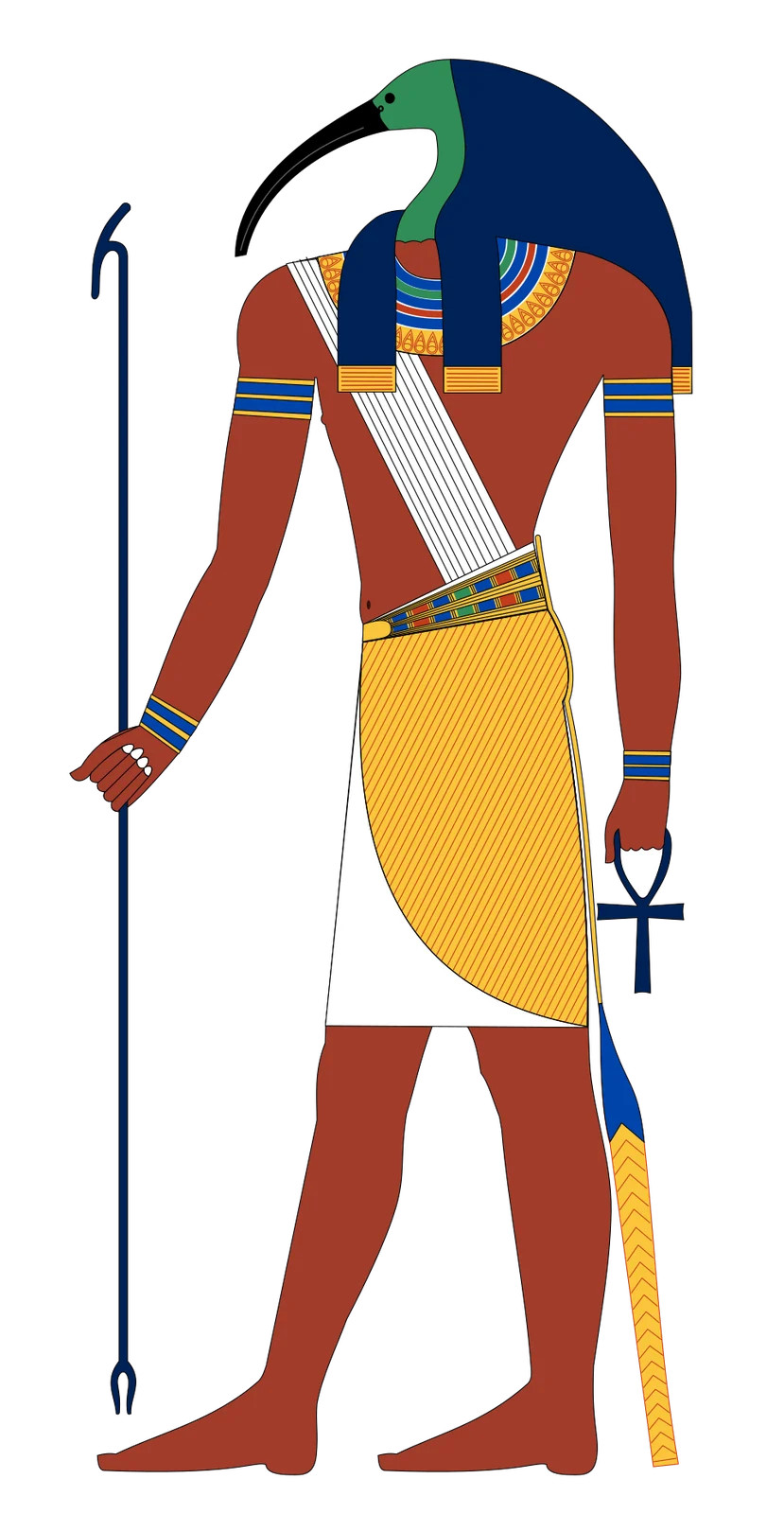
Thoth
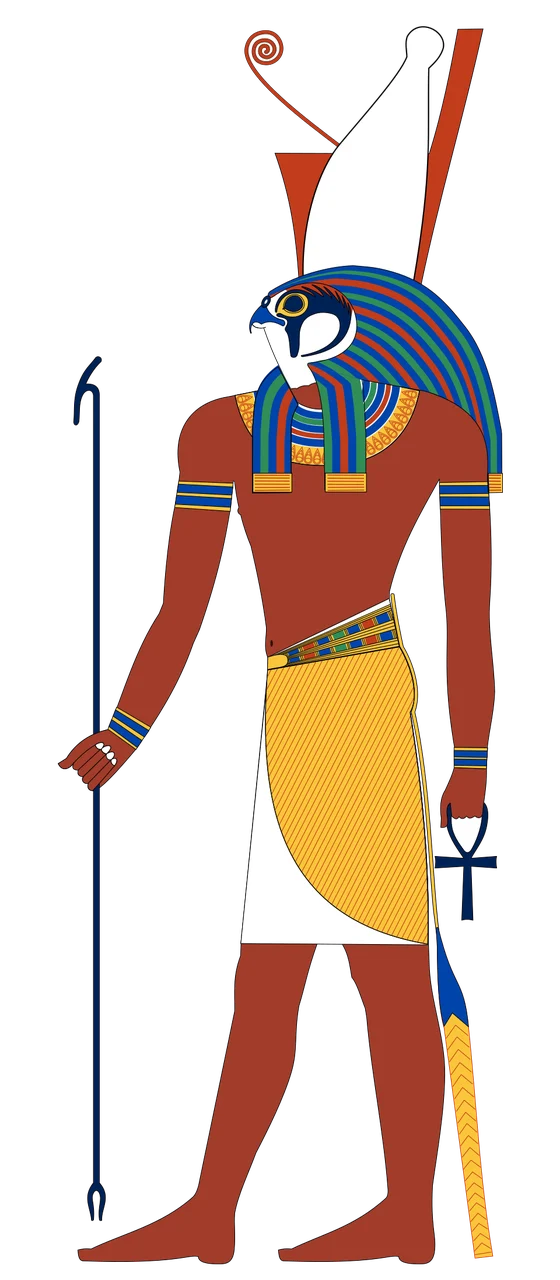
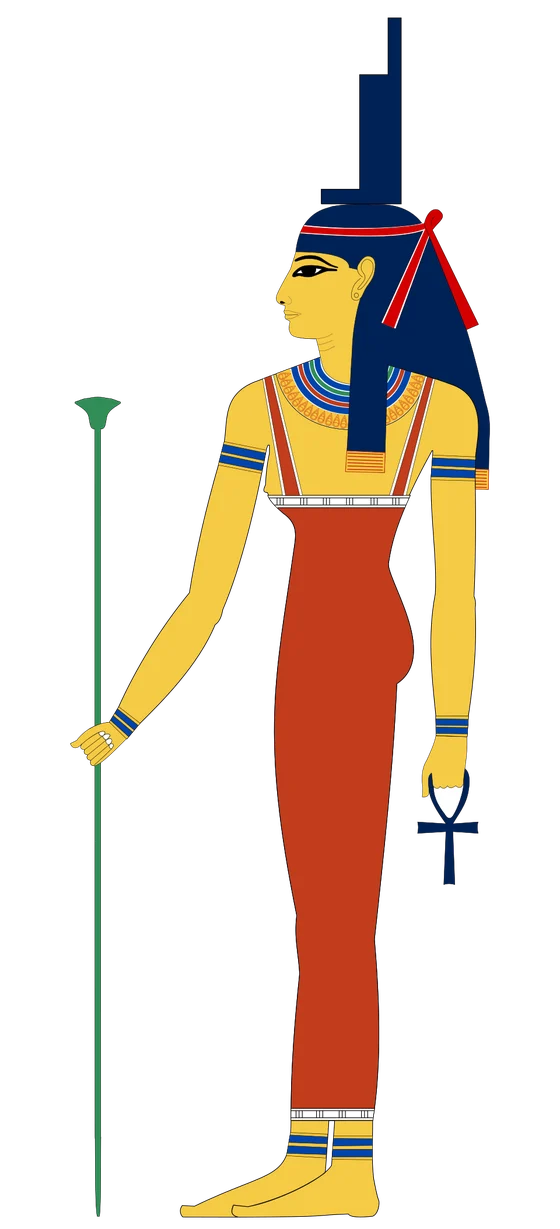
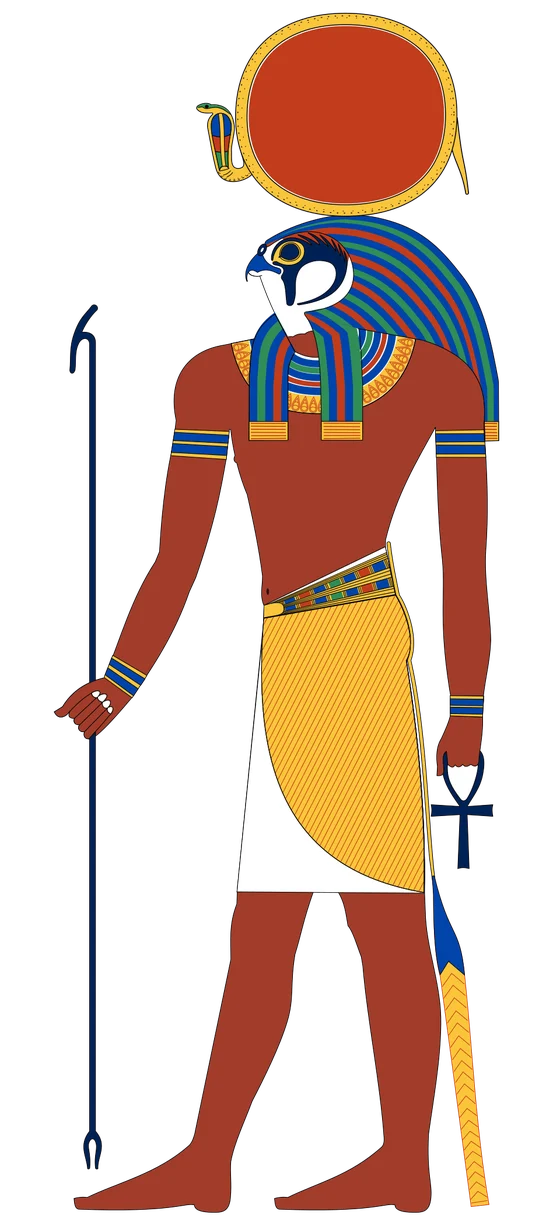
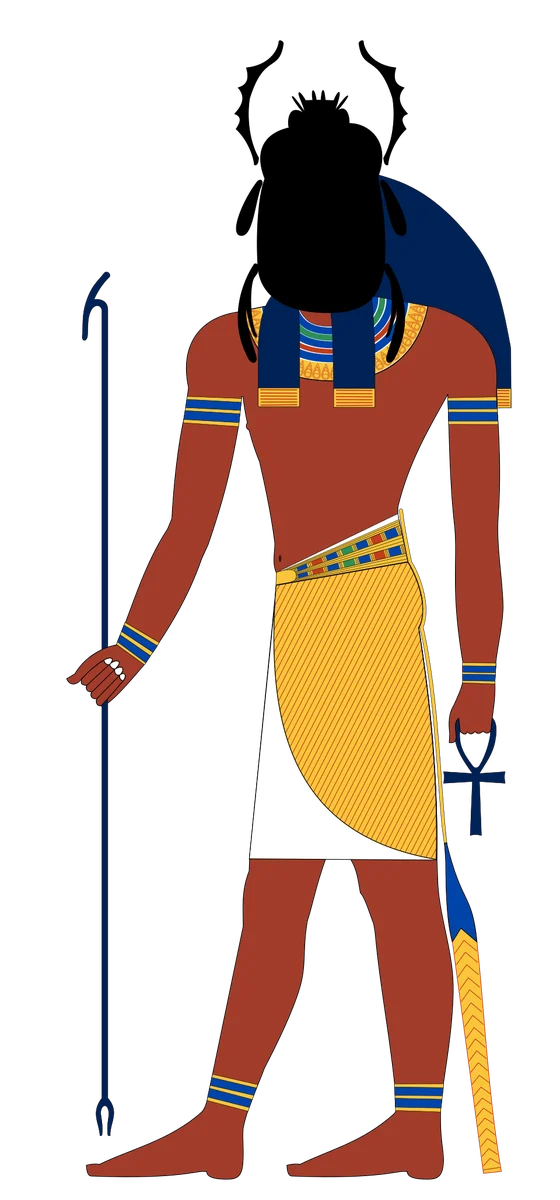
Modern vector interpretation of Egyptian deity iconography, based on historical representations; not a photograph or an original ancient painting. See the credited file description for shared iconography and artistic liberties.
Overview
Thoth communicates divine decisions, identifies places and forms in the winged-disk narrative, and intervenes when Horus is poisoned. In the healing episode his arrival interrupts the solar boat’s progress until the child can be restored. The text treats language as an effective power rather than decoration: naming, command and cure shape events. This entry follows those actions and does not append unsupported claims about every later association with writing or science.
Museo Egizio’s faience amulet Cat. 1022 supplies a material link with the ibis form. Its catalogue connects Thoth with recording the weighing of a deceased person’s heart before Osiris. The healer in the Horus episode and the funerary recorder are thus attested through different witnesses, rather than one action inferred from the other.
Origins & earliest records
Several translated narratives establish Thoth’s roles. They come from distinct Egyptian witnesses and should not be merged into a single sequential biography.
Records & interpretation
The selected attestation is Destruction of mankind; Horus and winged disk; healing of Horus in Budge’s translated collection. It documents a textual or ritual representation; commentary and later classical accounts are labeled where used. It does not establish zoological existence, a first oral telling, or a uniform belief shared by all Egyptians. A separate museum object/catalogue supports the represented animal form and visual details; this is material/iconographic evidence, not an observation of a living supernatural organism.
In the literature
“I have come from heaven to make protection of Horus”
The Death and Resurrection of Horus / A Hymn of Praise to Horus, lines following101–102; paragraph beginning “"I am Thoth, I have come from heaven to make protection…” · E. A. Wallis Budge
Thoth speaks protective formulas to drive the scorpion poison out of Horus, identifying divine protection for the child’s body.
Selected bibliography
Documented works and useful reading. This is not a list of every appearance.
- 01
Legends of the Gods: The Egyptian Texts
Selected witness: Destruction of mankind; Horus and winged disk; healing of Horus. Historical translation and commentary; not an exhaustive bibliography.
- 02
Legends of the Gods: The Egyptian Texts, edited with Translations
London,1912; E.A.WallisBudge historical English translations; narrative body distinguished from editorial introduction and footnotes.
Family, evolution & connections
Sacred ibis (Threskiornis aethiopicus)
Thoth is represented with an ibis head in the Met’s bronze figure, while the museum’s Egyptian bestiary identifies the sacred ibis associated with the deity. Animal Diversity Web describes the living sacred ibis under Threskiornis aethiopicus. This connects an attested divine animal representation to its zoological referent; it does not turn the god into a biological species or explain every representation of Thoth.
Located primary passages
Specific passages supporting details in this entry, grouped by their published witness.
Legends of the Gods: The Egyptian Texts
London,1912; E.A.WallisBudge historical English translations; narrative body distinguished from editorial introduction and footnotes.
- Thoth speaks protective formulas to drive the scorpion poison out of Horus, identifying divine protection for the child’s body.
Budge’s historical translation of a particular ancient text; uncertain readings, lacunae and variant names retained. Mythic healing claims are narrative content, not medical instructions.
Encyclopedia background
An additional attributed reference, separate from the editorial profile above.
Read the open encyclopedia overview
Thoth (from Koine Greek: Θώθ Thṓth, borrowed from Coptic: Ⲑⲱⲟⲩⲧ Thōout, Ancient Egyptian: Ḏḥwtj, the reflex of ḏḥwtj "[he] is like the ibis") is an ancient Egyptian deity. In art, he was often depicted as a man with the head of an ibis or a baboon, animals sacred to him. His feminine counterpart is Seshat, and his wife is Ma'at. He is the god of the Moon, wisdom, knowledge, writing, hieroglyphs, science, magic, art, and judgement.
Thoth's chief temple was located in the city of Hermopolis (Ancient Egyptian: ḫmnw /χaˈmaːnaw/, Egyptological pronunciation: Khemenu, Coptic: Ϣⲙⲟⲩⲛ Shmun). Later known as el-Ashmunein in Egyptian Arabic, the Temple of Thoth was mostly destroyed before the beginning of the Christian era. Its very large pronaos was still standing in 1826, but was demolished and used as fill for the foundation of a sugar factory by the mid-19th century.
Thoth played many vital and prominent roles in Egyptian mythology, such as maintaining the universe, and being one of the two deities (the other being Ma'at) who stood on either side of Ra's solar barque. In the later history of ancient Egypt, Thoth became heavily associated with the arbitration of godly disputes, the arts of magic, the system of writing, and the judgment of the dead.
Text from Wikipedia contributors, “Thoth”. CC BY-SA 4.0. Extracted introduction; formatting changed. Retrieved 5 October 2026. The source article may have changed since retrieval.
References
Sources supporting this profile. Linked pages have their own scope and editorial standards.
- Primary-text translation and historical commentaryLegends of the Gods — Destruction of mankind; Horus and winged disk; healing of HorusResearch access: 2026-10-05
- Museum object catalogueMuseo Egizio — amulet Cat. 1022Research access: 2026-10-05
Image credits
Thematic illustrationThoth
Modern vector interpretation of Egyptian deity iconography, based on historical representations; not a photograph or an original ancient painting. See the credited file description for shared iconography and artistic liberties.