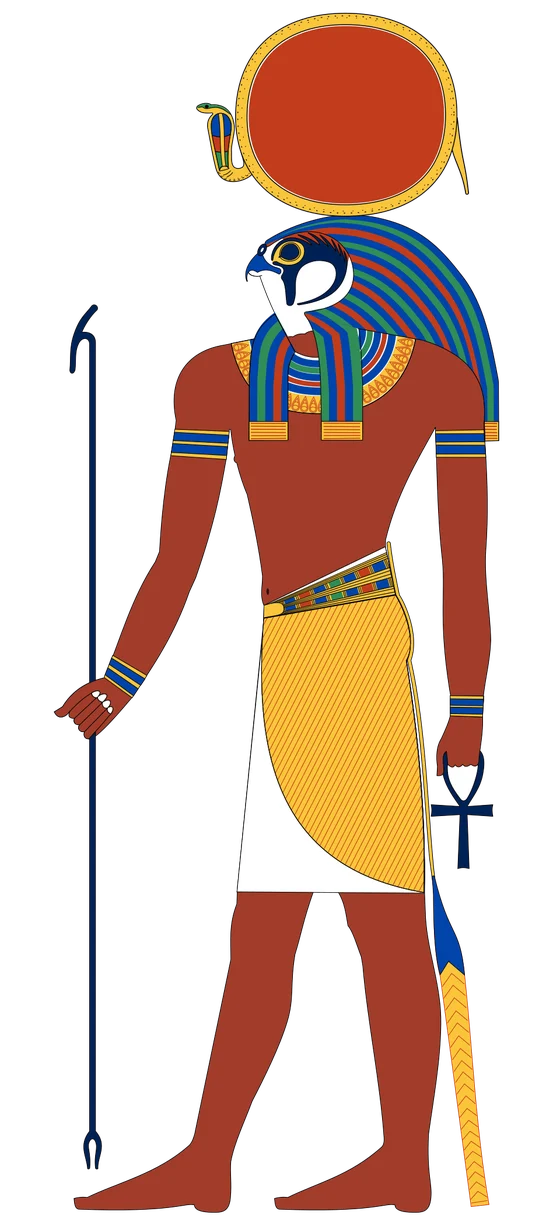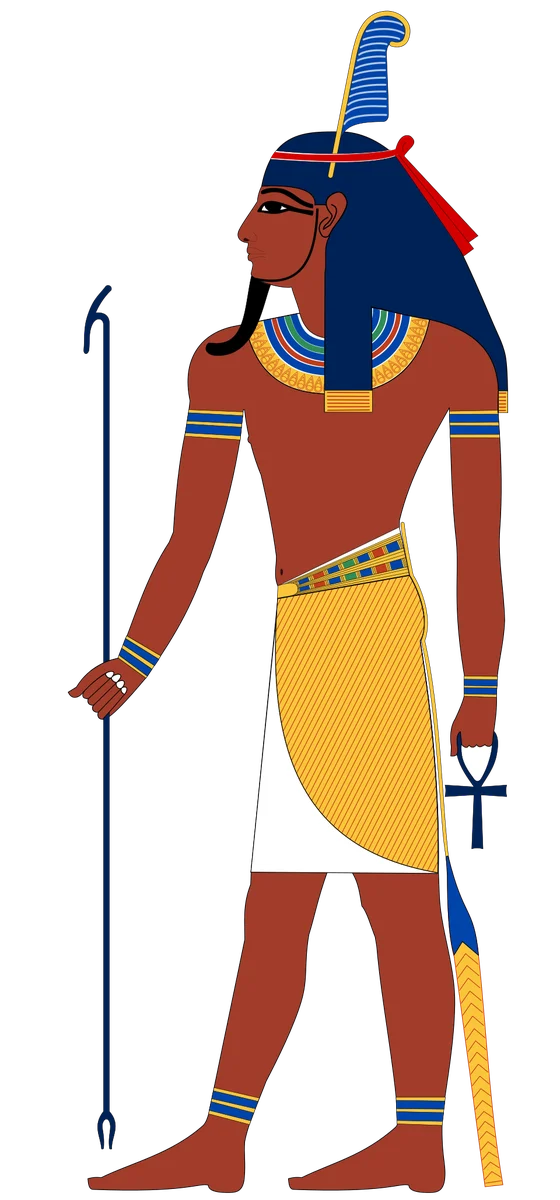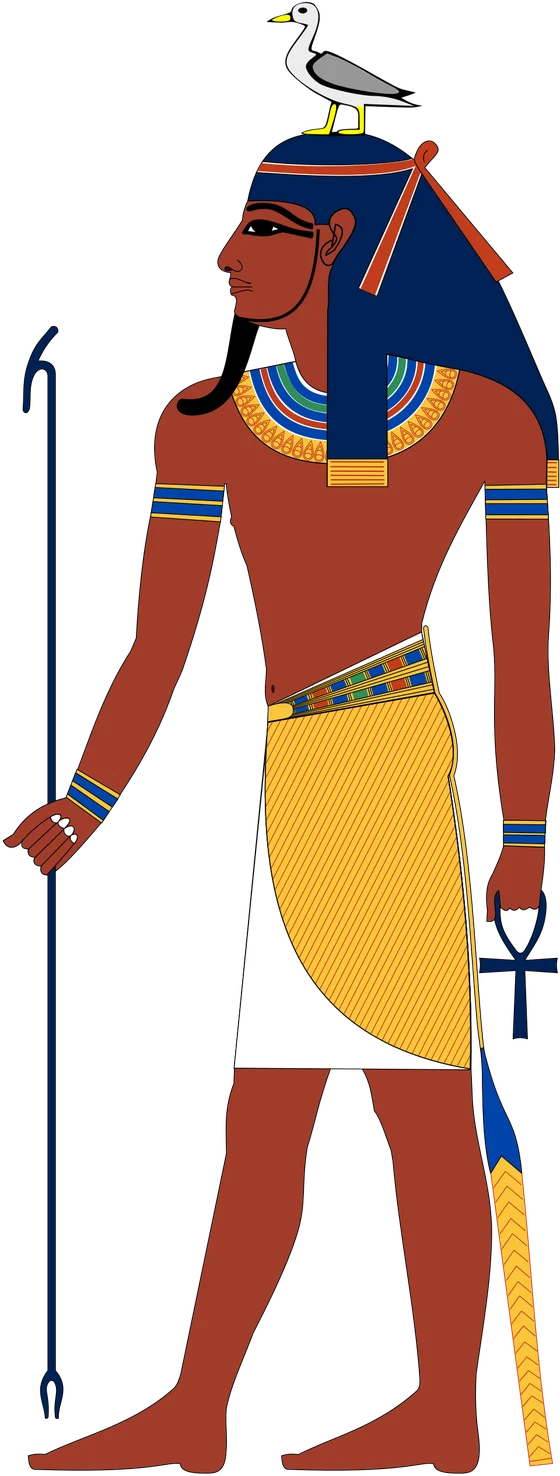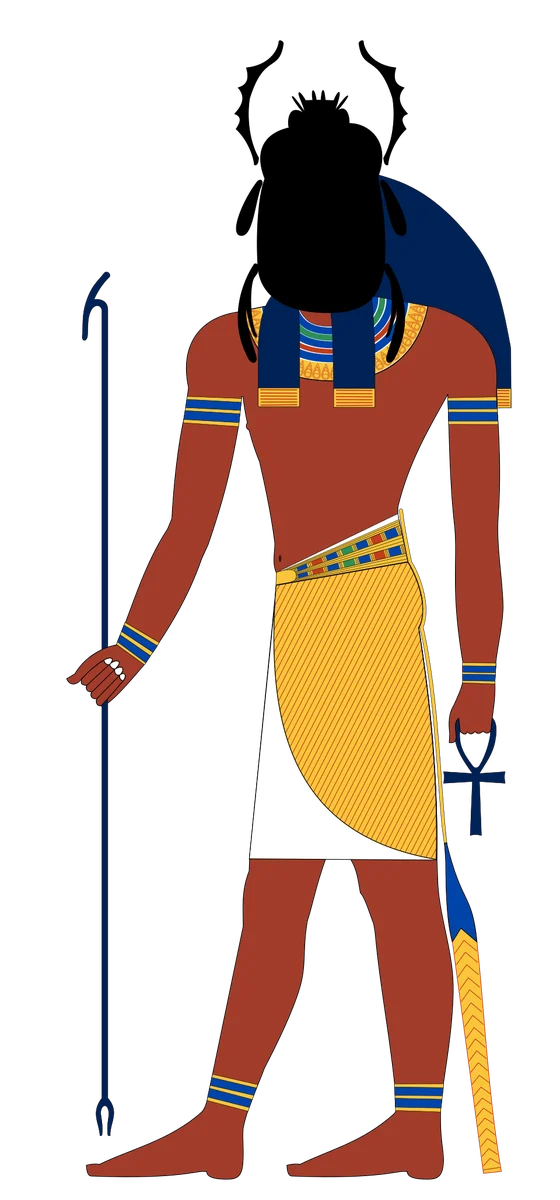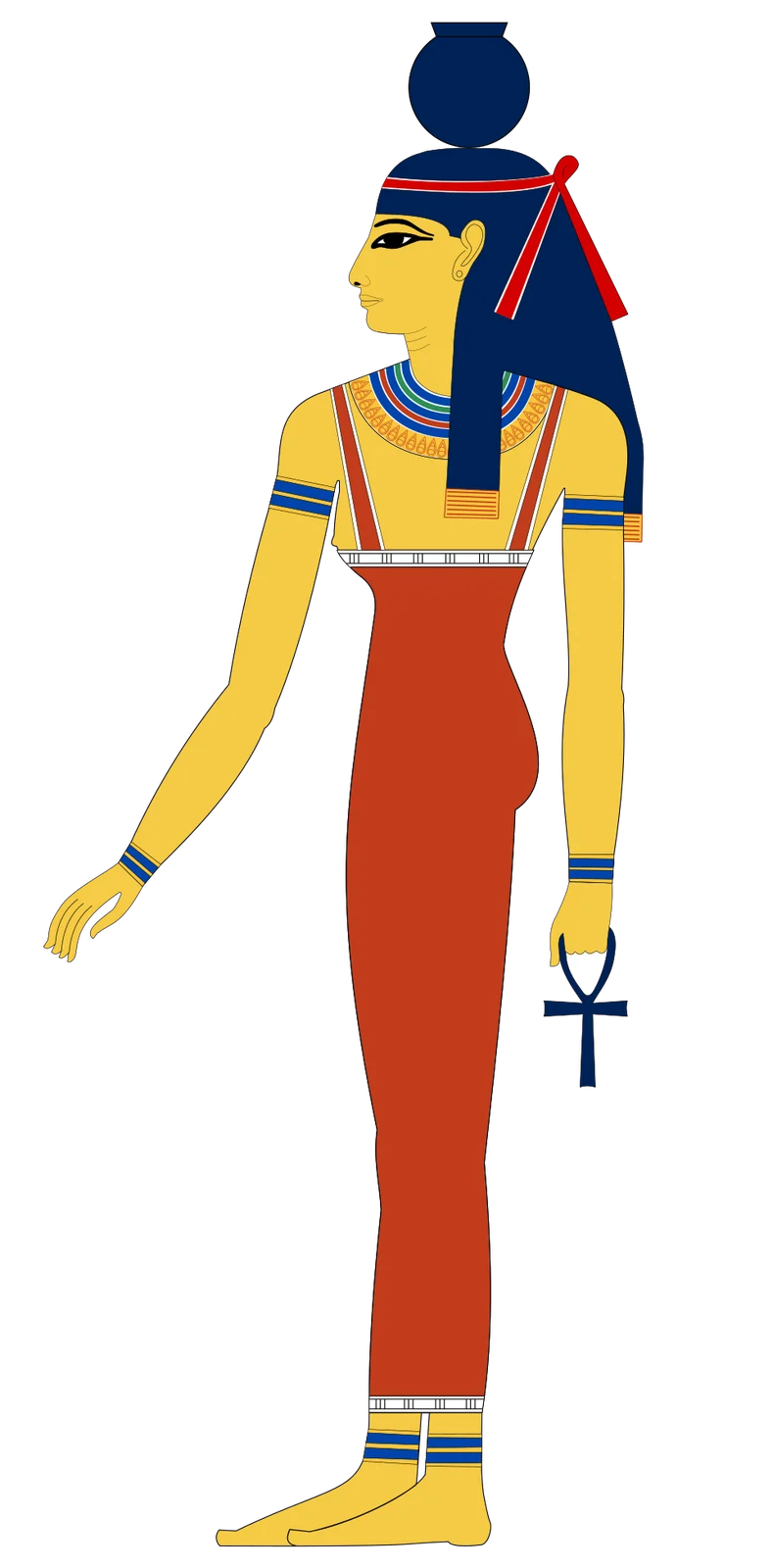
Nut, modern vector interpretation
Modern vector interpretation of Egyptian deity iconography, based on historical representations; not a photograph or an original ancient painting. See the credited file description for shared iconography and artistic liberties.
Overview
Nut participates in the creation genealogy as the sky above Keb and later bears Ra upward in the form of a cow. Shu and other gods help support her, making the heavens a divine body with an organized company of attendants. Her transformations belong to specific ritual and narrative contexts. This profile therefore records both the sky relationship and the heavenly-cow episode without claiming that every depiction of Nut has bovine anatomy.
The cow image is elaborated through a system of attendants rather than left as a vague animal comparison. The edition describes the solar boats beneath her body and the gods holding her legs, with Shu supporting her from below. The resulting scene places divine travel within a bodily sky supported by an organized company.
Origins & earliest records
The cow episode belongs to the destruction-of-mankind material translated in the collection; it is distinct from the creation account.
Records & interpretation
The selected attestation is Creation; destruction of mankind and heavenly cow in Budge’s translated collection. It documents a textual or ritual representation; commentary and later classical accounts are labeled where used. It does not establish zoological existence, a first oral telling, or a uniform belief shared by all Egyptians.
In the literature
“she set the Majesty of Ra upon [her] back”
The Legend of the Destruction of Mankind, ChapterI; paragraph beginning “Then the Majesty of Nu, to son Ra, spake, saying:—"Thou art…” · E. A. Wallis Budge
Nut takes cow form and bears Ra on her back during his departure from humankind; the surrounding translated text has explicit lacunae.
Selected bibliography
Documented works and useful reading. This is not a list of every appearance.
- 01
Legends of the Gods: The Egyptian Texts
Selected witness: Creation; destruction of mankind and heavenly cow. Historical translation and commentary; not an exhaustive bibliography.
- 02
Legends of the Gods: The Egyptian Texts, edited with Translations
London,1912; E.A.WallisBudge historical English translations; narrative body distinguished from editorial introduction and footnotes.
Family, evolution & connections
Textual genealogy: Creation A in Budge's Egyptian text translation
Selected divine generations explicitly enumerated in the translated History of Creation A.
Scroll sideways to see all branches. With a keyboard, focus the tree and use the arrow keys.
- Joint parents: Shu and Tefnut
- Joint parents: Geb (Seb/Keb) and Nut
- Heru-khent-an-maati (Blind Horus in this translation)
Follow the translator's named production of Shu and Tefnut, their joint offspring Geb and Nut, and the latter pair's enumerated children. Paired nodes identify two parents; they are not single organisms. A divine genealogy in one translated recension, not biological evolution or a harmonized account of all Egyptian traditions. Creation B differs. The source's Heru-khent-an-maati, glossed Blind Horus, remains an unlinked named node to avoid confusing him with later Horus parentage. Budge's historical translation and commentary are not a modern consensus edition.
Isis
The translated History of Creation A lists Isis among the offspring brought forth by Nut and Geb. This edge is a selected parental relationship from that named text, with both parents acknowledged. It does not establish a universally agreed genealogy across Egyptian regions, periods and recensions, or turn a divine account into biological ancestry.
Located primary passages
Specific passages supporting details in this entry, grouped by their published witness.
Legends of the Gods: The Egyptian Texts
London,1912; E.A.WallisBudge historical English translations; narrative body distinguished from editorial introduction and footnotes.
- Nut takes cow form and bears Ra on her back during his departure from humankind; the surrounding translated text has explicit lacunae.
Budge’s historical translation of a particular ancient text; uncertain readings, lacunae and variant names retained. Mythic healing claims are narrative content, not medical instructions.
References
Sources supporting this profile. Linked pages have their own scope and editorial standards.
- Primary-text translation and historical commentaryLegends of the Gods — Creation; destruction of mankind and heavenly cowResearch access: 2026-10-05
Image credits
Thematic illustrationNut, modern vector interpretation
Modern vector interpretation of Egyptian deity iconography, based on historical representations; not a photograph or an original ancient painting. See the credited file description for shared iconography and artistic liberties.