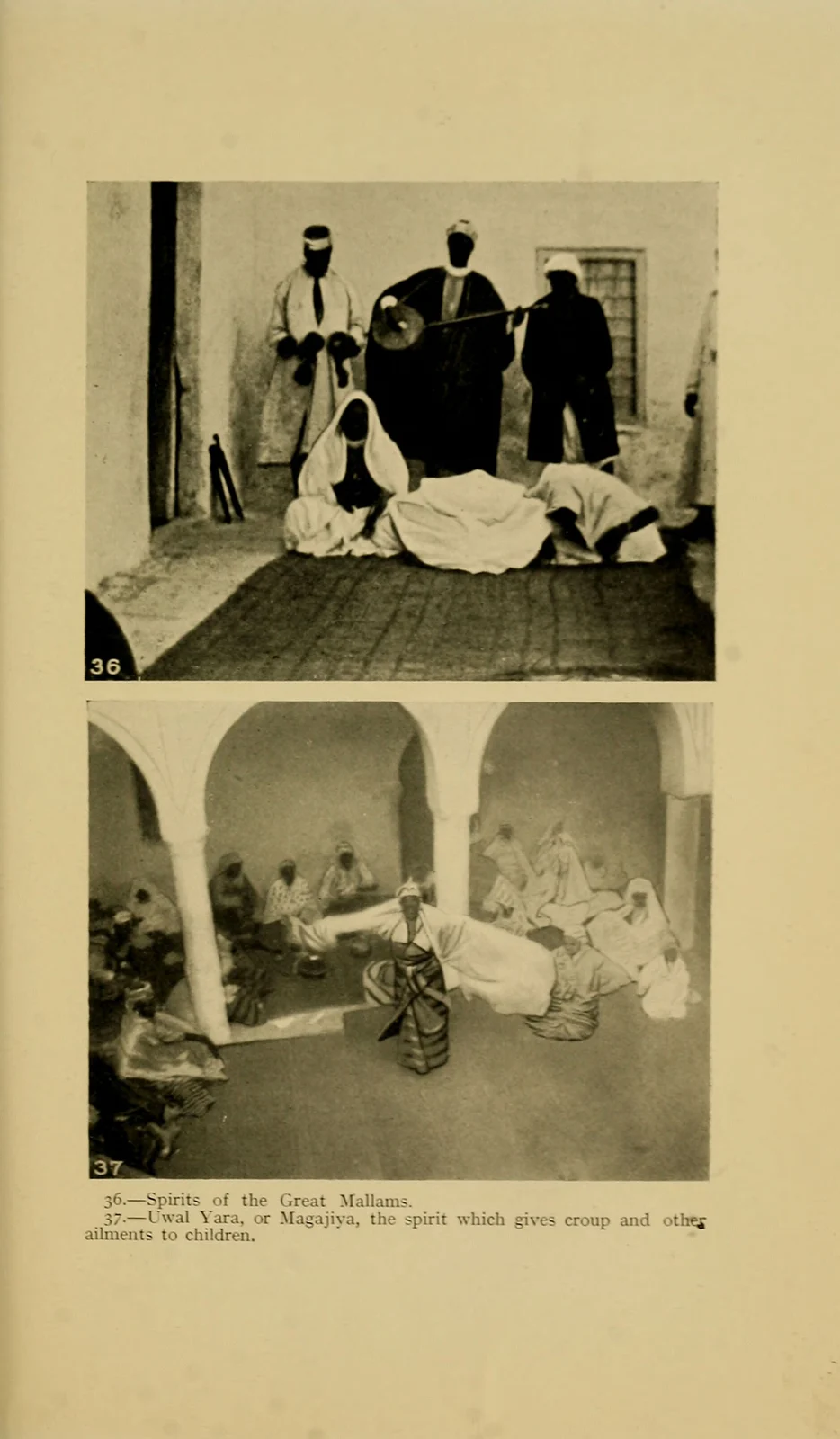
Nana Magajiya/Uwal Yara enacted by human participants in photograph37, The Ban of the Bori, 1914
The lower photograph, numbered37, is captioned Uwal Yara or Magajiya. It records a human performance of the named spirit, rather than a photograph of a supernatural body. The original caption’s illness claims are historical attributed beliefs.
Overview
Nana Magajiya, also called Uwal Yara and Fattatakko, is a formidable spirit whose title Mother of Children contrasts with her hostile treatment of them. Tremearne’s account says she nurses and kills several spirit children; her only child, Haukachi, is removed by her brother Yerima for safety. She is the wife of Geshe but is described as stronger through her fierce temper and will. The translated song gives her a large child-carrying cloth, an ample child-bearing belly and a beating club. Elephant comparisons convey her forcefulness; they do not establish an elephant-headed anatomical form.
The dance begins with circling, then turns to violent agitation: the mount attempts to tear clothing and body, particularly breasts and mouth. The account also describes hostility toward Haukachi’s human lovers. In the recorded illness narrative, Yerima distracts her by scolding so that a threatened child can be moved away, paralleling Haukachi’s own removal. Other rites ask mercy when a child has unknowingly offended her. The chapter’s disease and recovery claims are historical religious interpretations, not medical instructions. Tremearne tentatively compares her with Um Es Sibyan, but this profile preserves the local named witness without asserting a settled equivalence across traditions.
Origins & earliest records
Tremearne’s historical collection combines accounts and ritual observations in Hausa-associated North African communities and northern Nigeria. Its evolutionary and comparative origin theories are not adopted.
Records & interpretation
The Ban of the Bori, pp 301–303. Named representations, translated songs and competing informant explanations retained as historical evidence; collector’s speculative cross-cultural equivalences are not asserted.
Additional images
 View larger
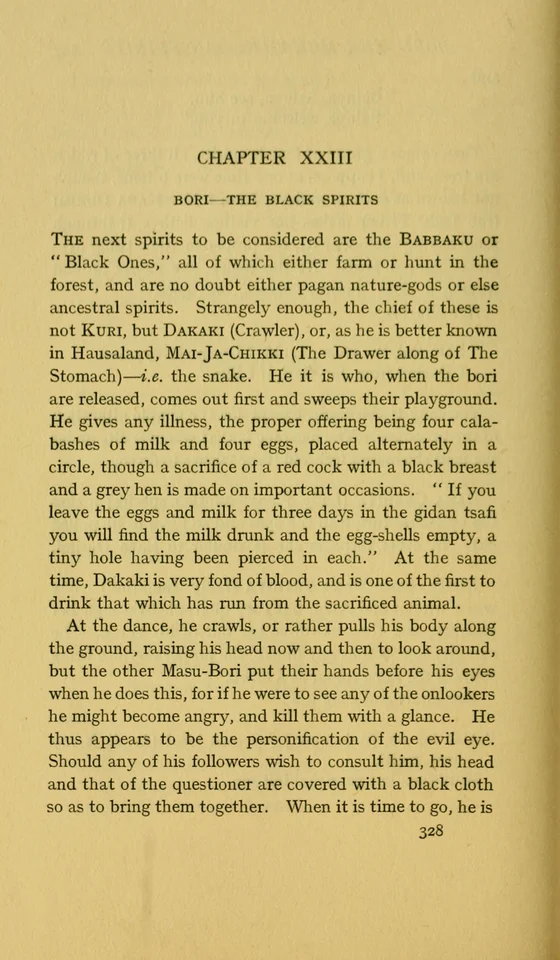
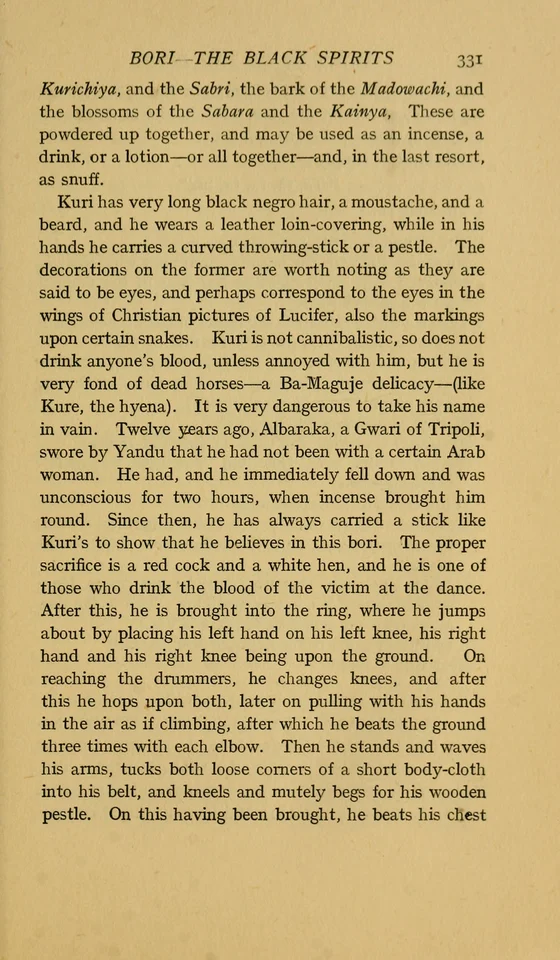
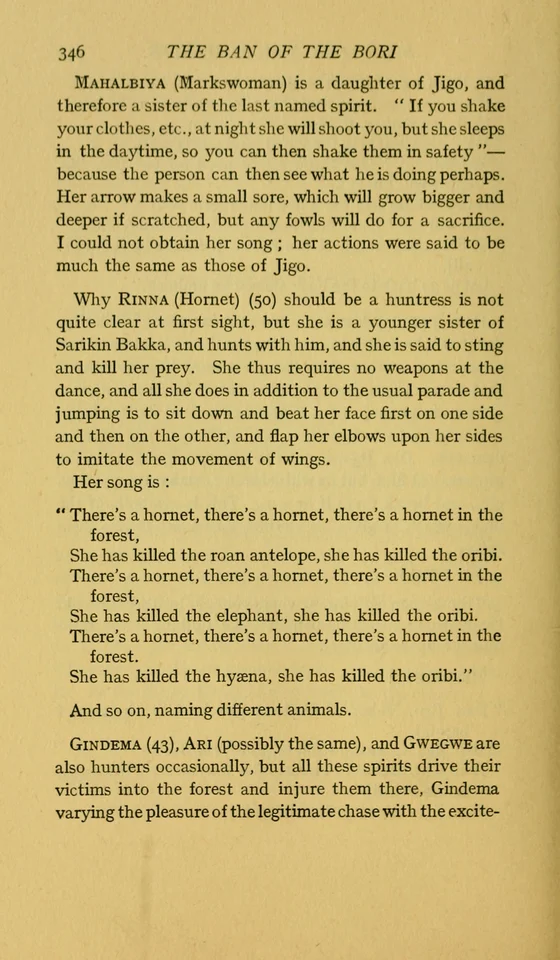
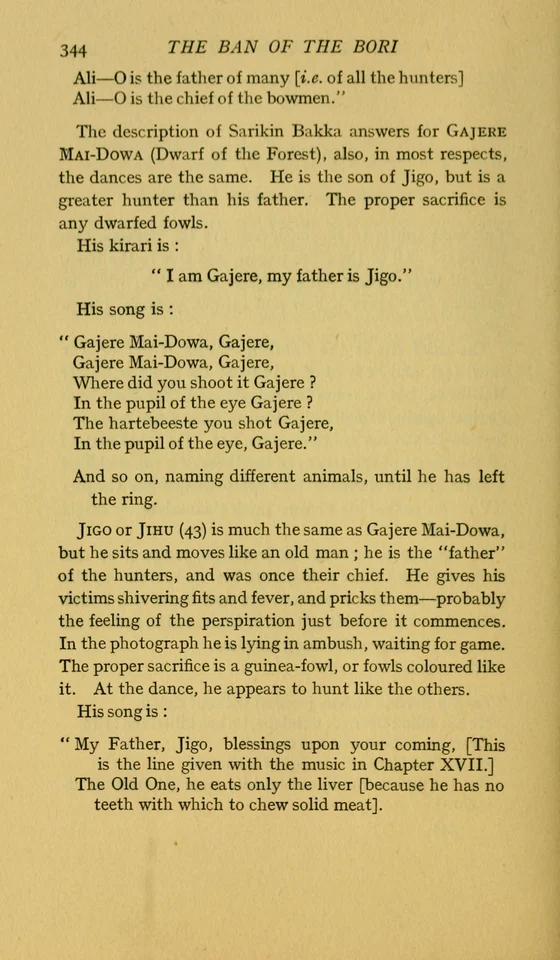
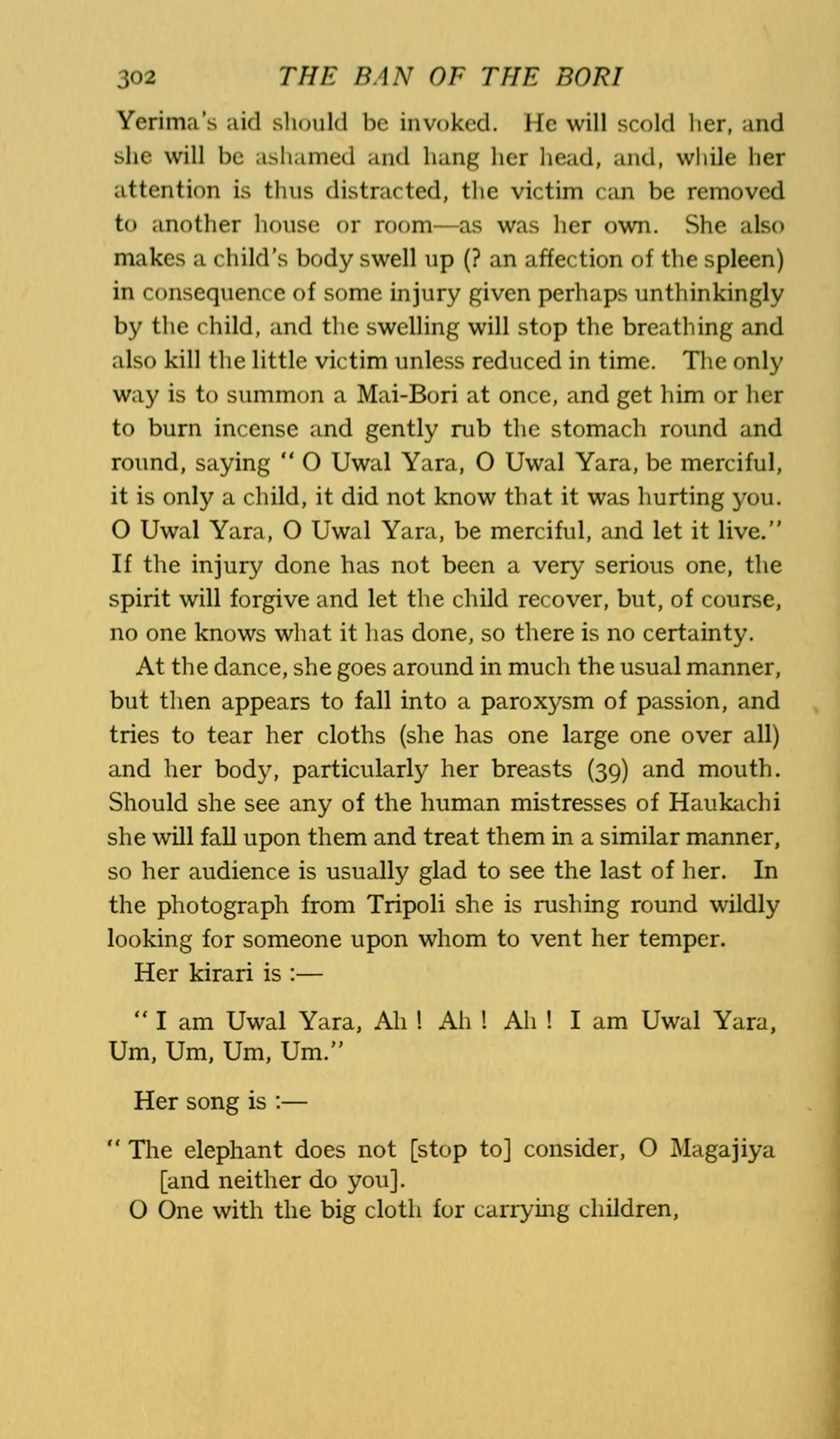
 Nana Magajiya/Uwal Yara,1914 historical printed text witness, page302; documentary source-page facsimile
Documentary text facsimile naming Nana Magajiya/Uwal Yara and describing ritual/narrative attributes; not a photograph of a spirit or creature artwork. Colonial observer terminology and interpretations belong to the original1914 text.
Selected bibliography
Documented works and useful reading. This is not a list of every appearance.
- 01
The Ban of the Bori
Selected witness pp 301–303; colonial collection with uneven narrator attribution.
Family, evolution & connections
Haukachi’s explicitly named parents
Selected named notices in Tremearne’s 1914 historical Bori account, pp. 301–302, 306–307.
Scroll sideways to see all branches. With a keyboard, focus the tree and use the arrow keys.
- Nana Magajiya + Mallam Ali Geshe (two stated parents)
The mother notice names her only child; the Geshe notice independently calls him Haukachi’s father. Joint root groups two parents. Other children she nursed are not added as births. Yerima’s protective care does not make him another biological parent. This is source-specific religious genealogy, not biological descent or universal contemporary doctrine.
Haukachi
The Nana Magajiya notice explicitly names Haukachi as her only child, distinguishing him from unnamed spirit children she nursed. Nursing is not silently converted into biological parentage.
Mallam Ali Geshe
Both notices identify Nana Magajiya and Geshe as spouses. Their respective powers, temper and performance representations remain distinct rather than merged into a single spirit.
Yerima
The account calls Yerima Nana Magajiya’s brother when he removes her child Haukachi for protection. No shared parent is named in that passage, and Yerima’s conflicting father notices are not harmonized through the sibling statement.
References
Sources supporting this profile. Linked pages have their own scope and editorial standards.
- Historical ritual observation and translated songsThe Ban of the Bori — Nana MagajiyaResearch access: 2026-10-05
Image credits
Historical ritual performance photographNana Magajiya/Uwal Yara enacted by human participants in photograph37, The Ban of the Bori, 1914
The lower photograph, numbered37, is captioned Uwal Yara or Magajiya. It records a human performance of the named spirit, rather than a photograph of a supernatural body. The original caption’s illness claims are historical attributed beliefs.
Further credits appear with each additional image.