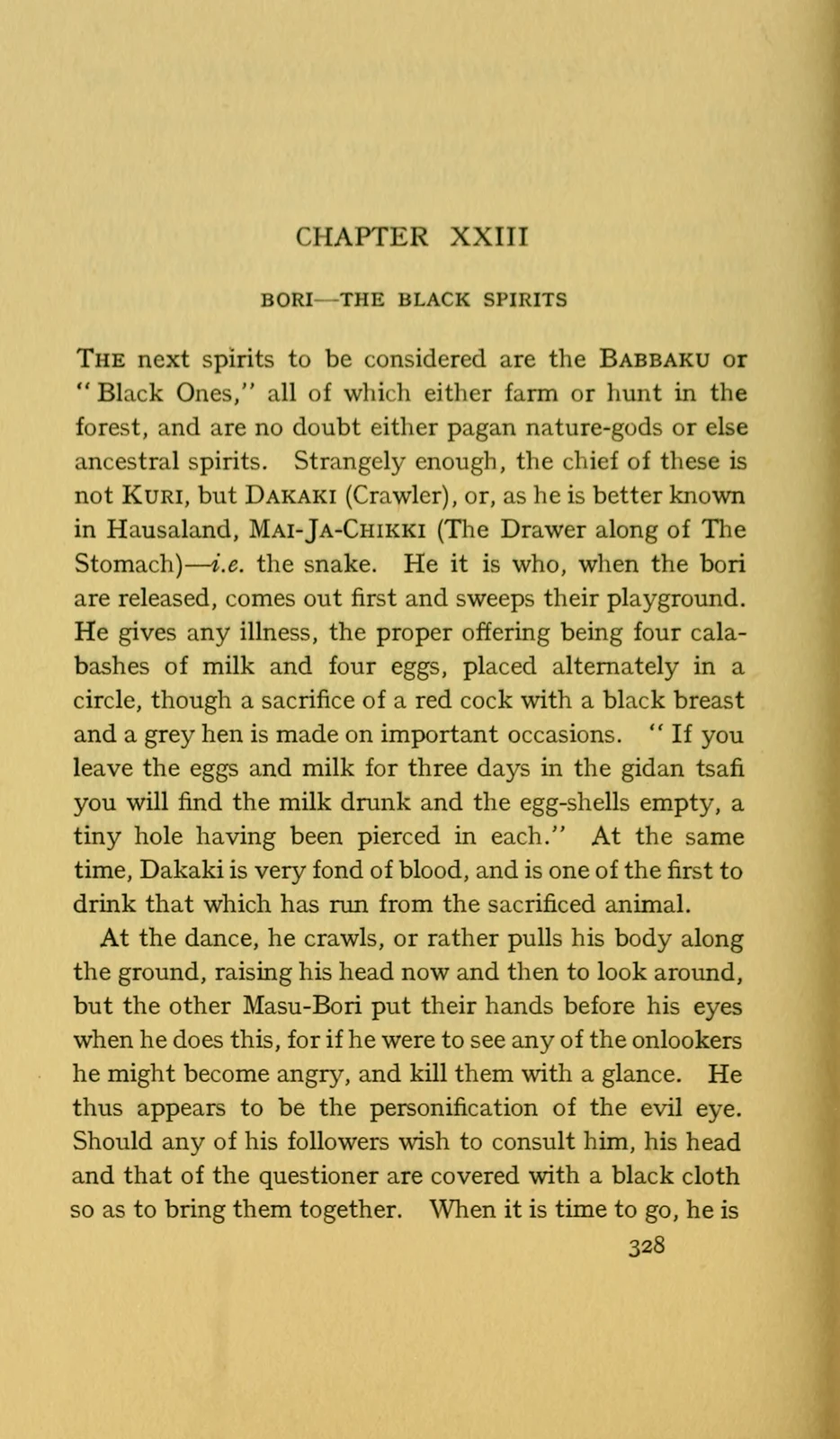
Dakaki,1914 historical printed text witness, page328; documentary source-page facsimile
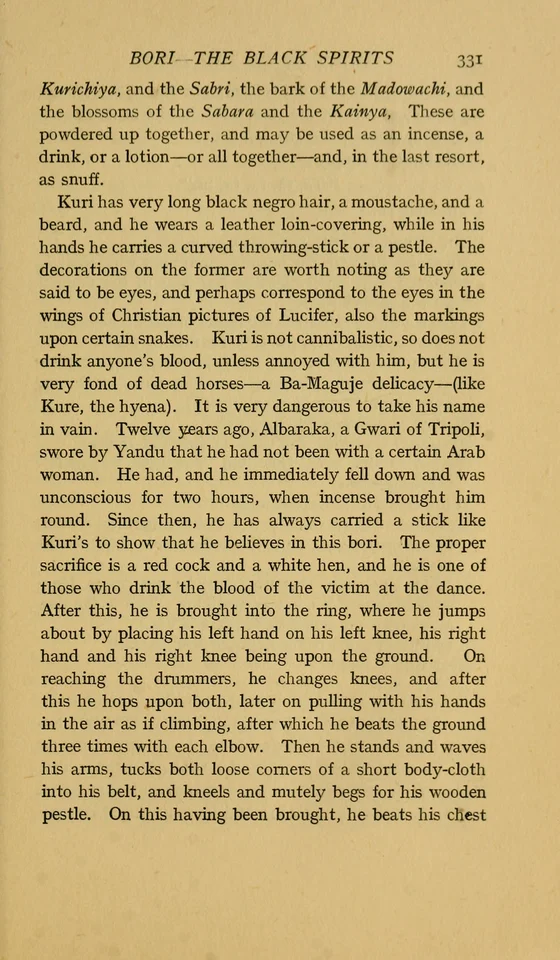
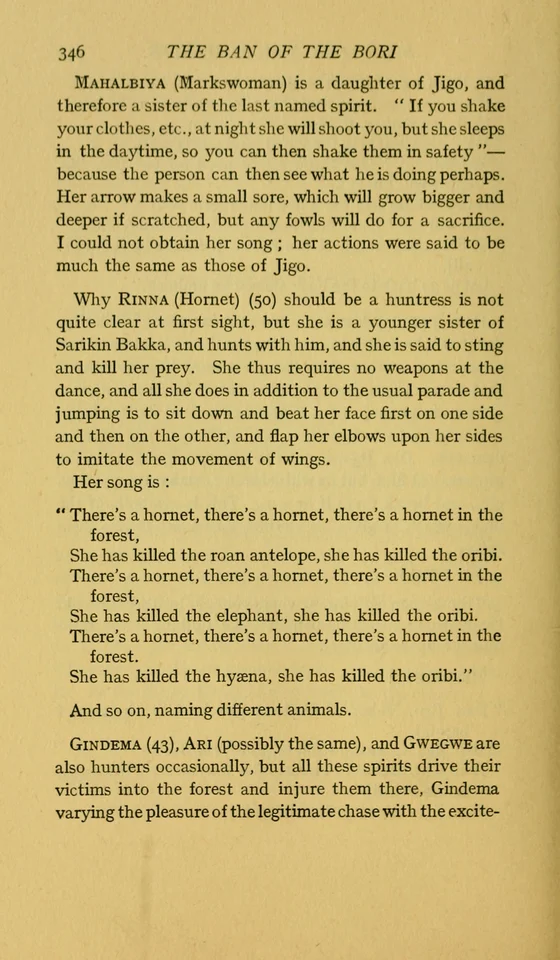
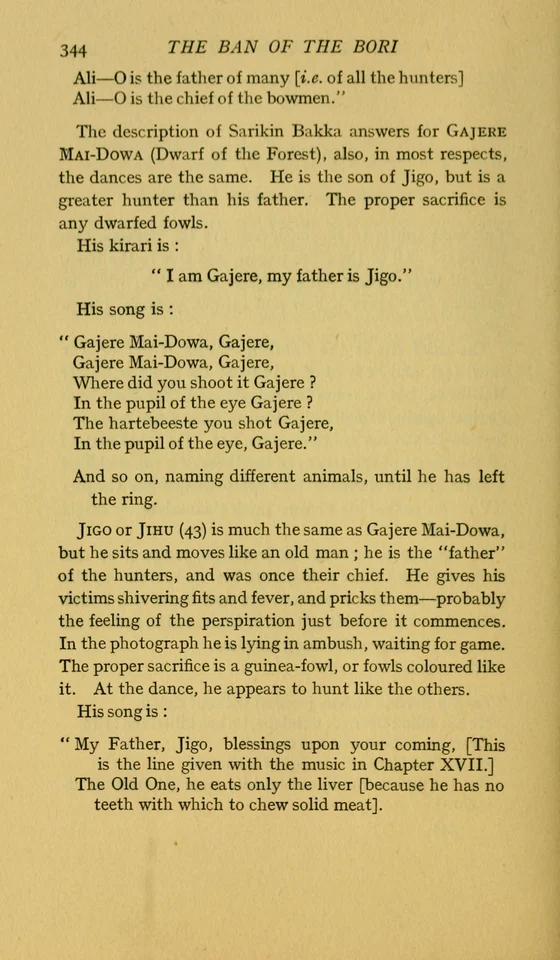
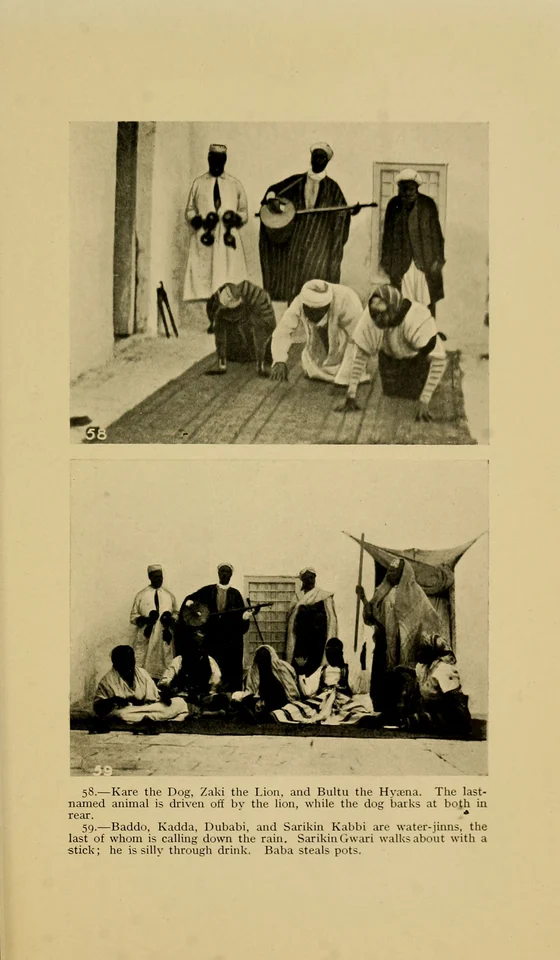
Documentary text facsimile naming Dakaki and describing ritual/narrative attributes; not a photograph of a spirit or creature artwork. Colonial observer terminology and interpretations belong to the original1914 text.
Overview
Dakaki, also called Mai-Ja-Chikki, is the snake spirit placed first among the Babbaku in Tremearne’s account. His names evoke crawling and drawing the stomach along the ground. When the spirits are released, he comes out first and sweeps their playground. The description connects his place at the beginning of proceedings with a particular bodily representation: the human mount pulls the body forward on the ground, occasionally raising the head to look around.
Whenever the head rises, attendants put their hands before the eyes because Dakaki’s glance is believed capable of killing an onlooker. The translated song uses footlessness, hissing and red-eyed imagery and tries to divert his attention from someone in the audience. Its appeal that he should arrive by day allows everyone to see and avoid the threatening gaze. These actions belong to a performance and its accompanying explanations, while Tremearne’s identification of him as the personification of the evil eye is a comparative interpretation.
Consultation also requires care with the head and eyes. A black cloth covers both the questioner’s head and the mount’s, bringing them together beneath it. To signal departure, attendants show Dakaki a hole in a drum, which he understands as a hollow tree. He sneezes and goes inside, although the human mount remains visibly in the ring. The account says he has no spoken praise formula because he cannot speak; the musicians nevertheless address him throughout the song.
The chapter describes four calabashes of milk alternating with four eggs in a circle, with additional fowl offerings on important occasions. An attributed statement says that after three days the milk is gone and tiny holes have appeared in emptied eggshells. Dakaki is also said to be among the first spirits to drink blood from a sacrificed animal. These offering accounts give a second setting beside the public dance; their claimed disappearance and consumption remain statements in the historical witness.
Origins & earliest records
Tremearne’s historical collection combines accounts and ritual observations in Hausa-associated North African communities and northern Nigeria. Its evolutionary and comparative origin theories are not adopted.
Records & interpretation
The Ban of the Bori, pp 328–329. Ritual movements describe human mounts representing spirits; translated songs and attributed powers are evidence of this recorded representation, not proof of medical causation or uniform contemporary community practice.
Selected bibliography
Documented works and useful reading. This is not a list of every appearance.
- 01
The Ban of the Bori
Selected witness pp 328–329; colonial collection with uneven narrator attribution.
Family & connections
A source-supported family tree or inspiration record has not yet been compiled for this profile. Related reading below indicates a connection in subject matter, not a proven lineage or creative influence.
References
Sources supporting this profile. Linked pages have their own scope and editorial standards.
- Historical ritual observation and translated songsThe Ban of the Bori — DakakiResearch access: 2026-10-05
Image credits
Historical text facsimileDakaki,1914 historical printed text witness, page328; documentary source-page facsimile
Documentary text facsimile naming Dakaki and describing ritual/narrative attributes; not a photograph of a spirit or creature artwork. Colonial observer terminology and interpretations belong to the original1914 text.