Hans the Hedgehog
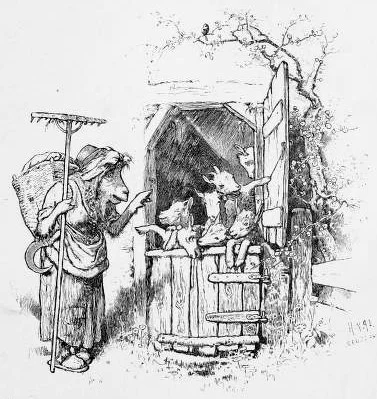
Image associated with the exact linked encyclopedia article; consult credited file description for its interpretation.
Overview
Hans is born after a wealthy, childless farmer, tired of being mocked, wishes for a child even if it is a hedgehog. In Hunt’s Grimm tale 108, the child has a hedgehog’s upper body and a boy’s lower body. His mother cannot nurse him because of his quills, and he spends eight years on straw behind the stove. The narrator connects this extraordinary birth with the father’s wish but identifies no witch who places a curse on him.
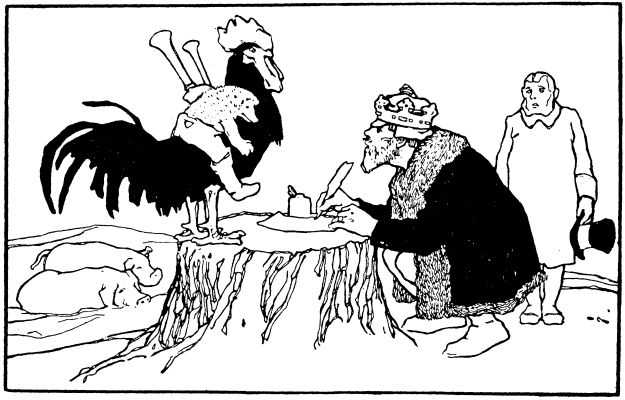
When his father goes to a fair, Hans asks for bagpipes. He then has a cock shod by the blacksmith and rides it into the forest, taking pigs and asses to herd. The cock carries him into a tree, from which he plays his pipes while watching the animals. Two kings, lost on separate occasions, hear him. In exchange for directions, each agrees in writing to give him the first thing that meets the king at home. In both cases this is a daughter, but the agreements differ: the first king writes a false promise, believing Hans cannot read, while the second writes what he has actually agreed.
Hans eventually sends word to his father that the villagers should prepare to slaughter his numerous pigs. After returning with them, he sets out again on the newly shod cock. At the first king’s court, guards with weapons cannot keep the flying mount outside the gate. Hans forces the king to surrender the daughter, then injures her with his quills before sending her back. This assault is part of the selected story; the figure is not consistently a gentle or harmless animal bridegroom.
The second king receives him, and that king’s daughter keeps the promise despite being frightened of his appearance. Hans himself arranges the removal of the animal form. He instructs four men to take his discarded hedgehog skin and burn it when he gets into bed. After they do so, he has a human body but appears badly burned; a physician treats him with washing, salves and ointments. The skin’s destruction is therefore planned by Hans, rather than an impatient bride secretly ruining his chance of release.
The marriage is then properly celebrated and Hans receives the kingdom. Years later he returns to his father, who at first does not recognize the splendidly dressed visitor. Once Hans identifies himself, his father accompanies him to the kingdom. The ending reverses the earlier household rejection without erasing it. The mixed body, speaking animals and transformation belong to this tale’s events; they supply neither a biological hybrid species nor a genealogy of hedgehog people.
Origins & earliest records
This entry follows tale 108 in the Grimm brothers’ Household Tales, using Margaret Hunt’s 1884 English translation. The collection was repeatedly revised during the nineteenth century and mediates material from storytellers and earlier literature. Its publication and translation dates identify the selected witness, not the beginning of every related oral narrative.
Records & interpretation
Complete tale 108 in Margaret Hunt’s Grimm translation read from opening through ending. The passage supplies this narrative’s events and relationships, not observational evidence for a biological species. The two kings make different written promises. Hans plans his own skin’s destruction; treatment follows the transformation. The first princess’s assault and final reconciliation with the father are retained.
In the literature
“a hedgehog in the upper part of his body, and a boy in the lower,”
Tale 108 Hans the Hedgehog; paragraph beginning “There was once a countryman who had money and land in plenty,…” · Margaret Hunt
Hans is born with hedgehog and human anatomy.
Selected bibliography
Documented works and useful reading. This is not a list of every appearance.
- 01
Household Tales, tale 108: Hans the Hedgehog
Complete selected English tale read, including the ending and transformation sequence. The translation is a located literary witness, not a claim to the first oral telling.
- 02
Household Tales: 108 Hans the Hedgehog
Margaret Hunt’s English translation, London: George Bell and Sons, 1884; Gutenberg e-text identifies Hunt. Translation date corroborated by the Wikisource scanned title page and National Library of New Zealand catalogue.
Family, evolution & connections
Hans the Hedgehog’s family - Hunt tale 108
The stated countryman parents and later completed marriage in this English telling.
Scroll sideways to see all branches. With a keyboard, focus the tree and use the arrow keys.
- Unnamed countryman and his wife
Parent-to-child branching follows the explicit birth and father/son identification. Marriage is recorded in the son’s label, not drawn as offspring. Unnamed relatives retain source roles. The first king’s rejected daughter is not labelled a wife. Skin removal changes Hans’s appearance, not his stated parentage; the king giving him the realm is his father-in-law, not his birth father.
Hans’s unnamed peasant parents
The countryman wishes for a child even if it is a hedgehog, and his wife gives birth to Hans. His mixed body is the tale’s extraordinary condition, not evidence for a human–hedgehog biological hybrid.
Second king’s unnamed daughter in Hunt tale 108
Hans marries the second king’s daughter, and their marriage is solemnised again after the skin-burning sequence. The first king’s daughter is injured and sent home; she is not another completed marriage.
Second king in Hunt tale 108
The second king is the father of Hans’s wife and later gives him the kingdom. Hans’s own father is the countryman whom he revisits at the ending; these two fathers retain separate roles.
Located primary passages
Specific passages supporting details in this entry, grouped by their published witness.
Household Tales, tale 108: Hans the Hedgehog
Margaret Hunt’s English translation, London: George Bell and Sons, 1884; Gutenberg e-text identifies Hunt. Translation date corroborated by the Wikisource scanned title page and National Library of New Zealand catalogue.
- Hans is born with hedgehog and human anatomy.
- Hans chooses a shod rooster as his mount.
- Hans removes his hedgehog skin and has it burned during his marriage.
This describes the version printed in Hunt’s translation; German tale origin and other versions require separate evidence.
Encyclopedia background
An additional attributed reference, separate from the editorial profile above.
Read the open encyclopedia overview
"Hans My Hedgehog" (German: Hans mein Igel) is a German fairy tale collected by the Brothers Grimm (KHM 108). The tale was translated as Jack My Hedgehog by Andrew Lang and published in The Green Fairy Book. It is of Aarne-Thompson type 441.
The tale follows the events in the life of a diminutive half-hedgehog, half-human being named Hans, who eventually sheds his animal skin and turns wholly human after winning a princess.
Text from Wikipedia contributors, “Hans My Hedgehog”. CC BY-SA 4.0. Extracted introduction; formatting changed. Retrieved 5 October 2026. The source article may have changed since retrieval.
References
Sources supporting this profile. Linked pages have their own scope and editorial standards.
- Primary textGrimm/Hunt, complete tale 108Research access: 2026-10-05
Image credits
Reference illustrationHans the Hedgehog
Image associated with the exact linked encyclopedia article; consult credited file description for its interpretation.