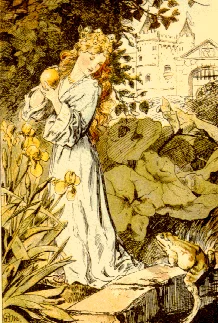
Frog King
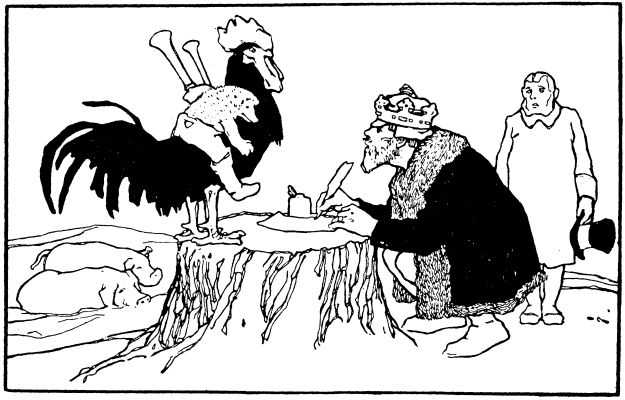
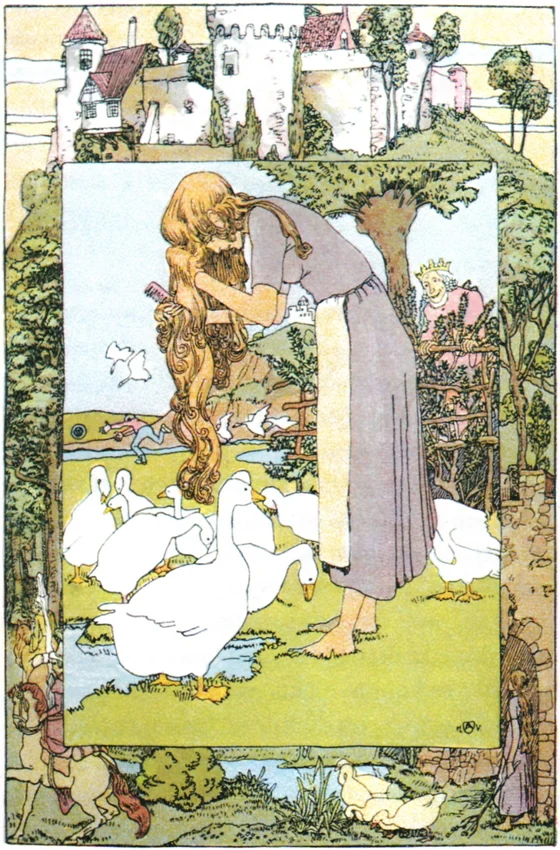
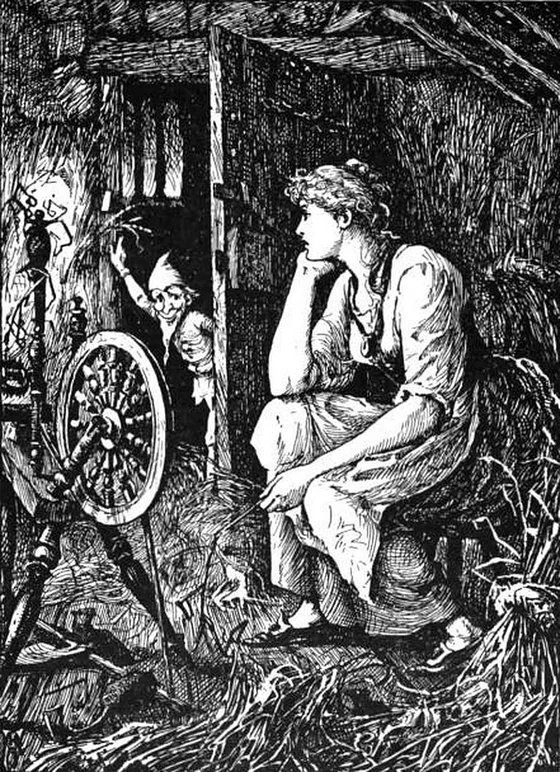
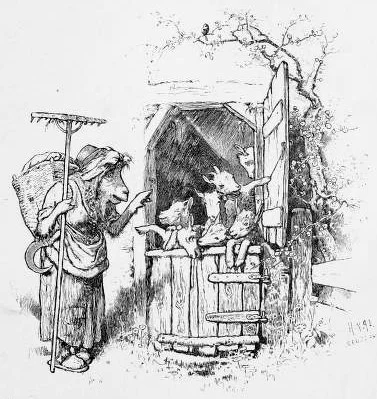
Image associated with the exact linked encyclopedia article; consult credited file description for its interpretation.
Overview
The frog first speaks from a deep forest well beneath a lime tree, where the youngest princess has dropped her golden ball. Hunt’s translation describes his thick head emerging from the water. He refuses her offered clothes, jewels and crown, instead demanding companionship: a place beside her, food from her plate, drink from her cup and space in her bed. She promises everything while privately dismissing the possibility that a water animal could be her companion. He retrieves the ball in his mouth, but she runs home despite his call that he cannot move as quickly. His next-day arrival changes the apparently private woodland bargain into a public household obligation. He climbs the marble stairs, knocks and recalls her promise; when she slams the door, her father requires her to let him in. The text makes the princess’s fear and unwillingness visible rather than presenting an immediately affectionate relationship.
At the table the frog asks to be lifted to her chair and then to the tabletop. Later she carries him upstairs with two fingers and leaves him in a corner, but he demands to share the bed and threatens to appeal to her father. Her angry throw against the wall breaks the enchantment; no kiss occurs in this selected episode. The resulting prince explains that a witch transformed him and that the princess alone could deliver him, although the witch’s motive and initial encounter remain untold. The next morning his servant Faithful Henry arrives with eight white horses adorned with ostrich feathers and golden harness chains. Henry had enclosed his heart in three iron bands against grief. Their successive cracks during the homeward journey are mistaken for carriage damage until he explains his joy. The title’s Iron Henry therefore refers to a second extraordinary motif, not an iron-bodied frog or a mechanical creature.
Origins & earliest records
This profile follows tale 1, The Frog-King, or Iron Henry, in Hunt’s 1884 translation of Grimm’s Household Tales. The Grimm collection underwent repeated nineteenth-century revisions. The wall-throwing restoration and servant’s three bands identify this selected witness; the familiar kiss ending requires its own edition or retelling rather than substitution here.
Records & interpretation
The full tale directly supplies the well, bargain, unwilling palace encounter, witch explanation and iron-band aftermath. These are collected literary events, not observed amphibian behaviour or medically verified heart restraints. Edition-specific details allow comparison without treating a transformed prince as a naturally occurring frog species.
In the literature
“threw him with all her might against the wall.”
Tale 1 The Frog-King, or Iron Henry; paragraph beginning “The King’s daughter began to cry, for she was afraid of the…” · Margaret Hunt
The princess throws the frog against a wall, after which he becomes a prince.
“But when he fell down he was no frog but a King’s son with beautiful kind eyes.”
Tale 1 The Frog-King, or Iron Henry; paragraph beginning “The King’s daughter began to cry, for she was afraid of the…” · Margaret Hunt
Transformation follows the wall impact, rather than a kiss in this edition.
Selected bibliography
Documented works and useful reading. This is not a list of every appearance.
- 01
Household Tales, tale 1: The Frog-King, or Iron Henry
Specific public-domain collected tale inspected. The selected English edition is a literary witness, not a transcript of a universal oral version.
- 02
Household Tales: 1 The Frog-King, or Iron Henry
Margaret Hunt’s English translation, London: George Bell and Sons, 1884; Gutenberg e-text identifies Hunt. Translation date corroborated by the Wikisource scanned title page and National Library of New Zealand catalogue.
Family, evolution & connections
Golden Bird’s Fox
Hunt’s Frog-King becomes human when the angry princess throws him against a wall, whereas the Golden Bird’s fox asks the prince to perform a specific violent act to release him. Both are enchanted men whose restoration reverses an animal appearance. The selected frog story contains no liberating kiss, and the two actions have different motives.
Unnamed princess in The Frog-King
Hunt’s Frog-King explicitly ends with the restored prince becoming the princess’s husband with her father’s approval. Their earlier bargain concerns shared meals and a bed, rather than stated kinship before the transformation. This connection records the eventual marriage in that text, while preserving its wall-throwing release instead of importing a kiss from other retellings.
Located primary passages
Specific passages supporting details in this entry, grouped by their published witness.
Household Tales, tale 1: The Frog-King, or Iron Henry
Margaret Hunt’s English translation, London: George Bell and Sons, 1884; Gutenberg e-text identifies Hunt. Translation date corroborated by the Wikisource scanned title page and National Library of New Zealand catalogue.
- The princess throws the frog against a wall, after which he becomes a prince.
- Transformation follows the wall impact, rather than a kiss in this edition.
- Iron Henry’s iron bands signify grief for his master’s enchantment.
This describes the version printed in Hunt’s translation; German tale origin and other versions require separate evidence.
Encyclopedia background
An additional attributed reference, separate from the editorial profile above.
Read the open encyclopedia overview
"The Frog Prince; or, Iron Henry" (German: Der Froschkönig oder der eiserne Heinrich, literally "The Frog King or the Iron Henry") is a German fairy tale collected by the Brothers Grimm and published in 1812 in Grimms' Fairy Tales (KHM 1). Traditionally, it is the first story in their folktale collection. The tale is classified as Aarne-Thompson type 440.
"The Frog Prince" can be compared to the similar eastern European fairy tale "The Frog Princess".
Text from Wikipedia contributors, “The Frog Prince”. CC BY-SA 4.0. Extracted introduction; formatting changed. Retrieved 5 October 2026. The source article may have changed since retrieval.
References
Sources supporting this profile. Linked pages have their own scope and editorial standards.
- Primary textGrimm/Hunt, Household Tales, tale 1Research access: 2026-10-05
Image credits
Reference illustrationFrog King
Image associated with the exact linked encyclopedia article; consult credited file description for its interpretation.