A sourced illustration has not yet been added. This gap is included in the coverage record.
Overview
Zipacna's mountain-making strength drives two encounters whose traps turn ordinary materials into weapons. In Spence's 1908 abridgement, four hundred youths ask him to help move a huge tree intended for their house. They entice him into a ditch and drop timber on him, but he has prepared a side tunnel where the impact cannot reach him. Instead of immediately escaping, he sends up pieces of hair and nails with ants. The youths accept these fragments as proof of death and begin celebrating. Zipacna waits until they are intoxicated, then destroys the house above his hiding place and kills them. His retaliation is therefore preceded by both attempted murder and his own deception. The scene makes ant-carried evidence and the building site as important as raw strength. A roof timber becomes a supposed crushing weapon, and the house that celebrates his defeat becomes the place where the youths die. The surviving being remains dangerous, but the sequence does not begin with an unprovoked attack.
The Hero Twins next direct their trap toward Zipacna's appetite. Spence places his daytime search for fish and crabs beside his nighttime work carrying mountains. They make an artificial crab and put it in a confined cave beneath a ravine. When the hungry mountain-maker enters, the mountain collapses upon him and he becomes stone. Christenson's annotated translation makes the positioning more explicit, including the twins' advice to enter on his back. His commentary proposes a crocodilian reading connected with Cipactli, but that interpretation must remain attributed. It is useful because it asks why body position matters in the trap; it does not turn a translated name into an uncontested animal portrait. The final reversal is concrete: the being who moves mountains is immobilized beneath one. Unlike the first ditch, this enclosure leaves no successful refuge. Comparing the abridgement with the annotated translation preserves the decisive actions while showing where an interpreter supplies an anatomical explanation.
Origins & earliest records
Zipacna is securely documented as a named figure in the Popol Vuh manuscript tradition. The surviving colonial witness preserves earlier narrative material but does not supply the date of its first telling. Modern spellings and illustrations reflect editorial choices, and comparisons with older art remain interpretations rather than exact birth records.
Records & interpretation
Spence's abridgement supplies the ant-carried fragments, drunken celebration, house destruction and false-crab trap. Christenson's selected translation and commentary add the body-position question and an attributed crocodilian reading. These are distinguishable textual witnesses. The comparison supports episode detail without claiming to have independently read every manuscript, translation or contemporary K'iche' account.
In the literature
“he took refuge in a side-tunnel of the excavation”
The Myth of Vukub-Cakix; paragraph beginning “But their mission was not yet complete. The sons of Vukub-Cakix,…”
Zipacna escapes the four hundred youths’ pit trap, then destroys their house while they celebrate.
“constructed an artificial crab”
The Myth of Vukub-Cakix; paragraph beginning “But Hun-Ahpu and Xbalanque were grieved that the four hundred had…”
The twins lure Zipacna with an artificial crab and bring the mountain down upon him, turning his corpse into stone.
Selected bibliography
Documented works and useful reading. This is not a list of every appearance.
- 01
Popol Vuh, Ayer MS 1515
Surviving manuscript witness; its date does not establish the beginning of the tradition.
- 02
The Popol Vuh: The Mythic and Heroic Sagas of the Kichés of Central America
Historical English abridgement and commentary, used critically; not a substitute for K'iche' scholarship.
- 03
Popol Vuh: Sacred Book of the Quiché Maya People
Selected Zipacna defeat and notes 168, 203–206; crocodilian interpretation attributed rather than prescribed.
Family, evolution & connections
Vukub-Cakix’s two sons in Spence’s retelling
Spence’s 1908 abbreviated English retelling, pp. 12–15, not an independently collated K’iche’ manuscript.
Scroll sideways to see all branches. With a keyboard, focus the tree and use the arrow keys.
The passage expressly names Zipacna and Cabrakan as Vukub-Cakix’s two sons. Chimalmat is called spouse but her motherhood is not separately stated in this passage, so she is not inserted as joint parent. Source-specific spellings retained; no modern Indigenous people’s ancestry or universally harmonized genealogy is claimed.
Cabrakan
Zipacna and Cabrakan share the explicitly named father. Full versus half brotherhood is not independently established by this abbreviated witness.
Located primary passages
Specific passages supporting details in this entry, grouped by their published witness.
Primary source witness
Lewis Spence,1908 study and narrative synopsis, preface datedJuly1908; not a complete literal translation of the K’iche’ text.
- Zipacna escapes the four hundred youths’ pit trap, then destroys their house while they celebrate.
- The twins lure Zipacna with an artificial crab and bring the mountain down upon him, turning his corpse into stone.
This is Spence’s English synopsis, not a quotation attributed to an ancient K’iche’ author. The underlying tradition and manuscript need separate modern scholarly context; no claim of earliest attestation.
Encyclopedia background
An additional attributed reference, separate from the editorial profile above.
Read the open encyclopedia overview
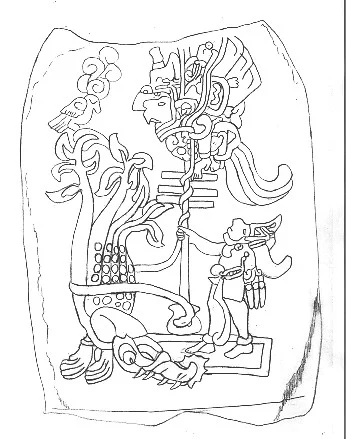
In Maya mythology, Zipacna was a son of Vucub Caquix (Seven Macaw) and Chimalmat. He and his brother, Cabrakan (Earthquake), were often considered demons. Zipacna, like his relatives, was said to be very arrogant and violent. Zipacna was characterized as a large caiman and often boasted about creating mountains.
Text from Wikipedia contributors, “Zipacna”. CC BY-SA 4.0. Extracted introduction; formatting changed. Retrieved 5 October 2026. The source article may have changed since retrieval.
References
Sources supporting this profile. Linked pages have their own scope and editorial standards.
- Primary textThe Popol Vuh: The Mythic and Heroic Sagas of the Kichés of Central AmericaResearch access: 2026-10-05
- ReferencePopol Vuh research guideResearch access: 2026-10-05
- ResearchChristenson: Zipacna defeat and interpretive notesResearch access: 2026-10-05
Image credits
A sourced illustration has not yet been added. This gap is included in the coverage record.