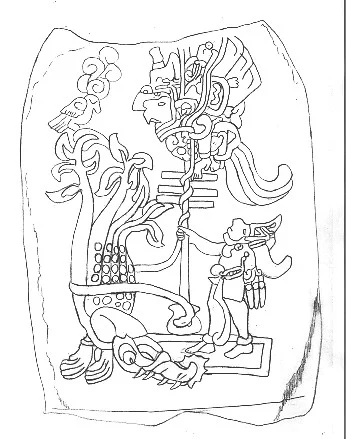
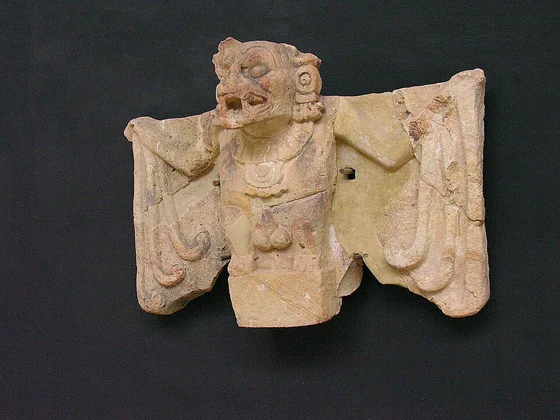
A sourced illustration has not yet been added. This gap is included in the coverage record.
Overview
Cabrakan is the mountain-destroying counterpart to his brother Zipacna, the mountain-maker. Spence's 1908 abridgement makes him the last surviving member of the arrogant family after Vucub Caquix and Zipacna are defeated. The Hero Twins find him overturning hills, then challenge him with news of an especially high mountain toward the east. He accepts the invitation because it appears to offer another demonstration of the power he already enjoys. The journey gives the twins time to prepare a meal: a bird shot with their blowpipes and treated with earth. Cabrakan eats it, loses his strength and fails to move the promised mountain. They can then bind and bury him. The decisive sequence moves from boast to journey, food, failed demonstration and confinement. It is a defeat through an offered pleasure rather than a contest in which the twins simply become physically stronger.
Christenson's annotated translation clarifies a material detail that Spence compresses: the bird's skin is coated with quicklime, described as white earth. It also places Cabrakan's destruction within the twins' task of preparing the world for the coming people. That account gives the meal and burial a linked earth motif. The landscape-destroyer takes earth into himself before he is put beneath it. His brother's defeat likewise ends in immobilization, but the trap works differently: hunger lures Zipacna into an enclosure, while eating weakens Cabrakan before binding becomes possible. These paired actions make the family episode more specific than an undifferentiated story of giant-slaying. The quicklime detail belongs to Christenson's wording, while Spence's general poisoned-earth description remains an explicitly abridged witness.
Origins & earliest records
The figure is documented in the Popol Vuh's transmitted K'iche' narrative. Its surviving colonial manuscript history is evidence for preservation, not the beginning of earthquake-related traditions. Different transcriptions render the name differently; the date of a modern translation likewise concerns publication rather than the creation of Cabrakan as a narrative figure.
Records & interpretation
The historical abridgement supports the eastward challenge, bird meal, weakness and burial. Christenson's annotated translation specifies quicklime on the bird and situates the action in the preparation of the world for people. Keeping the witnesses named prevents a modern translator's material term being silently presented as wording independently checked in the colonial manuscript.
In the literature
“the other in demolishing them”
The Myth of Vukub-Cakix; paragraph beginning “After this catastrophe, ere yet the earth was quite recovered from…”
Cabrakan is associated with the demolition of mountains, contrasting with Zipacna’s heaping them up.
“he was bound and buried by the victorious hero-gods.”
The Myth of Vukub-Cakix; paragraph beginning “Of the family of boasters only Cabrakan remained. Discovered by the…”
The twins weaken Cabrakan with a bird poisoned with earth before binding and burying him.
Selected bibliography
Documented works and useful reading. This is not a list of every appearance.
- 01
Popol Vuh, Ayer MS 1515
Surviving manuscript witness; its date does not establish the beginning of the tradition.
- 02
The Popol Vuh: The Mythic and Heroic Sagas of the Kichés of Central America
Historical English abridgement and commentary, used critically; not a substitute for K'iche' scholarship.
- 03
Popol Vuh: Sacred Book of the Quiché Maya People
Selected Cabracan episode, printed pp. 94–98, including quicklime/white-earth meal; no complete translation reading claimed.
Family, evolution & connections
Vukub-Cakix’s two sons in Spence’s retelling
Spence’s 1908 abbreviated English retelling, pp. 12–15, not an independently collated K’iche’ manuscript.
Scroll sideways to see all branches. With a keyboard, focus the tree and use the arrow keys.
The passage expressly names Zipacna and Cabrakan as Vukub-Cakix’s two sons. Chimalmat is called spouse but her motherhood is not separately stated in this passage, so she is not inserted as joint parent. Source-specific spellings retained; no modern Indigenous people’s ancestry or universally harmonized genealogy is claimed.
Located primary passages
Specific passages supporting details in this entry, grouped by their published witness.
Primary source witness
Lewis Spence,1908 study and narrative synopsis, preface datedJuly1908; not a complete literal translation of the K’iche’ text.
- Cabrakan is associated with the demolition of mountains, contrasting with Zipacna’s heaping them up.
- The twins weaken Cabrakan with a bird poisoned with earth before binding and burying him.
This is Spence’s English synopsis, not a quotation attributed to an ancient K’iche’ author. The underlying tradition and manuscript need separate modern scholarly context; no claim of earliest attestation.
Encyclopedia background
An additional attributed reference, separate from the editorial profile above.
Read the open encyclopedia overview
Cabrakan (also known as Caprakan, Cabracan, and Kab'raqan) was a Maya god of earthquakes and mountains. Cabrakan is a son of Vucub-Caquix and the brother of Zipacna. He serves as a minor character in the Popol Vuh, where the Maya Hero Twins defeat him.
He has been called the Maya equivalent to Tepēyōllōtl.
Text from Wikipedia contributors, “Cabrakan”. CC BY-SA 4.0. Extracted introduction; formatting changed. Retrieved 5 October 2026. The source article may have changed since retrieval.
References
Sources supporting this profile. Linked pages have their own scope and editorial standards.
- Primary textThe Popol Vuh: The Mythic and Heroic Sagas of the Kichés of Central AmericaResearch access: 2026-10-05
- ReferencePopol Vuh research guideResearch access: 2026-10-05
- ResearchChristenson: Cabracan defeat, pp. 94–98Research access: 2026-10-05
Image credits
A sourced illustration has not yet been added. This gap is included in the coverage record.