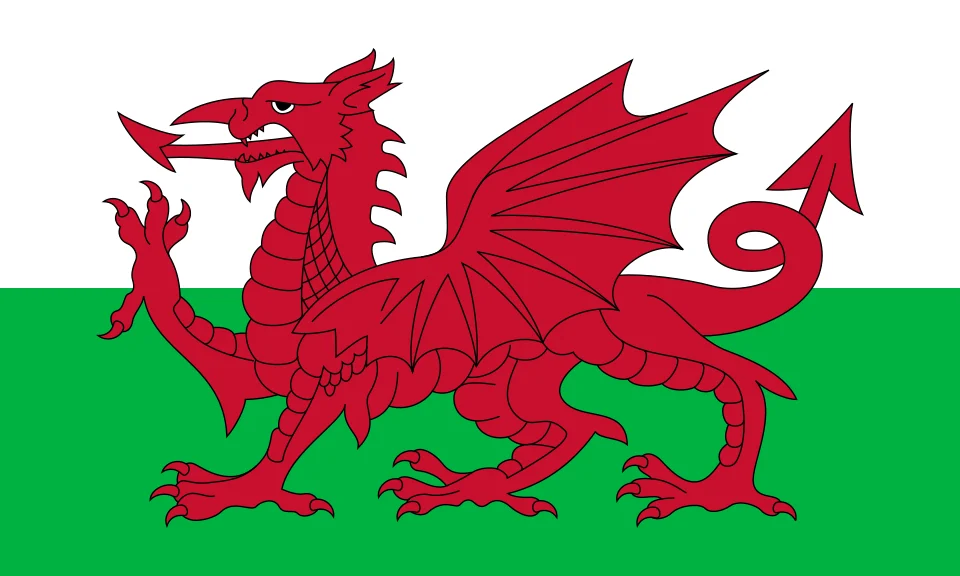
Welsh
Image associated with the exact linked encyclopedia article; consult credited file description for its interpretation.
Overview
Welsh cultural life includes Cymraeg, literature, music, festivals and relationships with places across Wales. The National Eisteddfod is one important cultural institution, but identity is not determined solely by participation in a festival or ability to speak Welsh. Welsh-speaking, English-speaking and multilingual communities have different experiences. Migration, work and family histories also connect Wales with communities elsewhere.
Industrial heritage is a major part of these histories. The National Slate Museum presents the workshops and working life associated with the slate industry, complementing accounts centred on poetry or rural traditions. Clothing promoted as national dress developed through historical fashion and representation rather than providing a timeless uniform for all Welsh people. Contemporary culture continues through education, broadcasting, sport, literature and everyday community activity, with language revitalisation forming one aspect of a broader living society.
The White Book of Rhydderch provides a concrete medieval witness to Welsh literary culture. The National Library of Wales dates its copying to the middle of the fourteenth century and identifies five scribal hands, probably working at Strata Florida. The former single manuscript is now divided between Peniarth 4 and5. Peniarth 4 preserves the Four Branches of the Mabinogi and other Middle Welsh tales, whereas Peniarth 5 includes religious prose and translated adaptations. The library finds no evidence that the White Book ever contained The Dream of Rhonabwy. A manuscript’s surviving contents, its copying date and the earlier histories of its stories must be distinguished.
The Eisteddfod likewise has several historical stages. The National Library’s history describes Lord Rhys’s poetry and music competitions at Cardigan in 1176, later revival through Welsh societies, and the Gorsedd’s association with an eisteddfod at Carmarthen in 1819. The modern national organisation followed decisions made at Denbigh in 1860, with its first official festival at Aberdare in 1861. These dates do not describe one unchanged annual institution running continuously from the Middle Ages. Later adaptations included broadcasting awards by radio in 1940 and online cultural programmes during the COVID-19 pandemic.
Industrial collections preserve a different kind of evidence. The slate museum occupies Dinorwig’s former workshops; the quarry closed in 1969 and the museum opened in 1972, employing former workers to demonstrate their crafts. Its current website announces closure for redevelopment, so older visitor descriptions should not be read as confirmation that the site is presently open.
History & identity
Welsh language and identity developed through long historical changes in Britain, including transformations of earlier Brittonic languages and political relationships. A linguistic development or medieval political event cannot supply one founding date for every Welsh community. Modern national institutions and diaspora identities reflect later processes alongside continuity with earlier histories.
Sources & representation
Welsh cultural and museum sources describe language, traditions and industrial history from particular institutional perspectives. Linguistic and historical research provides evidence for earlier developments, while lived identities cannot be inferred from genetics or language alone. National symbols should be read historically: their documented adoption differs from claims that they have always represented everyone.
Selected bibliography
Documented works and useful reading. This is not a list of every appearance.
- 01
The history of the Welsh language and easy phrases to learn and use
Selected public cultural introduction; not a complete historical bibliography.
- 02
White Book of Rhydderch / Llyfr Gwyn Rhydderch
Complete custodial content/history account inspected. Peniarth 4 and5 distinguished; manuscript itself not newly transcribed.
- 03
History of the National Eisteddfod
Complete historical overview and alternative-festival sections read. Medieval gathering, modern organisation and altered wartime/digital formats distinguished.
- 04
Highlights: National Slate Museum
Complete page read including current redevelopment closure notice; older visitor copy not taken as current opening confirmation.
Language & cultural connections
These connections link languages or specific cultural works and institutions; they do not establish biological ancestry or ethnic identity.
Shared human classification
Shared species classification of the human members of this community: Homo sapiens. This cultural identity is not a biological taxon, race, subspecies or separate evolutionary branch.
Encyclopedia background
An additional attributed reference, separate from the editorial profile above.
Read the open encyclopedia overview
The Welsh (Welsh: Cymry) are an ethnic group and nation native to Wales who share a common ancestry, history and culture. Wales is one of the four countries of the United Kingdom. The majority of people living in Wales are British citizens.
In Wales, the Welsh language (Welsh: Cymraeg) is protected by law. Welsh remains the predominant language in many parts of Wales, particularly in North Wales and parts of West Wales, though English is the predominant language in South Wales. The Welsh language is also taught in schools in Wales; and, even in regions of Wales in which Welsh people predominantly speak English on a daily basis, the Welsh language is spoken at home among family or in informal settings, with Welsh speakers often engaging in code-switching and translanguaging. In the English-speaking areas of Wales, many Welsh people are bilingually fluent or semi-fluent in the Welsh language or, to varying degrees, capable of speaking or understanding the language at limited or conversational proficiency levels. The Welsh language is descended from Brythonic, spoken across Britain since before the Roman invasion.
In 2016, an analysis of the geography of Welsh surnames commissioned by the Welsh Government found that 718,000 people (nearly 35% of the Welsh population) have a family name of Welsh origin, compared with 5.3% in the rest of the United Kingdom, 4.7% in New Zealand, 4.1% in Australia, and 3.8% in the United States, with an estimated 16.3 million people in the countries studied having at least partial Welsh ancestry. Over 300,000 Welsh people live in London.
Text from Wikipedia contributors, “Welsh people”. CC BY-SA 4.0. Extracted introduction; formatting changed. Retrieved 5 October 2026. The source article may have changed since retrieval.
References
Sources supporting this profile. Linked pages have their own scope and editorial standards.
- ReferenceThe history of the Welsh language and easy phrases to learn and useResearch access: 2026-10-05
- MuseumHighlights – National Slate MuseumResearch access: 2026-10-05
- LibraryWhite Book of Rhydderch: custodial manuscript accountResearch access: 2026-10-05
- Library educational historyHistory of the National EisteddfodResearch access: 2026-10-05
Image credits
Reference illustrationWelsh
Image associated with the exact linked encyclopedia article; consult credited file description for its interpretation.