Wadjet
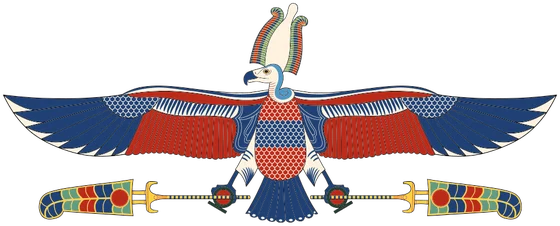
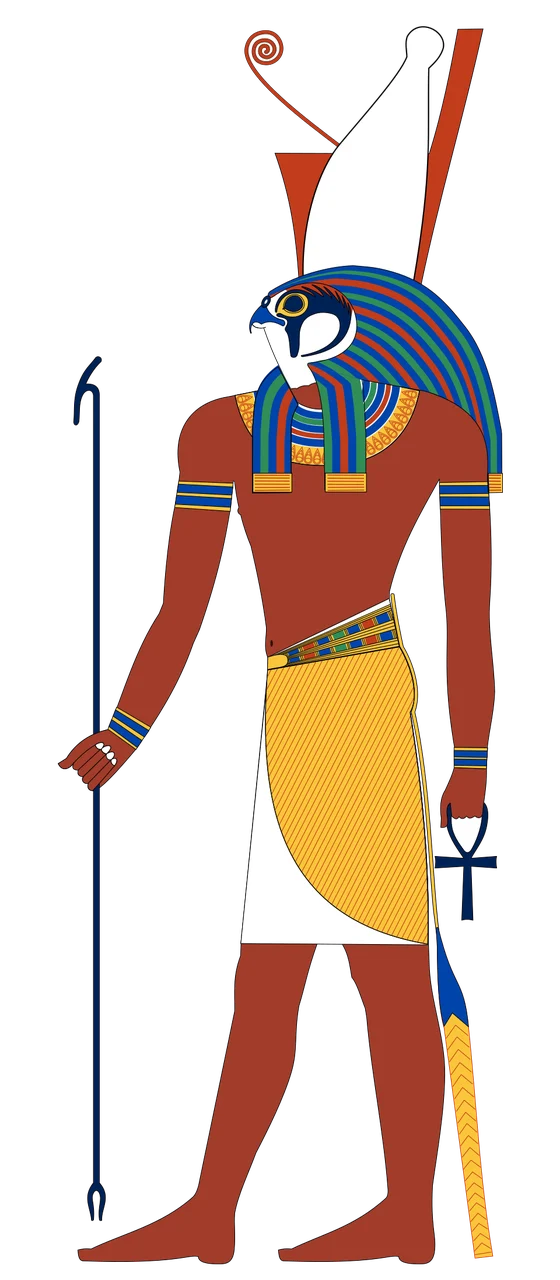
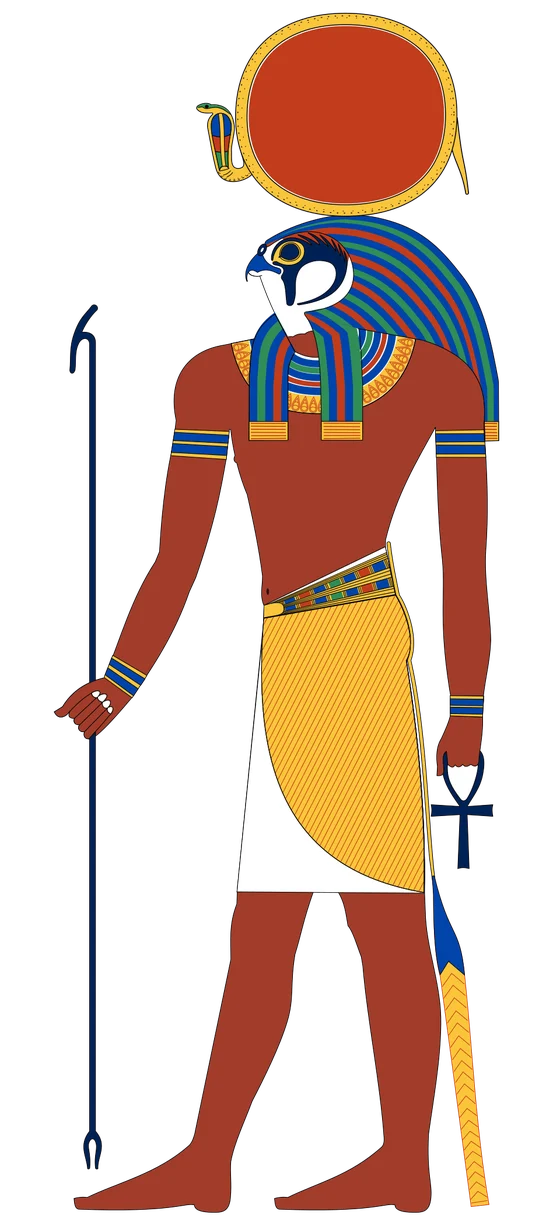
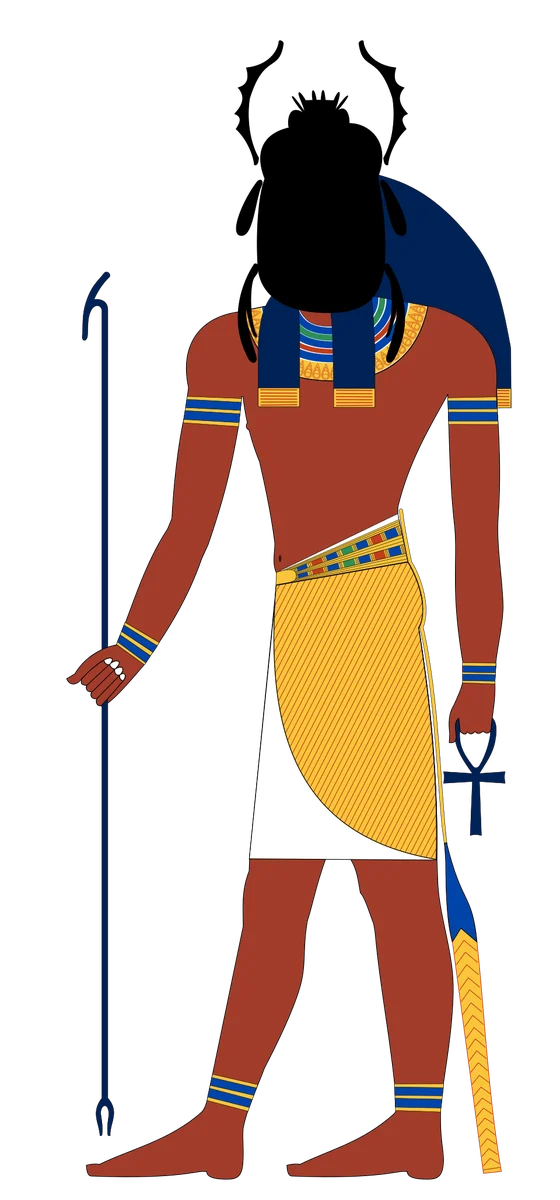
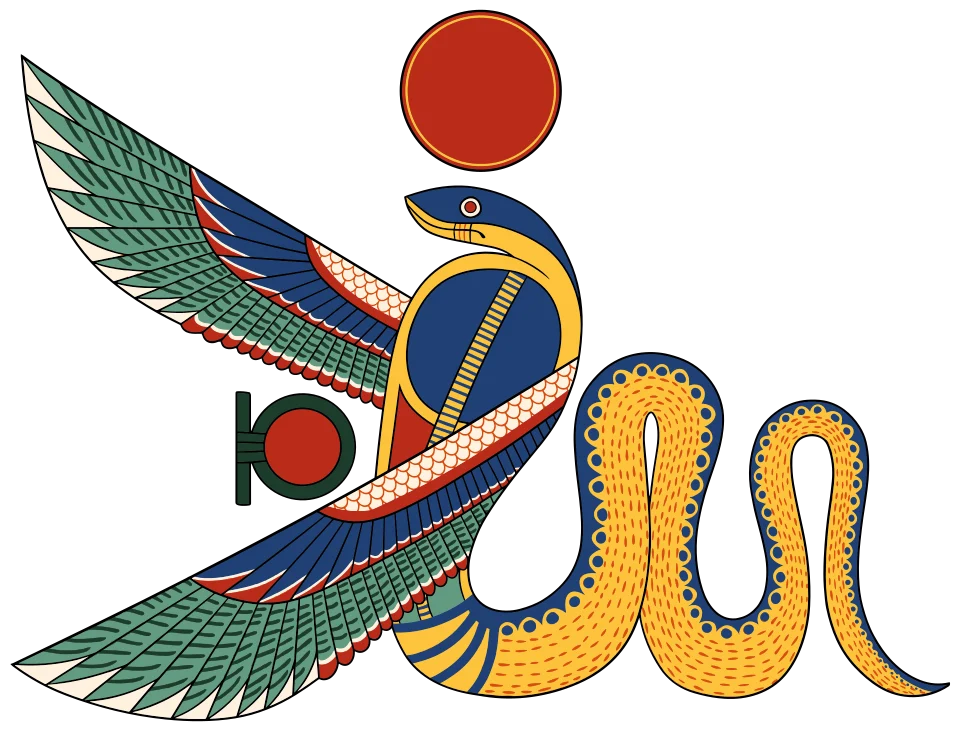
Modern vector interpretation of Egyptian deity iconography, based on historical representations; not a photograph or an original ancient painting. See the credited file description for shared iconography and artistic liberties.
Overview
The winged-disk narrative places Uatchit with Nekhebit in serpent form at the solar boat’s bow, frightening hostile beings into helplessness. Later passages relate these protective forms to the divine emblem and distinguish their northern and southern positions. This makes serpent imagery protective within the selected account, not automatically demonic. The entry does not assume that every Egyptian cobra image can be identified as this goddess without an inscription or object context.
Heru-Behutet’s emblem places the two protective goddesses on different sides. Uatchit is connected with the northern position, while Nekhebit marks the southern one; together they accompany the radiant defender. Their capacity to frighten hostile beings gives the serpent form a guarding function, with position and named company supplying the context for identification.
Origins & earliest records
Uatchit, Uatchet and Wadjet are grouped as forms of the same name. The selected attestation is a temple narrative translated in 1912.
Records & interpretation
The selected attestation is Horus of Edfu and the winged disk, Uatchit in Budge’s translated collection. It documents a textual or ritual representation; commentary and later classical accounts are labeled where used. It does not establish zoological existence, a first oral telling, or a uniform belief shared by all Egyptians.
In the literature
“in the form of two serpents, that they might make the enemies to quake”
Horus of Behutet and the Winged Disk; paragraph beginning “Then Heru-Behutet took upon himself the form of the Winged Disk,…” · E. A. Wallis Budge
Uatchet and Nekhebet take serpent forms beside Heru-Behutet’s winged disk to terrify enemies appearing as crocodiles and hippopotami.
Selected bibliography
Documented works and useful reading. This is not a list of every appearance.
- 01
Legends of the Gods: The Egyptian Texts
Selected witness: Horus of Edfu and the winged disk, Uatchit. Historical translation and commentary; not an exhaustive bibliography.
- 02
Legends of the Gods: The Egyptian Texts, edited with Translations
London,1912; historical English text edited by E.A.WallisBudge. Ancient narrative/ritual translation, separate from modern introduction and footnotes.
Family, evolution & connections
Nekhbet
The British Museum’s cobra ornament is identified as almost certainly Wadjet because it wears the red crown. Its commentary pairs Wadjet of Lower Egypt with Nekhbet of Upper Egypt and their respective crowns; stela EA612 also places both protective goddesses around a winged sun-disc. This records their complementary royal imagery, not parentage, biological kinship or a claim that their animal forms are interchangeable.
Located primary passages
Specific passages supporting details in this entry, grouped by their published witness.
Legends of the Gods: The Egyptian Texts
London,1912; historical English text edited by E.A.WallisBudge. Ancient narrative/ritual translation, separate from modern introduction and footnotes.
- Uatchet and Nekhebet take serpent forms beside Heru-Behutet’s winged disk to terrify enemies appearing as crocodiles and hippopotami.
Specific ancient textual version in a historical English witness; names Uatchet/Nekhebet/Seb/Nu are historical renderings, not separate beings. Plutarch’s version and bracketed restorations must not be universalized. Ritual speech is literary evidence, not an instruction to perform healing or protective practices.
Encyclopedia background
An additional attributed reference, separate from the editorial profile above.
Read the open encyclopedia overview
Wadjet (; Ancient Egyptian: wꜢḏyt "Green One"), known to the Greek world as Uto (; Koine Greek: Οὐτώ) or Buto (; Βουτώ) among other renderings including Wedjat, Uadjet, and Udjo, was originally the ancient Egyptian local goddess of the city of Dep or Buto in Lower Egypt, which was an important site in prehistoric Egypt. Wadjet's worship originally started in the Predynastic period, but evolved over time from a local goddess to a patron goddess.
Wadjet was closely associated in ancient Egyptian religion with the Eye of Ra and the Eye of Horus symbols, each powerful protective deities. The hieroglyph for her eye is shown below; sometimes two are shown in the sky of religious images. There is little consensus on which eye is truly tied to Wadjet as both have some importance to her. The main differences between her eyes are which side of the face they are on, left or right. The color of these eyes in amulets and ceramics are usually created in vibrant blue and green colors, which resemble the goddess's name of "the green one". The green Wadjet eye amulets found in Egyptian daily life provided a token of fertility and protection to those who had them.
Text from Wikipedia contributors, “Wadjet”. CC BY-SA 4.0. Extracted introduction; formatting changed. Retrieved 5 October 2026. The source article may have changed since retrieval.
References
Sources supporting this profile. Linked pages have their own scope and editorial standards.
- Primary-text translation and historical commentaryLegends of the Gods — Horus of Edfu and the winged disk, UatchitResearch access: 2026-10-05
Image credits
Thematic illustrationWadjet
Modern vector interpretation of Egyptian deity iconography, based on historical representations; not a photograph or an original ancient painting. See the credited file description for shared iconography and artistic liberties.