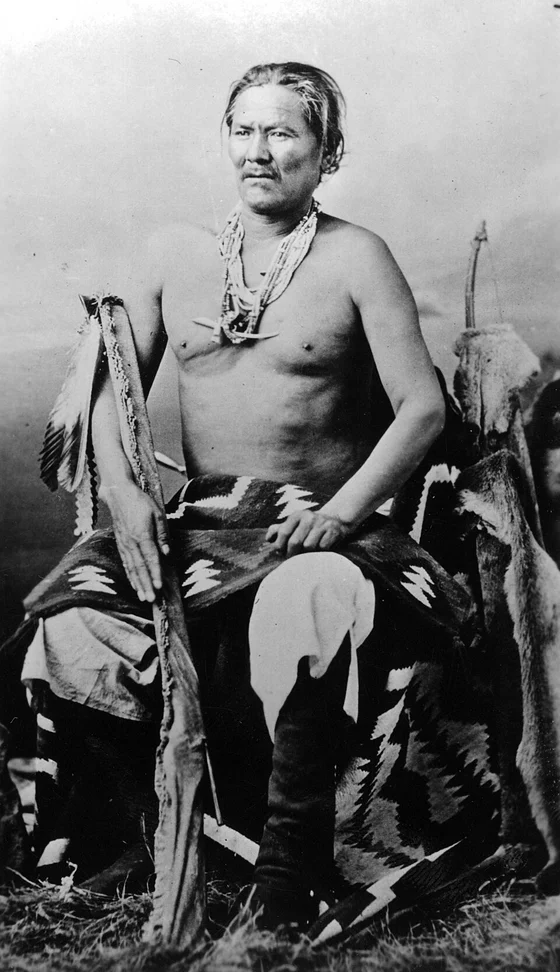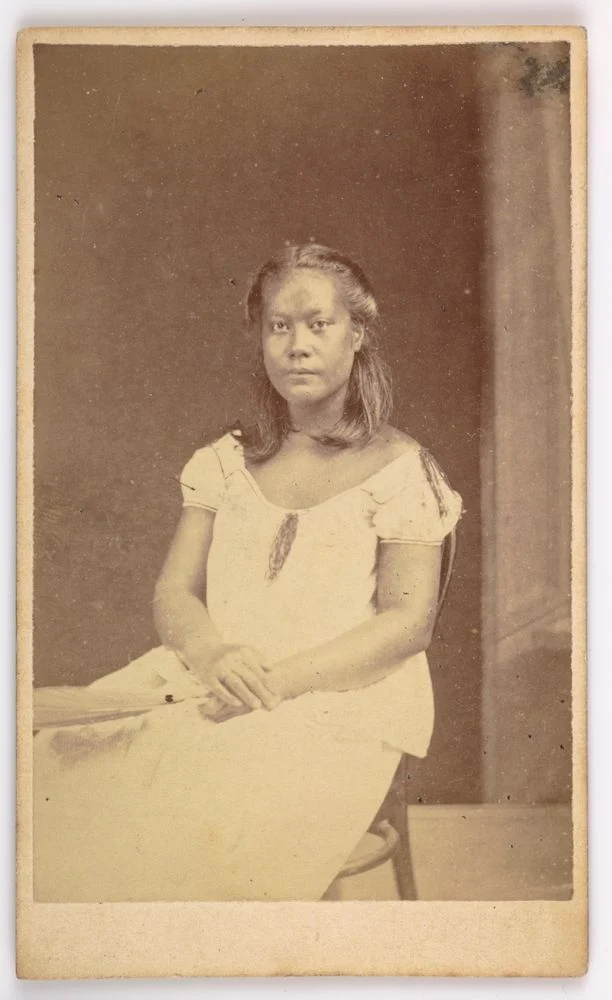
Historical studio portrait catalogued as Girl from Tokelau, Francis Herbert Dufty studio in Fiji, 1871–1886, Te Papa O.043444
Te Papa catalogues this albumen studio portrait as “Girl from Tokelau” and dates the Dufty studio’s production in Fiji to 1871–1886. The sitter’s name is not supplied in the record. This is a particular historical portrait made outside Tokelau, rather than a representative image of contemporary Tokelauan people.
Overview
Tokelauans have homes on Atafu, Nukunonu and Fakaofo and in communities beyond the atolls. The government’s public cultural overview presents faka-Tokelau through family, community and sharing, with village affairs involving elders representing families. It also recognises linguistic and family connections with Samoa and Tuvalu without treating those relationships as identical national or cultural identities. Its account distinguishes the villages of the three atolls and identifies Fenuafala as a second settlement on Fakaofo. The page describes New Zealand citizenship and resettlement during the 1960s and early 1970s as part of migration history. Citizenship, ancestral affiliation and present place of residence nevertheless describe different aspects of a person’s life.
A more explicit discussion of change appears in the Tokelau National Strategic Plan for 2010–2015. Its language-and-cultural-heritage section says culture evolves through contact and identifies oral traditions, performance, crafts and collective gatherings as expressions of it. The plan links language transmission to schools and communities abroad as well as at home. It reports concerns that reduced canoe and traditional-house use can also diminish associated skills and vocabulary. This is a dated statement of challenges and ambitions, rather than a survey of every household today. Its proposals for institutions, teaching and coordinated resources must not be mistaken for evidence that every planned institution or programme was subsequently implemented.
A completed resource project supplies a later, concrete example. In June 2023, the Ministry for Pacific Peoples reported distribution of reprinted copies of the Tokelauan dictionary originally published in 1986. It named collaboration among the Tokelau Dictionary Project Team, the Administrator’s office, the Council for the Ongoing Government of Tokelau and Judith Huntsman. Copies reached communities in New Zealand and several other Pacific and Australian locations. The report connects this sharing with inati, the Tokelauan approach to distributing resources, and describes elders’ support for the work. The dictionary is a language-learning resource; receiving it alone cannot establish fluency. A proposed revision with a wider wordlist remained a goal in that report, distinct from the completed reprint.
These sources present heritage work as something people actively sustain across villages, families and diaspora organisations. Their different dates also matter: the older cultural overview, a finite planning period and the 2023 distribution report cannot be collapsed into one present-day inventory. Language resources and local voices offer complementary evidence of how Tokelauans maintain connections while responding to changing conditions.
History & identity
A living community overview, keeping atoll affiliation, migration history and New Zealand citizenship distinct. The dated 2010–2015 plan and 2023 dictionary project are documentary milestones, not an identity-founding chronology.
Sources & representation
Government cultural self-description and the complete language-and-cultural-heritage section of its historical plan are paired with a complete 2023 Ministry report. Old population, holiday and religious-majority wording is not presented as a current census; planned institutions are not asserted to exist.
Selected bibliography
Documented works and useful reading. This is not a list of every appearance.
- 01
Culture and society
Complete public cultural overview read and cached. Family, village distinctions, migration and linguistic connections retained; undated figures and stale holidays omitted.
- 02
Tokelau National Strategic Plan 2010–2015: Language and cultural heritage
Complete chapter 6, section 4 read with plan date and objectives. Dynamic culture, language and skills concerns are dated evidence; proposed institutions remain plans.
- 03
The journey ke olatia te gagana Tokelau reaches milestone
Complete 12 June 2023 report read and cached. Dictionary reprint, named collaborators, distribution and future revision distinguished; outdated census figures omitted.
- 04
Co-collecting climate change in Tokelau: Project IKA
Rachel Yates, Te Papa blog,3May2021; curator’s account of Project IKA2017
Language & cultural connections
These connections link languages or specific cultural works and institutions; they do not establish biological ancestry or ethnic identity.
Te Papa’s Project IKA
In 2017, councils on Atafu, Fakaofo and Nukunonu recruited local co-collectors to work with Te Papa on climate-change stories and objects. The curator describes community direction of photography and collecting, rather than outsiders independently defining what represents Tokelauan experience.
Located primary passages
Specific passages supporting details in this entry, grouped by their published witness.
Co-collecting climate change in Tokelau: Project IKA
Rachel Yates, Te Papa blog,3May2021; curator’s account of Project IKA2017
- The participating curator documents village-council negotiations and named co-collectors from Atafu, Fakaofo and Nukunonu. Their2017 collaboration selected physical and digital objects and directed photographic documentation of locally important places. The account makes community participation visible in a museum collection’s provenance; it does not supply an exhaustive cultural history or independently establish every climate-impact claim.
Complete main article: Co-collecting; Tokelau and representing climate change; Collecting digital
Curator-mediated account, not a complete transcript of co-collectors’ testimony; embedded clips not watched and images not independently interpreted.
References
Sources supporting this profile. Linked pages have their own scope and editorial standards.
- Government self-descriptionCulture and societyResearch access: 2026-10-05
- Historical government planning documentTokelau National Strategic Plan 2010–2015: Language and cultural heritageResearch access: 2026-10-05
- Government programme reportThe journey ke olatia te gagana Tokelau reaches milestoneResearch access: 2026-10-05
Image credits
Historical community portrait photographHistorical studio portrait catalogued as Girl from Tokelau, Francis Herbert Dufty studio in Fiji, 1871–1886, Te Papa O.043444
Te Papa catalogues this albumen studio portrait as “Girl from Tokelau” and dates the Dufty studio’s production in Fiji to 1871–1886. The sitter’s name is not supplied in the record. This is a particular historical portrait made outside Tokelau, rather than a representative image of contemporary Tokelauan people.