Svaðilfari
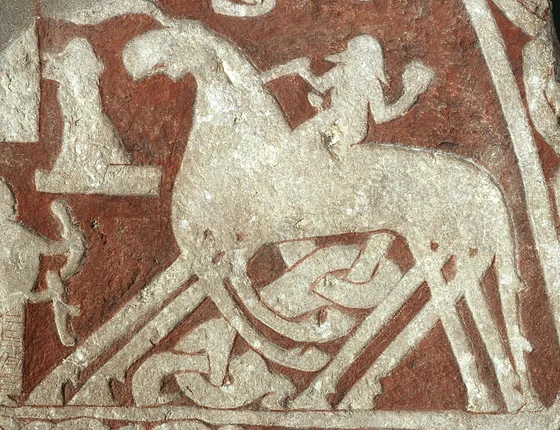
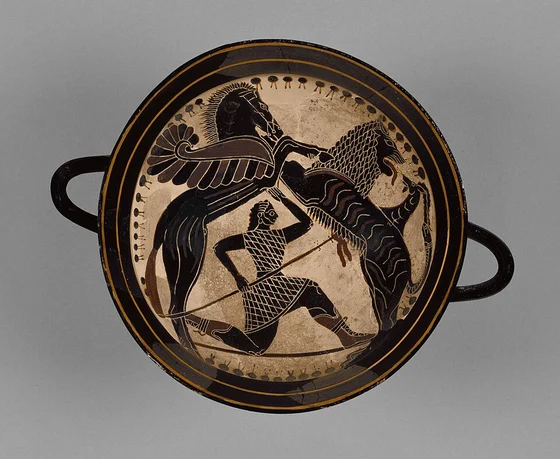
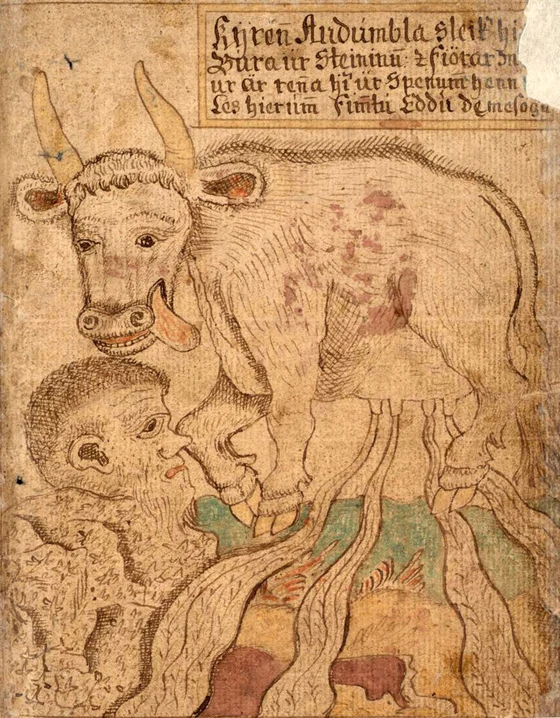
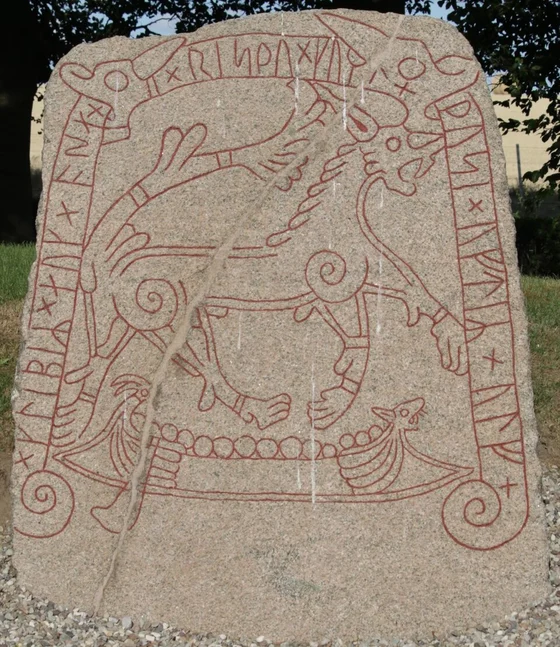
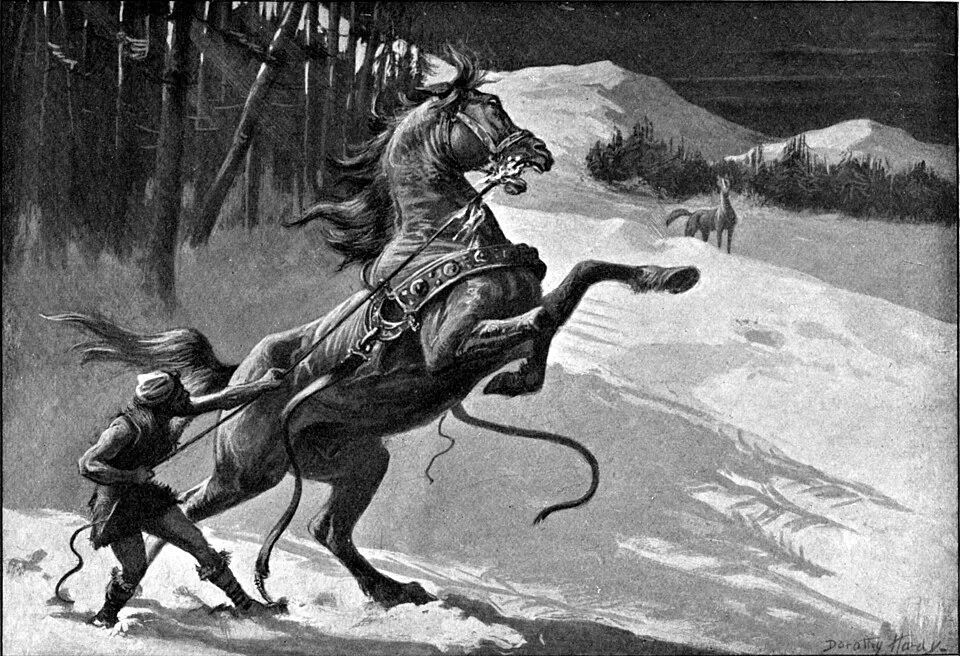
Image associated with the exact linked encyclopedia article; consult credited file description for its interpretation.
Overview
Svaðilfari is the extraordinary working horse in the story explaining Sleipnir’s birth. In Anderson’s translation of Gylfaginning, a builder first offers to construct a stronghold for the gods in three half-years, demanding Freyja, the sun and the moon as payment. The gods instead agree to a deadline of one winter, with the contract void if any part remains unfinished on the first day of summer. No man may help the builder, but Loki persuades them to allow his horse, called Svadilfare in this edition.
The builder works from the first day of winter and hauls stone at night. The gods are astonished by the size of the rocks the horse pulls and by how much of the work it performs. The strength of this permitted helper makes a bargain the gods expected to be safe suddenly dangerous. With three days left before summer, only the gate remains unfinished. The story therefore makes the stallion’s labour central to the threatened loss of Freyja and the lights of the sky.
The gods blame Loki and threaten him unless he prevents completion. That evening Loki appears as a mare near the stone-hauling route. Svaðilfari breaks his reins and follows her into the woods. The builder chases them, but the horses run all night, leaving the construction behind its usual progress. The distraction works because the builder depends on the horse; it is not a duel in which the stallion is defeated by greater strength.
When the builder sees that he cannot finish, he reveals his giant form. The gods abandon their sworn agreement and summon Thor, who kills him with a hammer blow. The quoted verse following the prose also draws attention to broken oaths and promises. This ending belongs to the contractual conflict surrounding the horse; it should not be softened into a simple account of an honest contest won by the gods.
Loki later bears a grey foal with eight feet: Sleipnir. The account identifies the consequence of the mare-and-stallion encounter without giving Svaðilfari an independent later history. His relationship to Sleipnir is narrative parentage, while Loki’s change of form is a transformation within that same story. The selected text does not name the builder or supply Svaðilfari with wings.
Origins & earliest records
Directly inspected in Anderson’s The Fooling of Gylfe, Chapter XIII, paragraph 43, pp. 109–112, including the concluding verse attributed to the Vala’s Prophecy. The title page of the selected edition is 1901; the copyright notice is 1879. This is an English witness to the medieval Gylfaginning account, not a first oral attestation.
Records & interpretation
The complete bargain, stone-hauling, mare pursuit, builder’s death, foal and quoted verse were read. They support a literary account of extraordinary strength and kinship, not an archaeological identification of a horse or stronghold.
In the literature
“the horse did one half more of the mighty task than the builder.”
The Fooling of Gylfe, chapter XIII, section 43 · Rasmus Björn Anderson
Svaðilfari performs an extraordinary share of the fortification work.
Selected bibliography
Documented works and useful reading. This is not a list of every appearance.
- 01
The Younger Edda: The Fooling of Gylfe
Chapter XIII, Odin’s Horse and Frey’s Ship, paragraph 43, pp. 109–112; complete Sleipnir-origin episode and attached verse read.
- 02
The Younger Edda
Chicago: Scott, Foresman and Company, 1901; translation copyright 1879, with translator’s preface dated September 1879.
Family, evolution & connections
Sleipnir
In the builder episode, Loki takes mare form and diverts Svaðilfari, then bears an eight-legged foal. The edition’s explanatory vocabulary explicitly names Svaðilfari as Sleipnir’s sire. This is narrated magical parentage.
Located primary passages
Specific passages supporting details in this entry, grouped by their published witness.
Primary source witness
Chicago: Scott, Foresman and Company, 1901; translation copyright 1879, with translator’s preface dated September 1879.
- Svaðilfari performs an extraordinary share of the fortification work.
This documents Snorri’s literary account in Anderson’s translation, not zoological existence or a universal account of all Norse traditions.
Primary source witness
Rasmus Björn Anderson translation, Chicago: Scott, Foresman and Company, 1901; translation copyright 1879.
- The gods permit the builder the help of his horse at Loki’s suggestion.
- The mare distracts Svaðilfari and interrupts the builder’s work.
Version-specific detail in the translated literary narrative; not an earliest-attestation or real-fauna claim.
Encyclopedia background
An additional attributed reference, separate from the editorial profile above.
Read the open encyclopedia overview
In Norse mythology, Svaðilfari is a stallion that fathered the eight-legged horse Sleipnir with Loki (in the form of a mare). Svaðilfari was owned by the disguised and unnamed jötunn who built the walls of Asgard.
Text from Wikipedia contributors, “Svaðilfari”. CC BY-SA 4.0. Extracted introduction; formatting changed. Retrieved 5 October 2026. The source article may have changed since retrieval.
References
Sources supporting this profile. Linked pages have their own scope and editorial standards.
- Primary textAnderson, The Younger Edda, Chapter XIII, paragraph 43Research access: 2026-10-05
Image credits
Reference illustrationSvaðilfari
Image associated with the exact linked encyclopedia article; consult credited file description for its interpretation.