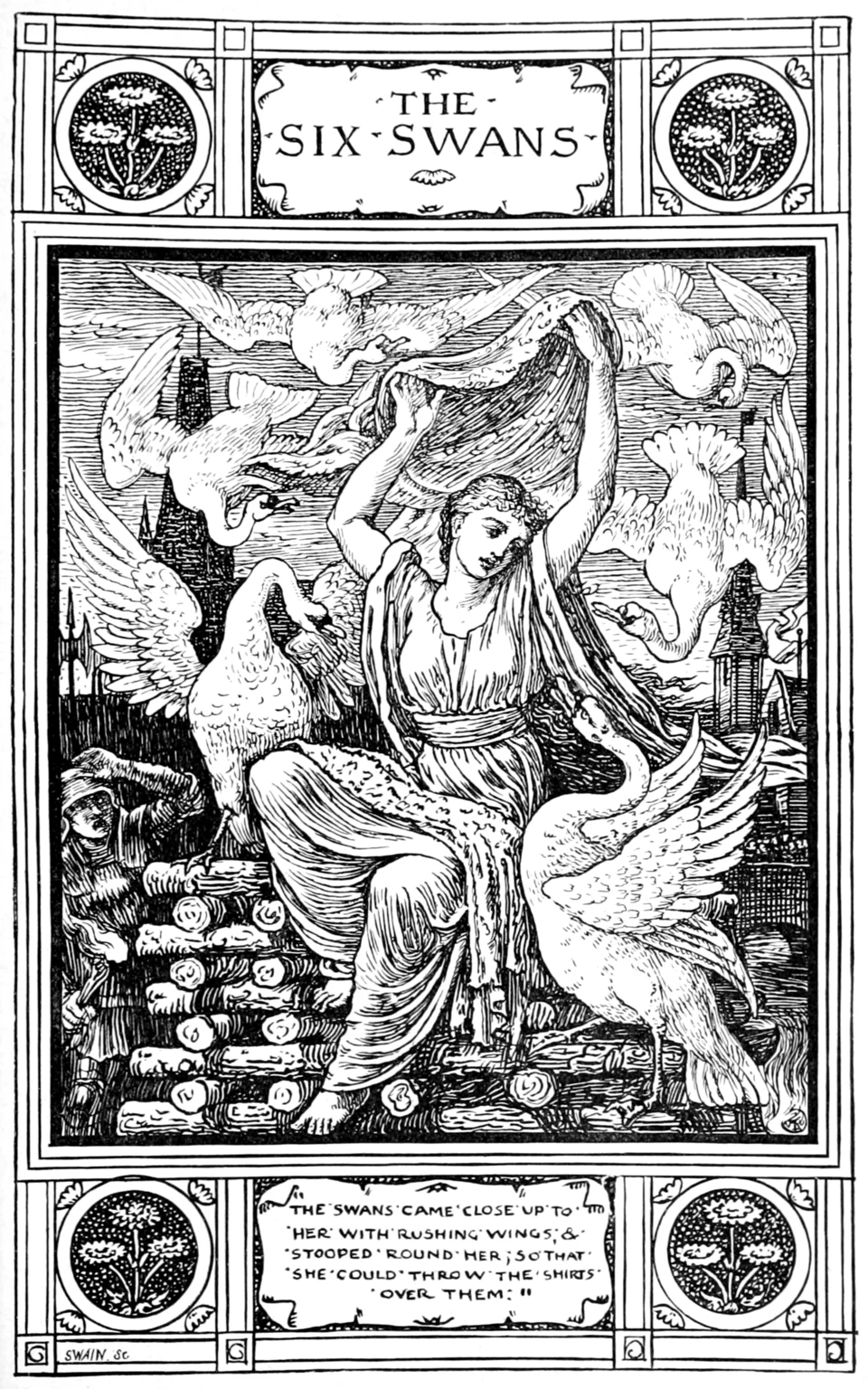
Six Swan Brothers
Image associated with the exact linked encyclopedia article; consult credited file description for its interpretation.
Overview
The princes’ stepmother finds their hidden forest castle and throws enchanted shirts over them. They become swans, while their sister escapes the attack by remaining indoors. She discovers that they can shed the swan skins for only a quarter-hour each evening. Their brief conversations establish a remedy requiring six years without speech or laughter while she sews six shirts of starwort.
Her silence leaves her unable to answer false accusations at another royal court. At the threatened execution, the swans arrive and receive the shirts, restoring the brothers. The youngest retains a wing because one sleeve is unfinished. The shared enchantment remains one flock entry, and the incomplete rescue matters: this version does not conclude with every trace of the animal form erased.
The enchantment begins with their father’s second marriage. Lost while hunting, he accepts a witch’s condition that he marry her daughter in return for directions out of the forest. He already has six sons and a daughter by his first wife. Fearing his new wife’s intentions, he places the children in a concealed castle reached by following a magical ball of yarn. That protective route becomes a weakness when the queen bribes servants to disclose the secret and finds the ball.
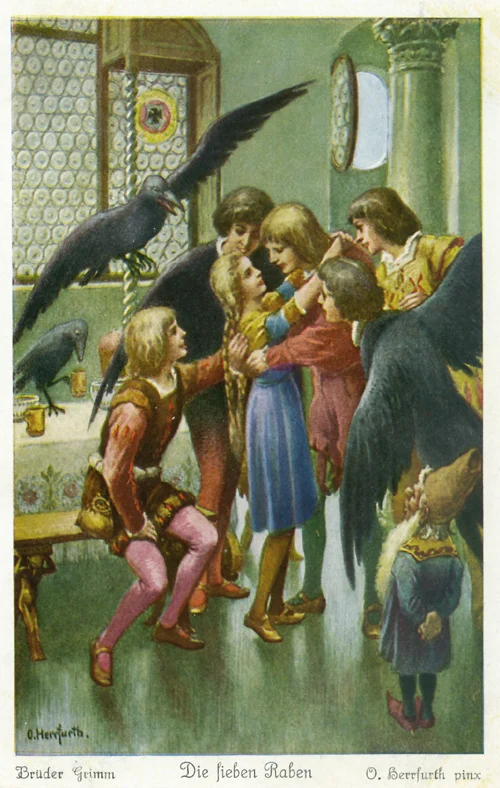
The queen learned witchcraft from her mother and sews charms into six small white silk shirts. The boys run to meet her because they mistake the approaching visitor for their father. Each becomes a swan as a shirt touches him. Their sister remains indoors and later shows their father feathers from the courtyard. He mourns but does not believe his wife responsible. The girl secures one more night in the castle and leaves alone to search for the transformed brothers.
She discovers a hut containing six beds and hides underneath one. At sunset the swans enter, blow the feathers from one another and shed their skins like shirts. Their restored human interval lasts only fifteen minutes. The place belongs to robbers, and the brothers cannot guarantee her safety there. Their explanation of the cure combines a time condition with material work: she must neither speak nor laugh for six years while making six shirts of starwort. One spoken word would undo her labor.
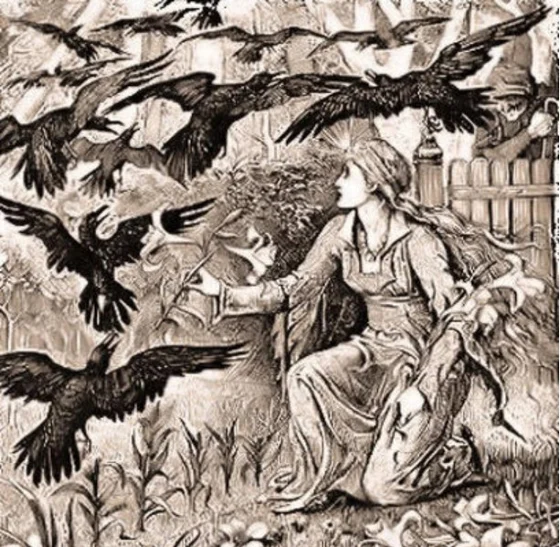
The sister gathers the plants and sews in a tree. When another king’s huntsmen discover her, she tries to send them away by throwing down ornaments and clothing, but they climb up and take her down. The king covers her with his mantle, brings her to court and marries her. This scene differs from the sister’s nod of agreement in The Twelve Brothers. The selected translation does not turn the huntsmen’s insistence into an expressed invitation from the silent girl.
The king’s mother removes each of the queen’s three newborn children and stains the sleeping mother’s mouth with blood. She then accuses her of eating them. The king rejects the first two accusations, but after the third the silent queen is condemned. The children are hidden and eventually recovered alive. The narrative’s accusation must therefore not be repeated as an actual deed of the sister.
On the final day of the six years, the shirts are complete except for one left sleeve. The six swans arrive while the execution fire is about to be lit. She throws the garments over them and their skins fall away. Five brothers return wholly to human form; the youngest has a swan’s wing where his left arm should be. Once able to speak, the queen exposes the deception and reunites with her children. The hostile older woman is executed, but the text never supplies a later cure for the remaining wing.
Origins & earliest records
This entry follows tale 49 in the Grimm brothers’ Household Tales, using Margaret Hunt’s 1884 English translation. The collection was repeatedly revised during the nineteenth century and mediates material from storytellers and earlier literature. Its publication and translation dates identify the selected witness, not the beginning of every related oral narrative.
Records & interpretation
Complete tale 49 read in Hunt’s English text, including the final transformation or marriage and punishment. The 1884 volume title and translator’s preface were also inspected in transcription. Hunt explains editorial selection and combination of variants, so this is a located literary witness rather than a verbatim field recording. No German manuscript collation or verification of supernatural existence is claimed.
In the literature
“had in the place of it a swan’s wing on his shoulder.”
Tale 49 The Six Swans; paragraph beginning “When the day came for the sentence to be executed, it was…” · Margaret Hunt
The youngest brother retains a wing where the incomplete shirt lacked a left sleeve.
Selected bibliography
Documented works and useful reading. This is not a list of every appearance.
- 01
Household Tales, tale 49: The Six Swans
Complete numbered tale 49, including its ending, read in English transcription. The 1884 edition identifies Margaret Hunt as translator; the translator’s preface was separately checked. This is one selected witness, not an exhaustive variant bibliography.
- 02
Household Tales: 49 The Six Swans
Margaret Hunt’s English translation, London: George Bell and Sons, 1884; Gutenberg e-text identifies Hunt. Translation date corroborated by the Wikisource scanned title page and National Library of New Zealand catalogue.
Family, evolution & connections
Unnamed sister in The Six Swans
Hunt’s Six Swans begins with six sons and one daughter born to the king’s first wife. The daughter escapes the stepmother’s transforming shirts and undertakes six years of silence while sewing starwort shirts to release her brothers. The text leaves these siblings unnamed; their human family relationship persists through their enchanted bird forms.
Twelve Raven Brothers
Hunt’s Six Swans requires six years without speech or laughter and six starwort shirts; an unfinished sleeve leaves the youngest brother with a wing. The Twelve Brothers instead requires seven years of silence after the sister picks twelve enchanted lilies. The parallel concerns sibling rescue and silence, while the triggers, tasks and outcomes remain distinct.
Located primary passages
Specific passages supporting details in this entry, grouped by their published witness.
Household Tales, tale 49: The Six Swans
Margaret Hunt’s English translation, London: George Bell and Sons, 1884; Gutenberg e-text identifies Hunt. Translation date corroborated by the Wikisource scanned title page and National Library of New Zealand catalogue.
- The youngest brother retains a wing where the incomplete shirt lacked a left sleeve.
- The stepmother uses enchanted shirts to transform her stepchildren.
- The sister must make starwort shirts during six silent years.
This describes the version printed in Hunt’s translation; German tale origin and other versions require separate evidence.
References
Sources supporting this profile. Linked pages have their own scope and editorial standards.
- Primary textGrimm/Hunt, Household Tales, tale 49Research access: 2026-10-05
- Historical edition and editorial statementGrimm’s Household Tales, volume I (1884): title and translator’s prefaceResearch access: 2026-10-05
Image credits
Reference illustrationSix Swan Brothers
Image associated with the exact linked encyclopedia article; consult credited file description for its interpretation.