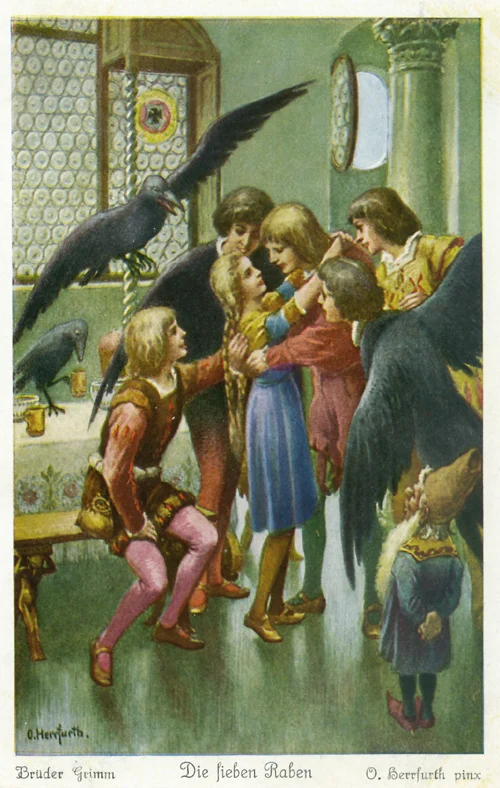
Seven Raven Brothers
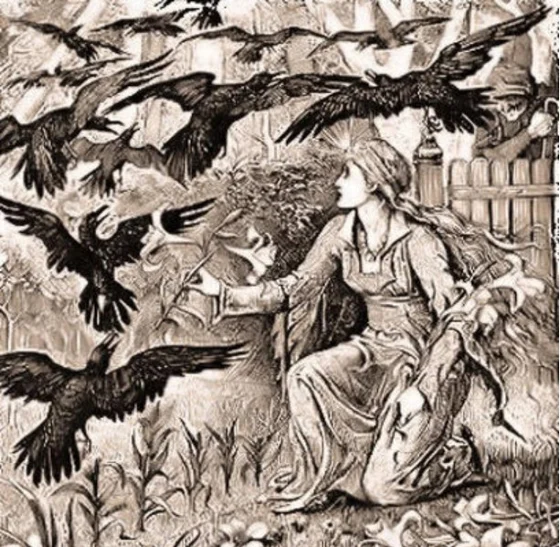
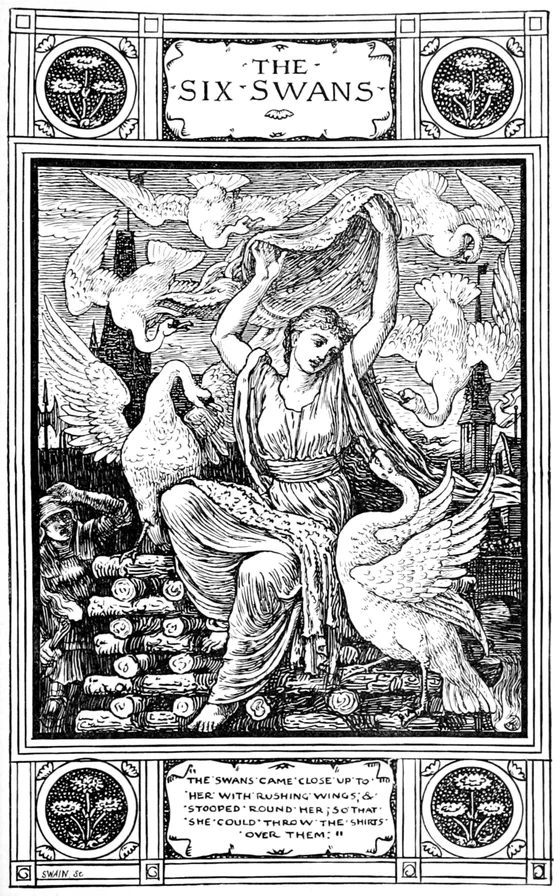
Image associated with the exact linked encyclopedia article; consult credited file description for its interpretation.
Overview
The brothers accidentally lose the vessel needed to bring baptismal water for their newborn sister. Their father mistakes the delay for disobedience and wishes them into raven form; the words take effect immediately. The girl grows up unaware of the loss before learning of it and leaving home with a family ring. Her birth causes the circumstances of the curse without making her responsible for her father’s act.
She passes hostile sun and moon figures and receives help from the stars before reaching the Glass Mountain. Inside she samples the seven brothers’ meal and leaves the ring in a cup. The ravens recognise it, wish their sister present, and regain human form when she appears. Their common curse and recognition make a single flock profile, with a rescue mechanism distinct from Grimm’s other bird-brother stories.
The journey’s objects matter as much as the eventual recognition. The girl carries bread, water, a small chair and her parents’ ring; the helpful morning star supplies a chicken drumstick to open the Glass Mountain. When she discovers that this key is lost, she cuts off a little finger and uses it to open the door. A dwarf then brings the brothers’ separate plates and glasses, enabling her to sample each portion and leave the ring in the last glass. The tale therefore joins bodily sacrifice, hospitality and a recognisable family possession in its rescue, rather than requiring the long silence used in The Twelve Brothers.
Origins & earliest records
This entry follows tale 25 in the Grimm brothers’ Household Tales, using Margaret Hunt’s 1884 English translation. The collection was repeatedly revised during the nineteenth century and mediates material from storytellers and earlier literature. Its publication and translation dates identify the selected witness, not the beginning of every related oral narrative.
Records & interpretation
The numbered tale supplies the being’s appearance, speech and actions in a collected literary narrative. It documents storytelling and editorial transmission, rather than biological existence or actual animal behaviour. Different editions and related oral tales may alter transformations, endings or motives; the selected passage is identified so those differences can be compared.
In the literature
“all the ravens were restored to their human form again.”
Tale 25 The Seven Ravens; paragraph beginning “Suddenly she heard a whirring of wings and a rushing through the…” · Margaret Hunt
The sister’s appearance releases the seven brothers from raven form.
Selected bibliography
Documented works and useful reading. This is not a list of every appearance.
- 01
Household Tales, tale 25: The Seven Ravens
Specific public-domain collected tale inspected. The selected English edition is a literary witness, not a transcript of a universal oral version.
- 02
Household Tales: 25 The Seven Ravens
Margaret Hunt’s English translation, London: George Bell and Sons, 1884; Gutenberg e-text identifies Hunt. Translation date corroborated by the Wikisource scanned title page and National Library of New Zealand catalogue.
Family, evolution & connections
Unnamed sister in The Seven Ravens
The Seven Ravens gives an unnamed couple seven sons and a later daughter. Their father’s angry wish transforms the sons after they fail to bring baptismal water. The daughter eventually reaches them, carrying her parents’ ring as a recognition token. This source-specific sibling connection does not identify the family with the separate Twelve Brothers tale.
Twelve Raven Brothers
Seven Ravens transforms seven sons through their father’s angry wish and frees them when their sister arrives and is recognized by a ring. Twelve Brothers transforms twelve sons when their sister picks lilies and requires seven years of silence. These are separate Grimm narratives with comparable family motifs, rather than one genealogy with inconsistent numbers.
Located primary passages
Specific passages supporting details in this entry, grouped by their published witness.
Household Tales, tale 25: The Seven Ravens
Margaret Hunt’s English translation, London: George Bell and Sons, 1884; Gutenberg e-text identifies Hunt. Translation date corroborated by the Wikisource scanned title page and National Library of New Zealand catalogue.
- The sister’s appearance releases the seven brothers from raven form.
- The sister opens the Glass Mountain with a severed finger after losing the star’s gift.
- A family ring helps a raven brother recognize the sister’s presence.
This describes the version printed in Hunt’s translation; German tale origin and other versions require separate evidence.
References
Sources supporting this profile. Linked pages have their own scope and editorial standards.
- Primary textGrimm/Hunt, Household Tales, tale 25Research access: 2026-10-05
Image credits
Reference illustrationSeven Raven Brothers
Image associated with the exact linked encyclopedia article; consult credited file description for its interpretation.