Sirens
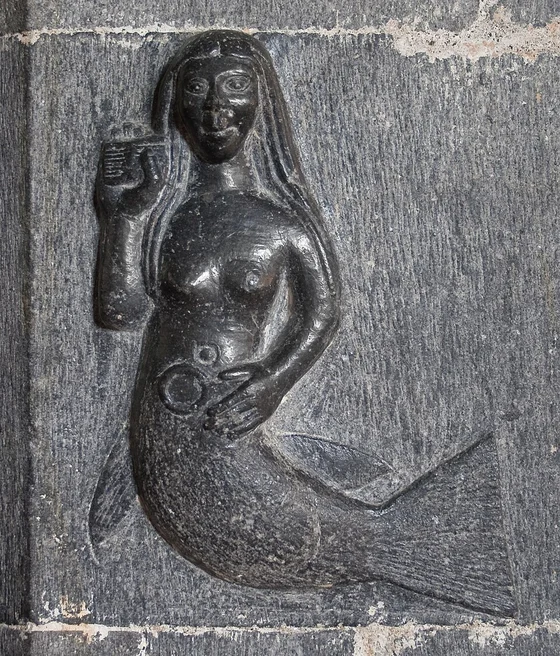
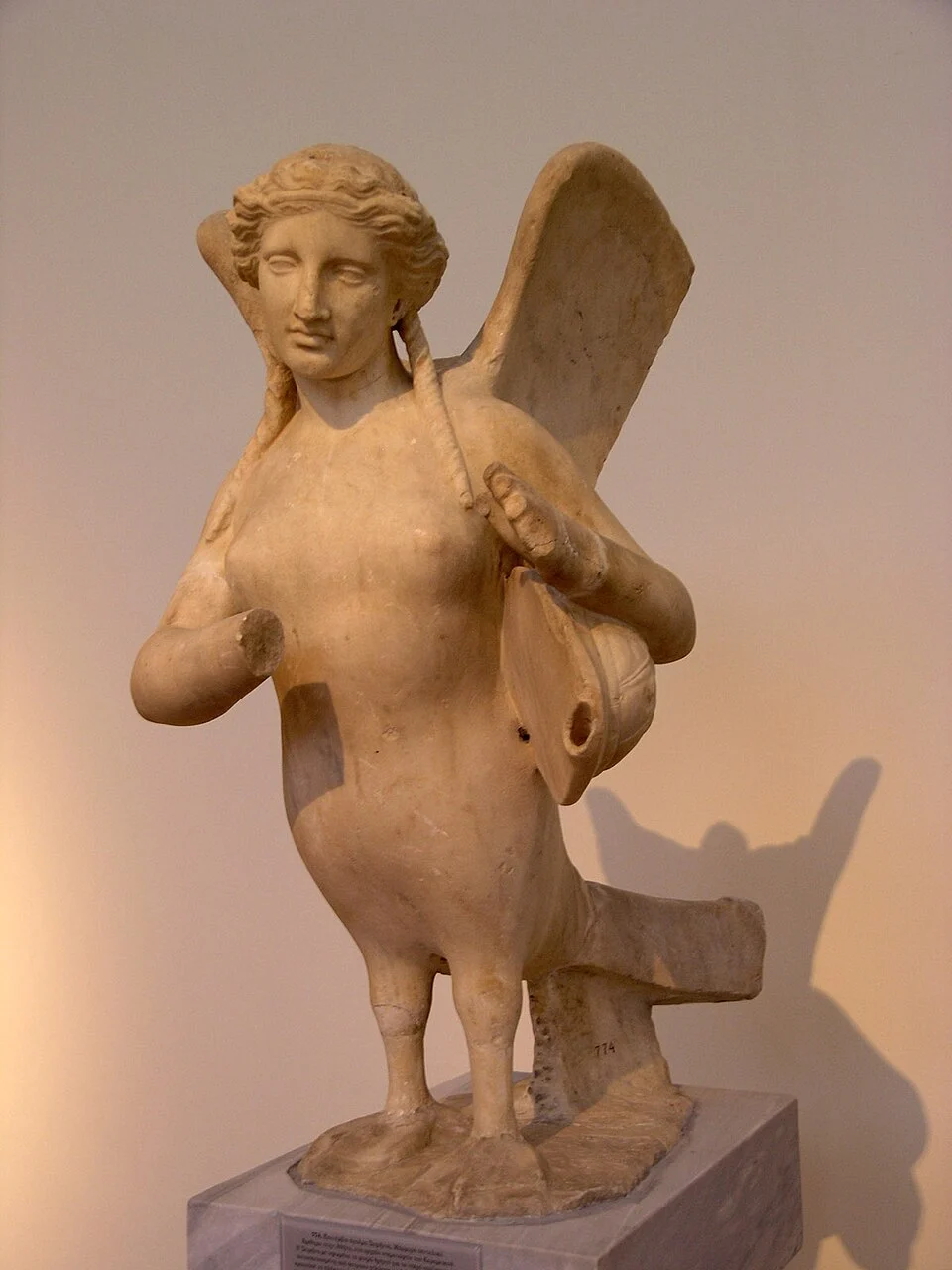
Image associated with the exact linked encyclopedia article; consult credited file description for its interpretation.
Overview
The Sirens are supernatural singers whose voices imperil passing sailors. Different ancient works give them different parents, names and bodily forms, and place their encounters within the voyages of Odysseus or the Argonauts. Their music can promise knowledge, overpower resolve or be answered by another musician. These literary singers and the bird-women of surviving art form a connected tradition with substantial variation.
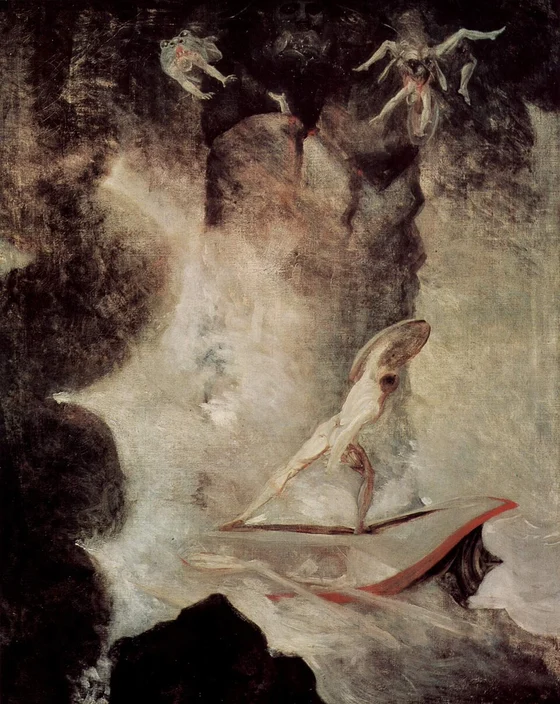
In Odyssey XII, Circe describes a meadow surrounded by the bones and decaying remains of earlier listeners. She instructs Odysseus to seal his crew’s ears with wax and, if he wants to hear the song himself, have them bind him upright at the mast. He repeats the instructions before the encounter. When the wind falls, the sailors lower the sail and row, while he softens the wax with his hands and the sun’s warmth. The singers address him by name and offer knowledge of Troy and the wider world. His signal for release fails: Eurylochus and Perimedes tighten his bonds, and the crew removes the wax only beyond hearing distance. The passage succeeds through advance agreement and coordinated action. It supplies neither individual Siren names nor a detailed bird-woman anatomy.
Apollonius’s Argonautica IV places the singers on Anthemoessa and calls them children of the river Achelous and the Muse Terpsichore. They formerly attended Demeter’s unmarried daughter; Seaton’s translation describes them as partly birds and partly maidens. The Argonauts are about to moor when Orpheus’s rapid lyre-playing overcomes their voices. Butes nevertheless leaps overboard and swims toward them. Aphrodite rescues him and settles him on the Lilybean height, while the distressed company sails on toward further dangers. Orpheus protects the voyage through competing sound, but the episode does not present his performance as preventing every individual response.
The Epitome attributed to Apollodorus, VII.18–19, instead gives Melpomene as their mother and names Pisinoe, Aglaope and Thelxiepia. It assigns the three performers separate parts: lyre, singing and flute. Their bodies have bird form from the thighs downward. Its shortened Odysseus episode adds a prediction that the Sirens must die when a ship passes them, followed by their death. That conclusion belongs to this account; Homer’s narrated escape does not include it. The names, number and parentage should therefore stay attached to their witnesses rather than become one fixed family list.
Ovid’s Metamorphoses V.551–563 offers an explanation for wings within Calliope’s account of Proserpina’s abduction. The Sirens had been among her companions and searched for her across the world. They wished for wings so that the search could cross the sea, and the gods granted them feathers while preserving their human faces and voices. The passage distinguishes their transformation from the preceding punishment of Ascalaphus, who becomes an owl after reporting Proserpina’s eating. It connects avian form with a search for their lost companion, not an account of sailors or mermaid tails.
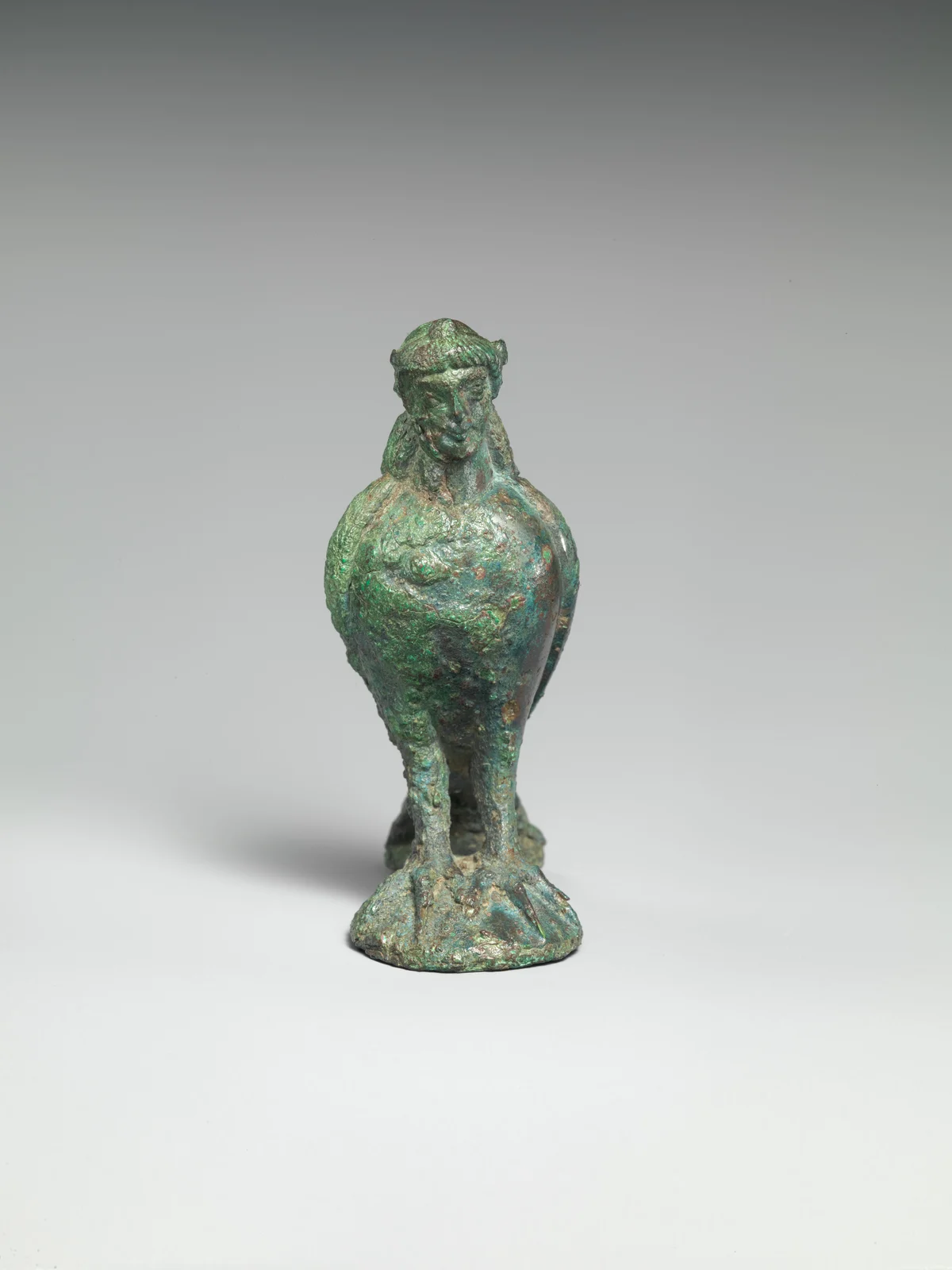
Material witnesses show how artists combined human and bird features. The Menil Collection’s terracotta Siren, accession 1967-20 DJ, dates to the late sixth century BCE. Its catalogue cautiously describes a reported Boeotian origin and identifies a woman’s head on a bird’s body, a diadem, remaining white slip and painted detail. The Metropolitan Museum’s South Italian or Etruscan bronze, accession 1996.42, dates to about 500 BCE and wears a flower-decorated diadem. The proposed position on a vase lid remains a museum suggestion. These are dated representations with their own production histories, rather than illustrations assumed to reproduce Homer’s unstated anatomy.
Origins & earliest records
The Odyssey is the earliest literary witness examined here; the selected surviving objects date to the late sixth century BCE and about 500 BCE. These witnesses do not establish the first oral telling or the earliest Siren image worldwide. Later authors supply named parents, individual names and transformation stories absent from the Homeric encounter.
Records & interpretation
Epic, mythographic prose and catalogued ancient objects document a history of representation. Named descent from Achelous with either Terpsichore or Melpomene is a source-specific narrative genealogy, not biological classification. No zoological evidence follows from the literary ability to enchant or from bird-human figures in art. Similarity to other supernatural singers or mermaids does not by itself prove common origin or direct creative influence.
Additional images
 View larger
 South Italian or Etruscan bronze siren with human head and bird body, about500BCE
The bronze gives the Siren a human head, feathered body, wings and bird feet, with a floral diadem. The Met suggests that it may originally have stood on a vase lid. This is separate evidence for an ancient artistic form; Homer’s encounter does not describe this complete anatomy, and the figure is distinct from a fish-tailed mermaid.
In the literature
“they sit in a green field and warble him to death with the sweetness of their song.”
Book XII, Circe’s warning; paragraph beginning “So far so good” · Samuel Butler
Homer associates the Sirens’ song with fatal attraction; no fish-tail anatomy is asserted.
“he who listens will go on his way not only charmed, but wiser,”
Book XII, Sirens’ address; paragraph beginning “Come here” · Samuel Butler
The Sirens promise knowledge as part of their enticement, rather than the narrator validating that promise.
“the lyre overcame the maidens' voice.”
BookIV885–921, Orpheus’s counter-song · R.C.Seaton
Orpheus’s lyre overcomes the Sirens’ voices for most of the crew; Butes nevertheless jumps and requires Cypris’s rescue.
Selected bibliography
Documented works and useful reading. This is not a list of every appearance.
- 01
Odyssey, Book XII
Circe’s full warning and the complete encounter through release of Odysseus; no anatomical description imported from later texts.
- 02
Argonautica IV, passage beginning at line 885, through 921
Anthemoessa, Terpsichore parentage, Orpheus and Butes, including Aphrodite’s rescue and the departure.
- 03
Library, Epitome VII.18–19
Named trio, Melpomene parentage, instruments, bird form, Odysseus and the death prediction.
- 04
Metamorphoses V.551–563
Companionship with Proserpina and requested wings, read with the surrounding Calliope narrative and distinct Ascalaphus transformation.
- 05
The Odyssey
Butler prose translation, originally published 1900 as confirmed by the second-edition preface; hosted corrected reprint. No unverified reprint date assigned.
- 06
Argonautica, BookIV: Sirens encounter
R.C.Seaton historical English translation1912, root edition handoff; selected host chapter explicitly identifies Seaton. Complete ArgonauticaIV885–921 independently reread, not full work.
- 07
The Library, EpitomeVII: Sirens encounter
Frazer1921 English translation, UVic hosted digitisation identifies original publication/Perseus markup. Complete EpitomeVII18–19 independently read; surrounding sentences inspected as context.
- 08
Metamorphoses, BookV: Sirens’ wings
BrookesMore historical translation1922, root edition handoff; translator explicitly identified by host. Complete MetamorphosesV551–563 and immediate Ascalaphus/Proserpina context independently read, not full book.
Family, evolution & connections
Scylla
Odyssey Book 12 places the Sirens’ alluring song and Scylla’s physical attack among different hazards of the same voyage. Their connection is structural: one danger is met through restraints and protected hearing, while the other forces a choice about sailing past. This does not make them one creature family or prove shared historical origins.
Located primary passages
Specific passages supporting details in this entry, grouped by their published witness.
Primary source witness
Butler prose translation, originally published 1900 as confirmed by the second-edition preface; hosted corrected reprint. No unverified reprint date assigned.
- Homer associates the Sirens’ song with fatal attraction; no fish-tail anatomy is asserted.
Book XII, Circe’s warning; paragraph beginning “So far so good”
- The Sirens promise knowledge as part of their enticement, rather than the narrator validating that promise.
This passage documents one ancient literary version. Translation publication dates are not ancient composition dates or earliest-attestation claims.
Odyssey, Book XII
Samuel Butler historical Odyssey translation first published1900; selected digital witness includes second-edition preface byHenryFestingJones, dated December4,1921. Complete selected BookXII warning and encounter independently reread, not entire Odyssey.
- Circe warns that the singing prevents return to family and describes bones around the singers’ meadow; she prescribes wax for the crew and a mast-bound listener, tightened if he asks release. Odysseus prepares the wax, is bound and hears two voices claiming knowledge of Troy and the world. His signs for release cause Eurylochus and Perimedes to bind him more tightly, and the crew removes wax and bonds only after passing beyond hearing.
The two singers are not individually named or assigned bird/fish anatomy here. Claimed omniscience is their enticement, not narrator proof. No Siren death follows in this passage.
Argonautica IV, passage beginning at line 885, through 921
R.C.Seaton historical English translation1912, root edition handoff; selected host chapter explicitly identifies Seaton. Complete ArgonauticaIV885–921 independently reread, not full work.
- Achelous and Terpsichore’s daughters inhabit Anthemoessa, formerly attended Demeter’s unmarried daughter and appear partly maiden, partly bird. As the Argonauts prepare to approach, Orpheus fills their ears with his lyre and overcomes the song. Butes alone jumps and swims toward them; Cypris rescues him to the Lilybean height. The remaining crew passes, grieving him.
Butes is not saved by Orpheus’s music alone and does not drown in this telling. The daughters’ mother differs from the Epitome; no Siren death is narrated.
Library, Epitome VII.18–19
Frazer1921 English translation, UVic hosted digitisation identifies original publication/Perseus markup. Complete EpitomeVII18–19 independently read; surrounding sentences inspected as context.
- Pisinoe, Aglaope and Thelxiepia are Achelous and Melpomene’s daughters, bird-shaped from the thighs and differentiated as lyre-player, singer and flute-player. Following Circe, Ulysses uses wax and mast binding; his requests for release produce tighter bonds. Their foretold death when a ship passes is fulfilled after his escape.
Three names and Melpomene belong to this version, not Homer’s two unnamed voices or Apollonius’s Terpsichore parentage. The manner of their death is not supplied here.
Metamorphoses V.551–563
BrookesMore historical translation1922, root edition handoff; translator explicitly identified by host. Complete MetamorphosesV551–563 and immediate Ascalaphus/Proserpina context independently read, not full book.
- The passage asks why the Siren maidens have birds’ feet and plumes but maiden faces. As Proserpina’s companions they search after her loss and wish for wings to cross the sea. Kindly gods grant feathers while preserving their human voice and face. The preceding Ascalaphus owl transformation is explicitly punitive and is a different event.
Requested search wings are not a punishment for failure to rescue Persephone. Ascalaphus’s punishment and bird form are not transferred to the Sirens, and neither they nor their parents are individually named here.
Encyclopedia background
An additional attributed reference, separate from the editorial profile above.
Read the open encyclopedia overview
In Greek mythology, sirens (Ancient Greek: singular: Σειρήν, Seirḗn; plural: Σειρῆνες, Seirênes) are female humanlike beings with alluring voices; they appear in a scene in the Odyssey in which Odysseus saves his crew's lives. Roman poets place them on some small islands called Sirenum Scopuli. In some later, rationalized traditions, the literal geography of the "flowery" island of Anthemoessa, or Anthemusa, is fixed: sometimes on Cape Pelorum and at others in the islands known as the Sirenuse, near Paestum, or in Capreae. All such locations were surrounded by cliffs and rocks. While some versions have depicted Sirens as woman-headed birds, other versions depict them as mermaids.
Sirens were used in Christian art throughout the medieval era as a symbol of the dangerous temptation embodied by women. "Siren" can also be used as a slang term for a woman considered both very attractive and dangerous.
Text from Wikipedia contributors, “Siren (mythology)”. CC BY-SA 4.0. Extracted introduction; formatting changed. Retrieved 5 October 2026. The source article may have changed since retrieval.
References
Sources supporting this profile. Linked pages have their own scope and editorial standards.
- Primary literary translationHomer, Odyssey XII, Butler translationResearch access: 2026-10-05
- Primary literary translationApollonius, Argonautica IV, Seaton translationResearch access: 2026-10-05
- Primary literary translationFrazer’s Epitome VII.18–19, University of Victoria transcriptionResearch access: 2026-10-05
- Primary literary translationOvid, Metamorphoses V, More translationResearch access: 2026-10-05
- Museum collection recordMetropolitan Museum, bronze Siren 1996.42Research access: 2026-10-05
- Museum collection recordMenil Collection, terracotta Siren 1967-20 DJResearch access: 2026-10-05
Image credits
Reference illustrationSirens
Image associated with the exact linked encyclopedia article; consult credited file description for its interpretation.
Further credits appear with each additional image.