Mermaid (merrow)
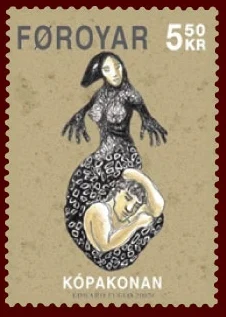
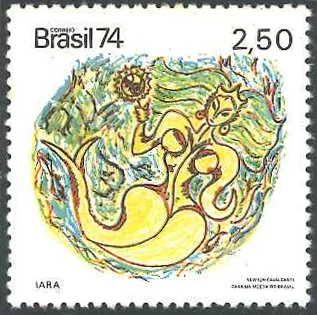
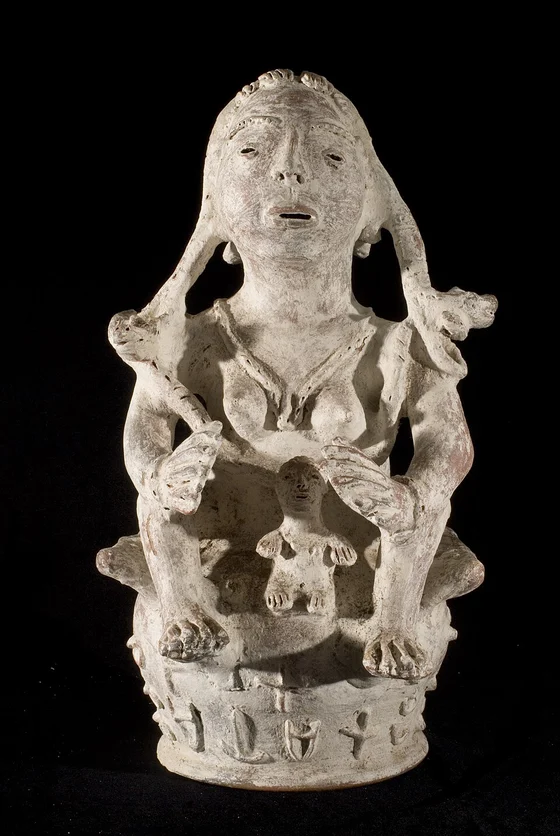
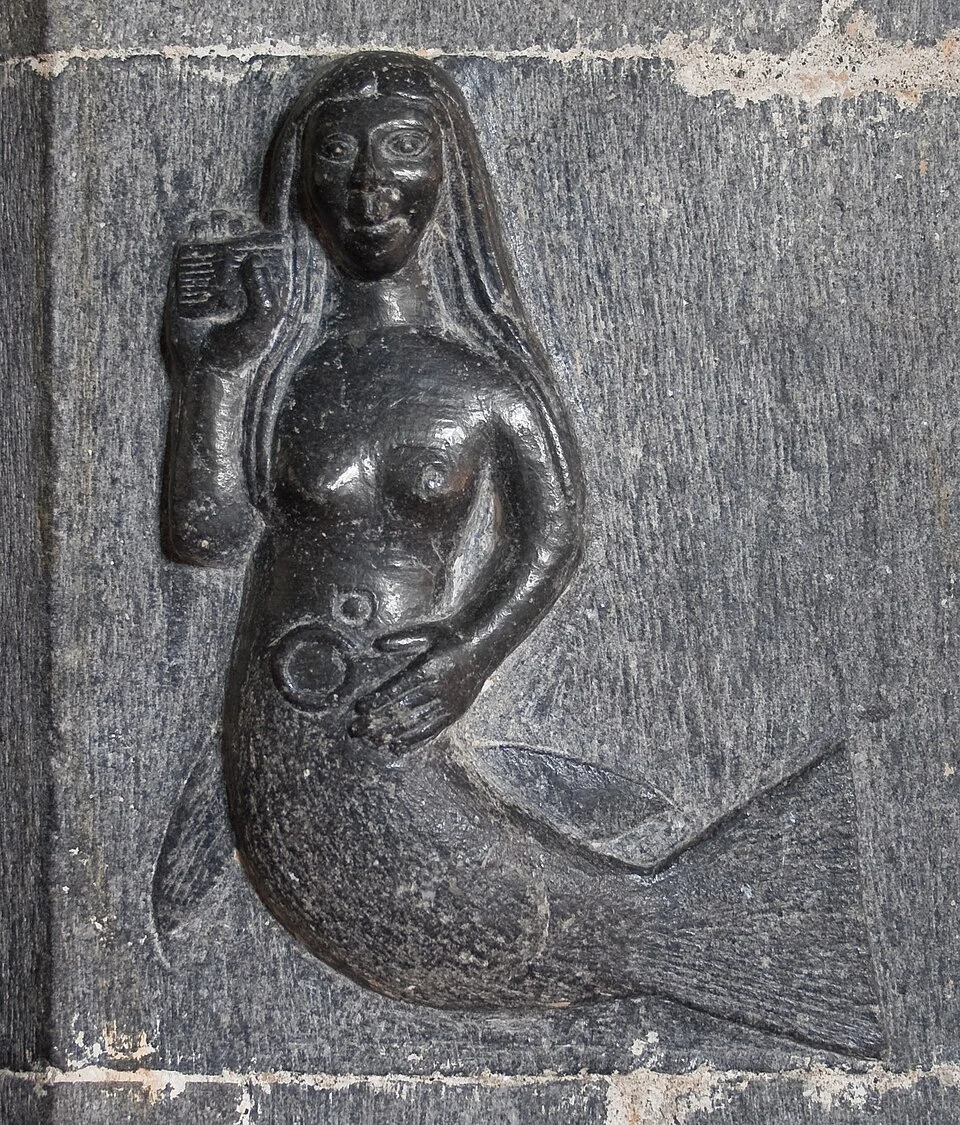
Image associated with the exact linked encyclopedia article; consult credited file description for its interpretation.
Overview
Mermaid is a broad English label; the Irish merrow is the more specific subject here. Croker's The Lady of Gollerus, inspected in the condensed 1844 edition, places a sea woman on the shore of Smerwick harbour. She has sea-green hair and delicate webbing between her fingers. Dick Fitzgerald takes the enchanted diving cap lying beside her, knowing that its loss prevents her return to the water. Her first response is grief, and she asks whether he will eat her. The story subsequently gives her speech, a royal family under the sea and a marriage on land. Its comic exchanges about beds, wealth and a priest's willingness to perform the marriage do not erase the unequal possession of the cap. After several years and children, she discovers it hidden behind fishing tackle. Memories of her parents and siblings return; she kisses a sleeping child, asks the daughter to care for the younger children and goes to the shore. Replacing the cap, she enters the sea and never returns in the narrated ending. Dick's conviction that her father forcibly keeps her below is his explanation, not independently established narration.
Yeats's 1888 anthology preserves a different literary merrow in The Soul Cages. Coomara has green hair and teeth, a red nose, scaled legs, a tail and short fin-like arms. He welcomes Jack Dogherty beneath the sea, where pots hold the souls of drowned sailors. Jack releases them while the host is distracted by drink. These precise features belong to this character and text, rather than proving the anatomy or conduct of every male merrow. The source history matters: Keightley's own later Fairy Mythology acknowledges that he invented the elaboration from a German narrative, while also reporting subsequent informants who knew related accounts. Consequently, Yeats's inclusion is evidence of literary circulation, not independent verification that this whole episode was originally collected from Irish oral tradition. The two stories illuminate intimate captivity and rescue in different ways, while making identification of the particular witness essential.
Croker’s The Wonderful Tune offers a different Merrow-section encounter at Trafraska in Ballinskellig Bay. Maurice Connor’s music compels people, fishes and shellfish to dance. Among the sea creatures appears a young woman with long green hair, a cocked hat and a white gown decorated with purple and red seaweed. She proposes marriage and promises him silver and gold dishes and kingship over the fishes. Her appearance and dancing are described, but this account does not specify a fish tail. His mother’s alarm at a scaly woman and imagined fish grandchildren belongs to her fearful commentary; the story supplies no actual offspring.
The lady persuades Maurice to enter the sea with her, then covers them both with a hooded cloak as a great wave breaks over them. He promises his mother a yearly token of burnt wood to signify his survival. The narration says it washes ashore for more than a century, though his mother dies soon after the departure and no longer receives it. Reports of music and Maurice’s voice rising from Kerry’s waters complete the legend. This seductive departure contrasts with the retrieved-cap escape in the Gollerus story; neither encounter fixes the appearance or household conduct of every sea woman in Croker’s collection.
Origins & earliest records
The selected witnesses are Croker's condensed 1844 edition of a collection begun in 1825, Yeats's 1888 anthology and Keightley's inspected revised edition dated 1892. Their individual narratives have different publication histories. Keightley's explicit acknowledgement distinguishes his literary adaptation from independently collected oral evidence; none establishes the beginning of all merrow traditions.
Records & interpretation
Croker supplies the sea-green hair, finger webs, hidden cap and return; Yeats supplies Coomara's distinct anatomy and soul pots. Keightley's own note 603 supplies the provenance qualification. These are textual and editorial witnesses, not zoological specimens, and anthology repetition does not create an independent confirmation of oral collection.
In the literature
“And heard a mermaid on a dolphin’s back Uttering such dulcet and harmonious breath”
Act II, scene I, Oberon’s speech to Puck
Oberon recalls the mermaid’s singing; line breaks normalized.
“their women are beautiful, for all their fish tails and the little duck-like scale between their fingers.”
The Merrow, editorial introduction; paragraph beginning “The Merrow , or if you write it in…”
Yeats’s editorial merrow introduction distinguishes the women from male merrows.
“Sometimes they come out of the sea, and wander about the shore in the shape of little hornless cows.”
The Merrow, editorial introduction; paragraph beginning “The Merrow , or if you write it in…”
A variable shore-going shape in the editor’s collected description.
“If this is stolen, they cannot again go down under the waves.”
The Merrow, editorial introduction; paragraph beginning “The Merrow , or if you write it in…”
The antecedent is the feather-covered red cohullen druith cap, not a general rule for every mermaid tradition.
Selected bibliography
Documented works and useful reading. This is not a list of every appearance.
- 01
Fairy and Folk Tales of the Irish Peasantry
Selected witness for the entry; bibliography is not exhaustive.
- 02
Fairy Legends and Traditions of the South of Ireland
The Lady of Gollerus, XXII, printed pp. 133–139; exact sea woman and cap episode.
- 03
The Fairy Mythology
The Soul Cages and note603: author's acknowledgement of invention from a German narrative, with separately asserted later informants.
- 04
Fairy Legends XXV: The Wonderful Tune, pp. 146–153; Merrow note, p. 154
Complete tale through the repeated burnt-wood token, mother’s death and reported undersea music. Fish-grandchild claims are the mother’s speculation, not narrated births.
Family, evolution & connections
The Lady of Gollerus - parents and Fitzgerald children
The selected 1844 English telling, XXII, pp. 133-139.
Scroll sideways to see all branches. With a keyboard, focus the tree and use the arrow keys.
- King father and queen mother beneath the sea
- The Lady of Gollerus (husband: Dick Fitzgerald)
- Kathelin (daughter)
- Two unnamed boys (sons, collectively)
The merrow’s stated parents lead to their daughter; her marriage is labelled alongside her and her own three children branch below. The sea parents and the merrow herself are personally unnamed; siblings have no count or individual pedigree and are not added as invented leaves. The two boys are unnamed. This version-specific family is not a genealogy of merrows as a class, and Dick’s explanation for her absence remains his belief.
Manatees and dugongs
The museum archive records a 1951 request concerning animals that may have given rise to mermaid legends, including manatees and dugongs. That documents the existence of the proposed explanation, not its truth. Irish merrow narratives have their own cultural context; these sources do not establish that every mermaid tradition began as a mistaken marine-mammal sighting.
The Peasant and the Waterman (German tale)
Keightley’s 1892 Fairy Mythology, note 603, explicitly acknowledges that The Soul Cages was invented from the German tale printed on page 259. Both stories involve a water-being retaining drowned people’s souls in containers and a visitor releasing them. This documents a literary input for that particular merrow story, not the origin of all merrow traditions. His subsequent informant claim is retained as attributed, uncorroborated testimony.
Dick Fitzgerald
Father Fitzgibbon marries Dick Fitzgerald to the merrow. The telling first has Dick seize and retain her diving cap, so the subsequent household does not erase that initial restriction on her ability to leave. This marriage is specific to Croker’s selected telling.
Her king father and queen mother beneath the sea
She calls her father the king of the waves; later she remembers her father the king and mother the queen. No personal names are supplied, and this royal parentage is not imposed on merrows generally.
Her unnamed brothers and sisters beneath the sea
On finding her cap, she remembers brothers and sisters along with her parents. The account supplies no names, counts, ages or individual sibling parentages.
Kathelin and two unnamed boys, children of the Fitzgerald household
After three years the narrator gives the couple two boys and a girl; Dick later addresses the girl as Kathelin. Their mother departs after recovering her cap. No return or further offspring are narrated, despite Dick’s lasting hope.
Located primary passages
Specific passages supporting details in this entry, grouped by their published witness.
Fairy and Folk Tales of the Irish Peasantry
Collection first published 1888; e-text represents an undated Walter Scott Publishing Co. reprint. Do not infer the reprint year.
- Yeats’s editorial merrow introduction distinguishes the women from male merrows.
The Merrow, editorial introduction; paragraph beginning “The Merrow , or if you write it in…”
- A variable shore-going shape in the editor’s collected description.
The Merrow, editorial introduction; paragraph beginning “The Merrow , or if you write it in…”
- The antecedent is the feather-covered red cohullen druith cap, not a general rule for every mermaid tradition.
The Merrow, editorial introduction; paragraph beginning “The Merrow , or if you write it in…”
Attests this published account; does not establish zoological existence, consensus belief or earliest origin.
Encyclopedia background
An additional attributed reference, separate from the editorial profile above.
Read the open encyclopedia overview
Merrow (from Irish murúch, Middle Irish murdúchann or murdúchu) is a mermaid or merman in Irish folklore. The term is anglicised from the Irish word murúch.
The merrows supposedly require a magical cap (Irish: cochaillín draíochta; anglicised: cohuleen druith) in order to travel between deep water and dry land.
Text from Wikipedia contributors, “Merrow”. CC BY-SA 4.0. Extracted introduction; formatting changed. Retrieved 5 October 2026. The source article may have changed since retrieval.
References
Sources supporting this profile. Linked pages have their own scope and editorial standards.
- Primary textFairy and Folk Tales of the Irish PeasantryResearch access: 2026-10-05
- Primary textCroker1844: The Lady of GollerusResearch access: 2026-10-05
- Primary textKeightley1892: The Fairy Mythology, note603Research access: 2026-10-05
- Primary edited folklore narrativeCroker, 1844: The Wonderful Tune and Merrow section noteResearch access: 2026-10-05
Image credits
Reference illustrationMermaid (merrow)
Image associated with the exact linked encyclopedia article; consult credited file description for its interpretation.