A sourced illustration has not yet been added. This gap is included in the coverage record.
Overview
Salt, Daudawa, Nari, Gabu, Tankua and Daudawar-batso hear of a handsome youth and take the form of beautiful maidens to visit him. The other ingredients drive Daudawar-batso away because of her smell. She follows at a distance. Beside a stream the first arrivals refuse an old woman’s request to rub her back; Daudawar-batso greets her and helps. The woman identifies the youth as her son and gives the helpful maiden his name, while telling her not to share it.
The visitors must approach the youth one at a time, identify themselves and name him. Salt, Daudawa, Nari, Gabu and Tankua describe what they contribute to soup but cannot answer his question and are sent back. Daudawar-batso initially hesitates after their failures. When encouraged to try, she identifies herself and answers Daskandarini. She is admitted and receives a rug, clothes and golden slippers.
The companions who previously rejected her offer to sweep, pound, fetch water, prepare soup and stir food, becoming her handmaids. This reversal supplies the ending’s warning against despising a poor person. The maiden transformations are explicit, while the edition’s alternating glosses for Nari do not identify an exact botanical species. Daudawar-batso’s smell is a character distinction within this particular food-personification tale.
Origins & earliest records
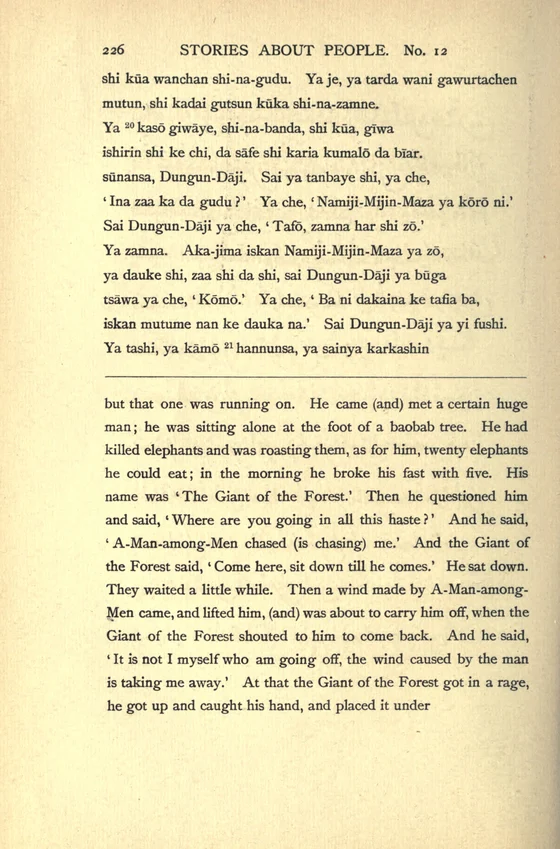
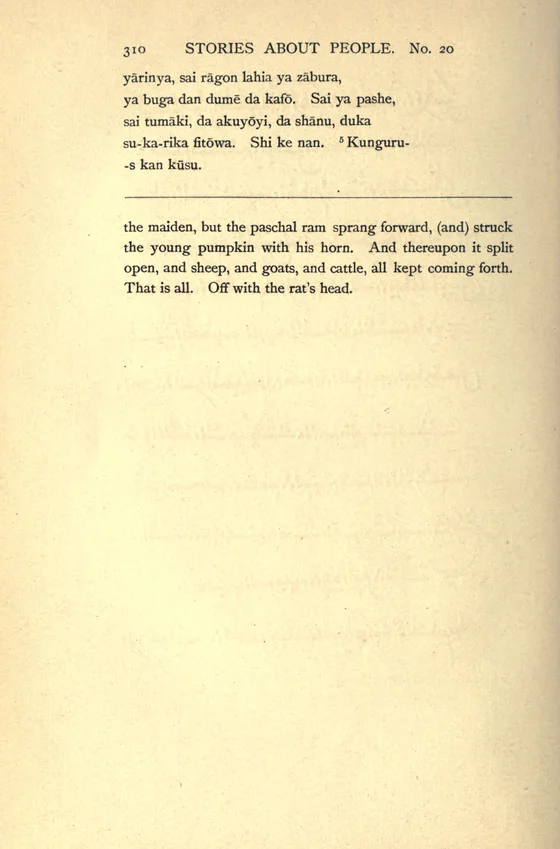
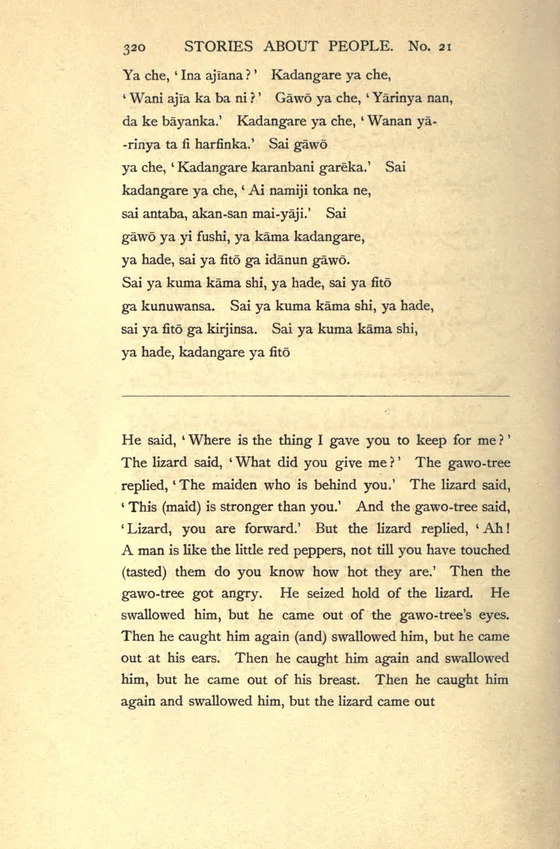
Malam Shaihu supplied written Hausa material, sometimes translated from Arabic manuscripts; Rattray transliterated and translated it into English. The author note dates the manuscript collection to 1907–1911.
Records & interpretation
Shaihu/Rattray, Hausa Folk-Lore, Customs, Proverbs, etc., Volume I (1913), tale 17, complete pp. 260–272; compiler methodology p. xii.
Selected bibliography
Documented works and useful reading. This is not a list of every appearance.
- 01
Hausa Folk-Lore, Customs, Proverbs, etc., Volume I
Shaihu/Rattray, Hausa Folk-Lore, Customs, Proverbs, etc., Volume I (1913), tale 17, complete pp. 260–272; compiler methodology p. xii.
Family & connections
A source-supported family tree or inspiration record has not yet been compiled for this profile. Related reading below indicates a connection in subject matter, not a proven lineage or creative influence.
References
Sources supporting this profile. Linked pages have their own scope and editorial standards.
- Bilingual manuscript tale; digitized primary OCRShaihu/Rattray — Seasoning Maidens of Shaihu’s Name ContestResearch access: 2026-10-05
- Compiler methodologyAuthor’s NoteResearch access: 2026-10-05
Image credits
A sourced illustration has not yet been added. This gap is included in the coverage record.