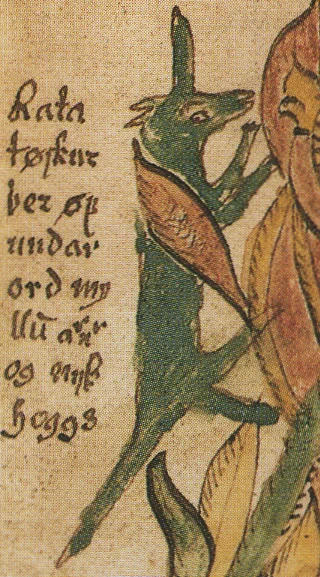
Ratatoskr
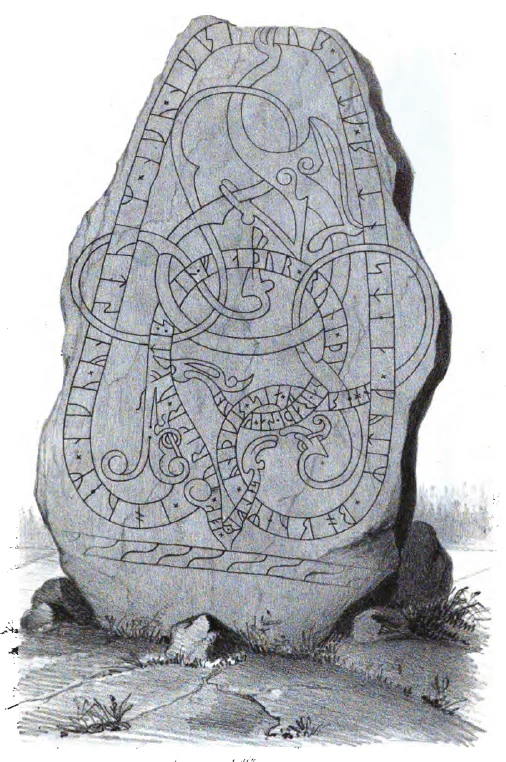
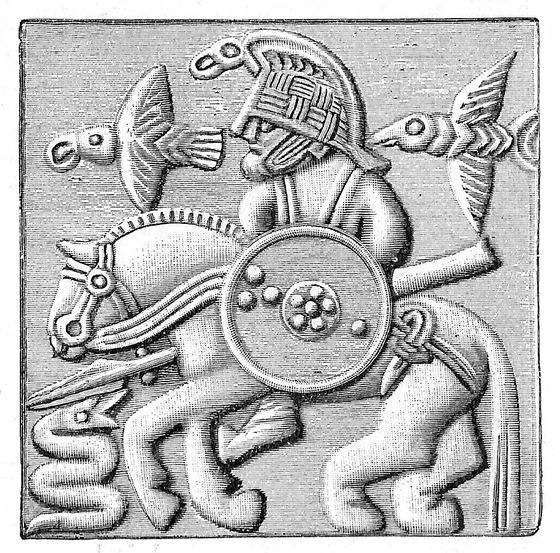
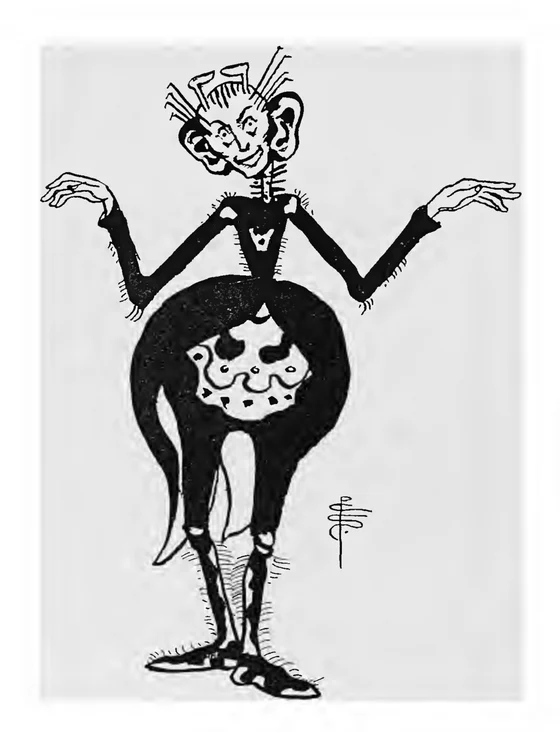
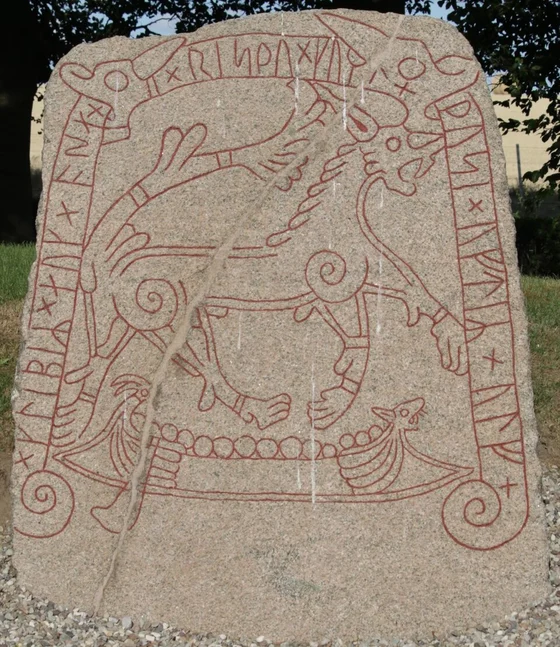
Image associated with the exact linked encyclopedia article; consult credited file description for its interpretation.
Overview
Snorri’s account places a squirrel on the world tree among several other animals. Ratatoskr’s activity is communication: it moves along the trunk, relaying envious words between an eagle in the branches and the serpent at the root. The creature therefore connects distant parts of the cosmic tree through speech rather than through combat or creation.
The brief passage gives a distinct role but little individual biography. Retellings sometimes turn that role into elaborate mischief or invented adventures; those developments should not be mistaken for the medieval witness. The squirrel’s familiar agility makes the movement easy to picture, while the content of the messages makes the relationship troublesome. This entry preserves that compact characterization without assigning additional powers that the selected text does not describe.
Thorpe’s poetic translation gives the squirrel a specifically downward message: it takes the eagle’s words from above and repeats them to Níðhöggr below. Brodeur’s prose instead explicitly calls the words envious and describes communication between the two animals. The poem’s verse does not itself supply that adjective or a separate upward speech, so the two formulations remain distinguishable. In the surrounding sequence, four named stags browse above, other serpents damage the tree, and Níðhöggr tears from below while the trunk decays at its side. Ratatoskr moves through this troubled vertical setting without being credited with causing all of its injuries.
Origins & earliest records
The selected witnesses are Grímnismál in Benjamin Thorpe’s translation, as printed in the 1906 Norroena edition, and Snorri Sturluson’s Gylfaginning, composed around 1220 and translated by Arthur Gilchrist Brodeur in 1916. Poem and prose are cited separately; these edition dates do not identify the beginning of oral transmission.
Records & interpretation
Verse 32’s downward message is compared with the explicitly envious words of the prose; verses 31–35 supply the surrounding tree inhabitants. The translated literary witnesses document the named animal’s role in their respective accounts.
In the literature
“A squirrel, by name Ratatosk, springs up and down the tree,”
The Fooling of Gylfe, chapter VII, section 16 · Rasmus Björn Anderson
The surrounding sentence makes Ratatoskr a carrier of hostile words between eagle and serpent.
Selected bibliography
Documented works and useful reading. This is not a list of every appearance.
- 01
Prose Edda: Gylfaginning, sections XVI
Selected public-domain prose witness. Numbering follows the linked Brodeur translation; neither a universal canon nor an exhaustive bibliography.
- 02
Grímnismál, verses 31–35, especially 32
Verse 32’s downward message is compared with the explicitly envious words of the prose; verses 31–35 supply the surrounding tree inhabitants.
- 03
The Younger Edda
Chicago: Scott, Foresman and Company, 1901; translation copyright 1879, with translator’s preface dated September 1879.
Family, evolution & connections
Níðhöggr
Gylfaginning describes Ratatoskr carrying hostile words between an eagle in the tree’s branches and Níðhöggr below. This is a named interaction across the world tree, not ancestry. The link helps distinguish a messenger’s narrative role from feeding relationships or animal behaviour that would require separate ecological evidence.
The unnamed eagle of Yggdrasil
Younger Edda section 16 describes Ratatosk running between an eagle in the ash tree and Nidhug, carrying hostile messages. The eagle is not identified there as Hraesvelgr, who is introduced separately. This narrative habitat connection preserves that distinction and treats the squirrel’s communicative role as mythology rather than evidence for real squirrel or eagle behavior.
Located primary passages
Specific passages supporting details in this entry, grouped by their published witness.
Primary source witness
Chicago: Scott, Foresman and Company, 1901; translation copyright 1879, with translator’s preface dated September 1879.
- The surrounding sentence makes Ratatoskr a carrier of hostile words between eagle and serpent.
This documents Snorri’s literary account in Anderson’s translation, not zoological existence or a universal account of all Norse traditions.
Primary source witness
Rasmus Björn Anderson translation, Chicago: Scott, Foresman and Company, 1901; translation copyright 1879.
- Ratatoskr’s movement conveys hostile words between the eagle and Níðhöggr.
Version-specific detail in the translated literary narrative; not an earliest-attestation or real-fauna claim.
Encyclopedia background
An additional attributed reference, separate from the editorial profile above.
Read the open encyclopedia overview
In Norse mythology, Ratatoskr (Old Norse, generally considered to mean "drill-tooth" or "bore-tooth") is a squirrel who runs up and down the world tree Yggdrasil to carry messages between the eagles perched atop it and the dragon Níðhöggr who dwells beneath one of the three roots of the tree. Ratatoskr is attested in the Poetic Edda, compiled in the 13th century from earlier traditional sources, and the Prose Edda, written in the 13th century by Snorri Sturluson.
Text from Wikipedia contributors, “Ratatoskr”. CC BY-SA 4.0. Extracted introduction; formatting changed. Retrieved 5 October 2026. The source article may have changed since retrieval.
References
Sources supporting this profile. Linked pages have their own scope and editorial standards.
- Primary textThe Prose Edda: Gylfaginning XVI (Brodeur translation)Research access: 2026-10-05
- Primary textThe Lay of Grimnir (Thorpe, 1906 edition)Research access: 2026-10-05
Image credits
Reference illustrationRatatoskr
Image associated with the exact linked encyclopedia article; consult credited file description for its interpretation.