Níðhöggr
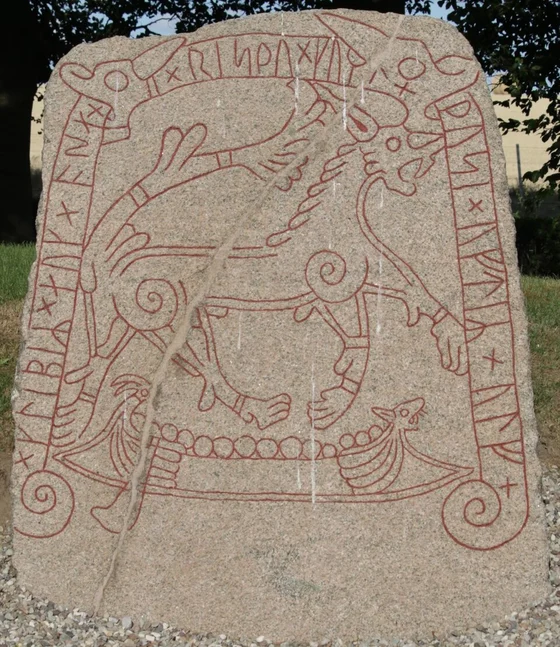
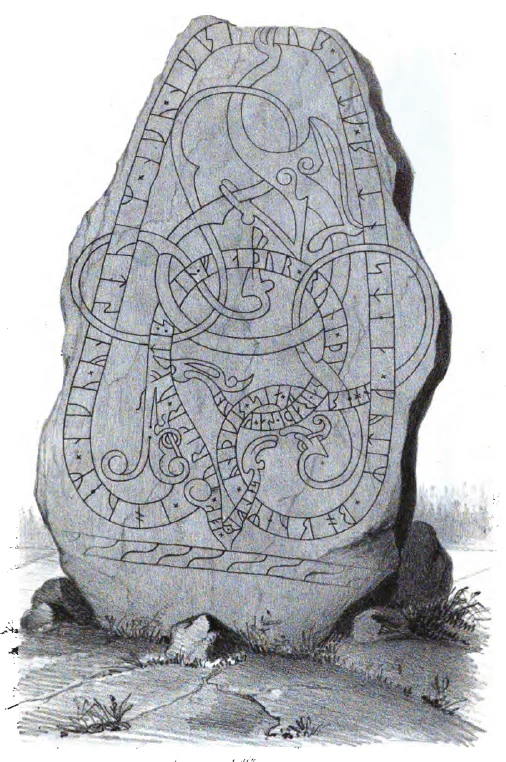
Image associated with the exact linked encyclopedia article; consult credited file description for its interpretation.
Overview
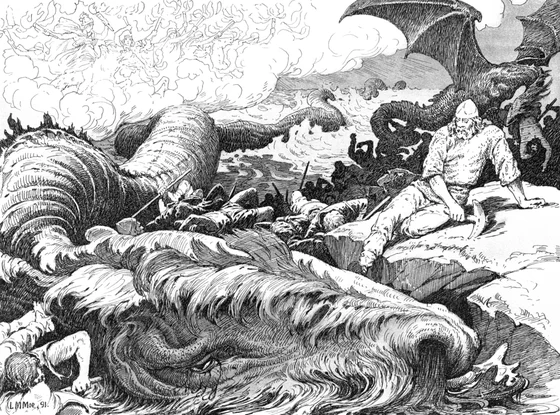
The Gylfaginning places Níðhöggr below Yggdrasill and describes the serpent gnawing at its root. Other animals also affect the tree, including stags that feed above, so damage occurs at several levels. The figure belongs to a detailed account of the tree’s inhabitants and pressures rather than a simple underground version of a treasure-guarding dragon.
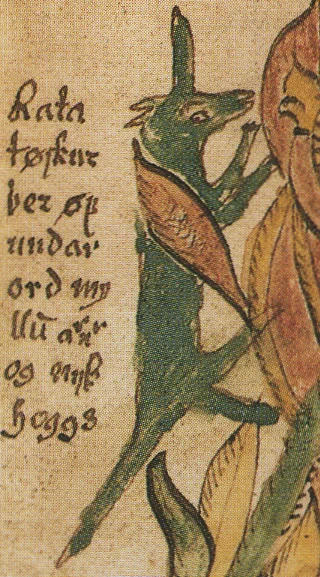
Ratatöskr carries hostile words between Níðhöggr and the eagle above, connecting the lower and upper regions through a troublesome messenger. Elsewhere the account associates a terrible serpent with dead bodies at Hvergelmir. Different poems and later images develop these motifs further; wings and a complete modern anatomy require their own evidence. Here the central attributes are place, gnawing and participation in the tree’s uneasy relationships.
Thorpe’s Lay of Grimnir 31–35 places the lower gnawing within a larger sequence about the ash. Ratatösk conveys the eagle’s words downward, four named stags feed above, and other named serpents lie beneath the tree. The final verse brings these pressures together: feeding above, rotting at the side and Níðhöggr’s damage below. Its description of the three roots differs from the prose allocation of one root to Niflheim, so the poetic grouping of Hel, frost-giants and humans should not be replaced with the prose map. The squirrel, stags and serpents remain distinct inhabitants, rather than anatomical appendages of Níðhöggr.
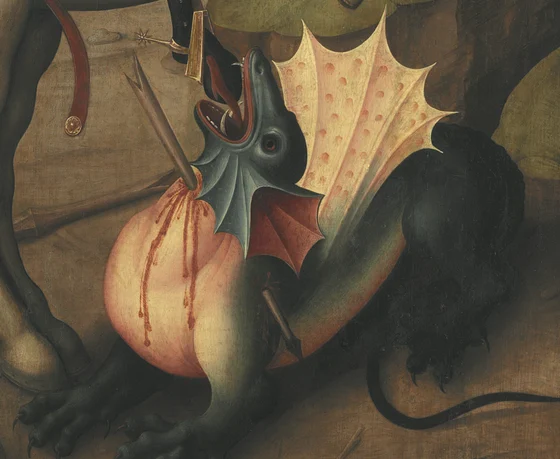
The Vala’s Prophecy supplies the separately located corpse imagery. In Thorpe’s verses 42–43, the seer describes Náströnd’s north-facing, serpent-built hall and its venomous streams, then associates Níðhöggr with the dead. The poem returns to him in its closing verse, numbered 65 in this edition: a dark dragon flies from Nida-fels carrying a corpse on its wings. That winged image is explicit in this poetic witness, unlike a reconstruction based solely on root-gnawing prose. It follows visions of renewed fields, returning gods and the righteous hall; the final image is left in that sequence rather than explained as a new battle or a conclusive destruction of the renewed world.
Origins & earliest records
This entry follows Gylfaginning, sections XV–XVI; LII, in Snorri Sturluson’s Prose Edda, composed around 1220 and translated here by Arthur Gilchrist Brodeur in 1916. The medieval work incorporates older poetic traditions, but its compilation date does not establish the beginning of a being’s oral history or every earlier attestation. Additional poetic comparisons use Benjamin Thorpe’s translation in the 1906 Norroena Society edition, preserving that edition’s verse numbering and spellings.
Records & interpretation
The cited prose situates gnawing beneath Yggdrasill and hostile messages. Grimnir 31–35 supplies a distinct poetic root grouping and interacting tree inhabitants. Völuspá 42–43 and its complete closing sequence, ending in Thorpe’s verse 65, supply corpse imagery and an explicitly winged flying dragon. The named passages support these different settings without a single standardized anatomy or end-of-world interpretation.
In the literature
“under it is Hvergelmer, where Nidhug gnaws the root from below.”
The Fooling of Gylfe, chapter VII, section 15 · Rasmus Björn Anderson
Níðhöggr gnaws the root associated with Niflheim.
Selected bibliography
Documented works and useful reading. This is not a list of every appearance.
- 01
Prose Edda: Gylfaginning, sections XV–XVI; LII
Selected public-domain prose witness. Numbering follows the linked Brodeur translation; neither a universal canon nor an exhaustive bibliography.
- 02
The Lay of Grimnir, verses 31–35
Root grouping, Ratatösk, four stags, other serpents and the tree’s threefold distress; prose map kept distinct.
- 03
Völuspá, The Vala’s Prophecy, verses 42–43 and 60–65 in Thorpe’s numbering
Serpent-built hall and corpse imagery, then complete closing renewal sequence and winged corpse-bearing dragon.
- 04
The Younger Edda
Chicago: Scott, Foresman and Company, 1901; translation copyright 1879, with translator’s preface dated September 1879.
Family, evolution & connections
Goin, Moin and other root-gnawing serpents
Younger Edda section 16 places additional serpents with Nidhug in Hvergelmer and quotes a verse naming Goin, Moin, Grabak, Grafvollud, Ofner and Svafner as root-gnawers. Only Goin and Moin are explicitly called Grafvitner’s sons. This records the shared mythic setting without treating all these serpents as Nidhoggr’s offspring, a single species or a biological clade.
Located primary passages
Specific passages supporting details in this entry, grouped by their published witness.
Primary source witness
Chicago: Scott, Foresman and Company, 1901; translation copyright 1879, with translator’s preface dated September 1879.
- Níðhöggr gnaws the root associated with Niflheim.
This documents Snorri’s literary account in Anderson’s translation, not zoological existence or a universal account of all Norse traditions.
Primary source witness
Rasmus Björn Anderson translation, Chicago: Scott, Foresman and Company, 1901; translation copyright 1879.
- Other serpents accompany Níðhöggr in Hvergelmir.
Version-specific detail in the translated literary narrative; not an earliest-attestation or real-fauna claim.
Primary source witness
Rasmus Björn Anderson translation, Chicago: Scott, Foresman and Company, 1901; translation copyright 1879.
- The quoted verse assigns Níðhöggr a role tormenting dead bodies at Hvergelmir.
Version-specific detail in the translated literary narrative; not an earliest-attestation or real-fauna claim.
Encyclopedia background
An additional attributed reference, separate from the editorial profile above.
Read the open encyclopedia overview
Nidhogg (Old Norse: Níðhǫggr, [ˈniːðˌhɔɡːz̠]; older Icelandic: Níðhöggr, Modern Icelandic: Níðhöggur) is a Germanic dragon in Norse mythology who is said to gnaw at the roots of the world tree, Yggdrasil, and is likewise associated with the dead in Hel and Niflheim.
Text from Wikipedia contributors, “Nidhogg”. CC BY-SA 4.0. Extracted introduction; formatting changed. Retrieved 5 October 2026. The source article may have changed since retrieval.
References
Sources supporting this profile. Linked pages have their own scope and editorial standards.
- Primary textThe Prose Edda: Gylfaginning XV–XVI; LII (Brodeur translation)Research access: 2026-10-05
- Primary poetic texts in translationThorpe’s Elder Edda translation: Grimnir and The Vala’s ProphecyResearch access: 2026-10-05
Image credits
Reference illustrationNíðhöggr
Image associated with the exact linked encyclopedia article; consult credited file description for its interpretation.