A sourced illustration has not yet been added. This gap is included in the coverage record.
Overview
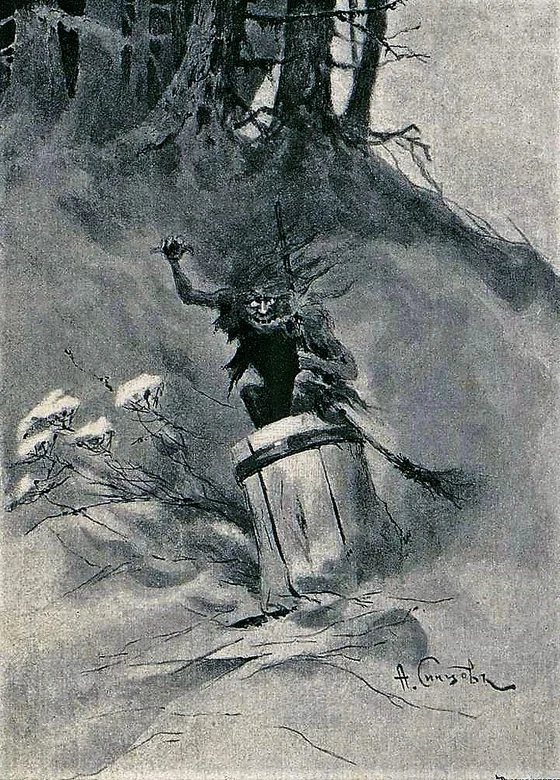
In the account attributed to Edmund Jones, the figure resembles a poor elderly woman carrying a milk vessel. She wears ash-coloured clothing and an angular hat, with her apron thrown over a shoulder. She stays ahead of the traveller and never turns to reveal her face. Her cry can sound close and then abruptly seem to come from a distant mountain.
Robert Williams's Black Mountain encounter begins as an attempt to catch up with an apparently deaf woman who could give directions. The faster he walks, the farther away she remains; he finally finds himself in marshland and hears her laugh. A drawn knife ends the encounter in this telling. Another traveller hides in the heath when her cry accompanies the impossible sound of a coach. These are particular gwyll narratives, not instructions for handling ordinary elderly women or a claim that all mountain fairies look alike.
Origins & earliest records
Sikes's 1880 book retells descriptions and attributed encounters from Edmund Jones's earlier collection, while also recording a local identification with the deceased Juan White. That identification is a reported explanation, not established biography. The dated printed witnesses preserve forms of the tale; they cannot settle the first oral appearance of the mountain apparition.
Records & interpretation
The detailed costume and pursuit sequences are textual evidence for an apparition tradition situated on named Welsh mountains. The accounts also show how narrators understood lost direction and strange sounds. They do not authenticate a supernatural traveller, and the knives, witch identifications and comparisons with Greek figures remain features of these historical accounts rather than demonstrated origins.
In the literature
“they never could overtake her”
Book I, chapter IV; printed p. 50
Those who follow the apparition cannot catch her to ask the way.
Selected bibliography
Documented works and useful reading. This is not a list of every appearance.
- 01
British Goblins: Welsh Folk-lore, Fairy Mythology, Legends and Traditions
Book I, chapter IV, pp. 49–53. Selected inspected witness; bibliography is not exhaustive.
- 02
British Goblins: Welsh Folk-lore, Fairy Mythology, Legends and Traditions — Book I, chapter IV
London: Sampson Low, Marston, Searle & Rivington, 1880. Original English compilation by Wirt Sikes; hosted Project Gutenberg transcription retains printed page anchors. Selected reports, quoted older authorities and the compiler’s comparative theories are distinguished.
Family & connections
A source-supported family tree or inspiration record has not yet been compiled for this profile. Related reading below indicates a connection in subject matter, not a proven lineage or creative influence.
Located primary passages
Specific passages supporting details in this entry, grouped by their published witness.
British Goblins: Welsh Folk-lore, Fairy Mythology, Legends and Traditions — Book I, chapter IV
London: Sampson Low, Marston, Searle & Rivington, 1880. Original English compilation by Wirt Sikes; hosted Project Gutenberg transcription retains printed page anchors. Selected reports, quoted older authorities and the compiler’s comparative theories are distinguished.
- Sikes, using the Prophet Jones, describes an ash-clothed old woman with a four-cornered hat and milk vessel who misleads travellers; a local tradition identifies her with deceased Juan White.
Book I, chapter IV; pp. 49–50; description and Juan White tradition
- Williams follows the woman into marshy ground; her laugh reveals the trap, and she vanishes when he draws a knife.
Book I, chapter IV; pp. 50–51; Robert Williams on the Black Mountain
- John hears the cry moving between hills and then an impossible approaching coach; he hides his face in the heath until the sounds pass and daylight removes his fear.
Book I, chapter IV; pp. 51–52; John ap John approaching Caerleon Fair
Selected complete episodes read in the hosted primary compilation. Earlier Jones, Iolo MSS., Pughe and Vale of Glamorgan citations are attributed as Sikes’s sources; their original editions have not been independently checked here. The compiler’s broad comparative etymologies are not adopted as established modern scholarship.
Encyclopedia background
An additional attributed reference, separate from the editorial profile above.
Read the open encyclopedia overview
Gwyllion or gwyllon is a Welsh word with a wide range of possible meanings including "ghosts, spirits" and "night-wanderers (human or supernatural) up to no good, outlaws of the wild." Gwyllion is only one of a number of words with these or similar meanings in Welsh. It is a plural form of the Welsh word gwyll(t), meaning "wild".
Text from Wikipedia contributors, “Gwyllion”. CC BY-SA 4.0. Extracted introduction; formatting changed. Retrieved 5 October 2026. The source article may have changed since retrieval.
References
Sources supporting this profile. Linked pages have their own scope and editorial standards.
- Primary textSikes, British Goblins: Book I, chapter IV, pp. 49–53Research access: 2026-10-05
Image credits
A sourced illustration has not yet been added. This gap is included in the coverage record.