Baba Yaga
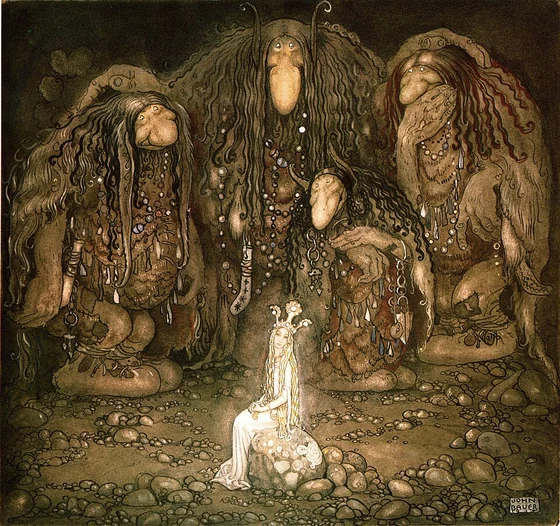
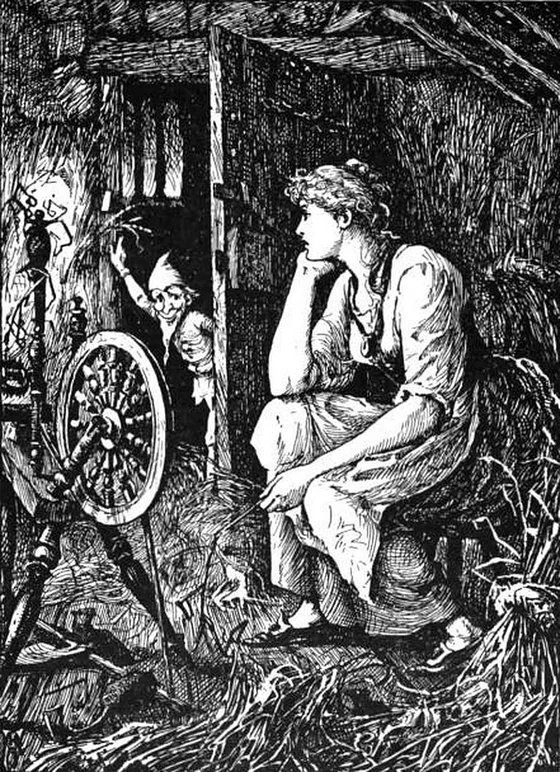
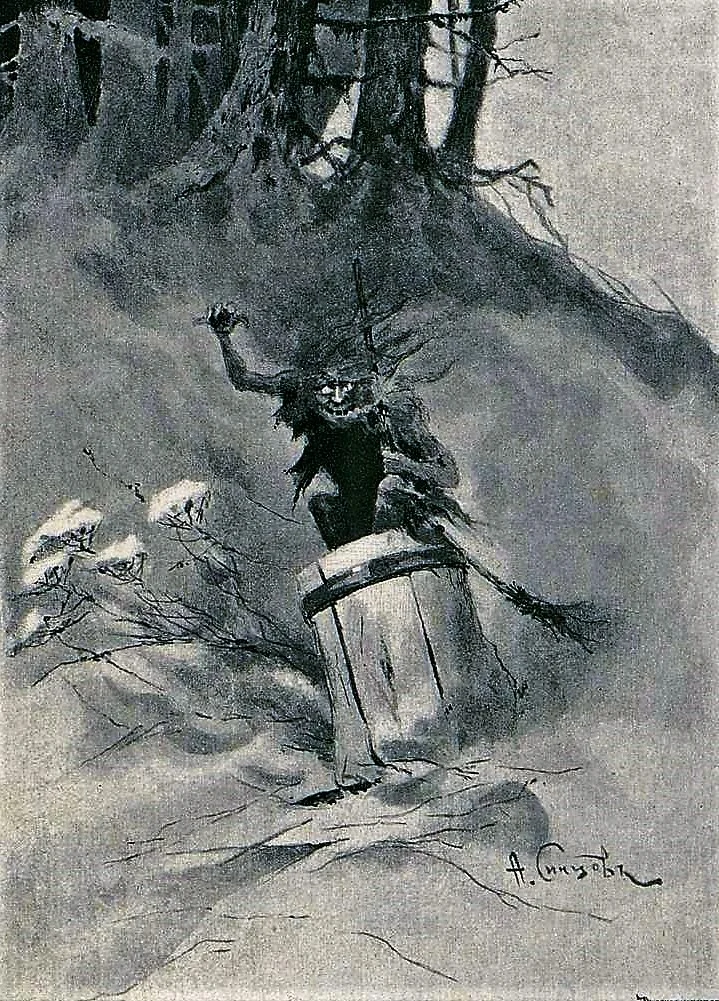
Image associated with the exact linked encyclopedia article; consult credited file description for its interpretation.
Overview
Baba Yaga’s forest dwelling and formidable appetite make her a threatening presence, but she is not simply an evil witch with one predictable role. A visitor may receive a task, be pursued, or gain crucial guidance and objects. In some stories several Baba Yagas appear, complicating the idea that every tale concerns one consistent individual.
The hut on bird legs and travel in a mortar are memorable motifs, while domestic objects, courtesy and practical skill often drive the plot. Tales place a young person at a threshold where ordinary rules become demanding and dangerous. Ralston’s translations are useful witnesses to Russian collections, but their explanations and English categories belong to a nineteenth-century scholarly frame.
Ralston’s 1873 discussion includes a Baba Yaga episode on pages 148–151 in which a girl is sent for a needle and thread while her aunt plans to eat her. The girl gives a handkerchief to the servant, bacon to the cat, rolls to the dogs, oil to the door hinges and a ribbon to the birch tree. These recipients subsequently help her escape or refuse to obstruct her. The cat supplies a towel that becomes a river and a comb that becomes a forest. Baba Yaga pursues in a mortar propelled with a pestle, sweeping away her tracks. This particular sequence makes the girl’s gifts decisive; the magical objects and household helpers belong to a named tale rather than a universal biography.
The escape tale’s source note identifies Afanasief, volume I, no. 3 b, from the Voroneje Government. After the helpers refuse to betray the girl, Baba Yaga pursues her in the mortar. The towel-river first delays her, but she brings oxen to drink it dry and resumes the chase. The comb’s dense forest finally defeats her efforts to gnaw a passage. The girl reaches her father and explains the attempted killing; the printed ending has him shoot the stepmother. Ralston also summarizes a different Khudyakof witness, no. 60: a husband’s mother sends the girl, her husband advises her, a cat receives butter, and spittle answers from beneath the threshold while she escapes. The substitutions matter because household relations and helpers vary between tellings.
Vasilissa the Fair, separately identified as Afanasief, volume IV, no. 44, gives Baba Yaga a bone fence with skull lights, limb-shaped gate fittings and a toothed mouth as lock. Vasilissa arrives seeking fire, carrying a doll left with her dying mother’s blessing. Baba Yaga threatens to eat her unless she cleans, prepares food and sorts wheat, then cleans earth from poppy seed. The doll completes the exhausting sorting work; three pairs of hands carry off the prepared grain and seed when Baba Yaga commands her servants. White, red and black mounted figures mark the girl’s journey. Asked about them, Baba Yaga calls them her bright Day, red Sun and dark Night. Vasilissa refrains from asking about the hands after being warned against excessive curiosity.
When Vasilissa attributes her success to her mother’s blessing, Baba Yaga expels her, saying blessed people are unwelcome, but supplies a skull with burning eyes on a stick. The skull itself speaks when Vasilissa considers discarding it. At home its fiery gaze follows and burns the stepmother and stepsisters, while leaving Vasilissa unharmed. She then buries it. Ralston’s concluding summary follows her fine linen, royal marriage and continued care for the doll. In this tale the fire she sought becomes lethal to her persecutors; Baba Yaga’s gift is therefore different from the thwarted pursuit in the earlier escape narrative. Neither tale’s outcome requires treating Ralston’s comparative explanations as proof of a single prehistoric identity.
Origins & earliest records
Russian printed tales and nineteenth-century collecting provide secure textual attestations, while earlier oral beginnings cannot be precisely dated. Ralston’s 1873 work translated and discussed already collected material. Claims that Baba Yaga is simply a surviving prehistoric goddess go beyond the evidence selected here and need a separate argument.
Records & interpretation
The source documents narrative variants and motifs such as the forest dwelling, difficult tasks and unusual travel. Those are textual evidence for storytelling, not archaeological proof of a single original figure. Illustrations and later adaptations establish reception but do not turn the tale’s supernatural events into independently verified occurrences.
In the literature
“She has so good a mare that she flies right round the world on it every day.”
Marya Morevna. [101]; paragraph beginning ““Beyond thrice nine lands, in the thirtieth kingdom, on…” · W. R. S. Ralston
Marya Morevna presents Baba Yaga as keeper of magical mares.
“Her appearance is that of a tall, gaunt hag, with dishevelled hair.”
Before “The Baba Yaga”, printed p. 147; paragraph beginning “In several of the stories…” · W. R. S. Ralston
Ralston’s description before “The Baba Yaga”, printed p. 147.
“When the proper words are addressed to it, the hut revolves upon its slender supports”
Before “The Baba Yaga”, printed p. 147; paragraph beginning “In several of the stories…” · W. R. S. Ralston
The compiler describes the turning hut, printed p. 147.
“she rides in a mortar, which she urges on with a pestle”
Before “The Baba Yaga”, printed p. 147; paragraph beginning “In several of the stories…” · W. R. S. Ralston
The compiler describes mortar-and-pestle travel, printed p. 147.
“The oxen drank up every drop of the river”
The Baba Yaga. [161]; paragraph beginning “The Baba Yaga, bony of limb, quickly jumped into…” · W. R. S. Ralston
She brings oxen to remove a magical river obstructing her pursuit in “The Baba Yaga”.
Selected bibliography
Documented works and useful reading. This is not a list of every appearance.
- 01
Russian Fairy Tales: A Choice Collection of Muscovite Folk-lore: The Baba Yaga, pp. 148–151, and Vasilissa the Fair, pp. 158–167
Hosted New York Hurst title page contains no printed date; Gutenberg header labels original publication 1872. Do not equate this physical edition with the separately catalogued London 1873 edition. Tale footnotes 161, 162 and 182 identify the underlying collected witnesses.
- 02
Russian Fairy Tales: A Choice Collection of Muscovite Folk-lore
First published as Russian Folk-Tales in 1873; hosted Hurst & Co. reprint is undated.
Family, evolution & connections
Baba Yaga’s daughters — Ralston’s summarized witness
Only the forty-one-daughters tale summarized on pp. 156–157.
Scroll sideways to see all branches. With a keyboard, focus the tree and use the arrow keys.
- Forty-one unnamed daughters (collective tip)
Explicit maternal relationship in Ralston’s source discussion. Collective tip preserves the stated count; individuals and their father are unnamed. Other Baba Yaga tales are separate versions. The husbands’ egg origin is not the daughters’ parentage.
Unnamed stepmother in Ralston’s The Baba Yaga
Ralston’s The Baba Yaga explicitly identifies the dangerous aunt as the girl’s stepmother’s sister. The girl first visits another aunt for protective advice, so these two women must remain distinct. The relationship makes this Baba Yaga an aunt through the father’s second marriage, rather than the girl’s biological maternal aunt or the parent of every witch.
Forty-one daughters in the tale summarized by Ralston
Ralston separately summarizes a tale in which forty-one egg-born brothers marry forty-one daughters of a Baba Yaga. That account explicitly gives the witch daughters and sons-in-law, unlike the neighboring aunt story. Its family belongs to the summarized witness; the number and marriage episode should not be imposed on every appearance of the Baba Yaga figure.
Frau Holle
Ralston’s bath-service episode contrasts two girls’ conduct and the coffers they receive. Hunt’s Frau Holle similarly contrasts diligent and negligent service, rewarding one girl with gold and marking the other with pitch. The shared structure permits comparison, while different tasks, supernatural households and consequences remain source-specific; it establishes no single identity or borrowing history.
Located primary passages
Specific passages supporting details in this entry, grouped by their published witness.
Russian Fairy Tales: A Choice Collection of Muscovite Folk-lore: The Baba Yaga, pp. 148–151, and Vasilissa the Fair, pp. 158–167
First published as Russian Folk-Tales in 1873; hosted Hurst & Co. reprint is undated.
- Marya Morevna presents Baba Yaga as keeper of magical mares.
Marya Morevna. [101]; paragraph beginning ““Beyond thrice nine lands, in the thirtieth kingdom, on…”
- Ralston’s description before “The Baba Yaga”, printed p. 147.
Before “The Baba Yaga”, printed p. 147; paragraph beginning “In several of the stories…”
- The compiler describes the turning hut, printed p. 147.
Before “The Baba Yaga”, printed p. 147; paragraph beginning “In several of the stories…”
- The compiler describes mortar-and-pestle travel, printed p. 147.
Before “The Baba Yaga”, printed p. 147; paragraph beginning “In several of the stories…”
- She brings oxen to remove a magical river obstructing her pursuit in “The Baba Yaga”.
The Baba Yaga. [161]; paragraph beginning “The Baba Yaga, bony of limb, quickly jumped into…”
Published witness, not zoological proof or an established earliest origin.
Encyclopedia background
An additional attributed reference, separate from the editorial profile above.
Read the open encyclopedia overview
Baba Yaga is a female character (or one of a trio of sisters of the same name) from Slavic folklore who has two contrasting roles. In some narratives, she is described as a repulsive or ferocious-looking old woman who fries and eats children, while in others she is depicted as a nice old woman who helps the hero. Both versions often depict her as a witch. She is often associated with forest wildlife. Her distinctive traits are flying around in a wooden mortar, wielding a pestle, and dwelling deep in the forest in a hut with chicken legs.
Text from Wikipedia contributors, “Baba Yaga”. CC BY-SA 4.0. Extracted introduction; formatting changed. Retrieved 5 October 2026. The source article may have changed since retrieval.
References
Sources supporting this profile. Linked pages have their own scope and editorial standards.
- Primary textRussian Folk-TalesResearch access: 2026-10-05
- Primary passageRussian Folk-Tales, Baba Yaga, pages 148-151Research access: 2026-10-05
- Primary translated collected narrativeRalston: Vasilissa the Fair, pp. 158–167, footnote 182Research access: 2026-10-05
- Custodial edition recordRussian State Library / National Electronic Library: London Smith, Elder 1873 edition catalogResearch access: 2026-10-05
Image credits
Reference illustrationBaba Yaga
Image associated with the exact linked encyclopedia article; consult credited file description for its interpretation.