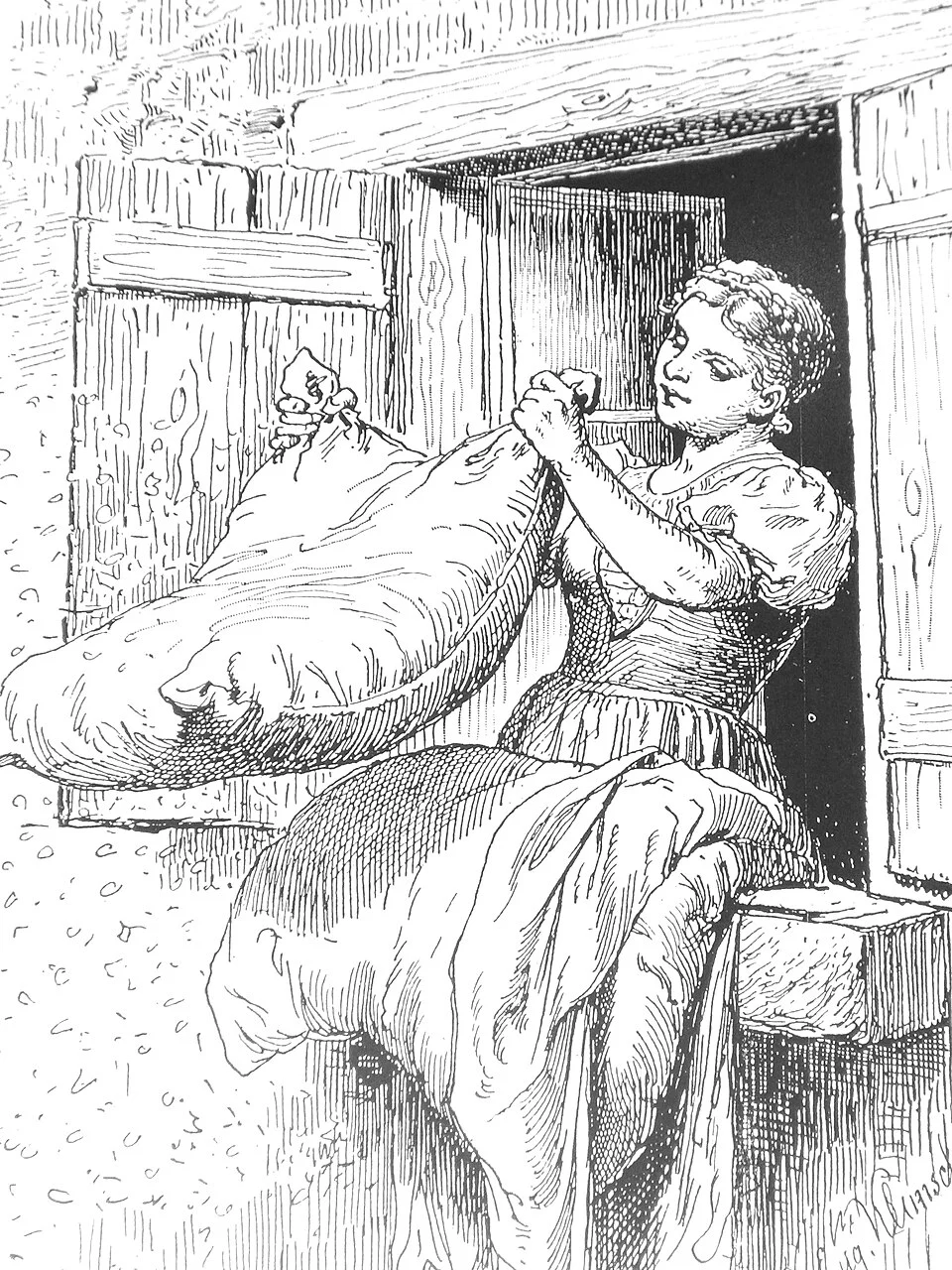
Frau Holle
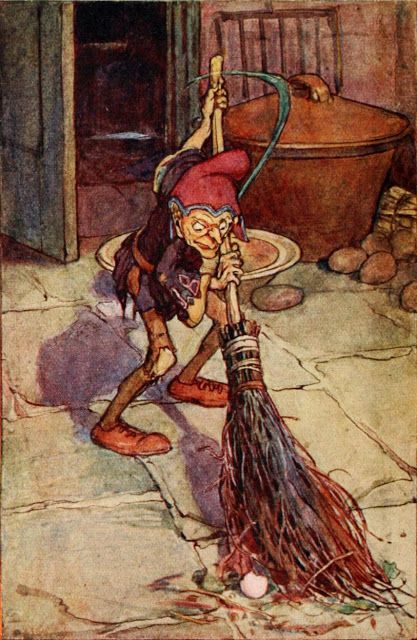
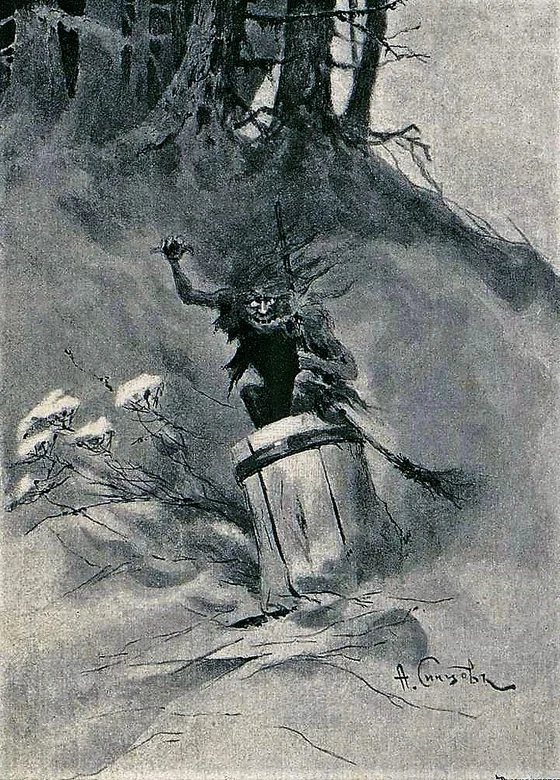
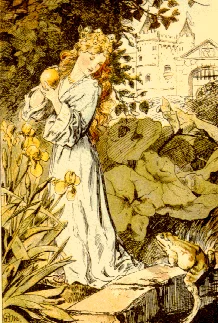
Image associated with the exact linked encyclopedia article; consult credited file description for its interpretation.
Overview
Mother Holle’s realm is entered through a well after a mistreated girl drops a blood-marked shuttle and is ordered to recover it. Losing consciousness, the girl wakes in a bright meadow. Bread calls from an oven to be removed before it burns, and an apple tree asks to be shaken; she helps both before reaching Holle’s house. The mistress’s very large teeth initially frighten her, yet her speech is kind and the employment she offers proves gentler than the girl’s original home. Holle especially requires her bedding to be shaken until its feathers fly, explaining that this produces snow on earth. The domestic task thus links the hidden realm to visible weather. The girl works faithfully, receives satisfying meals and hears no angry words, but eventually identifies her sadness as homesickness. Holle approves her attachment to home instead of holding her captive.
At the exit a shower of gold adheres to the girl, and Holle returns the lost shuttle before she reappears above ground. Her stepmother then sends her own daughter to imitate the profitable journey. This second traveller intentionally stains and drops a shuttle, but refuses to help the bread or fruit tree. She begins Holle’s service diligently with reward in mind, becomes progressively idle, and stops tending the bed. Dismissed at the same doorway, she receives lasting pitch in place of gold. A cock at the home well announces each girl’s different return. These consequences belong to the narrative’s contrast in conduct, while its inherited linkage of beauty with virtue and ugliness with idleness should not be adopted as a judgement of real people. The inspected fairy tale establishes an otherworldly employer and snow-making household. Claims connecting her to Holda, particular seasonal processions or an independently reconstructed goddess need separate regional evidence.
Origins & earliest records
The selected witness is Hunt’s 1884 translation of Grimm tale 24, Mother Holle. It is a specific collected and edited fairy tale, not a complete record of all regional beliefs associated with Holle or Holda. Its translation date and nineteenth-century collection history must remain separate from the unknown starting date of related oral accounts.
Records & interpretation
Holle’s teeth, kindly contract, snow-making feathers and contrasted exit rewards are stated in the full episode. They document literary representation and tale transmission, without supplying a supernatural body or a meteorological mechanism. The text’s moral and appearance categories do not classify actual populations.
In the literature
“shake it thoroughly till the feathers fly—for then there is snow on the earth.”
Tale 24 Mother Holle; paragraph beginning “But the old woman called out to her, “What are you afraid…” · Margaret Hunt
Mother Holle links the shaking of her feather bed with snowfall.
“she had such large teeth that the girl was frightened,”
Tale 24 Mother Holle; paragraph beginning “At last she came to a little house, out of which an…” · Margaret Hunt
Mother Holle’s striking teeth frighten the first visitor despite her subsequent kindness.
Selected bibliography
Documented works and useful reading. This is not a list of every appearance.
- 01
Household Tales, tale 24: Mother Holle
Specific public-domain collected tale inspected. The selected English edition is a literary witness, not a transcript of a universal oral version.
- 02
Household Tales: 24 Mother Holle
Margaret Hunt’s English translation, London: George Bell and Sons, 1884; Gutenberg e-text identifies Hunt. Translation date corroborated by the Wikisource scanned title page and National Library of New Zealand catalogue.
Family & connections
A source-supported family tree or inspiration record has not yet been compiled for this profile. Related reading below indicates a connection in subject matter, not a proven lineage or creative influence.
Located primary passages
Specific passages supporting details in this entry, grouped by their published witness.
Household Tales, tale 24: Mother Holle
Margaret Hunt’s English translation, London: George Bell and Sons, 1884; Gutenberg e-text identifies Hunt. Translation date corroborated by the Wikisource scanned title page and National Library of New Zealand catalogue.
- Mother Holle links the shaking of her feather bed with snowfall.
- Mother Holle’s striking teeth frighten the first visitor despite her subsequent kindness.
Tale 24 Mother Holle; paragraph beginning “At last she came to a little house, out of which an…”
- Holle rewards diligent service with gold.
- The lazy visitor’s pitch covering is permanent in this tale.
Tale 24 Mother Holle; paragraph beginning “But the pitch stuck fast to her, and could not be got…”
This describes the version printed in Hunt’s translation; German tale origin and other versions require separate evidence.
Encyclopedia background
An additional attributed reference, separate from the editorial profile above.
Read the open encyclopedia overview
"Frau Holle" (; German: [fʁaʊ ˈhɔlə]; also known as "Mother Holle", "Mother Hulda" or "Old Mother Frost") is a German fairy tale collected by the Brothers Grimm in Children's and Household Tales in 1812 (KHM 24). It is of Aarne-Thompson type 480.
Frau Holle (also known in various regions as Holla, Holda, Perchta, Berchta, Berta, or Bertha) was a folk figure whom the Grimms claimed survived in popular belief well into the 19th century. The figure originated as an ancient pre-Christian Germanic and Scandinavian goddess of winter, domestic crafts, and the underworld before being preserved in European folklore and published as a fairy tale by the Brothers Grimm in 1812.
The name may be cognate of the Scandinavian creature known as the Hulder. Jacob Grimm made an attempt to establish her as a Germanic goddess.
Text from Wikipedia contributors, “Frau Holle”. CC BY-SA 4.0. Extracted introduction; formatting changed. Retrieved 5 October 2026. The source article may have changed since retrieval.
References
Sources supporting this profile. Linked pages have their own scope and editorial standards.
- Primary textGrimm/Hunt, Household Tales, tale 24Research access: 2026-10-05
Image credits
Reference illustrationFrau Holle
Image associated with the exact linked encyclopedia article; consult credited file description for its interpretation.