A sourced illustration has not yet been added. This gap is included in the coverage record.
Overview
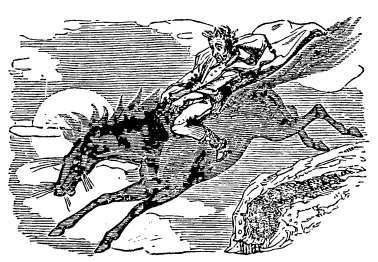
Sikes places the Ellylldan among lights seen moving over marshy terrain and tempting a late wanderer off course. In his condensed literary passage, attributed to The Vale of Glamorgan of 1839, a narrator follows it through pools, reeds and drooping bushes. When he stops, the light waits but shrinks almost out of sight; when he resumes, it brightens and moves ahead again.
The episode surrounds the moving glow with the sounds and movements of frogs, wild birds, bats and other marsh animals. It ends when the light joins a circling company and the follower falls asleep. This richly staged scene is a particular literary witness, not a measured account of the light's mechanism. Sikes's comparisons with foreign wandering lights and his observation about drained bogs explain his collecting framework; they do not supply a universal body shape for the Welsh presence.
Origins & earliest records
The selected witness is Sikes's British Goblins of 1880, which explicitly condenses an account from The Vale of Glamorgan, published in 1839. The earlier work is identified through that attribution rather than claimed as separately inspected here. These printed treatments establish particular literary versions, while the beginning and range of the underlying oral light traditions remain uncertain.
Records & interpretation
The source describes an apparent moving light and preserves a literary sequence of following it through marshland. That supports its narrative function as a lure. It does not verify a creature, and the detailed anatomy Sikes gives to an American comparison is not evidence for the Welsh Ellylldan; those descriptions are deliberately kept separate.
In the literature
“the compound word suggests a luring elf-fire.”
Book I, chapter II; printed p. 18
Sikes explains the name through his treatment of dan as fire and lure.
Selected bibliography
Documented works and useful reading. This is not a list of every appearance.
- 01
British Goblins: Welsh Folk-lore, Fairy Mythology, Legends and Traditions
Book I, chapter II, pp. 18–20. Selected inspected witness; bibliography is not exhaustive.
- 02
British Goblins: Welsh Folk-lore, Fairy Mythology, Legends and Traditions — Book I, chapter II
London: Sampson Low, Marston, Searle & Rivington, 1880. Original English compilation by Wirt Sikes; hosted Project Gutenberg transcription retains printed page anchors. Selected reports, quoted older authorities and the compiler’s comparative theories are distinguished.
Family & connections
A source-supported family tree or inspiration record has not yet been compiled for this profile. Related reading below indicates a connection in subject matter, not a proven lineage or creative influence.
Located primary passages
Specific passages supporting details in this entry, grouped by their published witness.
British Goblins: Welsh Folk-lore, Fairy Mythology, Legends and Traditions — Book I, chapter II
London: Sampson Low, Marston, Searle & Rivington, 1880. Original English compilation by Wirt Sikes; hosted Project Gutenberg transcription retains printed page anchors. Selected reports, quoted older authorities and the compiler’s comparative theories are distinguished.
- The compiler compares Ellylldan with misleading marsh lights and condenses an Iolo the Bard account from The Vale of Glamorgan (1839): the light leads a traveller through wetland and joins a dancing ring.
Selected complete episodes read in the hosted primary compilation. Earlier Jones, Iolo MSS., Pughe and Vale of Glamorgan citations are attributed as Sikes’s sources; their original editions have not been independently checked here. The compiler’s broad comparative etymologies are not adopted as established modern scholarship.
Encyclopedia background
An additional attributed reference, separate from the editorial profile above.
Read the open encyclopedia overview
In folklore, a will-o'-the-wisp, or will-o'-wisp (Latin: ignis fatuus, "foolish flame"), is an atmospheric ghost light seen by travellers at night, especially over bogs, swamps, or marshes.
In folklore, will-o'-the-wisps are typically attributed as ghosts, fairies or elemental spirits meant to reveal (or conceal) a path or direction. These wisps are portrayed as dancing or flowing in a static form, until noticed or followed, in which case they visually fade or disappear. Modern science explains the light aspect as natural phenomena such as bioluminescence or chemiluminescence, caused by the oxidation of phosphine (PH3), diphosphane (P2H4) and methane (CH4), produced by organic decay.
Text from Wikipedia contributors, “Will-o'-the-wisp”. CC BY-SA 4.0. Extracted introduction; formatting changed. Retrieved 5 October 2026. The source article may have changed since retrieval.
References
Sources supporting this profile. Linked pages have their own scope and editorial standards.
- Primary textSikes, British Goblins: Book I, chapter II, pp. 18–20Research access: 2026-10-05
Image credits
A sourced illustration has not yet been added. This gap is included in the coverage record.