Fairy
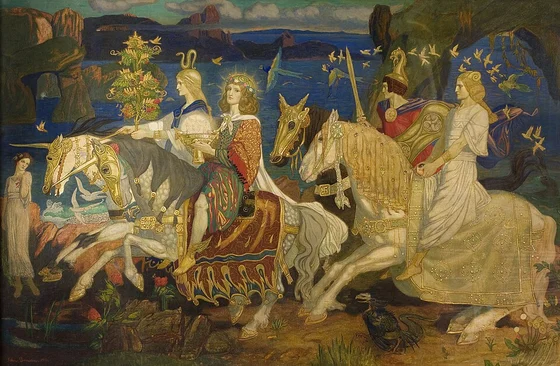
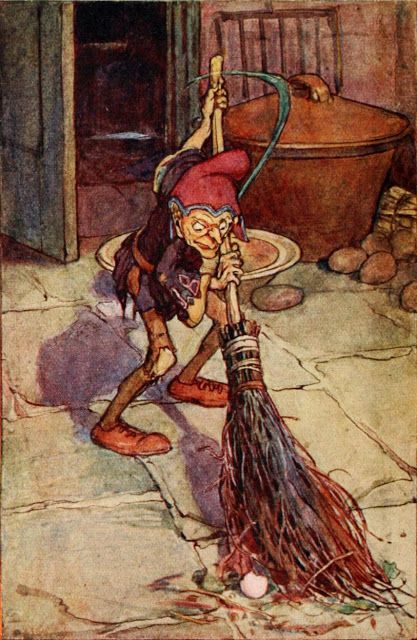
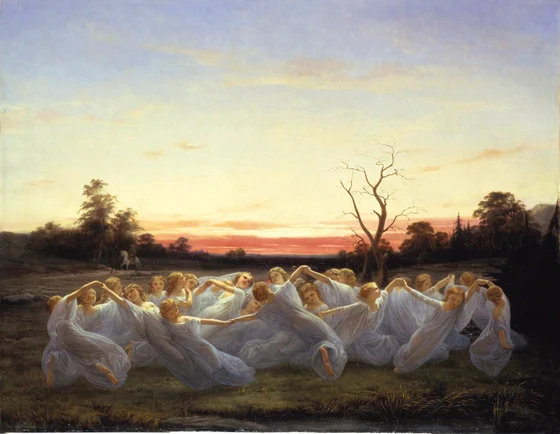
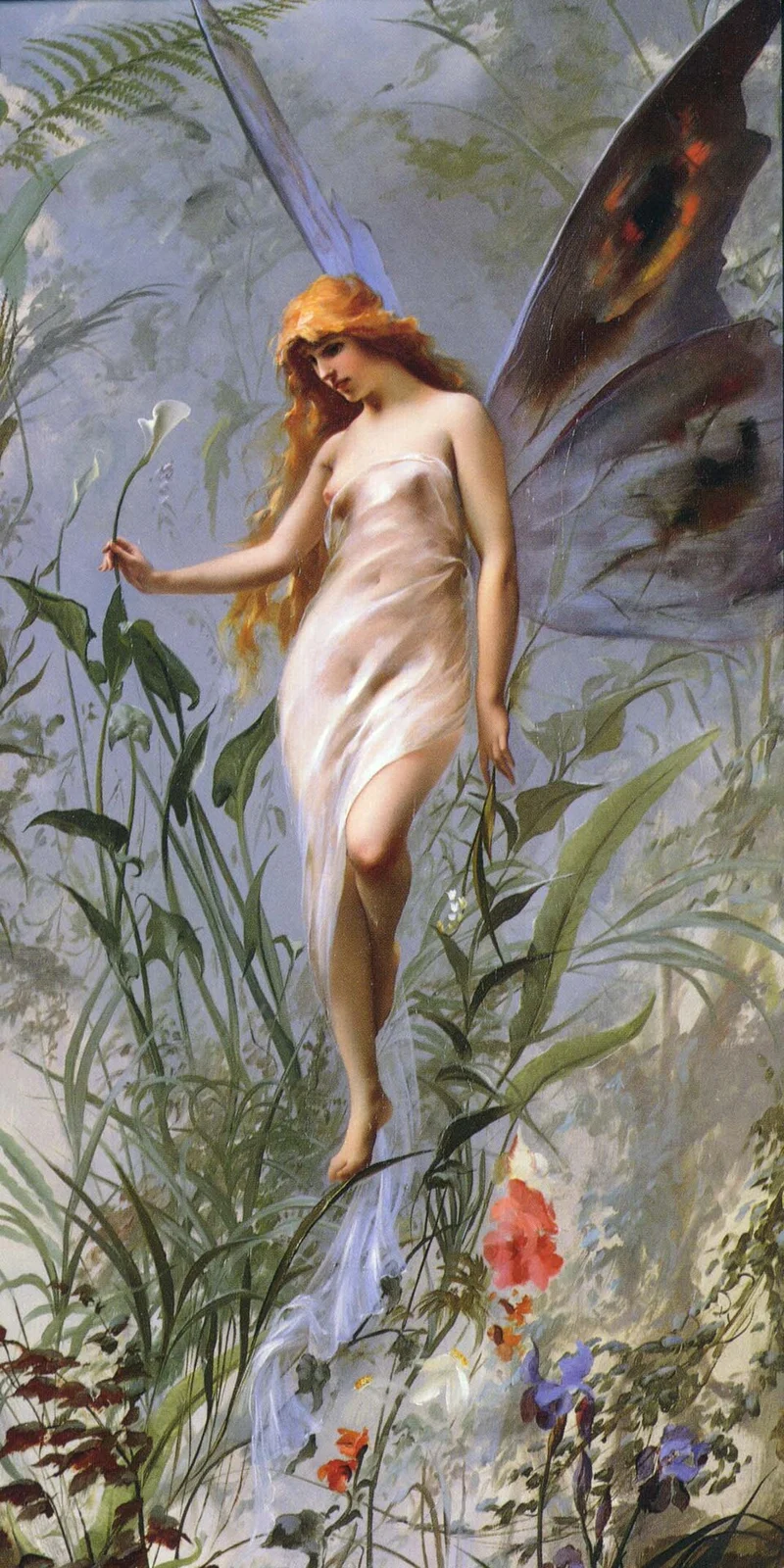
Image associated with the exact linked encyclopedia article; consult credited file description for its interpretation.
Overview
In A Midsummer Night’s Dream, a fairy serves a queen, moves across varied landscapes and decorates flowers with dew. Oberon and Titania have attendants, disputes and interests in human affairs; their conflict is represented as disturbing weather and seasonal order. The same scene places mischievous Robin Goodfellow beside the fairy court, recalling household work, spoiled churning and misleading travellers. Small-scale imagery appears when frightened attendants hide in acorn cups. These features describe Shakespeare’s theatrical world and its chosen folklore associations. They do not establish that every being called a fairy is minute, winged or organized under the same monarchs.
Campbell’s 1900 collection instead presents Scottish Gaelic accounts of beings associated with hills and green mounds, everyday labour, theft, assistance and encounters with humans. His synthesis depicts them as counterparts of people whose approach may escape notice. It also preserves variation and the collector’s judgments, which should not be mistaken for a complete community consensus. Keeping the two witnesses separate makes the generic label useful without erasing specific traditions such as Aos sí. A reader can compare fairy dwelling, scale and social action while retaining the source of each claim. Fairy and elf sometimes overlap in English literary wording, but that usage does not make the Edda’s álfar or every regional spirit interchangeable.
Origins & earliest records
Shakespeare’s play was printed in1600, while Campbell’s posthumous Scottish collection appeared in1900. These dates identify selected literary and collected witnesses, not the origin of fairy belief. The generic profile deliberately retains several situated meanings rather than claiming one universal British tradition or a single unchanged species description across centuries.
Records & interpretation
The play supports its court, flower imagery, mischief and small-scale hiding place. Campbell supplies a dated collector’s synthesis of Gaelic accounts. Both are evidence for represented or recorded traditions, with different settings and purposes; neither independently establishes supernatural biology or proves that every locally named being belongs to one taxonomy.
In the literature
“I do wander everywhere, Swifter than the moon’s sphere; And I serve the Fairy Queen”
Act II, scene I, Fairy’s opening speech
The unnamed Fairy answers Puck; line breaks normalized.
Selected bibliography
Documented works and useful reading. This is not a list of every appearance.
- 01
A Midsummer Night’s Dream, ActII sceneI
Literary fairy court and household-mischief references; not a universal folk taxonomy.
- 02
Superstitions of the Highlands and Islands of Scotland, chapterI
Selected opening accounts inspected; collector synthesis remains situated.
- 03
A Midsummer Night’s Dream
Exact contiguous excerpt checked against the linked primary e-text on 2026-10-05; only whitespace normalized. First print date; modern spelling and punctuation of Project Gutenberg e-text.
Family & connections
A source-supported family tree or inspiration record has not yet been compiled for this profile. Related reading below indicates a connection in subject matter, not a proven lineage or creative influence.
Located primary passages
Specific passages supporting details in this entry, grouped by their published witness.
A Midsummer Night’s Dream, ActII sceneI
Exact contiguous excerpt checked against the linked primary e-text on 2026-10-05; only whitespace normalized. First print date; modern spelling and punctuation of Project Gutenberg e-text.
- The unnamed Fairy answers Puck; line breaks normalized.
This source represents its own literary or collected version. A novel or poem is evidence for depiction, not a universal definition or a zoological claim. Original source verification is preserved; attachment performed after exact generic profileID became available.
Encyclopedia background
An additional attributed reference, separate from the editorial profile above.
Read the open encyclopedia overview
A fairy (also fay or faerie/faery) is a type of mythical being or legendary creature, generally described as anthropomorphic, found in the folklore of multiple European cultures (including Celtic, Slavic, Germanic, and French folklore), a form of spirit, often with magical, metaphysical, supernatural, or preternatural qualities.
Myths and stories about fairies do not have a single origin but are rather a collection of folk beliefs from disparate sources. Various folk theories about the origins of fairies include casting them as either demoted angels or demons in a Christian tradition, as deities in pagan belief systems, as spirits of the dead, as prehistoric precursors to humans, or as spirits of nature.
The label of fairy has at times applied only to specific magical creatures with human appearance, magical powers, and a penchant for trickery. At other times, it has been used to describe any magical creature, such as goblins and gnomes. Fairy has at times been used as an adjective, with a meaning equivalent to "enchanted" or "magical". It was also used as a name for the place these beings come from: Fairyland.
A recurring motif of legends about fairies is the need to ward off fairies using protective charms. Common examples of such charms include church bells, wearing clothing inside out, four-leaf clover, and food. Fairies were also sometimes thought to haunt specific locations and to lead travelers astray using will-o'-the-wisps. Before the advent of modern medicine, fairies were often blamed for sickness, particularly tuberculosis and birth deformities.
In addition to their folkloric origins, fairies were a common feature of Renaissance literature and Romantic art and were especially popular in the United Kingdom during the Victorian and Edwardian eras. The Celtic Revival also saw fairies established as a canonical part of Celtic cultural heritage.
Text from Wikipedia contributors, “Fairy”. CC BY-SA 4.0. Extracted introduction; formatting changed. Retrieved 5 October 2026. The source article may have changed since retrieval.
References
Sources supporting this profile. Linked pages have their own scope and editorial standards.
- Primary textShakespeare, A Midsummer Night’s Dream, ActII sceneIResearch access: 2026-10-05
- Primary textCampbell, Scottish fairy accounts, chapterIResearch access: 2026-10-05
Image credits
Reference illustrationFairy
Image associated with the exact linked encyclopedia article; consult credited file description for its interpretation.