Elf
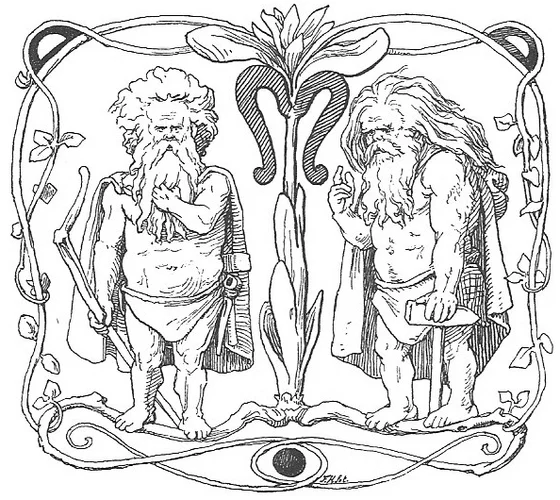
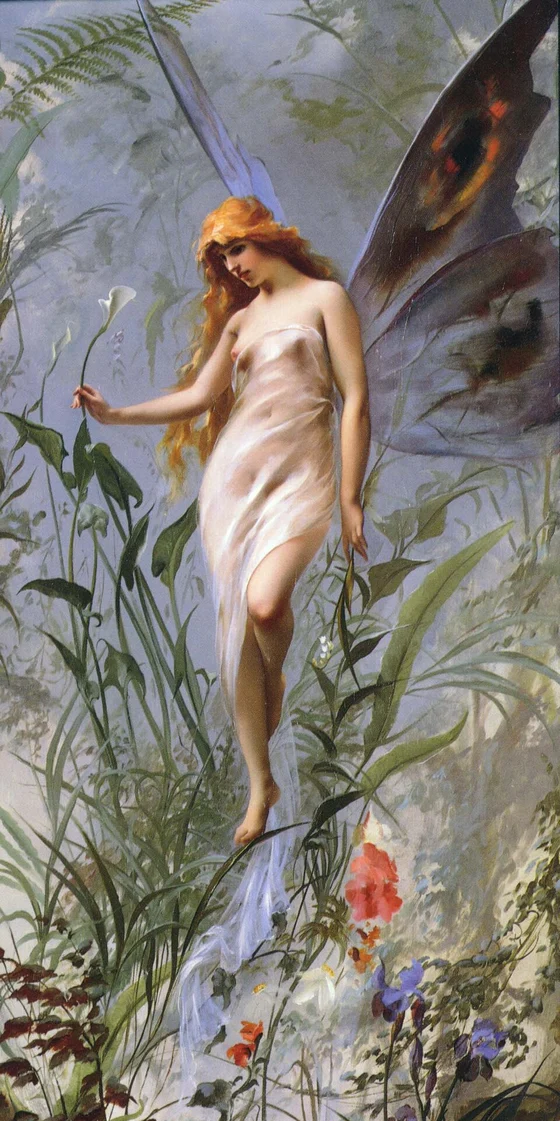
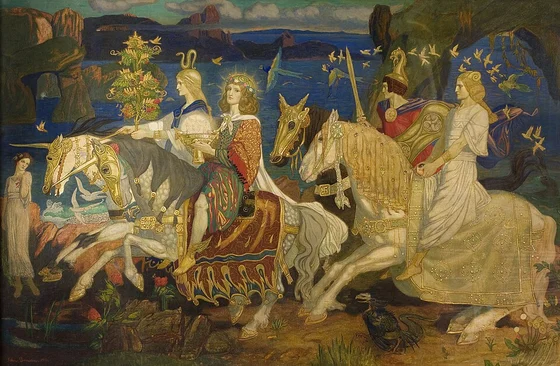
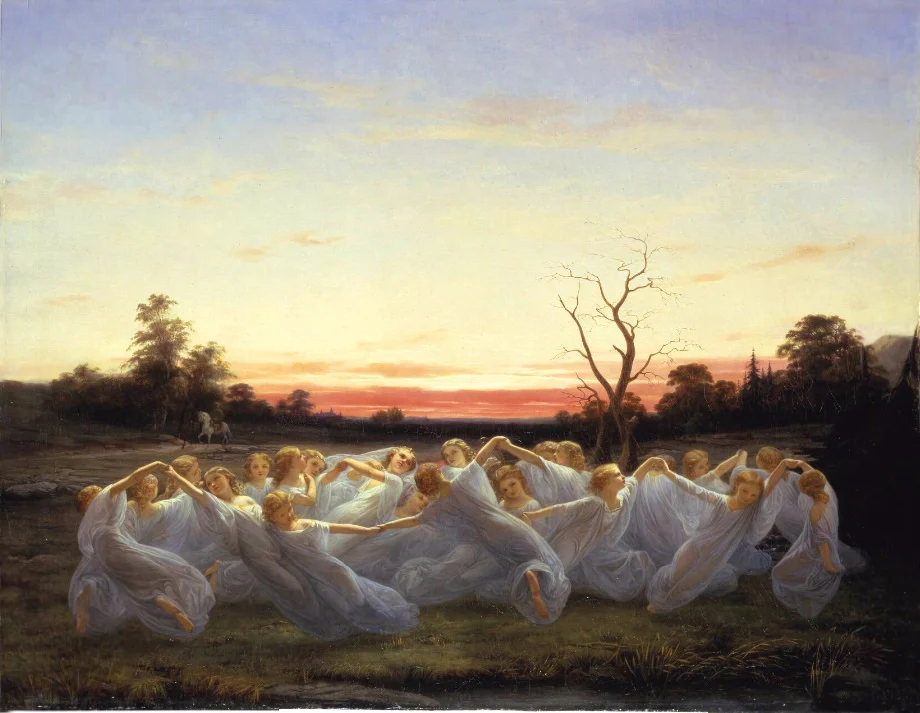
Image associated with the exact linked encyclopedia article; consult credited file description for its interpretation.
Overview
Gylfaginning describes Álfheimr as the dwelling of light elves and places dark elves within the earth. The passage contrasts their appearance and actions through strong imagery of brightness and darkness. Later in the same discussion it places light elves in a higher heavenly setting associated with Gimlé. These descriptions belong to the speaker’s cosmological explanation in a medieval Icelandic text. They should not be silently translated into modern ethnic categories, nor treated as proof that every ancient use of álfr fits this one contrast. The selected English rendering uses its own nineteenth-century vocabulary and spellings, which are distinguished from the underlying Old Norse names.
The account offers relatively little everyday physical detail: it does not establish a universal ear shape, costume, stature or military society. That sparseness matters when an illustration or modern adaptation supplies conspicuous features absent from the inspected passage. English literary usage can also call fairy attendants elves, as Shakespeare does, but a shared translation word does not establish identical traditions. This profile therefore provides a Norse foundation within the broader history of the English label. Dwarfs, dark elves and other underground beings require source-specific comparison rather than automatic separation into perfectly stable modern categories. Their relationships remain a textual question, while named dwarfs and specific fairy traditions have separate profiles.
The heavenly setting in §17 is presented through Ganglere’s questions and Har’s answers. After describing Gimlé as the surviving hall for good and righteous people, Har locates another heaven, Andlang, above the visible one and a third, Vidblain, higher still. His answer places Gimlé there with language of belief and says that light elves alone are thought to inhabit it at present. The dialogue therefore connects elves with a layered account of the heavens without presenting every location as an equally certain geographical observation. It also distinguishes their present occupancy from the righteous people’s future dwelling.
The poetic witnesses supply other kinds of classification. In The Lay of the Dwarf Alvis, the questioning Thor asks how natural things are named across different worlds. Alvis repeatedly assigns the Alfar their own terms, alongside those of humans, gods, giants and dwarfs: earth, heaven, moon, sun, clouds, wind, calm, sea, forest, night and grain appear in this sequence. The poem distinguishes groups through knowledge and vocabulary rather than a catalogue of bodies. The Lay of Volund adds a more individual association. Its prose introduction calls the smith a son of a king of the Finns, while verses 10, 13 and 30 call him the Alfar’s companion or chief. His jewellery-making, captivity and eventual flight belong to that named figure’s narrative; these passages do not make every elf a flying smith. Keeping prose introduction and verse address together preserves the text’s different characterizations instead of forcing Völund into one modern species category.
Origins & earliest records
The selected cosmological account belongs to the Prose Edda, compiled in thirteenth-century Iceland and commonly associated with Snorri Sturluson. It is read here in Anderson’s 1901 edition of an 1879 translation. That mediation and the medieval compilation date do not establish the first appearance of elves in older oral or ritual traditions. The poetic comparisons use Benjamin Thorpe’s translation in the 1906 Norroena Society edition; that edition’s title-page attribution to Sæmund is not treated as established authorship of the poems.
Records & interpretation
Gylfaginning §17 supplies the light/dark contrast, Álfheimr and Har’s qualified account of higher heavens. Alvis 10–35 distinguishes the Alfar through vocabulary in a knowledge contest. Volund’s prose introduction and verses 10, 13 and 30 preserve different affiliations of the named smith. Together these are situated textual witnesses, rather than a single anatomical or social description applicable to every use of álfr.
In the literature
“The light-elves are fairer than the sun to look upon”
“The Fooling of Gylfe”, Chapter VII, section 17, p. 77 · Rasmus Björn Anderson
Har distinguishes light-elves and dark-elves. This is Anderson’s historical translation of medieval cosmology.
Selected bibliography
Documented works and useful reading. This is not a list of every appearance.
- 01
The Younger Edda, Gylfaginning, chapter VII §17, pp. 77–78
Light/dark elf contrast and the dialogue’s qualified placement of Gimlé, Andlang and Vidblain.
- 02
The Lay of the Dwarf Alvis, verses 1–36, especially 10–35, pp. 57–62
Complete knowledge contest; Alfar vocabulary compared with other groups, without deriving anatomy from the names.
- 03
The Lay of Volund, prose introduction and verses 1–39, especially 10, 13 and 30, pp. 121–127
Finnish royal parentage in prose and Alfar companion/chief language in verse kept distinct; named smith’s acts not generalized to all elves.
- 04
The Younger Edda / Prose Edda
Exact contiguous excerpt checked against the linked primary e-text on 2026-10-05; only whitespace normalized. Chicago: Scott, Foresman, 1901; translation copyright 1879. Dates refer to this English edition, not composition of the Old Norse work.
Family & connections
A source-supported family tree or inspiration record has not yet been compiled for this profile. Related reading below indicates a connection in subject matter, not a proven lineage or creative influence.
Located primary passages
Specific passages supporting details in this entry, grouped by their published witness.
The Younger Edda, Gylfaginning, chapter VII §17, pp. 77–78
Exact contiguous excerpt checked against the linked primary e-text on 2026-10-05; only whitespace normalized. Chicago: Scott, Foresman, 1901; translation copyright 1879. Dates refer to this English edition, not composition of the Old Norse work.
- Har distinguishes light-elves and dark-elves. This is Anderson’s historical translation of medieval cosmology.
This source represents its own literary or collected version. A novel or poem is evidence for depiction, not a universal definition or a zoological claim. Original source verification is preserved; attachment performed after exact generic profileID became available.
Encyclopedia background
An additional attributed reference, separate from the editorial profile above.
Read the open encyclopedia overview
An elf (pl. elves) is a type of humanoid supernatural being in Germanic folklore. Elves appear especially in North Germanic mythology, being mentioned in the Icelandic Poetic Edda and the Prose Edda.
In medieval Germanic-speaking cultures, elves were thought of as beings with magical powers and supernatural beauty, ambivalent towards everyday people, and capable of either helping or hindering them. Beliefs varied considerably over time and space and flourished in both pre-Christian and Christian cultures. The word elf is found throughout the Germanic languages. It seems originally to have meant 'white being'. However, reconstructing the early concept depends largely on texts written by Christians, in Old and Middle English, medieval German, and Old Norse. These associate elves variously with the gods of Norse mythology, with causing illness, with magic, and with beauty and seduction.
After the medieval period, the word elf became less common throughout the Germanic languages, losing out to terms like Zwerg ('dwarf') in German and huldra ('hidden being') in North Germanic languages, and to loan-words like fairy (borrowed from French). Still, belief in elves persisted in the early modern period, particularly in Scotland and Scandinavia, where elves were thought of as magically powerful people living, usually invisibly, alongside human communities. They continued to be associated with causing illnesses and with sexual threats. For example, several early modern ballads in the British Isles and Scandinavia, originating in the medieval period, describe elves attempting to seduce or abduct human characters.
With modern urbanisation and industrialisation, belief in elves declined rapidly, though Iceland has some claim to continued popular belief. Elves started to be prominent in the literature and art of educated elites from the early modern period onwards. These literary elves were imagined as tiny, playful beings, with William Shakespeare's A Midsummer Night's Dream a key development of this idea. In the eighteenth century, German Romantic writers were influenced by this notion of the elf, and re-imported the English word elf into the German language. From the Romantic notion came the elves of modern popular culture. Christmas elves are a relatively recent creation, popularized during the late 19th century in the United States. Elves entered the twentieth-century high fantasy genre in the wake of J. R. R. Tolkien's works; these re-popularised the idea of elves as human-sized and humanlike beings. Elves remain a prominent feature of fantasy media today.
Text from Wikipedia contributors, “Elf”. CC BY-SA 4.0. Extracted introduction; formatting changed. Retrieved 5 October 2026. The source article may have changed since retrieval.
References
Sources supporting this profile. Linked pages have their own scope and editorial standards.
- Primary textThe Younger Edda, selected 1901 Anderson edition, Gylfaginning §17Research access: 2026-10-05
- Primary textThorpe’s Elder Edda translation, Norroena Society 1906: Alvis and VolundResearch access: 2026-10-05
Image credits
Reference illustrationElf
Image associated with the exact linked encyclopedia article; consult credited file description for its interpretation.