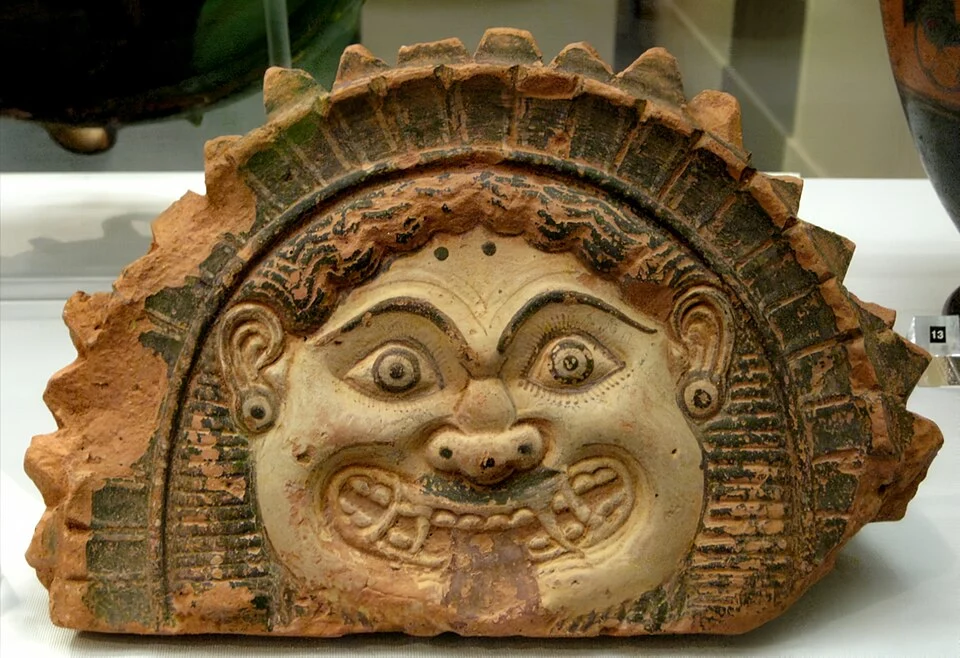
Medusa
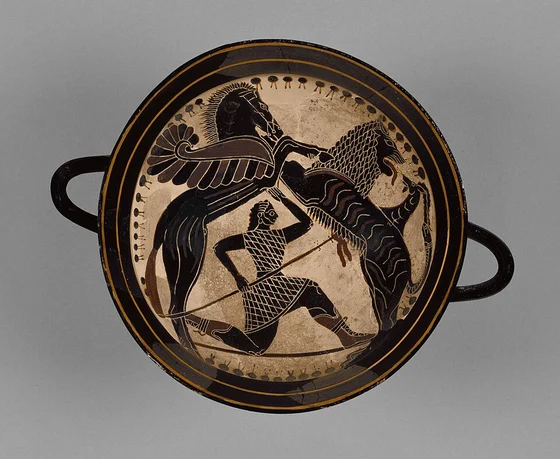
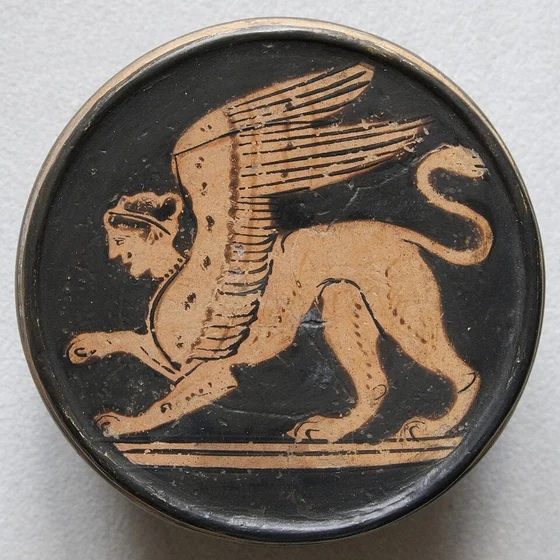
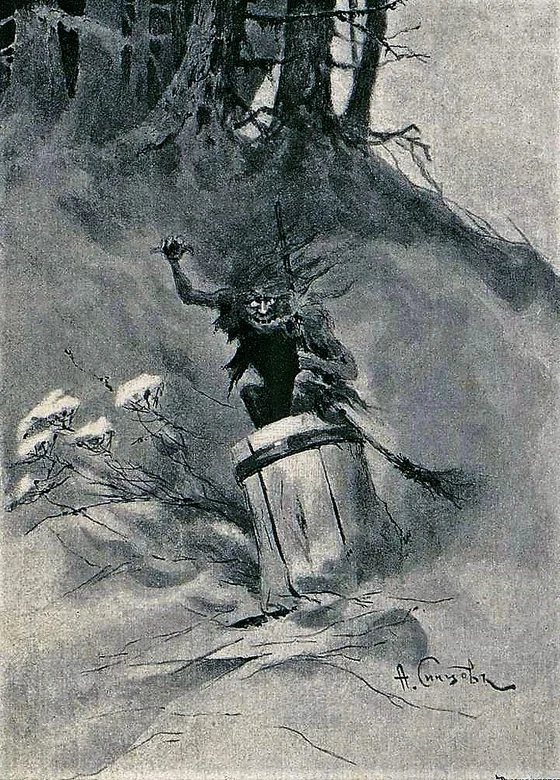
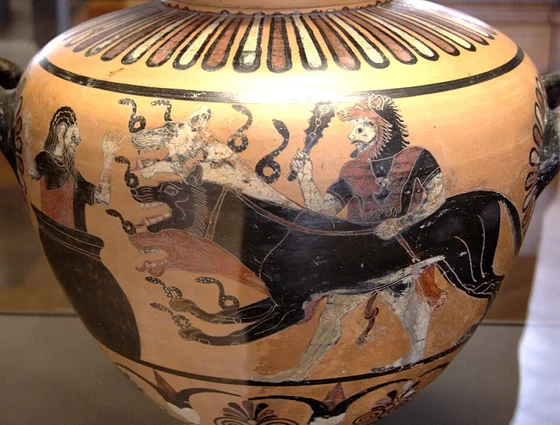
Image associated with the exact linked encyclopedia article; consult credited file description for its interpretation.
Overview
Medusa is the mortal Gorgon whose severed head retains the power to turn those who look at it into stone. She belongs to a family of extraordinary beings, but her mortality distinguishes her from Stheno and Euryale. Ancient accounts vary in their descriptions of her body, the circumstances of her earlier life and the uses of her remains. The familiar snake-haired woman is one influential representation within this longer history.
Hesiod’s Theogony, in its genealogy beginning at line 270, places the Gorgons among the children of Ceto and Phorcys, beyond Ocean toward Night. It names Sthenno, Euryale and Medusa and contrasts the first two sisters’ immortality with Medusa’s fate. Poseidon lies with her in a flower-filled meadow. When Perseus cuts off her head, Pegasus and Chrysaor emerge. Pegasus subsequently carries Zeus’s thunder and lightning; Chrysaor becomes the father of Geryon through Callirrhoe. This passage provides named relationships and divergent descendants without an account of a temple or a transformation of Medusa’s hair.
Library II.4.2 gives the expedition a political motive: Polydectes wants access to Perseus’s mother Danae and sends the grown son to obtain a Gorgon’s head. Hermes and Athena guide him. By temporarily seizing the shared eye and tooth of the Graiae, he learns the way to nymphs who supply winged sandals, a bag and a concealing cap. Hermes also gives him a hard sickle. The Gorgons in this version have serpentine heads, boar-like tusks, bronze hands and golden wings. Athena guides the attack while Perseus looks at Medusa’s reflection in a bronze shield and kills her as she sleeps.
The escape and return continue the head’s story. Pegasus and Chrysaor spring from Medusa, and Perseus puts her head in the bag. Her awakened sisters pursue him but cannot see him through the cap’s concealment. In Library II.4.3 he later uses the head against Phineus and his conspirators, then against Polydectes and his companions after finding Danae and Dictys seeking refuge. He finally gives the head to Athena, who places it in her shield. The passage also reports an alternative explanation involving Medusa’s rivalry with Athena in beauty; it remains an attributed version.
Ovid’s Metamorphoses IV places the account of Medusa’s earlier beauty inside Perseus’s speech at his wedding feast. Her hair had been especially admired. The story then connects Neptune’s act in Minerva’s temple with the goddess’s decision to replace that hair with snakes and display them against her enemies. Brookes More’s 1922 translation uses euphemistic language for the encounter; Dartmouth’s 2024 exhibition explicitly interprets it as Neptune’s rape of Medusa and examines how later depictions minimize her experience. Ovid’s narrative and that modern curatorial reading should each retain their attribution, rather than being substituted for Hesiod’s different scene.
Ovid also lets the severed head transform the landscape. After rescuing Andromeda, Perseus cushions it with leaves and seaweed. The plants harden on contact; sea nymphs repeat the process and scatter their seeds. The poem presents this as an origin of coral’s supposed change from an underwater plant to stone in the air. It is a poetic account of transformation, not a biological explanation of coral.
Surviving art gives the face several forms. The Metropolitan Museum’s sixth-century BCE Etruscan roof ornament, accession 27.122.14, has the exaggerated eyes and fierce grin of an Archaic gorgoneion. Its catalogue explains the roof-edge function and surviving paint. A different object, Attic pelike 45.11.1, attributed to Polygnotos and dated about 450–440 BCE, shows the sleeping Medusa with a beautiful young woman’s face. The museum identifies Perseus looking toward Athena during the attack. These dated objects demonstrate variation in artistic treatment; they do not require every text to describe the same anatomy.
In Dante’s Inferno IX, the Furies threaten to summon Medusa at the gates of Dis. Virgil turns Dante away and covers his eyes with his own hands to prevent a fatal sight. A heavenly messenger then opens the way. Medusa is invoked as a threat, but she is not shown arriving or petrifying Dante in the canto. The power of her image survives here through anticipation and protective action rather than another narrated beheading.
Origins & earliest records
Hesiod’s Archaic Theogony is the earliest literary witness examined for this profile. The selected Etruscan roof ornament dates to the sixth century BCE, while the Attic pelike dates to about 450–440 BCE. These are independently dated witnesses to representation, not a demonstrated first oral telling. Later works develop different episodes and explanations; Ovid’s hair-transformation account is not silently projected into Hesiod.
Records & interpretation
Genealogical poetry, mythographic narrative, Roman and medieval literature, and surviving decorated objects document Medusa’s cultural history. Ceto, Phorcys, the Gorgon sisters, Pegasus and Chrysaor form source-specific narrative relationships rather than a biological family tree. Petrification and coral transformation belong to the cited stories. Modern exhibition interpretation is identified separately from the ancient texts and the museum objects it discusses.
In the literature
“she was mortal, but the two were undying and grew not old.”
Theogony, lines 270–294 · Hugh G. Evelyn-White
Medusa is mortal, distinguished from her two immortal Gorgon sisters.
“Medusa come, so we to stone will change him!”
InfernoIX.52 · Henry Wadsworth Longfellow
The Furies invoke Medusa; the narrative does not say she appears.
“they hardened at the touch”
BookIV.740–752, coral origin · Brookes More
Sea plants harden on contact with Medusa’s severed head.
Selected bibliography
Documented works and useful reading. This is not a list of every appearance.
- 01
Theogony, Gorgon genealogy beginning at line 270
Ceto and Phorcys, the three sisters, Poseidon, Pegasus and Chrysaor, with the descendants’ immediate continuation.
- 02
The Library II.4.2–3
Complete located expedition, beheading, pursuit, later uses of the head and its gift to Athena; reported beauty-rivalry variant retained.
- 03
Metamorphoses IV.740–803
Coral episode and wedding-feast account of Medusa. Translator’s wording distinguished from modern curatorial interpretation.
- 04
Divine Comedy, Inferno IX
Complete canto inspected: invocation by the Furies, covered eyes and heavenly messenger; no actual arrival of Medusa.
- 05
Theogony, in Hesiod, the Homeric Hymns, and Homerica
Historical English translation; translator’s preface dated 9 September 1914. Gutenberg includes the English portions and relocated footnotes.
- 06
The Library (Bibliotheca)
Pseudo-Apollodorus, The Library, James George Frazer translation, Loeb Classical Library121–122; Harvard University Press / William Heinemann,1921.
- 07
Inferno
Dante, Inferno, Henry Wadsworth Longfellow translation explicitly identified in Gutenberg1001. Historical translation first published1867; selected digital print edition unspecified. Complete cantosIX andXII independently read, not the complete Inferno.
- 08
Metamorphoses, Book IV: Medusa report and coral origin
Brookes More historical English translation, explicitly identified by chapter heading. First translation publication1922 as supplied in root edition handoff; exact print edition of hosted transcription unspecified. Complete selected IV.740–803 passage independently reread; no full Metamorphoses claim.
Family, evolution & connections
Textual genealogy: children of Medusa and Poseidon in Library
Pegasus and Chrysaor at Library 2.4.2; Pegasus's parentage is repeated at 2.3.2.
Scroll sideways to see all branches. With a keyboard, focus the tree and use the arrow keys.
- Parents: Medusa and Poseidon
- Chrysaor
Use the explicit statement that Medusa had Pegasus and Chrysaor by Poseidon, rather than inferring parentage from the beheading scene alone. A supernatural birth narrative in this particular text. Perseus causes the emergence by beheading Medusa but is not identified as a parent. Chrysaor has no local profile yet and is retained as a named node. No direct biological ancestry is implied.
Sthenno and Euryale
Theogony names Sthenno, Euryale and Medusa together as Gorgons born to Ceto and Phorcys. The poem distinguishes mortal Medusa from her deathless sisters, so their shared parentage does not imply identical mortality. This record preserves Hesiod’s textual family relationship and does not merge every later retelling, artistic interpretation or modern fantasy use of the Gorgon name.
Ceto and Phorcys
Hesiod identifies Ceto and Phorcys as the parents of the Gorgons, including Medusa. The relationship supplies textual parentage for this version, without inferring descent from serpent appearance or from Perseus’s role in her death. These are personified mythological figures; the connection belongs to a named literary account rather than zoological classification or a complete family tree across all sources.
Located primary passages
Specific passages supporting details in this entry, grouped by their published witness.
Primary source witness
Historical English translation; translator’s preface dated 9 September 1914. Gutenberg includes the English portions and relocated footnotes.
- Medusa is mortal, distinguished from her two immortal Gorgon sisters.
This passage documents one ancient literary version. Translation publication dates are not ancient composition dates or earliest-attestation claims.
The Library II.4.2–3
Pseudo-Apollodorus, The Library, James George Frazer translation, Loeb Classical Library121–122; Harvard University Press / William Heinemann,1921.
- Of Stheno, Euryale and Medusa, only Medusa is mortal; the Gorgons have dragon scales, boar tusks, brazen hands and golden wings and petrify beholders.
- Athena guides Perseus’s hand as he uses the shield reflection to behead Medusa; Pegasus and Chrysaor emerge from her severed body.
Version-specific ancient compilation, not an earliest-attestation assertion. Compound episode claim was checked in full; the brief evidence excerpt is not the entire supporting passage.
Primary source witness
Dante, Inferno, Henry Wadsworth Longfellow translation explicitly identified in Gutenberg1001. Historical translation first published1867; selected digital print edition unspecified. Complete cantosIX andXII independently read, not the complete Inferno.
- The three Furies are named Megaera, Alecto and Tisiphone, described with serpent/hydra features, and invoke Medusa to turn Dante to stone. Virgil turns Dante around and covers his eyes. The subsequent heavenly messenger opens the gate; the canto never narrates Medusa’s actual arrival.
Invocation and feared gaze are explicit; no actual Medusa appearance, successful petrification or physical duel invented.
Metamorphoses IV.740–803
Brookes More historical English translation, explicitly identified by chapter heading. First translation publication1922 as supplied in root edition handoff; exact print edition of hosted transcription unspecified. Complete selected IV.740–803 passage independently reread; no full Metamorphoses claim.
- After the sea monster’s defeat Perseus cushions Medusa’s head on springy leaves and sea plants. The plants take up its poison and harden; sea nymphs reproduce the effect, and the narrator explains coral’s change from underwater plant to exposed stone.
- Perseus recounts obtaining the shared eye of two Phorcys daughters, reaching the Gorgon through petrified people and animals, using a brazen-shield reflection and severing her head while she and her serpent hair sleep. He reports Pegasus and his brother’s birth. Asked why Medusa alone has snake hair, he recounts her former beauty, the sea god’s encounter in Minerva’s temple and Minerva’s punitive change of the hair.
Narrated coral origin is not modern marine biology. Medusa’s severed head remains potent through contact, not only a living direct gaze. More’s rendering euphemises the sea god encounter as attaining her love. This historical translation does not by itself substantiate an explicitly consensual claim; root’s separately attributed modern curatorial sexual-violence reading is not quoted here. Two shared-eye sisters here are not silently changed to the three in Apollodorus.
The Library II.4.2–3
Frazer1921 historical English translation; full II.4.2–3 independently read in retained root HTML.
- Polydectes’s demand leads Perseus through the Graeae to the nymphs’ sandals, wallet and invisible cap; Hermes supplies the sickle and Athena guides the reflected blow. The sisters pursue but cannot see him under the cap. On his return the head petrifies Phineus’s conspirators and Polydectes’s gathering; he restores the equipment and gives the head to Athena. A final reported variant attributes the beheading to Medusa’s beauty rivalry with Athena.
The Library II.4.2–3, complete selected encounter and return
The Athena beauty-rivalry report is a distinct version from Ovid’s temple account. No physical anatomy imported from unrelated later depictions.
Encyclopedia background
An additional attributed reference, separate from the editorial profile above.
Read the open encyclopedia overview
In Greek mythology, Medusa (; Ancient Greek: Μέδουσα, romanized: Médousa, lit. 'guardian, protectress'), also called Gorgo (Ancient Greek: Γοργώ) or the Gorgon, was one of the three Gorgons. Medusa is generally described as a woman with living snakes in place of hair; her appearance was so hideous that anyone who looked upon her was turned to stone. Medusa and her Gorgon sisters Euryale and Stheno were usually described as daughters of Phorcys and Ceto; of the three, only Medusa was mortal.
Medusa was beheaded by the Greek hero Perseus, who then used her head, which retained its ability to turn onlookers to stone, as a weapon until he gave it to the goddess Athena to place on her shield. In classical antiquity, the image of the head of Medusa appeared in the evil-averting device known as the Gorgoneion.
According to Hesiod and Aeschylus, she lived and died on Sarpedon, somewhere near Cisthene. The 2nd-century BC writer Dionysius Scytobrachion instead placed the Gorgons in modern-day Libya. Herodotus also associated the Gorgons with Libya, reporting traditions that located them there.
Text from Wikipedia contributors, “Medusa”. CC BY-SA 4.0. Extracted introduction; formatting changed. Retrieved 5 October 2026. The source article may have changed since retrieval.
References
Sources supporting this profile. Linked pages have their own scope and editorial standards.
- Primary literary translationHesiod, Theogony: Gorgon family passageResearch access: 2026-10-05
- Primary literary translationFrazer’s Library II.4.2–3Research access: 2026-10-05
- Primary literary translationOvid, Metamorphoses IV, More translationResearch access: 2026-10-05
- Primary literary translationDante, Inferno IX, Longfellow translationResearch access: 2026-10-05
- Museum collection recordMetropolitan Museum, Etruscan antefix 27.122.14Research access: 2026-10-05
- Museum collection recordMetropolitan Museum, Polygnotos pelike 45.11.1Research access: 2026-10-05
- Curatorial interpretation and receptionElizabeth Hadley, More Than a Monster, Dartmouth Libraries exhibition (2024)Research access: 2026-10-05
Image credits
Reference illustrationMedusa
Image associated with the exact linked encyclopedia article; consult credited file description for its interpretation.