Mapuche
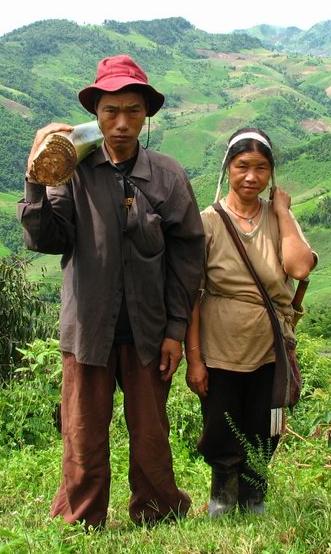
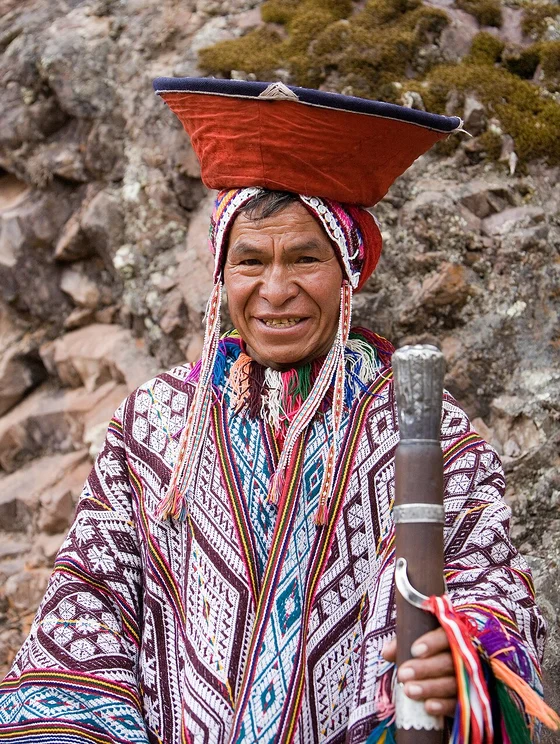
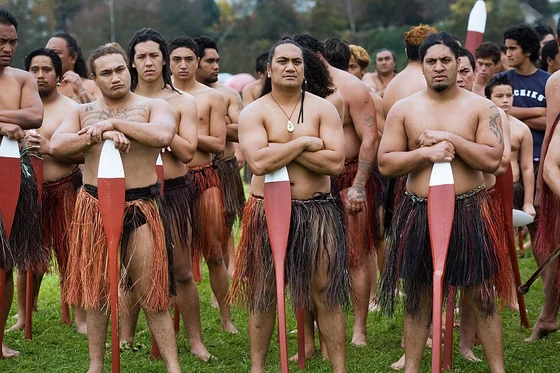
Image associated with the exact linked encyclopedia article; consult credited file description for its interpretation.
Overview
Mapuche histories include relationships with land, community authorities, language and changing political circumstances across southern South America. Mapudungun, oral knowledge, textile traditions and ceremonial life are among the subjects represented in public cultural institutions. Their meanings belong within particular community contexts. Contemporary Mapuche people also live in cities, work in many professions and participate in cultural and political movements.
The Museo Mapuche de Cañete reflects community participation in the naming and interpretation of a cultural institution. Its collections include domestic objects, tools, clothing and symbols associated with authority and ceremony. Historical accounts document resistance to Spanish expansion and later military occupation by Chile and Argentina. A balanced introduction treats these processes as part of an ongoing history, rather than assuming that communities disappeared or that cultural continuity requires living exactly as ancestors did.
A December 2025 report from the Universidad Católica de Temuco documents language work with the Truf Truf community and the Kimeltuwpew centre. Its first-anniversary event presented educational projects, traditional epew storytelling and an audiovisual initiative called Las voces del Gürü. Storyteller Octavio Córdova described starting instruction in mapuzungun through stories and interpreting the fox’s cleverness as a resource for facing difficulties. The centre reported teaching activities, a documentation room and a sound studio, with an archive still being developed. These are named participants and reported activities, not an independent measure of language recovery across all Mapuche communities.
In Argentina, a May 2025 Universidad Nacional del Comahue report describes a workshop on using mapuzugun in institutional signs. Organisers included the Mapuche association Kizu Iñciñ and student groups in Neuquén. The extension team brought together language speakers, students and university staff to translate the names of shared spaces and develop teaching materials. The account records work for fourteen educational and social institutions during 2024. This offers a concrete example of language visibility in contemporary public institutions, while leaving open the separate question of how signage, teaching and household use contribute to long-term transmission.
Poetry also moves between languages and audiences. Elicura Chihuailaf’s De sueños azules y contrasueños is represented here by the September 2023 digital edition issued by UTE and the Chilean Embassy. Its catalogue identifies a trilingual Mapudungun–Kichwa–Spanish presentation and a youth readership in Ecuador. The edition’s stated purpose includes supporting ancestral languages and introducing readers to Mapuche thought through poetry. Those aims belong to a particular publication; they do not demonstrate its educational effects. The catalogue documents a 120-page edition, but the complete poems have not been newly read or reproduced in this profile.
History & identity
Mapuche origin histories and territorial relationships should not be reduced to the date of a colonial encounter. Written sources become especially extensive during European expansion, but documentation is not the beginning of a people. Historical names and boundaries changed, and nineteenth-century state occupation is a distinct event from earlier community formation.
Sources & representation
The Cañete museum documents material culture and community engagement, while Chile's national library provides historical synthesis and access to older records. Colonial accounts and ethnographic transcriptions require scrutiny of authorship, translation and power. Neither artefacts nor older texts alone capture contemporary perspectives, internal diversity or every community's relationship with its territory.
Selected bibliography
Documented works and useful reading. This is not a list of every appearance.
- 01
Museo Mapuche de Cañete
Selected cultural institution account; not a complete historical or ethnographic bibliography.
- 02
Centro Kimeltuwpem conmemoró su primer aniversario destacando la revitalización del mapuzungun y la tradición oral
Complete 2 December 2025 report read. Title spelling Kimeltuwpem differs from body Kimeltuwpew; audiovisual publication plans not asserted completed.
- 03
Jornada sobre señalización en Mapuzugun
Complete 5 May 2025 report read; workshop and reported 2024 translation work distinguished from future language outcomes.
- 04
De sueños azules y contrasueños
Publisher catalogue only; ISBN9789942843272. Header shortens the title, while description gives the full title. Full poems not newly read; no passages reproduced.
Language & cultural connections
These connections link languages or specific cultural works and institutions; they do not establish biological ancestry or ethnic identity.
Shared human classification
Shared species classification of the human members of this community: Homo sapiens. This cultural identity is not a biological taxon, race, subspecies or separate evolutionary branch.
Encyclopedia background
An additional attributed reference, separate from the editorial profile above.
Read the open encyclopedia overview
The Mapuche ( mə-POO-chee, Mapuche and Spanish: [maˈputʃe]), also known as Araucanians, are a group of Indigenous inhabitants of south-central Chile and southwestern Argentina, including parts of Patagonia. The collective term refers to a wide-ranging ethnicity composed of various groups who share a common social, religious, and economic structure, as well as a common linguistic heritage as Mapudungun speakers. Their homelands once extended from Choapa Valley to the Chiloé Archipelago and later spread eastward to Puelmapu, a land comprising part of the Argentine pampa and Patagonia. Today, the Mapuche represent 77.16% of Chile’s indigenous peoples and about 8.8% of the total national population. The Mapuche are concentrated in the Araucanía region. Many have migrated from rural areas to the cities of Santiago and Buenos Aires to pursue economic opportunities. Around 92% of the Mapuches are from Chile.
The Mapuche traditional economy is based on agriculture; their traditional social organization consists of extended families, under the direction of a lonko or chief. In times of war, the Mapuche would unite in larger groupings and elect a toki (meaning "axe" or "axe-bearer") to lead them. Mapuche material culture is known for its textiles and silverwork.
At the time of Spanish arrival, the Picunche inhabited the valleys between the Choapa and Itata, Araucanian Mapuche inhabited the valleys between the Itata and Toltén rivers, south of there, and the Huilliche and the Cunco lived as far south as the Chiloé Archipelago. In the seventeenth, eighteenth, and nineteenth centuries, Mapuche groups migrated eastward into the Andes and Pampas, conquering, fusing with and establishing relationships with the Poya and Pehuenche. At about the same time, ethnic groups of the Pampa regions, the Puelche, Ranquel, and northern Aonikenk, made contact with Mapuche groups. The Tehuelche adopted the Mapuche language and some of their culture, in what came to be called Araucanization, during which Patagonia came under effective Mapuche suzerainty.
Mapuche in the Spanish-ruled areas, especially the Picunche, mingled with the Spanish during the colonial period, forming a mestizo population that lost its Indigenous identity. But Mapuche society in Araucanía and Patagonia remained independent until the late nineteenth century, when Chile occupied Araucanía and Argentina conquered Puelmapu. Since then the Mapuche have become subjects, and later nationals and citizens, of those states. Today, many Mapuche and Chilean communities are engaged in the so-called Mapuche conflict over land and Indigenous rights in both Argentina and Chile.
Text from Wikipedia contributors, “Mapuche”. CC BY-SA 4.0. Extracted introduction; formatting changed. Retrieved 5 October 2026. The source article may have changed since retrieval.
References
Sources supporting this profile. Linked pages have their own scope and editorial standards.
- MuseumMuseo Mapuche de CañeteResearch access: 2026-10-05
- ReferenceEl pueblo MapucheResearch access: 2026-10-05
- UniversityKimeltuwpew: dated university and community project reportResearch access: 2026-10-05
- UniversityMapuzugun signage: Neuquén workshop reportResearch access: 2026-10-05
- University publisherChihuailaf: trilingual edition catalogueResearch access: 2026-10-05
Image credits
Reference illustrationMapuche
Image associated with the exact linked encyclopedia article; consult credited file description for its interpretation.