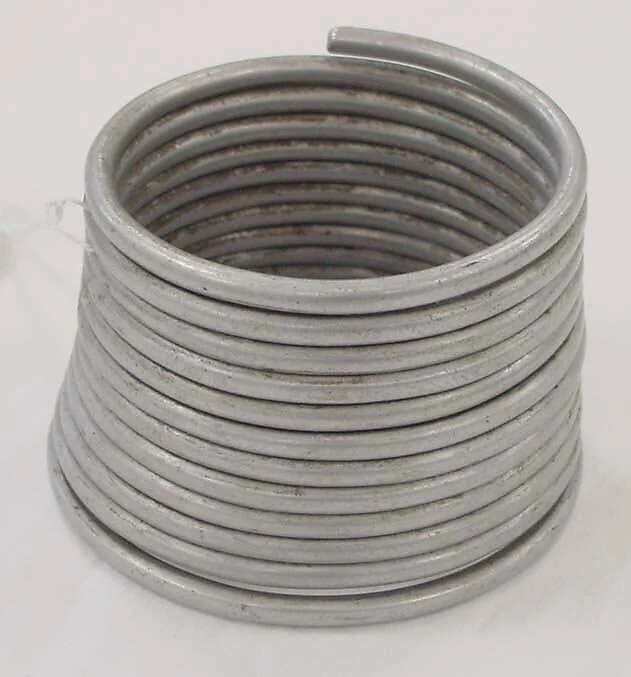
Coiled metal bracelet catalogued as a nineteenth-century Maasai object by The Metropolitan Museum of Art
The Met attributes this nineteenth-century metal bracelet to Maasai makers. It supplies a specific example of material culture, rather than a portrait of contemporary Maasai people or evidence that all Maasai communities wear the same ornament. The catalogue does not identify its individual maker or original wearer.
Overview
Maasai cultural histories include livestock keeping, age-set institutions and ceremonial practices, with considerable variation between places and circumstances. Livestock has social as well as economic significance, but pastoral life alone does not encompass every contemporary Maasai person's experience. Language, family relationships, oral knowledge and place contribute to identity. Cultural practices are interpreted and maintained by living communities, rather than fixed permanently in an ethnographic description.
The Maasai Association presents cultural preservation alongside practical programmes involving schooling, water, health and women's participation. This combination helps correct depictions that place Maasai people outside modern life. Communities face questions about land, livelihoods and access to services while exercising choices about their futures. Public descriptions of ceremonies require care: an institution's account documents particular perspectives and practices, and should not be assumed to apply identically to every individual or settlement.
The Maasai Mara Wildlife Conservancies Association describes a particular form of contemporary land organisation. Established in 2013, it coordinates conservancies and stakeholders in the Greater Mara ecosystem through a mandate from landowners and tourism parties. Its published priorities include governance, wildlife corridors, policy engagement, communication and more resilient sources of revenue. These are organisational aims within one region. They should not be assumed to represent every Maasai community’s land arrangements, or taken as independent proof that conservation and tourism benefits are distributed equally among all households.
Merrueshi Comprehensive School in Kajiado County offers a concrete example of community education. The Maasai Association’s school account describes both boarding and day pupils, government teachers and facilities supported through the association. Its listed curriculum includes Maasai, Swahili and English alongside scientific, mathematical and social subjects. A board of twelve women and men, nominated by community members, oversees resources and school management. This institutional account connects language, public schooling and local participation. Changing enrolment figures, fees and national curriculum requirements require separate dated checks and are not treated here as fixed features of Maasai education.
Tepilit Ole Saitoti’s The Worlds of a Maasai Warrior: An Autobiography supplies a named personal perspective. The University of California Press record describes childhood, adolescence and coming of age in Maasailand, life on the Serengeti plains, and the author’s education and travels in Europe and America. John Galaty provides the introduction. The selected paperback was published in October 1988 and comprises 170 pages. This memoir’s particular life history complements institutional accounts without standing for every Maasai experience. The present bibliography documents the publisher’s summary and edition record; the complete autobiography has not been newly read.
History & identity
Maasai histories are preserved through oral accounts and studied through historical records and regional research. Accounts of migration and pastoral development do not identify a single biological founding event. Modern borders and land policies create another layer of history, while contemporary communities continue to interpret inherited traditions in changing social and environmental circumstances.
Sources & representation
The Maasai Association is a Maasai-led organisation presenting community priorities and public cultural accounts. Its descriptions support an introduction to social practices and contemporary development, but are not a census of all Maasai experiences. More detailed historical and linguistic work requires local perspectives and attention to differences between communities.
Selected bibliography
Documented works and useful reading. This is not a list of every appearance.
- 01
Preserving and Celebrating Maasai Cultural Heritage
Selected community institutional reading; not a complete ethnographic bibliography.
- 02
Who We Are
Complete institutional overview, mission and six priorities read. Changing membership, acreage and payment totals omitted.
- 03
Maasai Schools: Merrueshi Comprehensive School
Complete school account read. Local management and stated language provision retained; fees, changing enrolment and national-policy claims not imported.
- 04
The Worlds of a Maasai Warrior: An Autobiography
Publisher synopsis and edition record only; ISBN9780520063259. Full autobiography unread; reviews not used as independent biographical proof.
Language & cultural connections
These connections link languages or specific cultural works and institutions; they do not establish biological ancestry or ethnic identity.
Shared human classification
Shared species classification of the human members of this community: Homo sapiens. This cultural identity is not a biological taxon, race, subspecies or separate evolutionary branch.
Encyclopedia background
An additional attributed reference, separate from the editorial profile above.
Read the open encyclopedia overview
The Maasai () are an Eastern Nilotic ethnic group native to northern, central and southern regions of Kenya including northern Tanzania, near the African Great Lakes region. Their native language is Maa, a Nilotic language related to Dinka, Kalenjin and Nuer, a branch within the broader Nilo-Saharan language family. Except for some elders living in rural areas, most Maasai people speak the official languages of Kenya and Tanzania—Swahili and English.
The Maasai population has been reported as numbering 1,189,522 in Kenya in the 2019 census compared to 377,089 in the 1989 census.
Text from Wikipedia contributors, “Maasai people”. CC BY-SA 4.0. Extracted introduction; formatting changed. Retrieved 5 October 2026. The source article may have changed since retrieval.
References
Sources supporting this profile. Linked pages have their own scope and editorial standards.
- CommunityPreserving and Celebrating Maasai Cultural HeritageResearch access: 2026-10-05
- Community membership organisationMara conservancies: institutional accountResearch access: 2026-10-05
- Community institutionMerrueshi school: community accountResearch access: 2026-10-05
- PublisherSaitoti: autobiography editionResearch access: 2026-10-05
Image credits
Contextual cultural object photographCoiled metal bracelet catalogued as a nineteenth-century Maasai object by The Metropolitan Museum of Art
The Met attributes this nineteenth-century metal bracelet to Maasai makers. It supplies a specific example of material culture, rather than a portrait of contemporary Maasai people or evidence that all Maasai communities wear the same ornament. The catalogue does not identify its individual maker or original wearer.