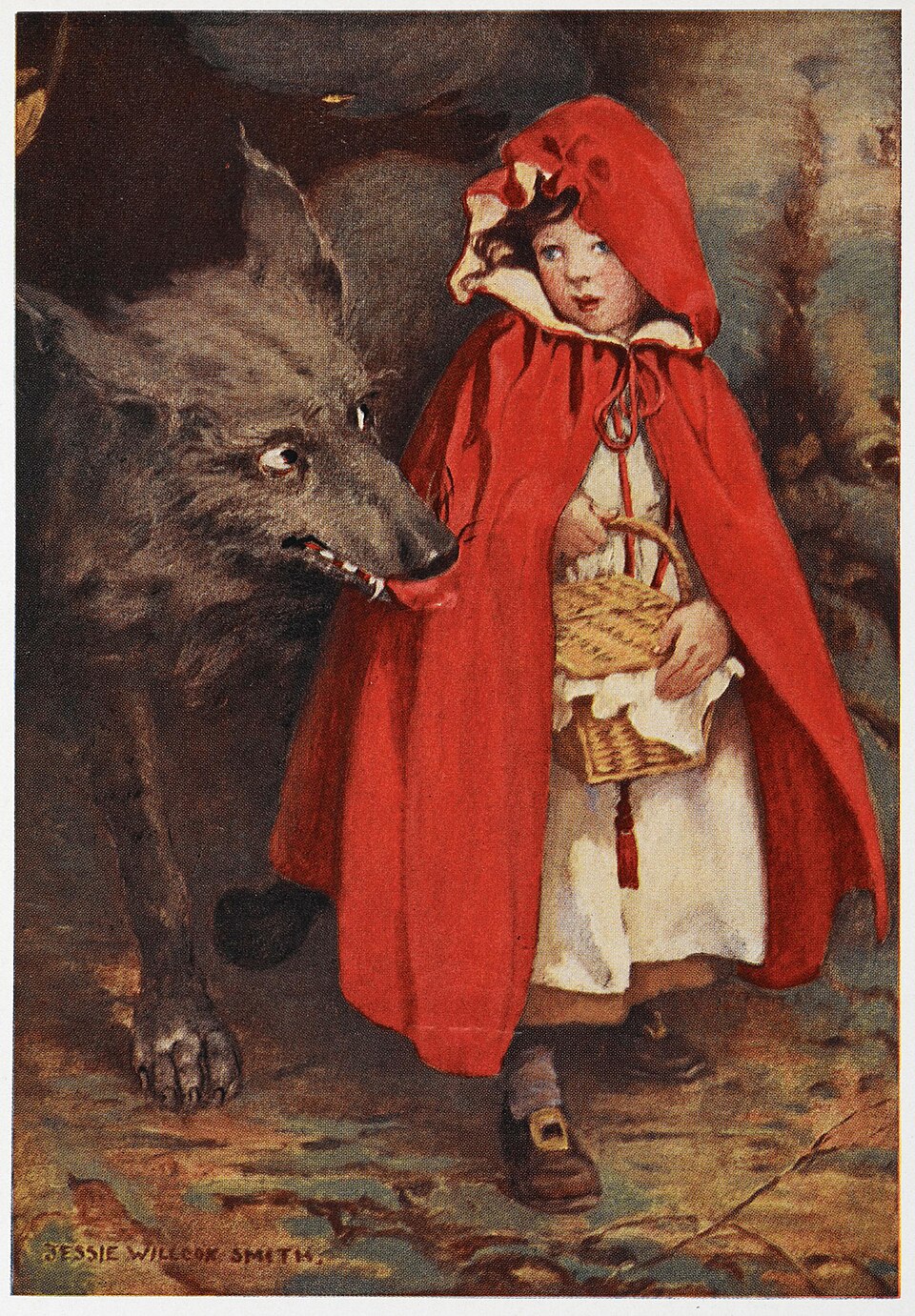
Little Red-Cap’s Wolf
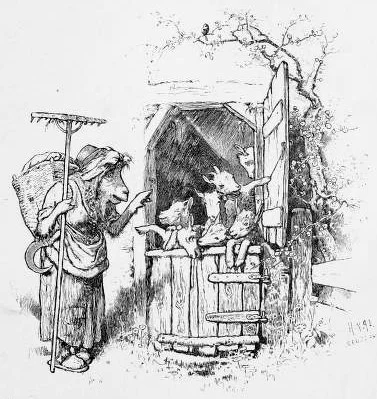
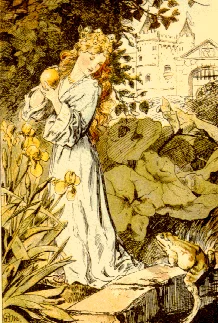
Image associated with the exact linked encyclopedia article; consult credited file description for its interpretation.
Overview
The first wolf in Hunt’s Grimm tale 26 meets Little Red-Cap as she carries cake and wine to her sick grandmother. She is not afraid of him and answers his questions about her destination. He encourages her to notice flowers and birds, allowing her to leave the path while he goes directly to the house. Pretending to be the child, he obtains instructions for opening the latch, devours the grandmother and puts on her clothes and cap before lying in her bed.
The child notices the altered ears, eyes, hands and mouth. The wolf turns each question into an apparent explanation of a grandmother’s affectionate or attentive behaviour, until the final answer declares his appetite. He springs from the bed and swallows her. This is an impersonation using clothing, setting and speech; the selected tale does not say that he magically transforms into the grandmother’s body.
A passing huntsman hears the snoring and enters to check on the old woman. Recognizing the wolf, he first considers shooting it, then uses scissors because the grandmother might still be alive inside. Red-Cap and her grandmother emerge, and the child brings stones to replace them in the wolf’s belly. When it wakes and tries to escape, the weight makes it fall dead. The huntsman takes its skin, while the grandmother recovers with the food the child brought.
The collected text then gives a further encounter with another wolf. This time Red-Cap stays on the path and warns her grandmother; together they refuse to admit it. The wolf climbs onto the roof to wait for the child to leave after dark. At the grandmother’s direction, Red-Cap fills a stone trough with water used to boil sausages. Attracted by the smell, the wolf leans too far, falls from the roof and drowns. This second ending is not the first wolf’s death retold: the characters have learned from the previous danger.
Perrault’s account, separately read in Charles Welsh’s 1901 translation, has a different result. Its wolf initially avoids attacking near woodcutters, proposes separate routes and reaches the grandmother first. After taking her place, it eats the child, and the story ends without a huntsman’s rescue or an appended second encounter. Keeping that witness separate prevents the familiar rescue from being silently inserted into every version of Little Red Riding-Hood.
Origins & earliest records
This entry follows tale 26 in the Grimm brothers’ Household Tales, using Margaret Hunt’s 1884 English translation. The collection was repeatedly revised during the nineteenth century and mediates material from storytellers and earlier literature. Its publication and translation dates identify the selected witness, not the beginning of every related oral narrative.
Records & interpretation
Complete Grimm tale 26 in Hunt’s translation read, including its ending and appended second-wolf encounter; complete Perrault/Welsh comparison also read. The textual evidence supports these particular narrative actions; animal speech, knowledge and extraordinary bodily events are not presented as zoological observations.
In the literature
“The better to eat you with!”
Tale 26 Little Red-Cap; paragraph beginning ““The better to eat you with!”…” · Margaret Hunt
The disguised wolf answers the question about his mouth just before swallowing Red-Cap.
Selected bibliography
Documented works and useful reading. This is not a list of every appearance.
- 01
Household Tales, tale 26: Little Red-Cap
Complete selected tale read from opening through ending. This English witness is distinguished from other editions and related oral narratives.
- 02
The Tales of Mother Goose: Little Red Riding-Hood
Complete selected story, pp. 80–84, with title/copyright and following editorial note read. No rescue in this witness; historical hypotheses in the editorial note are not adopted.
- 03
Household Tales: 26 Little Red-Cap
Margaret Hunt’s English translation, London: George Bell and Sons, 1884; Gutenberg e-text identifies Hunt. Translation date corroborated by the Wikisource scanned title page and National Library of New Zealand catalogue.
Family & connections
A source-supported family tree or inspiration record has not yet been compiled for this profile. Related reading below indicates a connection in subject matter, not a proven lineage or creative influence.
Located primary passages
Specific passages supporting details in this entry, grouped by their published witness.
Household Tales, tale 26: Little Red-Cap
Margaret Hunt’s English translation, London: George Bell and Sons, 1884; Gutenberg e-text identifies Hunt. Translation date corroborated by the Wikisource scanned title page and National Library of New Zealand catalogue.
- The disguised wolf answers the question about his mouth just before swallowing Red-Cap.
Tale 26 Little Red-Cap; paragraph beginning ““The better to eat you with!”…”
- The huntsman cuts open the sleeping wolf rather than immediately shooting it.
This describes the version printed in Hunt’s translation; German tale origin and other versions require separate evidence.
References
Sources supporting this profile. Linked pages have their own scope and editorial standards.
- Primary textGrimm/Hunt, complete tale 26Research access: 2026-10-05
- Primary textPerrault/Welsh, Little Red Riding-Hood, pp. 80–84Research access: 2026-10-05
Image credits
Reference illustrationLittle Red-Cap’s Wolf
Image associated with the exact linked encyclopedia article; consult credited file description for its interpretation.