Lepidodendron
Image associated with the exact linked encyclopedia article; consult credited file description for its interpretation.
Overview
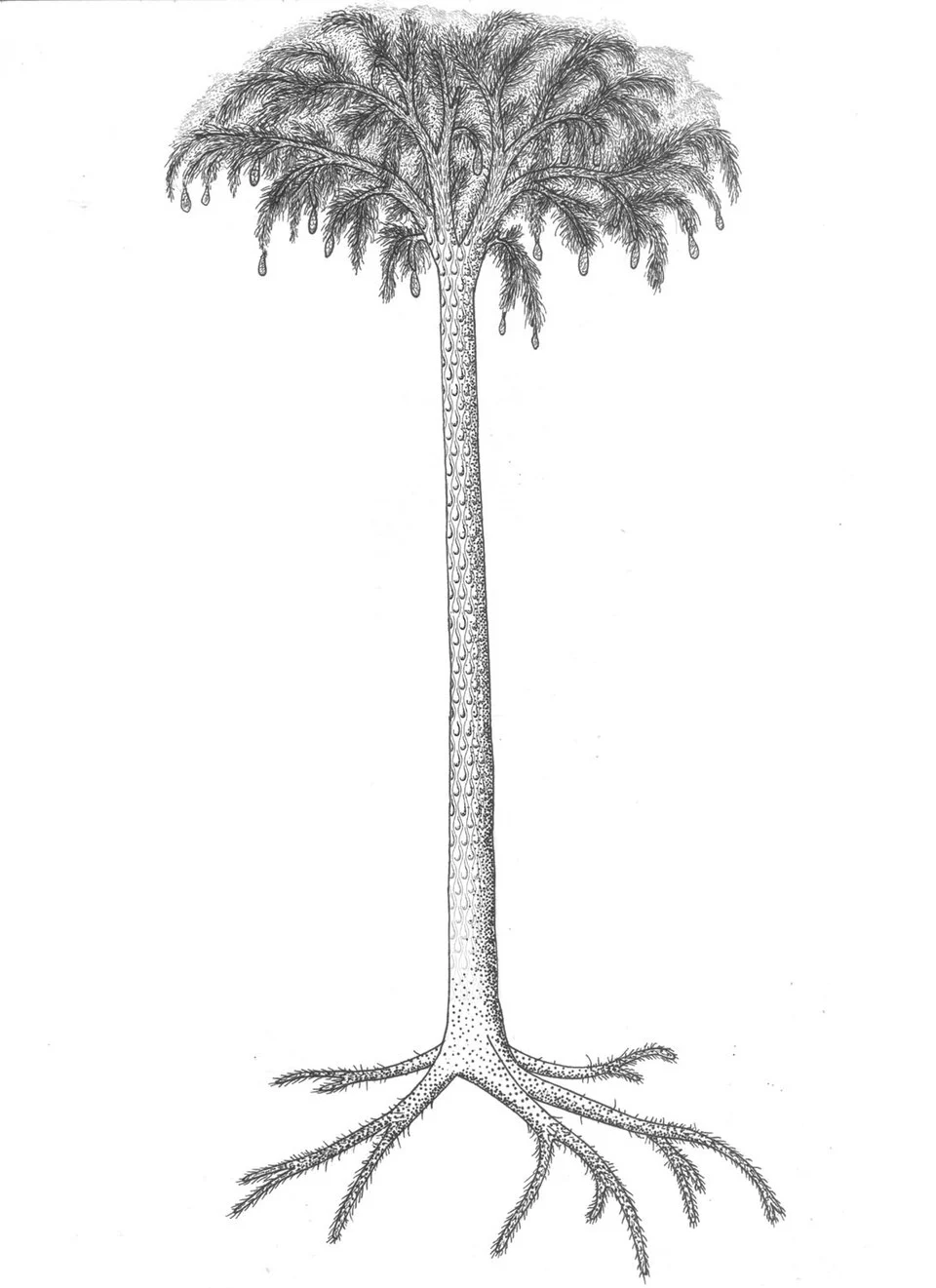
Lepidodendron is associated with the great lycophyte trees of Carboniferous wetlands. Diamond-shaped leaf scars make its stem surfaces distinctive. These plants were relatives of the lycophyte lineage rather than ordinary flowering trees, and their structural organisation differed markedly from that of a modern woodland trunk.
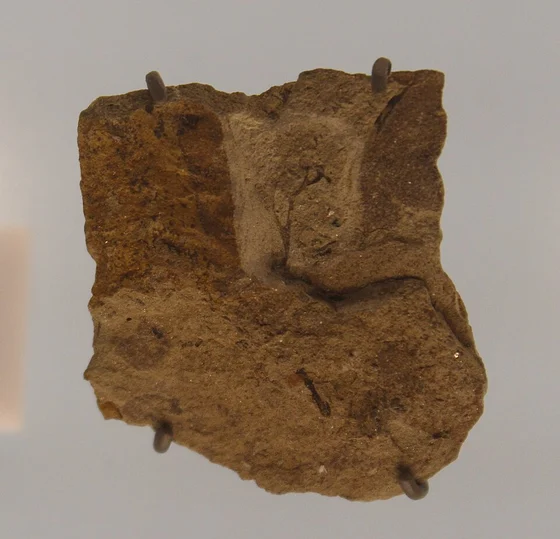
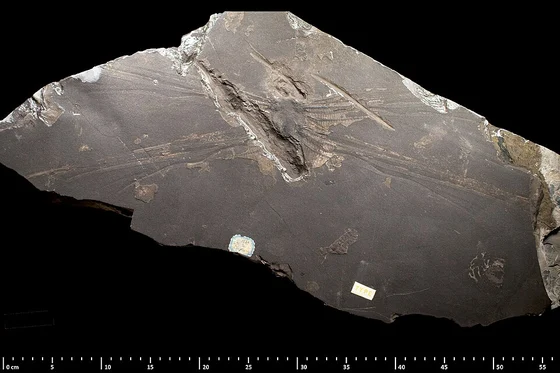
Fossil naming presents a special problem for plants: separately preserved roots, stems, leaves and reproductive structures may receive different names before their connections are established. Museum descriptions therefore discuss Lepidodendron as a form genus for particular stem impressions as well as a familiar reconstructed plant. Coal-bearing deposits preserve evidence for wetland vegetation, but coal itself is a transformed accumulation of organic material rather than a neatly labelled forest of one species.
Origins & earliest records
Lepidodendron material is prominent in Carboniferous coal-bearing rocks. The representative date near 310 million years is not a boundary for every assigned species or organ fossil. Modern names organise preserved parts and reconstructed plants; discovering a leaf-scarred stem cannot by itself establish the biological origin of the whole lineage.
Evidence & interpretation
Stem impressions, casts, compressions and associated plant organs reveal lycophyte anatomy and wetland settings. Connecting disarticulated organs to one biological species can be difficult. Form-genus usage must be distinguished from whole-plant reconstruction, and coal-swamp occurrence does not imply that every specimen occupied precisely the same habitat or developmental stage.
Selected bibliography
Documented works and useful reading. This is not a list of every appearance.
- 01
Fossil Lycophytes
Selected institutional scientific reading; not a complete bibliography.
Family, evolution & connections
Fossil rhizomorphic lycopsids — Bateman 1994
Ten of Figure 1’s sixteen historical whole-plant terminals; omitted congeneric tips are pruned.
Scroll sideways to see all branches. With a keyboard, focus the tree and use the arrow keys.
- Selected Figure 1 ingroup; hypothetical root omitted
- Bootstrap 68%
- Paurodendron fraipontii
- Oxroadia gracilis
- Bootstrap 98%
- Paralycopodites brevifolius
- Bootstrap <50%
- Chaloneria cormosa
- Bootstrap 59%
- Sigillaria approximata
- Bootstrap 50%
- Bootstrap 100%
- Synchysidendron resinosum
- Diaphorodendron phillipsii
- Bootstrap 64%
- Hizemodendron serratum
- Bootstrap 97%
- Lepidophloios harcourtii
115 additive binary characters, 80 informative; branch-and-bound parsimony, MinF optimisation and 500 bootstrap replicates. Preferred historical topology among nine equally parsimonious trees. Basal placements vary; Figure 2b is a separate imposed scenario, excluded here. Root HYAN is a hypothetical character reconstruction, not a fossil ancestor. Figure lengths count character changes, not time. Parenthesised character and autapomorphy counts are not support. Lepidophloios labels retain the study’s taxonomy; the text later regards two sampled names as conspecific. No direct ancestors or dates inferred. Bootstrap values belong to original nodes; pruning does not recompute support.
Taxonomic classification
A hierarchy of classified groups, not a chain of direct ancestors.
- kingdomPlantae
- phylumTracheophyta
- classLycopodiopsida
- familyLepidodendraceae
- genusLepidodendron
Encyclopedia background
An additional attributed reference, separate from the editorial profile above.
Read the open encyclopedia overview
Lepidodendron, from Ancient Greek λεπίς (lepís), meaning "scale", and δένδρον (déndron), meaning "tree", is an extinct genus of primitive lycopodian vascular plants belonging to the order Lepidodendrales. It is well preserved and common in the fossil record. Like other Lepidodendrales, species of Lepidodendron grew as large-tree-like plants in wetland coal forest environments. They sometimes reached heights of 50 metres (160 feet), and the trunks were often over 1 m (3 ft 3 in) in diameter. They are often known as "scale trees", due to their bark having been covered in diamond-shaped leaf-bases, from which leaves grew during earlier stages of growth. However, they are correctly defined as arborescent lycophytes. They thrived during the Carboniferous Period (358.9 to 298.9 million years ago), and persisted until the end of the Permian around 252 million years ago. Sometimes erroneously called "giant club mosses", the genus was actually more closely related to modern quillworts than to modern club mosses. In the form classification system used in paleobotany, Lepidodendron is both used for the whole plant as well as specifically the stems and leaves.
Text from Wikipedia contributors, “Lepidodendron”. CC BY-SA 4.0. Extracted introduction; formatting changed. Retrieved 5 October 2026. The source article may have changed since retrieval.
References
Sources supporting this profile. Linked pages have their own scope and editorial standards.
- MuseumFossil LycophytesResearch access: 2026-10-05
Image credits
Reference illustrationLepidodendron
Image associated with the exact linked encyclopedia article; consult credited file description for its interpretation.