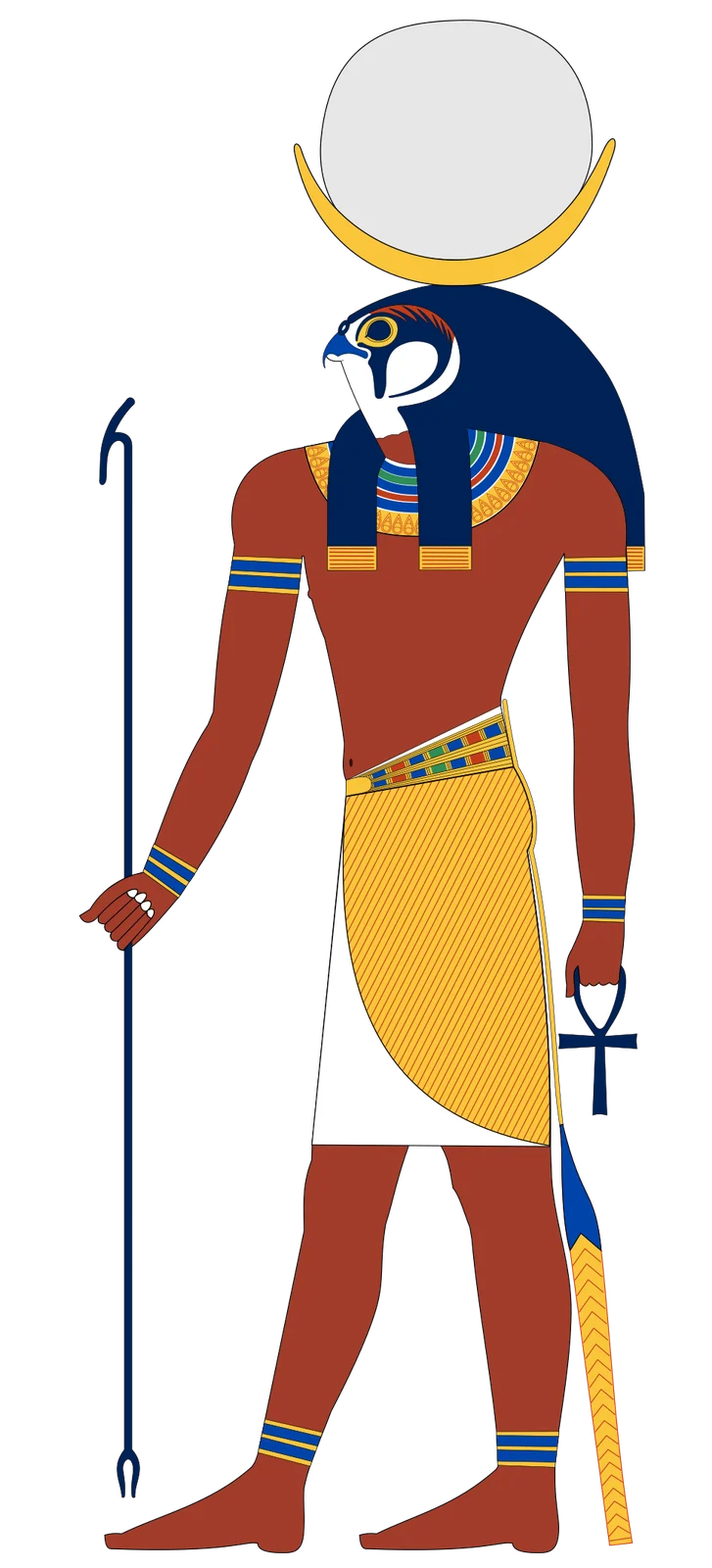
Khonsu
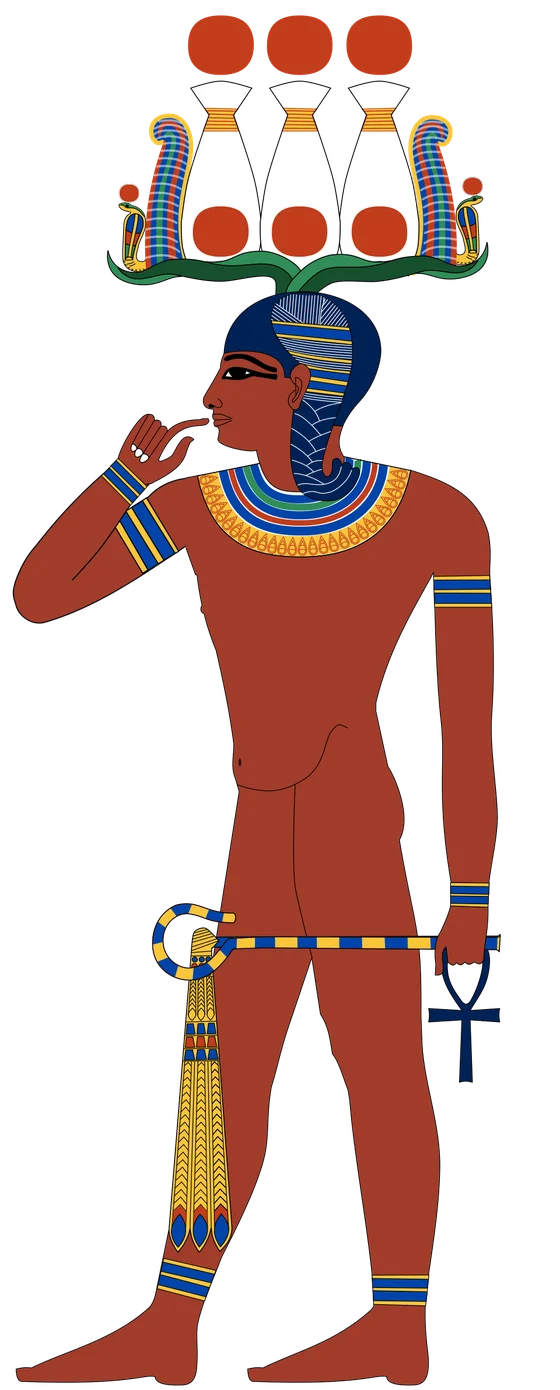
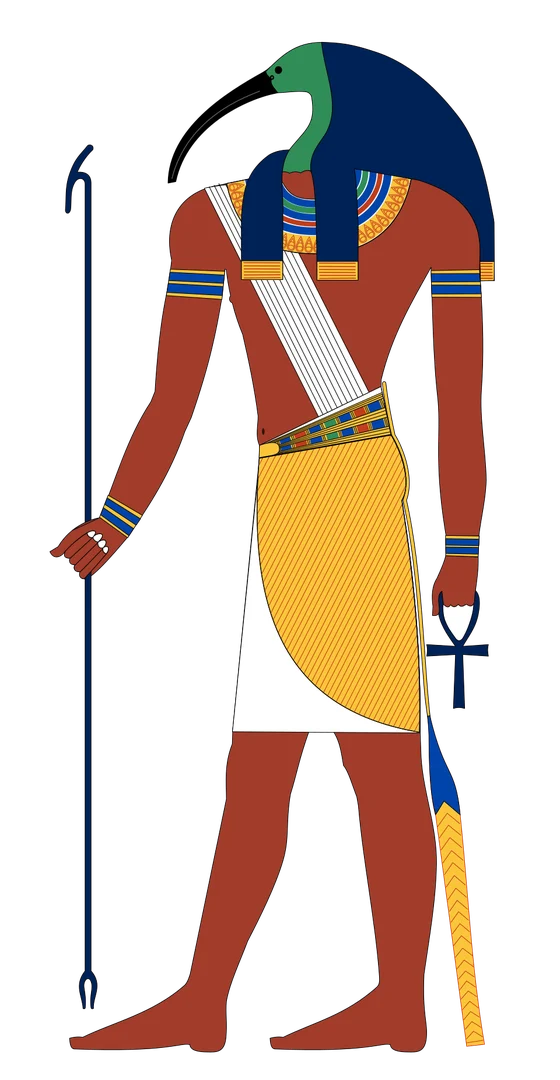
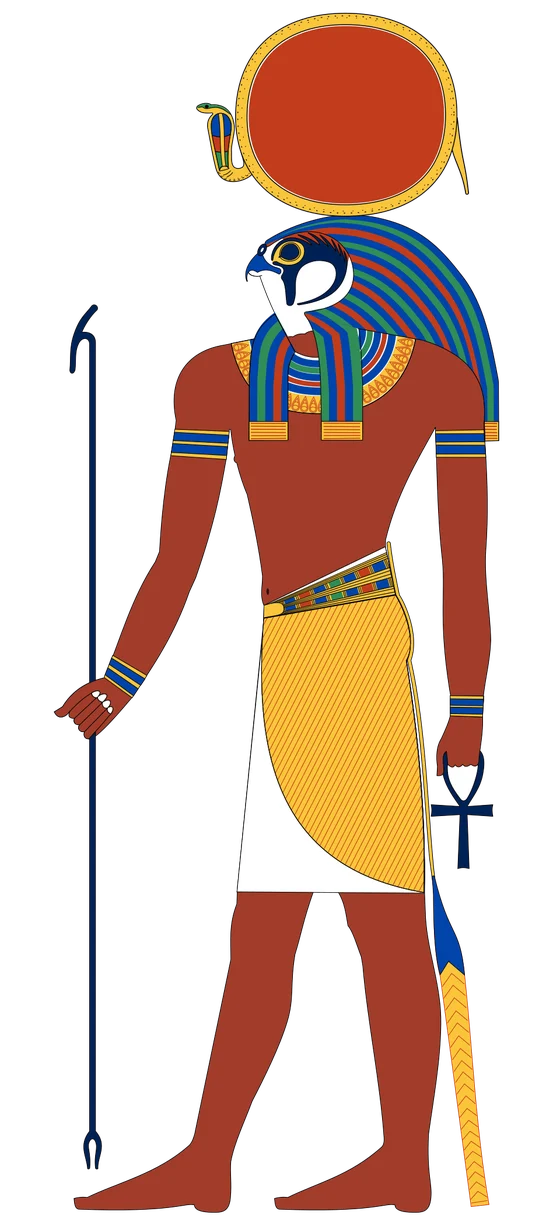
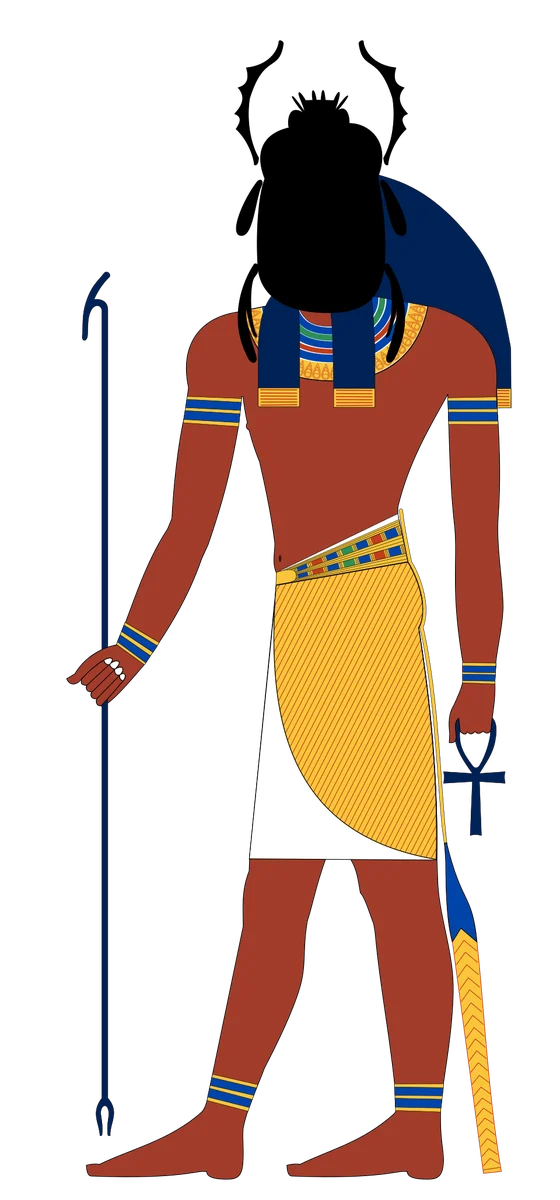
Modern vector interpretation of Egyptian deity iconography, based on historical representations; not a photograph or an original ancient painting. See the credited file description for shared iconography and artistic liberties.
Overview
The Bekhten narrative asks an Egyptian god to deal with a princess’s illness after a human specialist cannot cure her. Khensu’s effective power is sent through a divine image, and the spirit recognizes its authority and departs after arrangements are made. The foreign ruler later hesitates to return the image to Egypt. The story concerns a cult image, divine travel and diplomacy; it does not establish that possession was the biological cause of a historical illness.
The possessing spirit addresses the divine visitor as an authority it must obey. A feast accompanies its departure, and the power’s successful stay creates a second problem when the ruler wants to retain the image. Healing and the return journey belong together: the borrowed god’s presence has obligations beyond the princess’s recovery.
Origins & earliest records
The collection identifies a sandstone stele from the temple of Khensu at Thebes and warns that a printed heading incorrectly names Ptah. Khensu and Khonsu are one entry.
Records & interpretation
The selected attestation is Princess of Bekhten, Khensu in Budge’s translated collection. It documents a textual or ritual representation; commentary and later classical accounts are labeled where used. It does not establish zoological existence, a first oral telling, or a uniform belief shared by all Egyptians.
In the literature
“who dost drive away the spirits which attack!”
Bekhten stele narrative: A Legend of Ptah Nefer-Hetep and the Princess of Bekhten (heading as printed); paragraph beginning “And when this god had passed over to the place where…” · E. A. Wallis Budge
Khensu Pa-ari-sekher’s image reaches Bekhten and heals Bent-Resht; the possessing spirit agrees to depart and asks for a festival.
Selected bibliography
Documented works and useful reading. This is not a list of every appearance.
- 01
Legends of the Gods: The Egyptian Texts
Selected witness: Princess of Bekhten, Khensu. Historical translation and commentary; not an exhaustive bibliography.
- 02
Legends of the Gods: The Egyptian Texts, edited with Translations
London,1912; E.A.WallisBudge historical English translations; narrative body distinguished from editorial introduction and footnotes.
Family & connections
A source-supported family tree or inspiration record has not yet been compiled for this profile. Related reading below indicates a connection in subject matter, not a proven lineage or creative influence.
Located primary passages
Specific passages supporting details in this entry, grouped by their published witness.
Legends of the Gods: The Egyptian Texts
London,1912; E.A.WallisBudge historical English translations; narrative body distinguished from editorial introduction and footnotes.
- Khensu Pa-ari-sekher’s image reaches Bekhten and heals Bent-Resht; the possessing spirit agrees to depart and asks for a festival.
Budge’s historical translation of this particular text; uncertain readings, lacunae and variant names retained. Mythic healing claims are narrative content, not medical instructions. The Bekhten heading saysPtah although the body repeatedly identifiesKhensu.
Encyclopedia background
An additional attributed reference, separate from the editorial profile above.
Read the open encyclopedia overview
Khonsu (Ancient Egyptian: ḫnsw; also transliterated as Chonsu, Khonshu, Khensu, Khons, Chons; Coptic: Ϣⲟⲛⲥ, romanized: Shons) is an ancient Egyptian god of the Moon. His name means 'traveller', and this may relate to the perceived nightly travel of the Moon across the sky. Along with Thoth, he marked the passage of time and is associated with baboons. Khonsu was instrumental in the creation of new life in all living creatures. At Thebes, he formed part of a family triad (the "Theban Triad") with Mut his mother and Amun his father.
Text from Wikipedia contributors, “Khonsu”. CC BY-SA 4.0. Extracted introduction; formatting changed. Retrieved 5 October 2026. The source article may have changed since retrieval.
References
Sources supporting this profile. Linked pages have their own scope and editorial standards.
- Primary-text translation and historical commentaryLegends of the Gods — Princess of Bekhten, KhensuResearch access: 2026-10-05
Image credits
Thematic illustrationKhonsu
Modern vector interpretation of Egyptian deity iconography, based on historical representations; not a photograph or an original ancient painting. See the credited file description for shared iconography and artistic liberties.