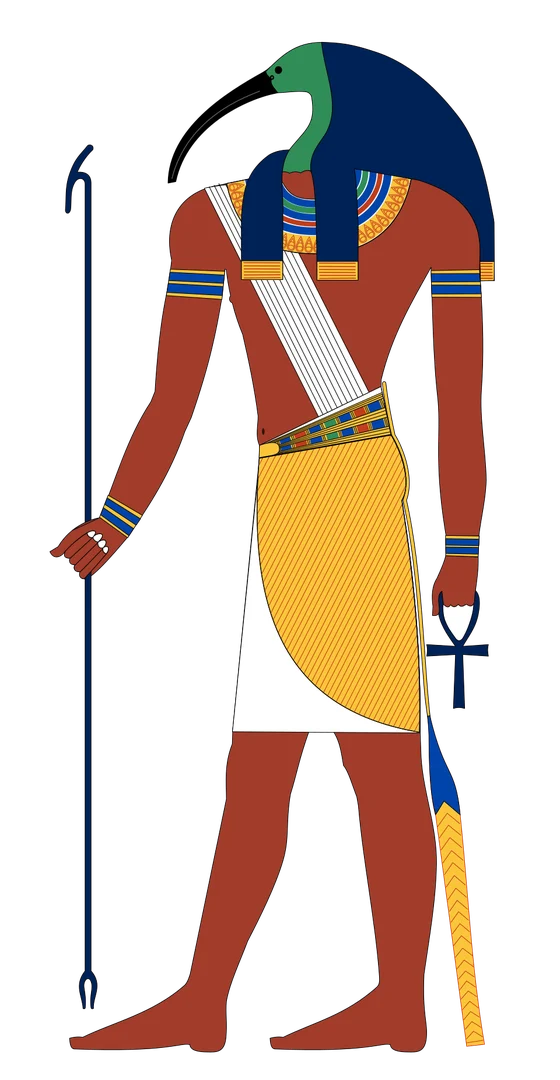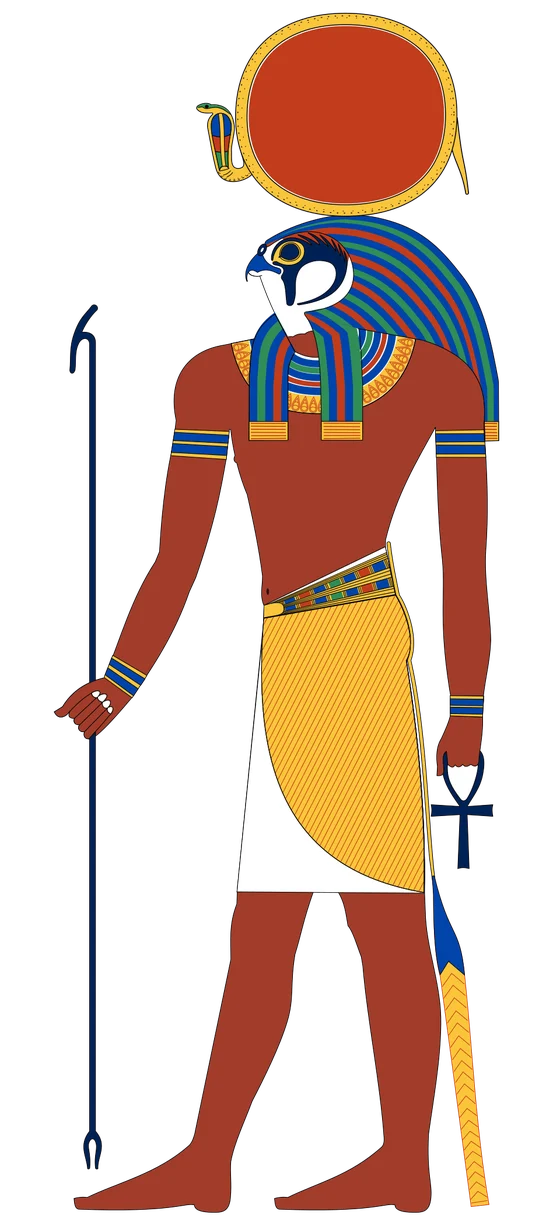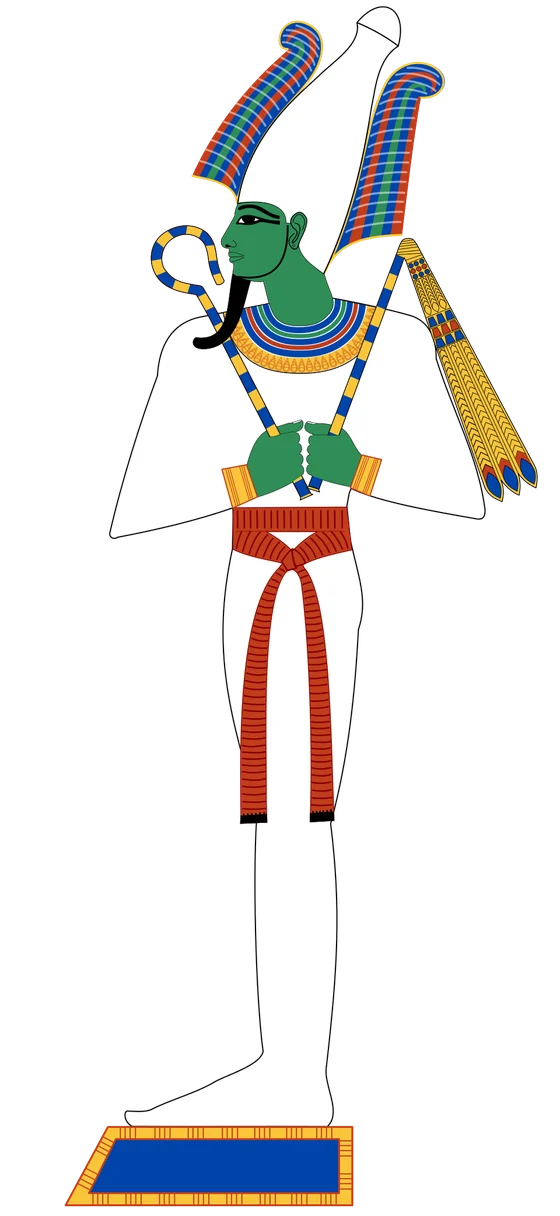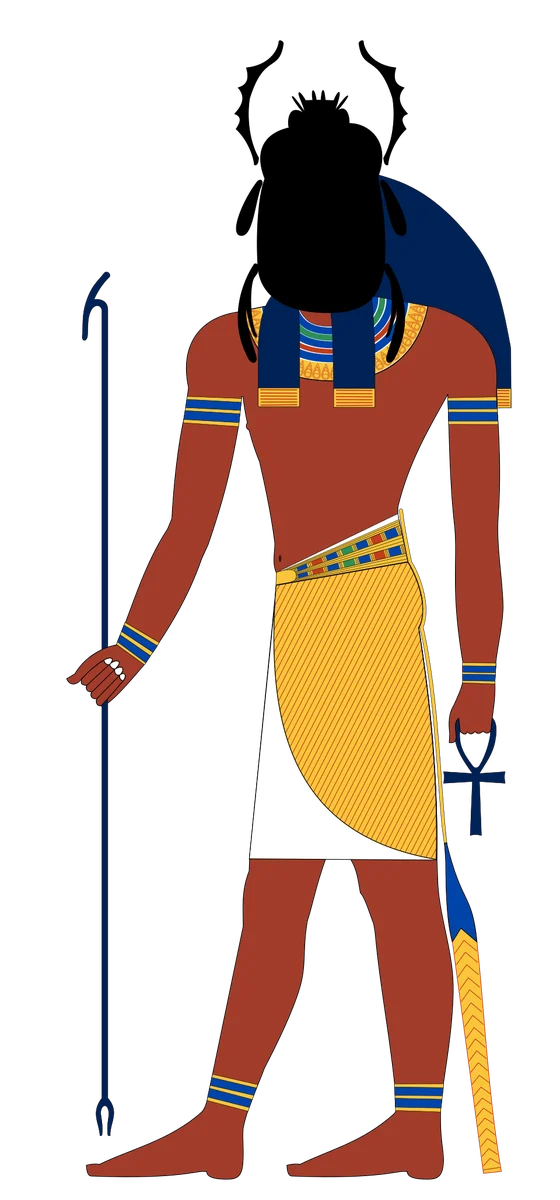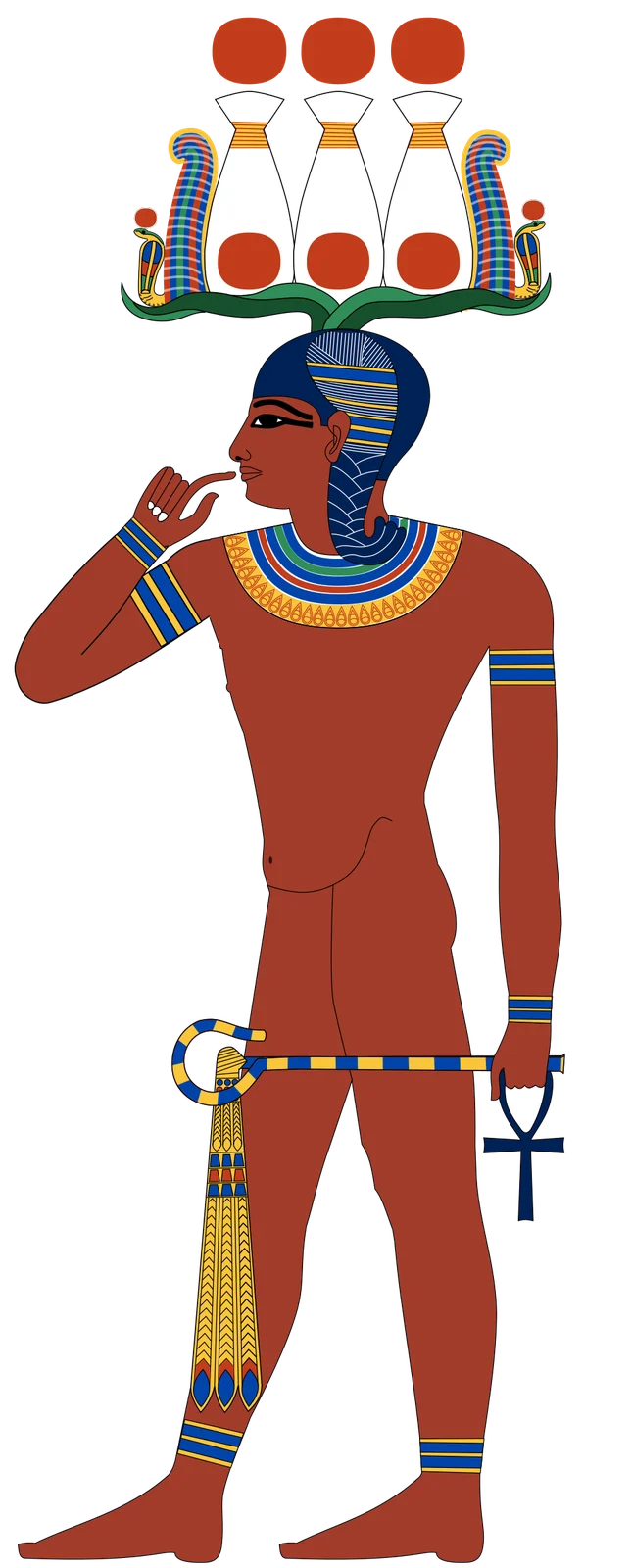
Heka, modern vector interpretation
Modern vector interpretation of Egyptian deity iconography, based on historical representations; not a photograph or an original ancient painting. See the credited file description for shared iconography and artistic liberties.
Overview
In the protective material, Heka appears with Ra, Sekhet and Thoth in a company defending Osiris. The edition explains the name in relation to a spell personified, and another ritual identification links the reciter to Ra and Heka. The evidence concerns a named divine power operating through ritual speech. It should not be generalized into a claim that any later use of the word magic identifies the same individual being.
The protective company is described as acting against Osiris’s enemies through loss of sight, breath and speech. Heka’s position among those named defenders makes effective words an actor within the encounter, not just a modern commentator’s explanation. Elsewhere the reciter declares identification with the solar power and Heka as part of the same ritual strategy.
Origins & earliest records
This profile follows explicit named appearances in translated protective passages, rather than assigning an invented date to the origin of Egyptian ritual practice.
Records & interpretation
The selected attestation is Healing of Horus and protective invocations in Budge’s translated collection. It documents a textual or ritual representation; commentary and later classical accounts are labeled where used. It does not establish zoological existence, a first oral telling, or a uniform belief shared by all Egyptians.
In the literature
“I am his Soul, and I am Heka.”
Destruction of Mankind, ChapterV; paragraph beginning “Whosoever sayeth [these words] worketh his own protection by means of…” · E. A. Wallis Budge
The protective ritual speaker identifies himself with Hekau/Heka and Ra’s Soul; this documents the divine personification of power in this text.
Selected bibliography
Documented works and useful reading. This is not a list of every appearance.
- 01
Legends of the Gods: The Egyptian Texts
Selected witness: Healing of Horus and protective invocations. Historical translation and commentary; not an exhaustive bibliography.
- 02
Legends of the Gods: The Egyptian Texts, edited with Translations
London,1912; historical English text edited by E.A.WallisBudge. Ancient narrative/ritual translation, separate from modern introduction and footnotes.
Family & connections
A source-supported family tree or inspiration record has not yet been compiled for this profile. Related reading below indicates a connection in subject matter, not a proven lineage or creative influence.
Located primary passages
Specific passages supporting details in this entry, grouped by their published witness.
Legends of the Gods: The Egyptian Texts
London,1912; historical English text edited by E.A.WallisBudge. Ancient narrative/ritual translation, separate from modern introduction and footnotes.
- The protective ritual speaker identifies himself with Hekau/Heka and Ra’s Soul; this documents the divine personification of power in this text.
Specific ancient textual version in a historical English witness; names Uatchet/Nekhebet/Seb/Nu are historical renderings, not separate beings. Plutarch’s version and bracketed restorations must not be universalized. Ritual speech is literary evidence, not an instruction to perform healing or protective practices.
References
Sources supporting this profile. Linked pages have their own scope and editorial standards.
- Primary-text translation and historical commentaryLegends of the Gods — Healing of Horus and protective invocationsResearch access: 2026-10-05
Image credits
Thematic illustrationHeka, modern vector interpretation
Modern vector interpretation of Egyptian deity iconography, based on historical representations; not a photograph or an original ancient painting. See the credited file description for shared iconography and artistic liberties.