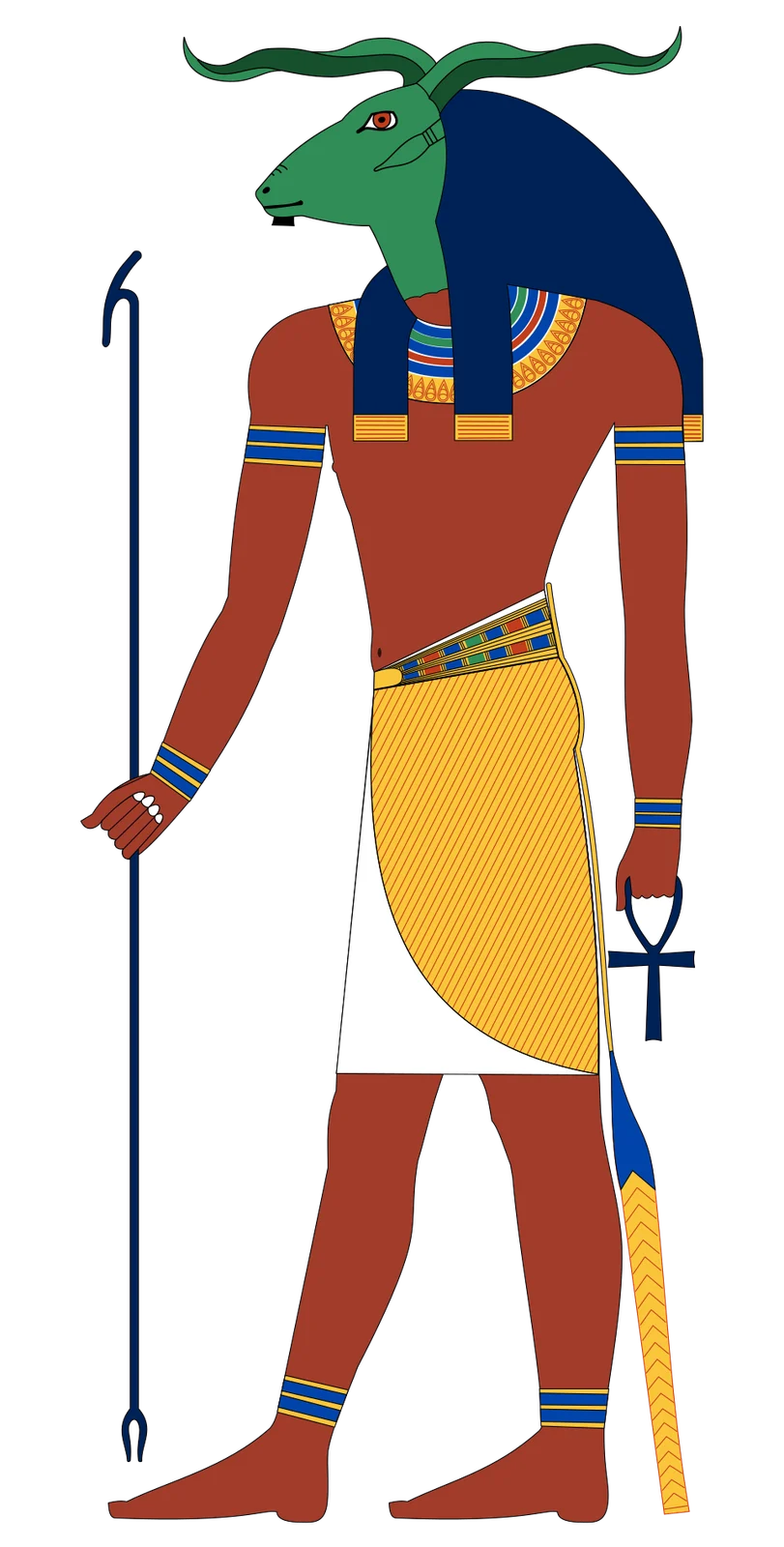
Khnum
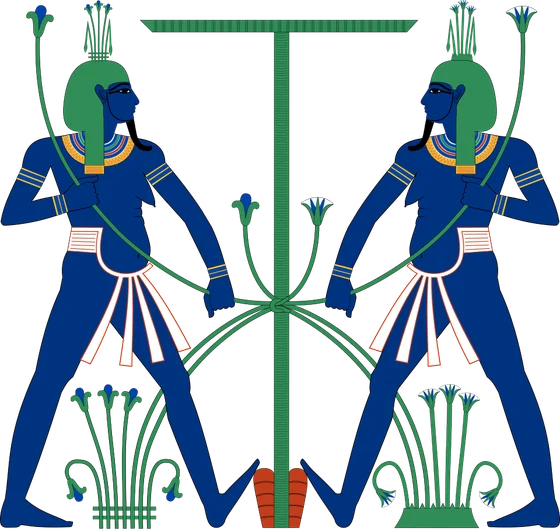
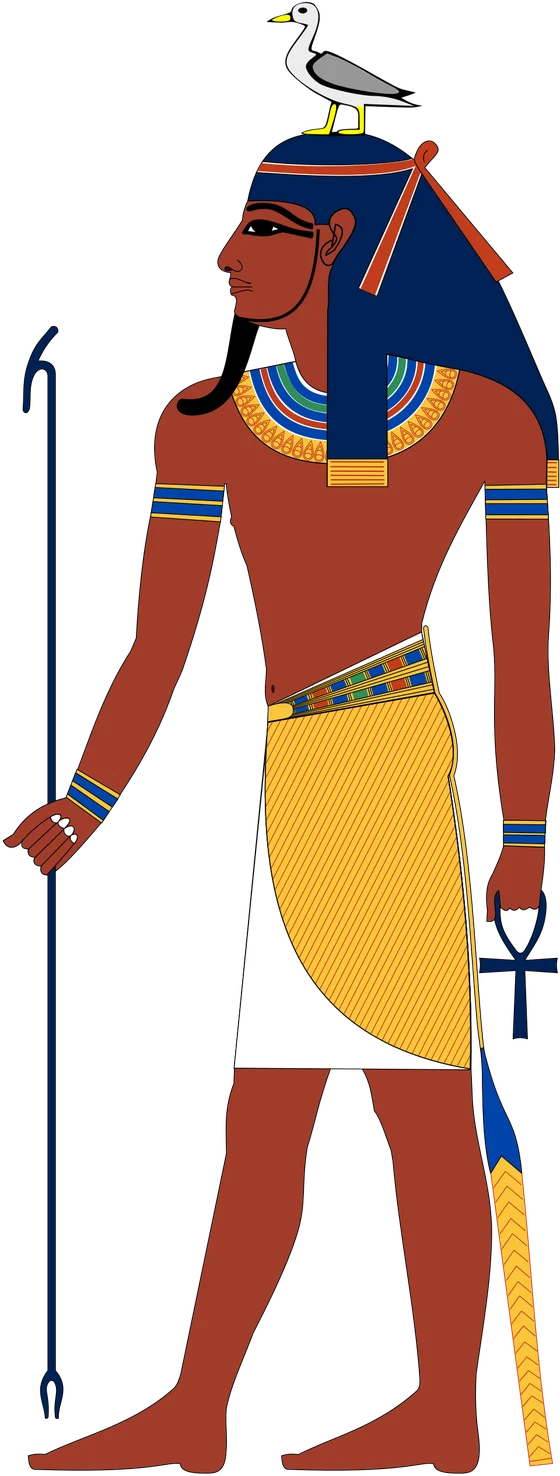
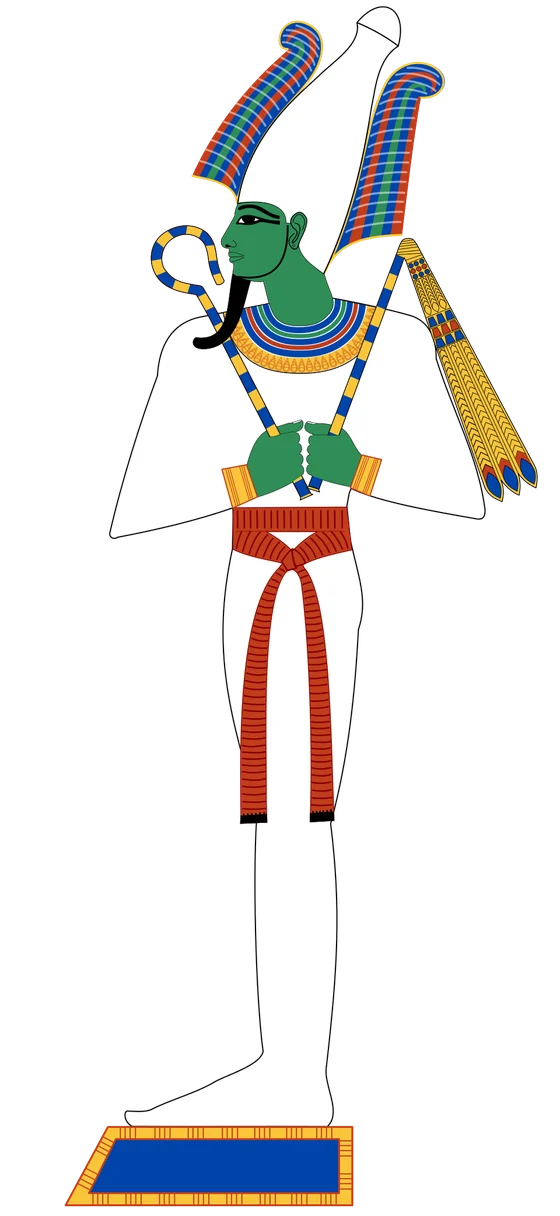
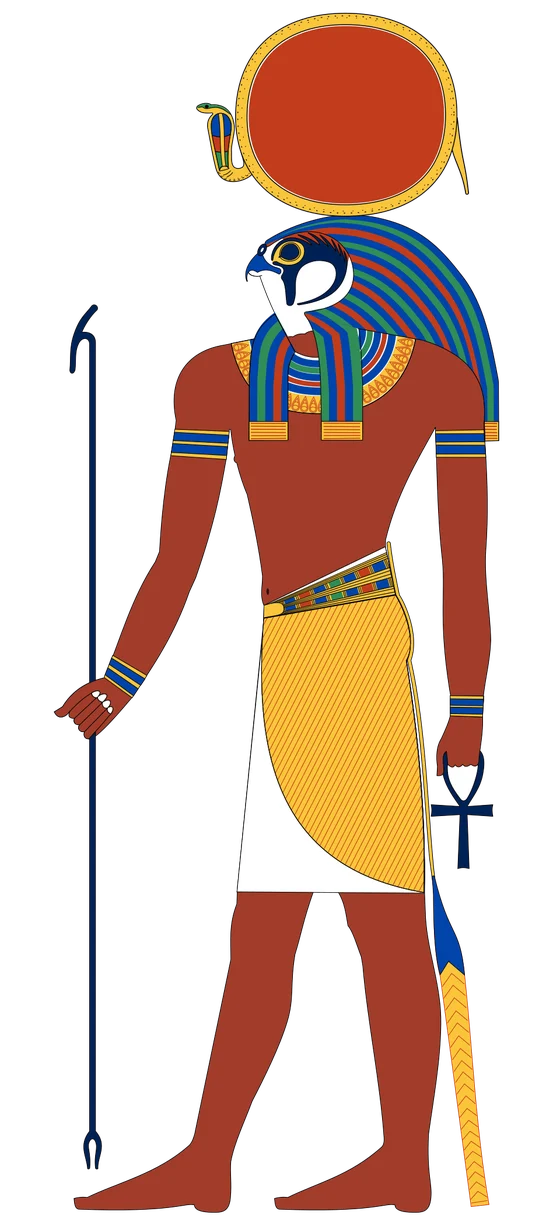
Modern vector interpretation of Egyptian deity iconography, based on historical representations; not a photograph or an original ancient painting. See the credited file description for shared iconography and artistic liberties.
Overview
A prolonged famine drives the ruler in the selected narrative to seek information about the Nile’s headwaters and the god presiding there. Khnemu appears as the powerful local deity associated with Elephantine and promises renewed abundance. The story ties divine favor to offerings and royal arrangements for a sanctuary. It is a textual explanation of authority and prosperity, not an independently verified hydrological map or a dated account of an actual seven-year famine.
The ruler’s inquiry gathers names of the sanctuary’s gods and local stones before the divine promise is given. The temple response therefore joins river abundance with land, building materials and offerings. Khnemu’s authority is embedded in the Elephantine setting, with named attendants around him rather than an isolated power over every body of water.
Origins & earliest records
The edition translates a famine inscription and uses Khnemu; Khnum is a modern spelling of the same deity, not an additional creature.
Records & interpretation
The selected attestation is Seven years’ famine, Khnemu in Budge’s translated collection. It documents a textual or ritual representation; commentary and later classical accounts are labeled where used. It does not establish zoological existence, a first oral telling, or a uniform belief shared by all Egyptians.
In the literature
“I will make Hap (i.e., the Nile) rise for thee”
A Legend of the God Khnemu and of a Seven Years’ Famine; paragraph beginning “"I am [he] who created himself, Nu, the Great [God], who…” · E. A. Wallis Budge
Khnemu promises the ruler recurring Nile floods, fertile crops and an end to famine in the dream narrative.
Selected bibliography
Documented works and useful reading. This is not a list of every appearance.
- 01
Legends of the Gods: The Egyptian Texts
Selected witness: Seven years’ famine, Khnemu. Historical translation and commentary; not an exhaustive bibliography.
- 02
Legends of the Gods: The Egyptian Texts, edited with Translations
London,1912; E.A.WallisBudge historical English translations; narrative body distinguished from editorial introduction and footnotes.
Family, evolution & connections
Ram-headed divine imagery
Soane’s Museum identifies its bronze figure S135 as Khnum and describes his ram head and formerly attached horizontal horns. The Met separately qualifies a four-headed figure as probably Khnum. These objects support ram-shaped divine imagery, while preserving uncertainty about individual identifications. No modern sheep species, breed, evolutionary ancestry or creator’s psychological motive is assigned to the ancient representation.
Located primary passages
Specific passages supporting details in this entry, grouped by their published witness.
Legends of the Gods: The Egyptian Texts
London,1912; E.A.WallisBudge historical English translations; narrative body distinguished from editorial introduction and footnotes.
- Khnemu promises the ruler recurring Nile floods, fertile crops and an end to famine in the dream narrative.
Budge’s historical translation of a particular ancient text; uncertain readings, lacunae and variant names retained. Mythic healing claims are narrative content, not medical instructions.
Encyclopedia background
An additional attributed reference, separate from the editorial profile above.
Read the open encyclopedia overview
Khnum, also romanised Khnemu (; Ancient Egyptian: 𓎸𓅱𓀭 ẖnmw, Koine Greek: Χνοῦβις Chnoûbis), was one of the earliest-known Egyptian deities in Upper Egypt, originally associated with the Nile cataract. He held the responsibility of regulating the annual inundation of the river, emanating from the caverns of Hapi, the deity embodying the flood. Since the annual flooding of the Nile brought with it silt and clay, and its water brought life to its surroundings, he eventually became known as the creator of human bodies and the life force kꜣ ("ka"). Using a potter's wheel and clay, he fashioned these entities and placed them within their mothers' wombs. Often, his creative endeavors were overseen by another god. He was later described as having moulded the other deities, and was revered as the creator of the animal kingdom. Banebdjedet was the equivalent god in Lower Egypt.
Worship of Khnum spanned from the First Dynasty and persisted even into the Greco-Roman period when rule by native dynasties had ended. Initially, his primary cult center was at Herwer in Middle Egypt. While his presence on the island of Elephantine dates back to the Early Dynastic Period, it wasn't until the New Kingdom that he ascended to become the principal deity of the island, acquiring the title as the overseer of the First Cataract of the Nile River. At Elephantine, Khnum formed a divine triad alongside the Nubian goddesses Satis and Anuket. His religious significance also extended to Esna, located south of Thebes.
Khnum's primary function in the inception of human beings was typically portrayed with the horns of a ram, one of the sacred animals worshiped in Ancient Egypt, representing aspects such as fertility, rebirth, regeneration, and resurrection. He was originally illustrated with horizontally spiraled horns (based on the Ancient Egyptian corkscrew-horned sheep, an extinct subspecies of the barbary sheep), but his representation later evolved to feature the down-turned horns of Ammon in the New Kingdom (based on the extinct sheep subspecies Ovis platyra palaeoaegyptiacus). Khnum's imagery also includes the crocodile head, denoting his dominion over the Nile. He can additionally be found wearing the atef crown adorned with two feathers, or the white crown of Upper Egypt.
Text from Wikipedia contributors, “Khnum”. CC BY-SA 4.0. Extracted introduction; formatting changed. Retrieved 5 October 2026. The source article may have changed since retrieval.
References
Sources supporting this profile. Linked pages have their own scope and editorial standards.
- Primary-text translation and historical commentaryLegends of the Gods — Seven years’ famine, KhnemuResearch access: 2026-10-05
Image credits
Thematic illustrationKhnum
Modern vector interpretation of Egyptian deity iconography, based on historical representations; not a photograph or an original ancient painting. See the credited file description for shared iconography and artistic liberties.