Hapi
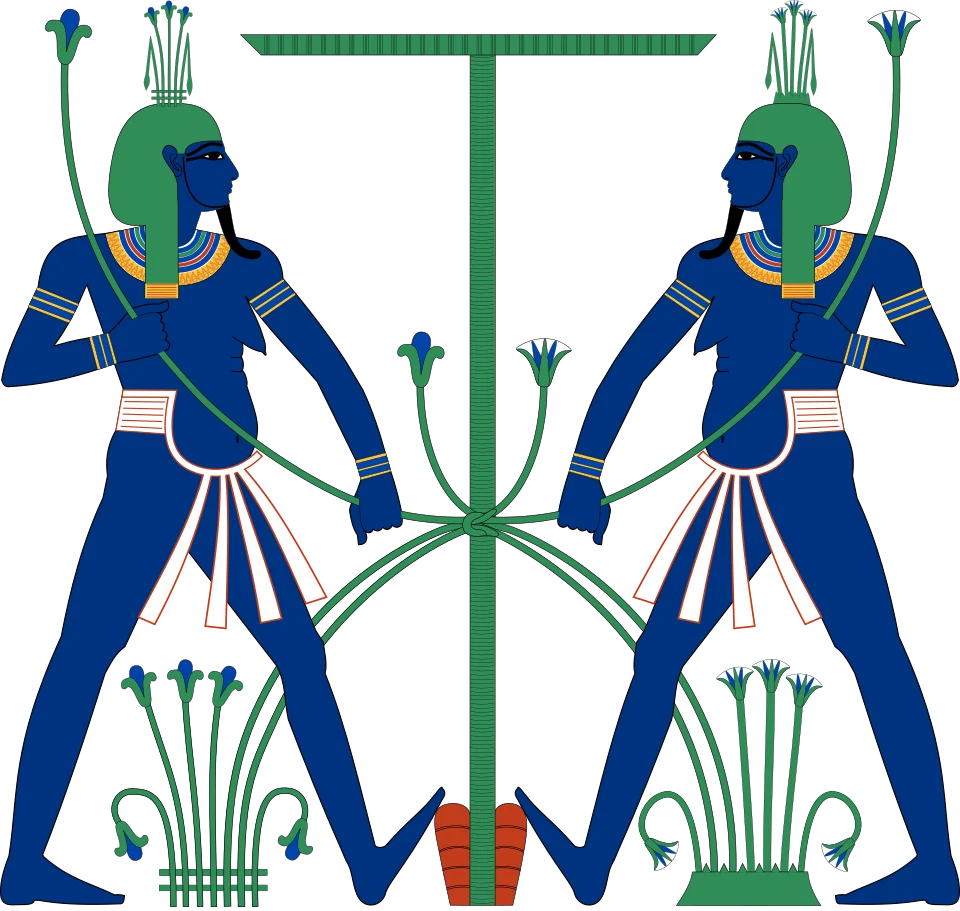
Modern vector interpretation of Egyptian deity iconography, based on historical representations; not a photograph or an original ancient painting. See the credited file description for shared iconography and artistic liberties.
Overview
Hapi, also written Hapy, represents the Nile’s inundation and the fertility it brings. Walters object 54.2135 depicts him carrying an offering table with water jars and lotus plants, with further lotuses hanging from his arm. He wears papyrus buds and blossoms as a crown, a divine beard, collar, armlets and a narrow girdle. These catalogue-supported attributes describe an agricultural and river abundance figure; they do not give him the baboon head of the similarly named funerary guardian.
In Budge’s translated famine legend, the ruler’s distress follows Hapi’s failure to rise adequately for seven years. Inquiry locates his seasonal emergence around Elephantine and places the renewal of abundance within Khnemu’s authority. The account ties offerings and sanctuary arrangements to restored water and food. Separately, the Nile stelae at Gebel al-Silsila record kings requesting a safe flood and plentiful fish and birds. These witnesses join divine agency to practical nourishment without establishing the legend as a dated famine report.
Origins & earliest records
Selected textual witness: the famine legend in Budge’s Legends of the Gods (1912). Material and ritual witnesses include Walters 54.2135 and the Nile stelae described by Egypt’s Ministry of Tourism and Antiquities.
Records & interpretation
Walters catalogue supports costume and offerings; Budge’s translated text supports the Khnum/Hapi connection; the Ministry supports inundation offerings. Met object 25.3.156 b independently identifies the other Hapy as a baboon-headed Son of Horus protecting lungs, resolving the name ambiguity.
Selected bibliography
Documented works and useful reading. This is not a list of every appearance.
- 01
Legends of the Gods: The Egyptian Texts
Famine legend: Hapi’s insufficient rise and Khnemu’s restoration of abundance.
Family & connections
A source-supported family tree or inspiration record has not yet been compiled for this profile. Related reading below indicates a connection in subject matter, not a proven lineage or creative influence.
References
Sources supporting this profile. Linked pages have their own scope and editorial standards.
- Museum object catalogueWalters Art Museum — The Nile God Hapy, 54.2135Research access: 2026-10-05
- Primary-text translation and historical commentaryLegends of the Gods — famine legendResearch access: 2026-10-05
- Official monument interpretationMinistry of Tourism and Antiquities — Nile StelaeResearch access: 2026-10-05
- Museum catalogue; identity disambiguationMetropolitan Museum — Viscera figure with baboon head (Hapy),25.3.156 bResearch access: 2026-10-05
Image credits
Thematic illustrationHapi
Modern vector interpretation of Egyptian deity iconography, based on historical representations; not a photograph or an original ancient painting. See the credited file description for shared iconography and artistic liberties.