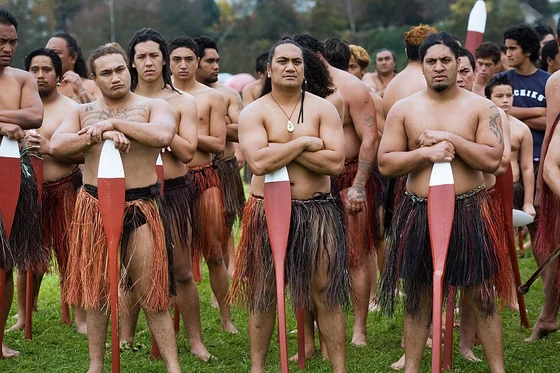
Kashubian cultural communities - AI-generated contextual illustration.
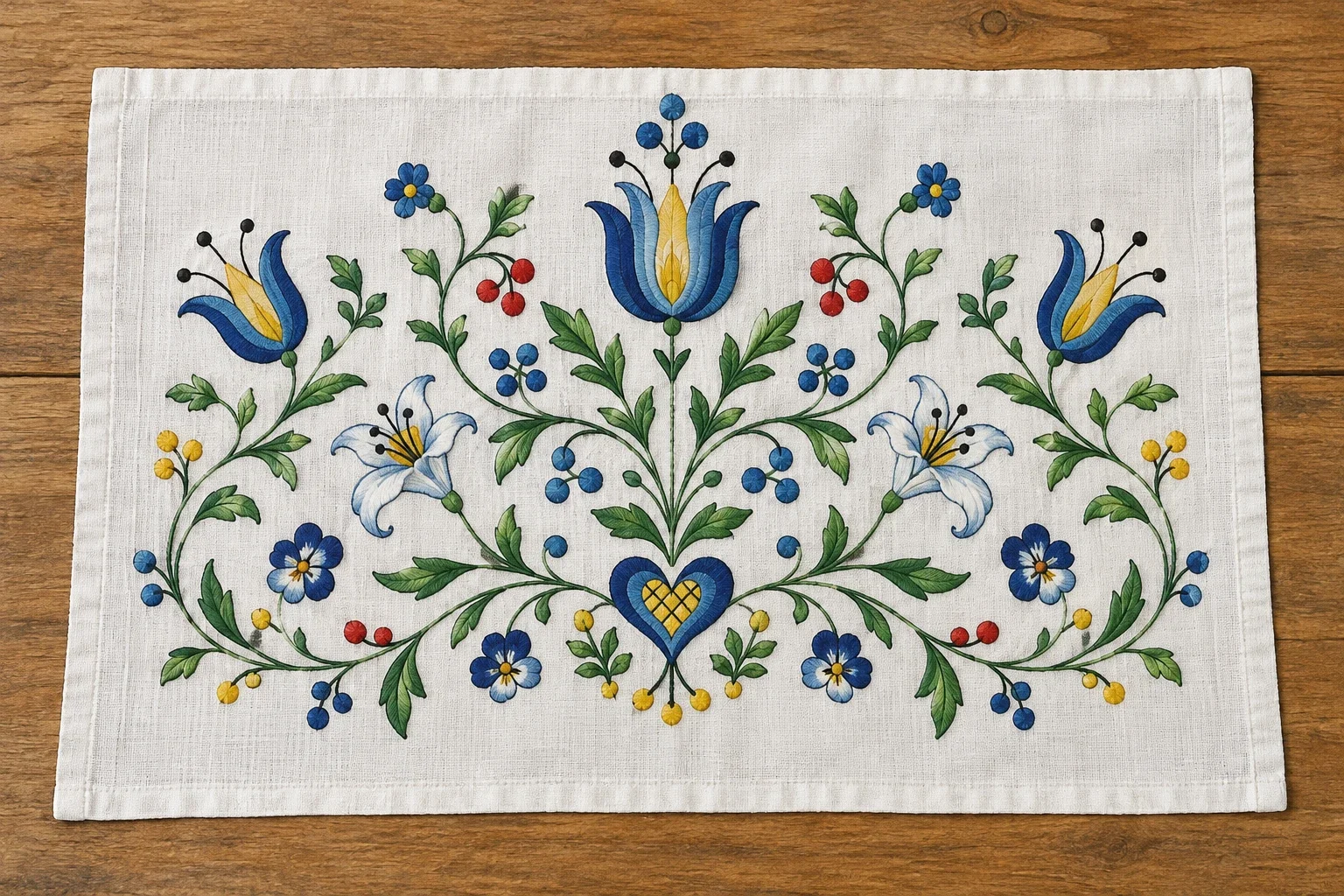
AI-generated conceptual linen sample inspired by the selected Kashubian floral ornamental repertoire described by Culture.pl. Composition, stitches and object are artistically invented; this is not an authenticated pattern, museum artifact or universal community emblem.
Overview
Kashubian cultural communities are represented here through selected accounts from Culture.pl, the Adam Mickiewicz Institute’s cultural portal, and the museum at Wdzydze. Culture.pl locates Kashubia in northern Poland and identifies Kashubian as a Western Slavic language. Its historical discussion describes different regional and political understandings of Kashubian belonging, rather than a single unchanging identity. A cultural community and its language are not biological taxa, and participation in one craft does not determine community membership.
The literary overview discusses Florian Ceynowa’s language work and Aleksander Majkowski’s novel Żëcé i Przigodë Remusa. The fictional Remus belongs to a literary account, not a documented description of ordinary Kashubians. Culture.pl also records a Kashubian association founded in 1956 and known from 1964 as the Kashubian-Pomeranian Association. Its account identifies recognition of Kashubian as a regional language in 2005 and describes education and media uses. These are selected historical and institutional observations, not evidence that every member uses the language in the same way.
The museum in Wdzydze traces its beginnings to Teodora and Izydor Gulgowski in 1906 and an eighteenth-century cottage used to house collections. It documents regional architecture from both Kashubia and Kociewie, which must remain distinct rather than collapsed into one community. Its account connects the founders’ work to local embroidery and fine root plaiting. Culture.pl’s craft overview describes Kashubian floral motifs and a palette including three shades of blue, black, red, green and yellow. The generated linen sample uses an invented composition within this selected ornamental repertoire, not an authenticated historical design.
History & identity
Selected milestones concern nineteenth- and twentieth-century literary work, the Wdzydze museum in 1906, association history in 1956 and 1964, and regional-language recognition in 2005. They are not a fixed origin date for Kashubian identity.
Sources & representation
Culture.pl supplies selected linguistic and cultural history; the Wdzydze museum supplies its own foundation and collections account. Literature, institutional history and craft evidence remain distinct; the underlying statute and the entire Remus novel were not separately examined.
Selected bibliography
Documented works and useful reading. This is not a list of every appearance.
- 01
Kaszëbskô Mowa: Freeing the Kashubian Language
Selected account read or catalogue consulted; not a complete bibliography.
- 02
Museum – Teodora and Izydor Gulgowski Kashubian Ethnographic Park in Wdzydze
Selected account read or catalogue consulted; not a complete bibliography.
- 03
Kurpie, Łowicz, Kashubian &… Architectural: A Brief Guide to Paper Cutouts
Selected account read or catalogue consulted; not a complete bibliography.
Language & cultural connections
Source-supported language and cultural connections have not yet been compiled for this profile.
References
Sources supporting this profile. Linked pages have their own scope and editorial standards.
- Cultural institutionKaszëbskô Mowa: Freeing the Kashubian LanguageResearch access: 2026-10-10
- MuseumMuseum – Teodora and Izydor Gulgowski Kashubian Ethnographic Park in WdzydzeResearch access: 2026-10-10
- Cultural institutionKurpie, Łowicz, Kashubian &… Architectural: A Brief Guide to Paper CutoutsResearch access: 2026-10-10
Image credits
AI-generated contextual illustrationKashubian cultural communities - AI-generated contextual illustration.
AI-generated conceptual linen sample inspired by the selected Kashubian floral ornamental repertoire described by Culture.pl. Composition, stitches and object are artistically invented; this is not an authenticated pattern, museum artifact or universal community emblem.