Hyrrokkin
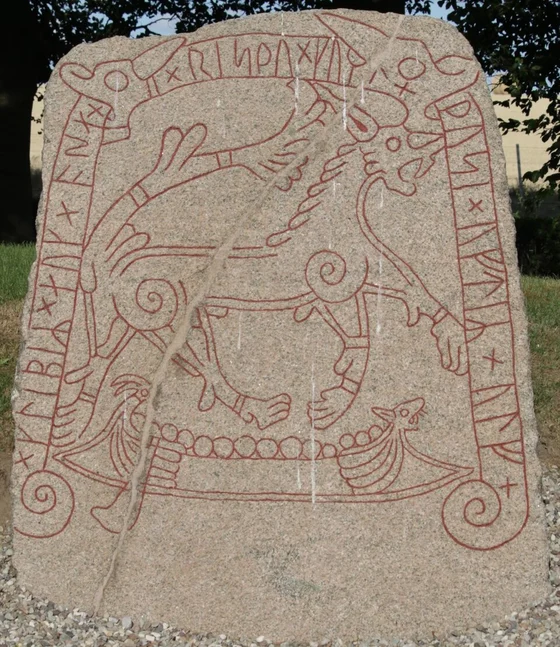
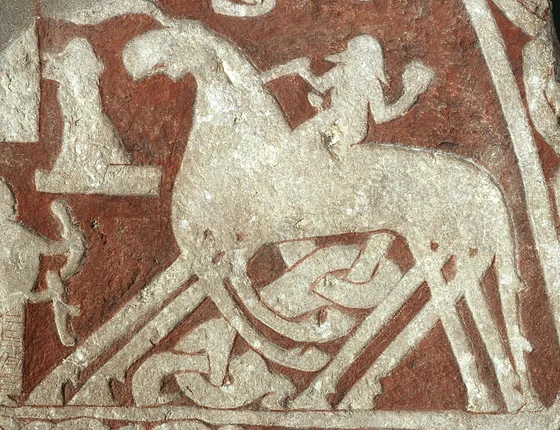
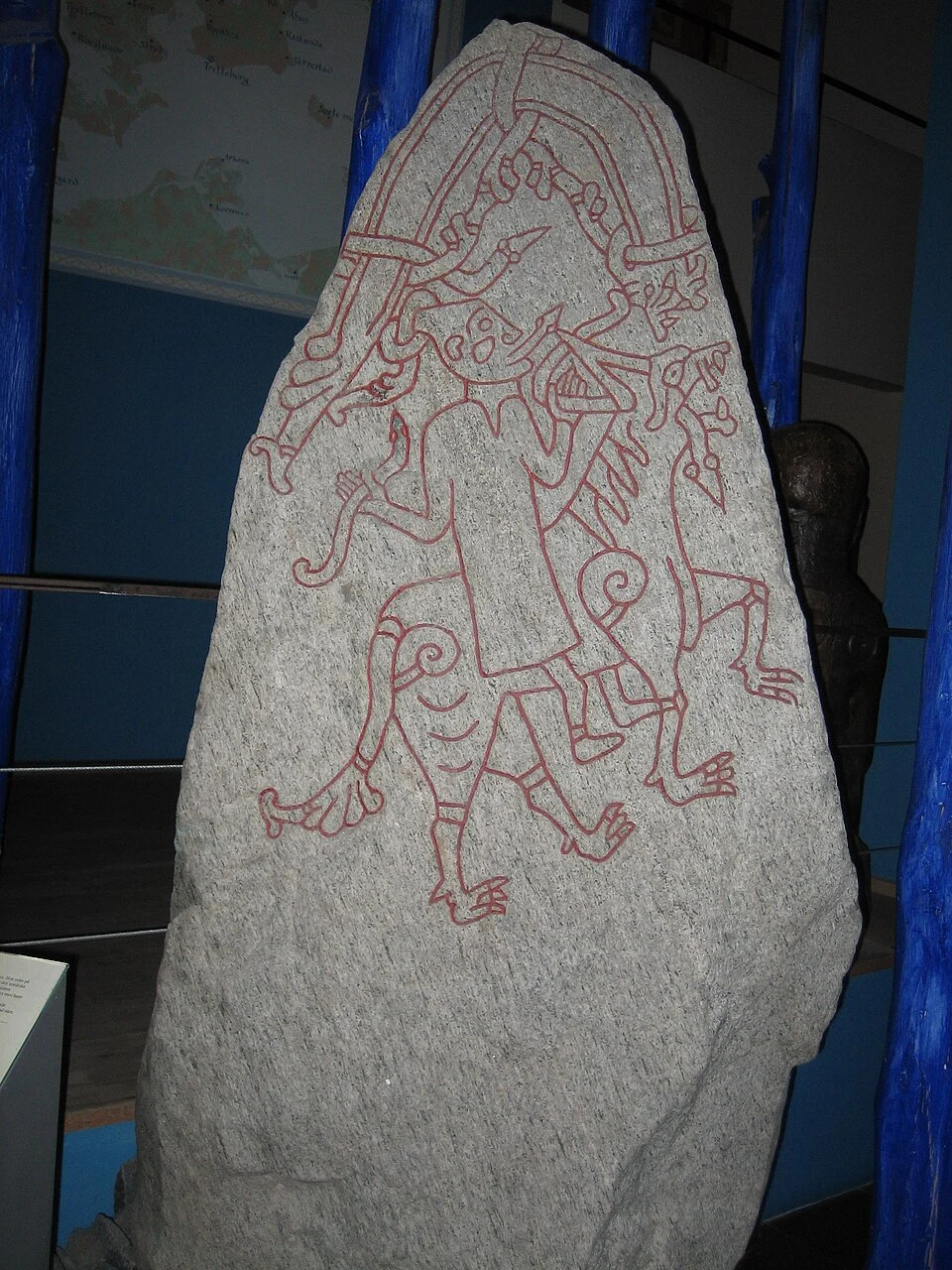
Photograph of Hunnestad monument DR284; wolf-riding woman with serpents interpreted as Hyrrokkin. Historical iconographic attribution is interpretive, not an explicit naming inscription.
Overview
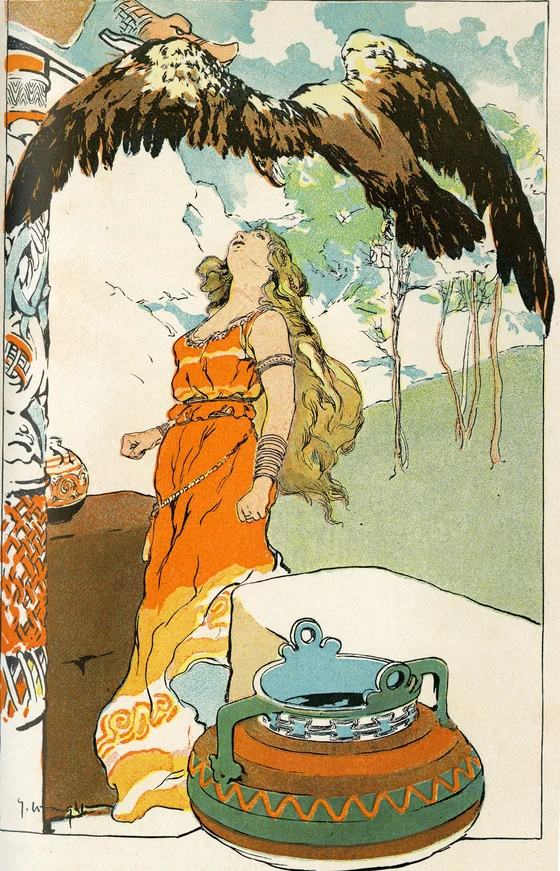
The gods prepare Baldr's body for a ship funeral but cannot launch Hringhorni. They send for Hyrrokkin from Jötunheimr. She arrives riding a wolf whose reins are twisted serpents, and Odin assigns four berserkers to hold the mount. Even they cannot control it without forcing it down, establishing the danger around the visitor before she touches the ship.
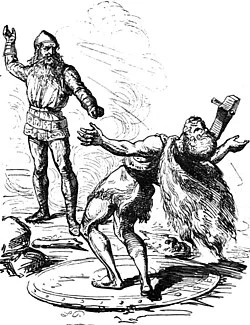
Hyrrokkin goes to the prow and moves the vessel with a single push. The rollers ignite and the earth shakes under the force. Thor is angered and raises his hammer against her, but the other gods secure peace for the helper. The episode makes a giantess indispensable to a divine funeral. It does not describe her as a universally hostile enemy, and its concentrated equipment and strength should not be expanded into an unsupported personal history.
Origins & earliest records
The selected witness is the Baldr funeral passage in the early-thirteenth-century Prose Edda, inspected through Anderson's 1901 edition of his 1879 translation. The text gives a specific arrival and task rather than a complete biography. Its place in the compiled mythology records literary transmission, not an independently recoverable date when the giantess was first imagined or invoked.
Records & interpretation
The wolf, serpent reins and violent launching motion are explicit narrative details and can guide a source-labelled illustration. They are not zoological observations of an unusually large mount or geological evidence for an earthquake caused by a giantess. Her assistance and Thor's hostility are both part of the episode and should remain visible together.
In the literature
“had twisted serpents for reins.”
Fooling of Gylfe, chapter XV, §51; printed p. 133 · Rasmus B. Anderson
The summoned giantess arrives with a wolf steed and serpent reins.
Selected bibliography
Documented works and useful reading. This is not a list of every appearance.
- 01
The Younger Edda
Fooling of Gylfe, chapter XV, §51, pp. 133–134. Selected inspected witness; bibliography is not exhaustive.
- 02
The Younger Edda — Fooling of Gylfe, chapter XV, §51
Chicago: Scott, Foresman and Company, 1901 selected edition; translation copyright 1879 and preface September 1879 appear in the inspected text. Rasmus B. Anderson’s English translation of the medieval Prose Edda, traditionally associated with Snorri Sturluson. The edition preserves different spelling conventions and has its own chapter and numbered-section sequence.
Family & connections
A source-supported family tree or inspiration record has not yet been compiled for this profile. Related reading below indicates a connection in subject matter, not a proven lineage or creative influence.
Located primary passages
Specific passages supporting details in this entry, grouped by their published witness.
The Younger Edda — Fooling of Gylfe, chapter XV, §51
Chicago: Scott, Foresman and Company, 1901 selected edition; translation copyright 1879 and preface September 1879 appear in the inspected text. Rasmus B. Anderson’s English translation of the medieval Prose Edda, traditionally associated with Snorri Sturluson. The edition preserves different spelling conventions and has its own chapter and numbered-section sequence.
- Unable to launch Balder’s ship Hringhorn, the gods summon Hyrrokken from Jotunheim; she rides a wolf that four berserks can only control by throwing it down.
Fooling of Gylfe, chapter XV, §51; pp. 133–134; summoning and arrival
- Her single push launches the ship with enough violence to ignite the rollers and shake the earth. Thor prepares to strike her, but the other gods ask peace for her.
Fooling of Gylfe, chapter XV, §51; p. 134; launch and protection from Thor
Complete selected prose episodes read; quoted poetic extracts inspected but not used to invent earliest dates or a modern standardized taxonomy. Section numbers belong to this 1901 translation and can differ from other editions. Translator’s introductory racial and theological interpretations are not treated as source narrative.
Encyclopedia background
An additional attributed reference, separate from the editorial profile above.
Read the open encyclopedia overview
Hyrrokkin (Old Norse: [ˈhyrˌrokːenː]) is a female jötunn in Norse mythology. According to 13th-century poet Snorri Sturluson, she launched the largest of all ships at Baldr's funeral after the Æsir gods were unable to budge the vessel.
Hyrrokkin was a relatively important figure in the last decades of paganism in Iceland. She appears to be depicted on one of the DR 284 stones from the Hunnestad Monument near Marsvinsholm, Sweden.
Text from Wikipedia contributors, “Hyrrokkin”. CC BY-SA 4.0. Extracted introduction; formatting changed. Retrieved 5 October 2026. The source article may have changed since retrieval.
References
Sources supporting this profile. Linked pages have their own scope and editorial standards.
- Primary textAnderson's Younger Edda: Fooling of Gylfe, chapter XV, §51, pp. 133–134Research access: 2026-10-05
Image credits
Historical illustrationHyrrokkin
Photograph of Hunnestad monument DR284; wolf-riding woman with serpents interpreted as Hyrrokkin. Historical iconographic attribution is interpretive, not an explicit naming inscription.