Hydrus
Image associated with the exact linked encyclopedia article; consult credited file description for its interpretation.
Overview
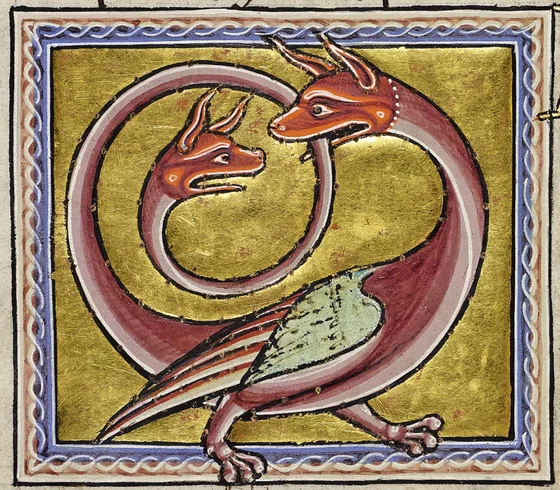
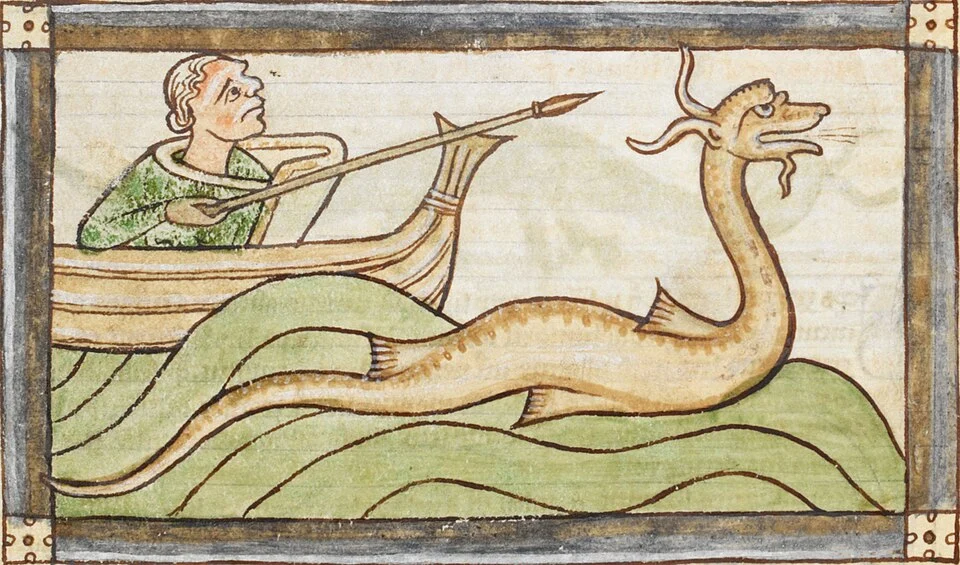
Aberdeen's hydrus lives in the Nile. When it finds a crocodile asleep on the shore with its mouth open, it rolls in mud, enters the mouth and is swallowed alive. It then tears through the crocodile's internal organs and emerges unharmed. The manuscript identifies the crocodile with death and hell and the hydrus with Christ's descent into hell and resurrection.
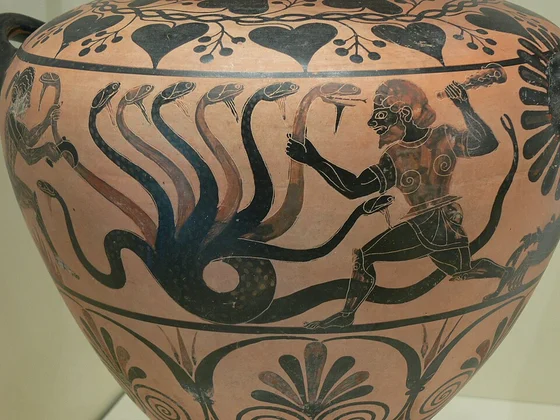
The same folio separately discusses the Lernaean hydra, saying that three heads replace a severed head. It then rejects that story as a literal monster account and explains it as a marsh whose blocked water outlets repeatedly opened elsewhere, until Hercules drained it. This is the compiler's rationalizing interpretation. The hydrus's Christian allegory and the hydra's proposed watery explanation therefore remain distinct, although their names share a water-related etymology. Folio68v's image commentary identifies the hydrus attacking the crocodile; the episode's full prose continues on folio69r.
Origins & earliest records
Aberdeen MS24 preserves the water-creature heading on folio68v and the detailed crocodile account on folio69r, in an English manuscript of around1200. This selected medieval witness distinguishes hydrus and hydra material in its own sequence. It does not fix the earliest version or establish one constant anatomy across every bestiary.
Records & interpretation
The prose supports mud coating, ingestion and emergence, while folio68v illustrates the confrontation. Its accompanying Christian exposition documents how the action was interpreted by the compiler. Text and image are evidence of a transmitted allegorical account, not verified crocodile anatomy or a biological demonstration of this method of survival.
Selected bibliography
Documented works and useful reading. This is not a list of every appearance.
- 01
Aberdeen Bestiary, University Library MS24, 68v–69r
Selected surviving folios inspected; text and image are treated as distinct evidence.
Family & connections
A source-supported family tree or inspiration record has not yet been compiled for this profile. Related reading below indicates a connection in subject matter, not a proven lineage or creative influence.
References
Sources supporting this profile. Linked pages have their own scope and editorial standards.
- Primary textUniversity of Aberdeen, MS24 folio68vResearch access: 2026-10-05
- Primary textUniversity of Aberdeen, MS24 folio69rResearch access: 2026-10-05
- ReferenceUniversity of Manchester, Aberdeen Bestiary project and manuscript datingResearch access: 2026-10-05
Image credits
Reference illustrationHydrus
Image associated with the exact linked encyclopedia article; consult credited file description for its interpretation.