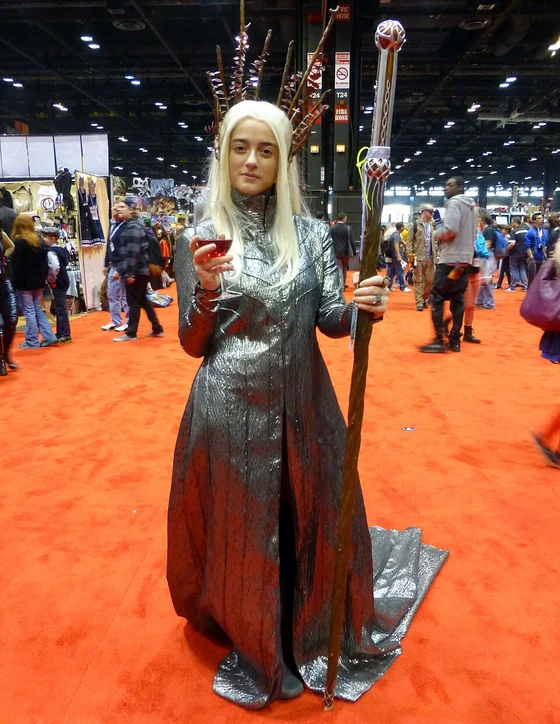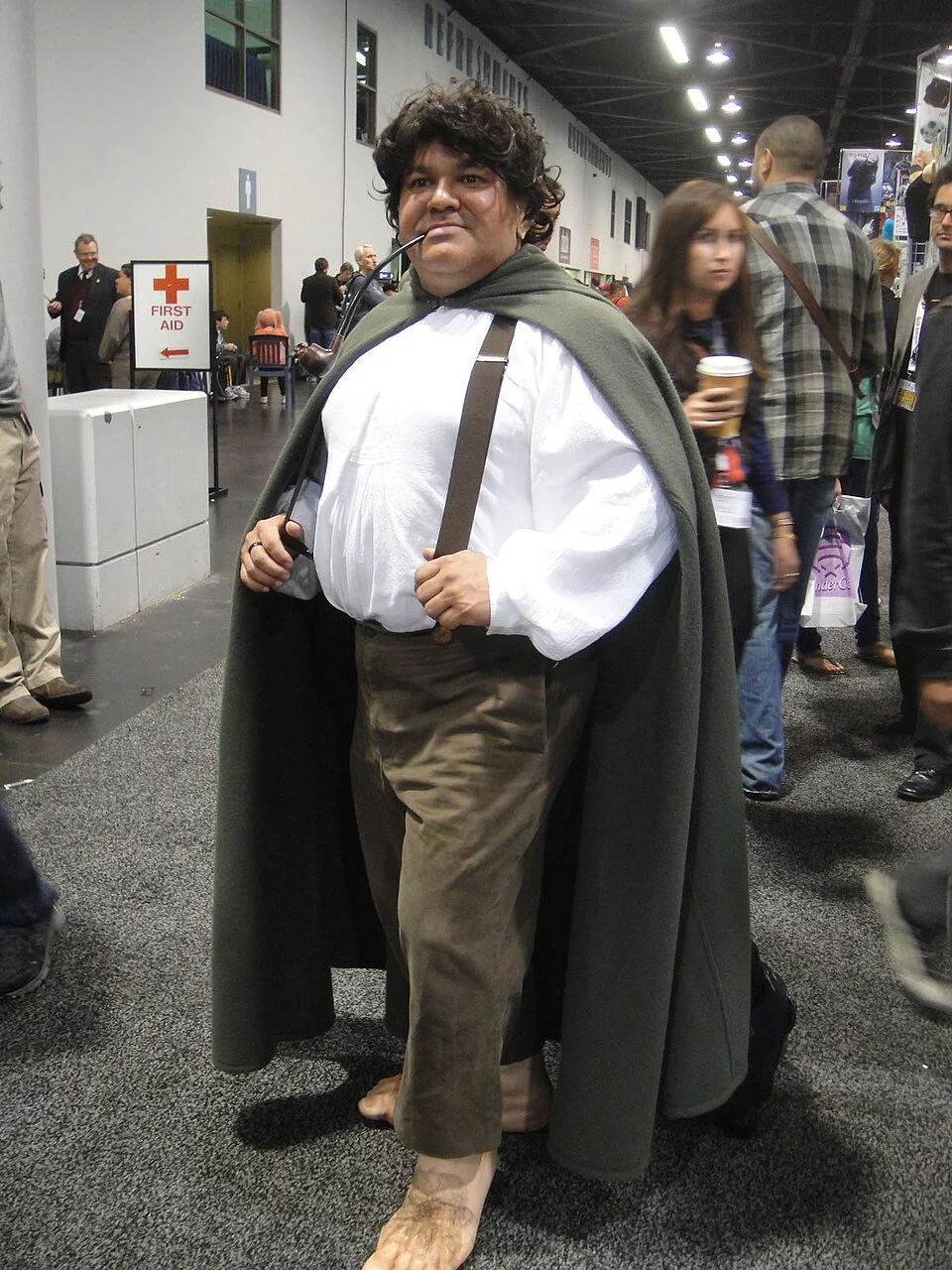
Hobbit: Frodo cosplay at WonderCon2012
Exact named character costume photograph; contemporary interpretation, not official character artwork or a universal anatomical model. Actual Commons source describes the named character and event. Photographer license verified in returned imageinfo; Visually inspected: Frodo costume with curled hair, cloak, braces, pipe and barefoot/hairy-foot interpretation; exact named Hobbit character.
Overview
Hobbits are a small people whose ordinary pleasures include food, gardens, family ties and comfortable homes. In Tolkien's published stories they are related to Men, rather than miniature Elves or magical fairies. Their apparent provinciality becomes important when Bilbo and later Frodo encounter conflicts whose scale dwarfs the concerns of the Shire.
Their achievements depend on endurance, pity and companionship as much as courage in battle. Different hobbit communities and family backgrounds also matter: the Shire is a society with institutions and prejudices, not simply a universal personality. Tolkien's account gives the reader a familiar domestic viewpoint from which to encounter the older and stranger peoples of Middle-earth.
First appearances & development
The Hobbit (1937) establishes the published people. This entry follows the version represented by the primary works listed below, rather than treating the name as a single creature shared by every adaptation. Published Tolkien texts are the baseline; screen adaptations and unfinished textual variants remain distinct.
Canon & continuity
Primary basis: The Hobbit (1937); comparison: The Fellowship of the Ring (1954). The bibliography identifies the relevant fictional treatments, while the linked guide supports identification and context. Exact page references, exhaustive first-appearance research and edition-independent mechanics are outside this profile. Published Tolkien texts are the baseline; screen adaptations and unfinished textual variants remain distinct.
Selected bibliography
Documented works and useful reading. This is not a list of every appearance.
- 01
The Hobbit
Published novel; later revisions should be identified when quoting.
- 02
The Fellowship of the Ring
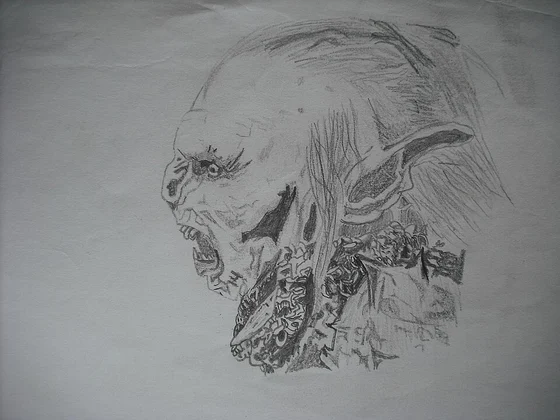
Hobbits, Elves and Orcs in the War of the Ring.
Family & connections
A source-supported family tree or inspiration record has not yet been compiled for this profile. Related reading below indicates a connection in subject matter, not a proven lineage or creative influence.
Encyclopedia background
An additional attributed reference, separate from the editorial profile above.
Read the open encyclopedia overview
Hobbits are a fictional race of people in the novels of J. R. R. Tolkien. About half average human height, Tolkien presented hobbits as a variety of humanity, or close relatives thereof. Occasionally known as halflings in Tolkien's writings, they live barefooted, and traditionally dwell in homely underground houses which have windows, built into the sides of hills, though others live in houses. Their feet have naturally tough leathery soles (so they do not need shoes) and are covered on top with curly hair.
Hobbits first appeared in the 1937 children's novel The Hobbit, whose titular Hobbit is the protagonist Bilbo Baggins, who is thrown into an unexpected adventure involving a dragon. In its sequel, The Lord of the Rings, the hobbits Frodo Baggins, Sam Gamgee, Pippin Took, and Merry Brandybuck are primary characters who all play key roles in fighting to save their world ("Middle-earth") from evil. In The Hobbit, hobbits live together in a small town called Hobbiton, which in The Lord of the Rings is identified as being part of a larger rural region called the Shire, the homeland of the hobbits in the northwest of Middle-earth. Some also live in a region east of the Shire, Bree-land, where they co-exist with Men.
The origins of the name and idea of "Hobbits" have been debated; literary antecedents include Sinclair Lewis's 1922 novel Babbitt, and Edward Wyke Smith's 1927 The Marvellous Land of Snergs. The word "hobbit" also appears in a list of ghostly beings in The Denham Tracts (1895), though these bear no similarity to Tolkien's Hobbits. Scholars have noted Tolkien's denial of a relationship with the word "rabbit", pointing to several lines of evidence to the contrary. Hobbits are modern, unlike the heroic ancient-style cultures of Gondor and Rohan, with familiar things like umbrellas, matches, and clocks. As such they mediate between the modern world known to readers and the heroic ancient world of Middle-earth.
Halflings appear as a race in Dungeons & Dragons, and the works of other fantasy authors including Terry Brooks, Jack Vance, and Clifford D. Simak.
Text from Wikipedia contributors, “Hobbit”. CC BY-SA 4.0. Extracted introduction; formatting changed. Retrieved 5 October 2026. The source article may have changed since retrieval.
References
Sources supporting this profile. Linked pages have their own scope and editorial standards.
- ReferenceHobbit — reference guideResearch access: 2026-10-05
- Primary workLetter to Milton Waldman, publisher, 1951 — hobbit human kinshipResearch access: 2026-10-05
Image credits
Cosplay interpretationHobbit: Frodo cosplay at WonderCon2012
Exact named character costume photograph; contemporary interpretation, not official character artwork or a universal anatomical model. Actual Commons source describes the named character and event. Photographer license verified in returned imageinfo; Visually inspected: Frodo costume with curled hair, cloak, braces, pipe and barefoot/hairy-foot interpretation; exact named Hobbit character.