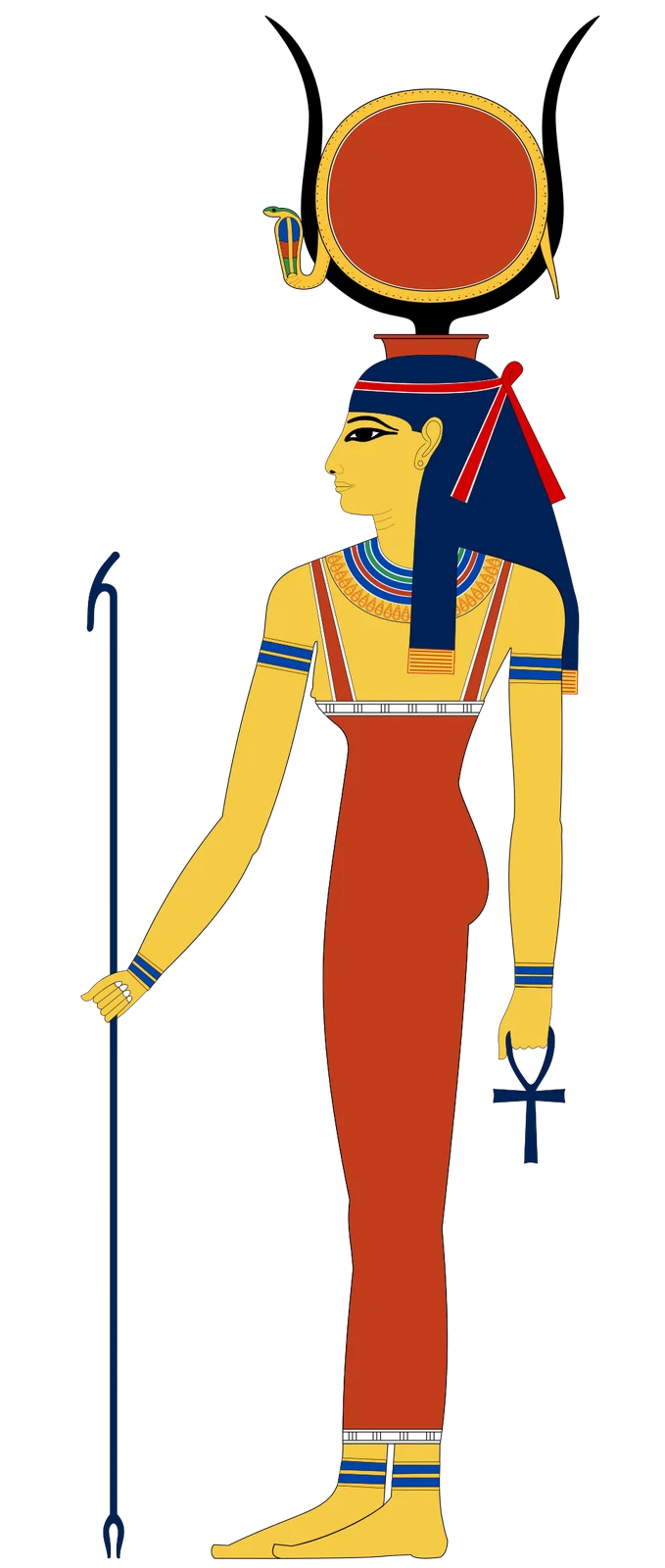
Hathor
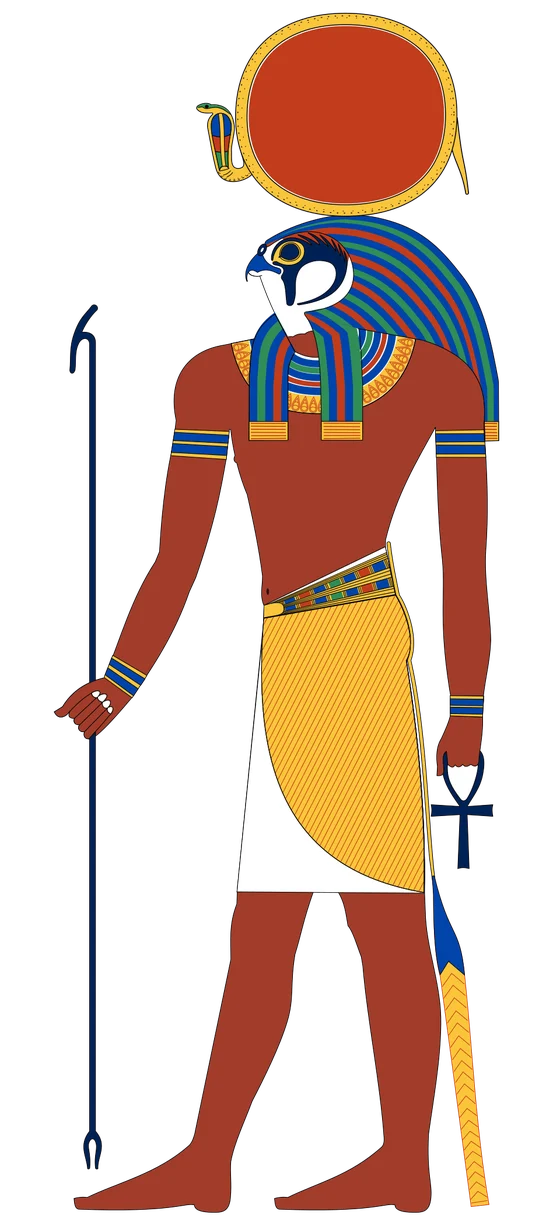
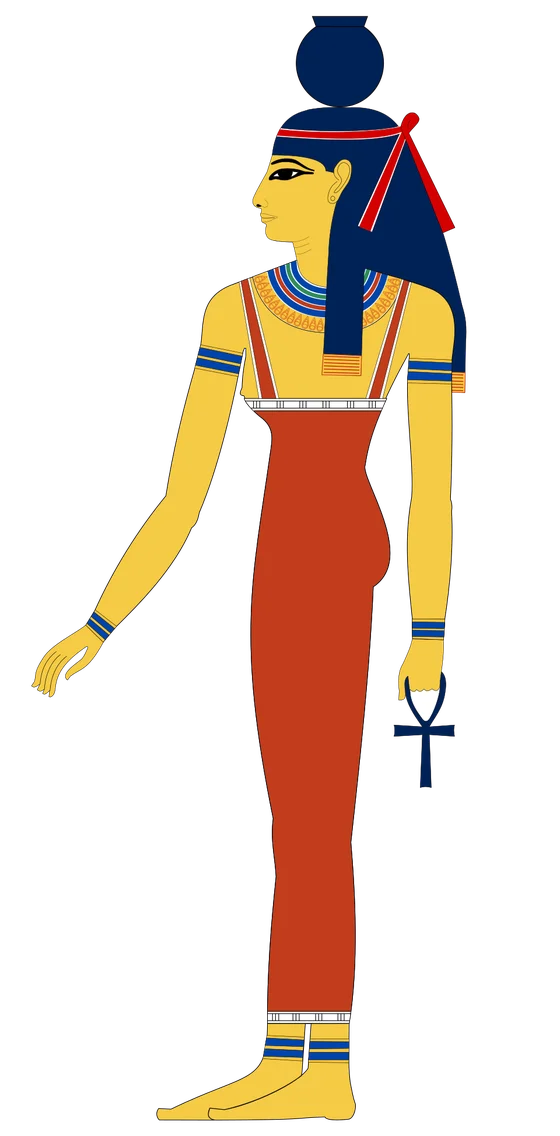
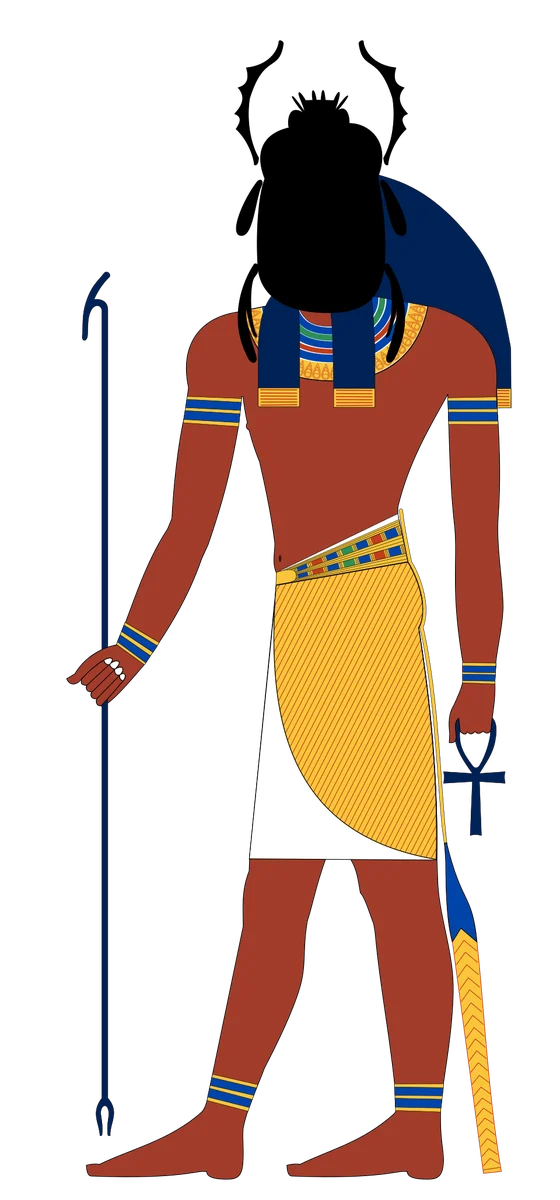
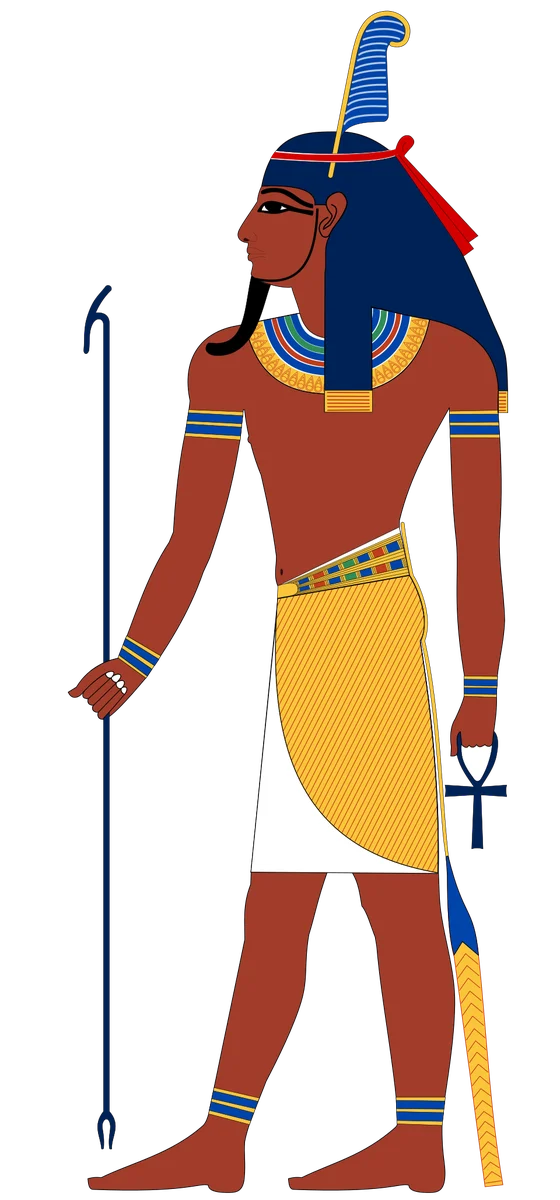
Modern vector interpretation of Egyptian deity iconography, based on historical representations; not a photograph or an original ancient painting. See the credited file description for shared iconography and artistic liberties.
Overview
Ra sends his Eye as Hathor against rebellious humans. She takes pleasure in the destruction, while the surviving people need a way to escape another assault. The narrative turns on a prepared drink spread across the ground, which she consumes instead of continuing the killing. This witness gives Hathor a dangerous role that differs from her familiar modern presentation as a benevolent goddess of love. The episode is not a complete account of her cult.
The rescue depends on changing what the pursuing Eye encounters on the ground. Ra’s agents prepare the drink before the next attack, and consumption interrupts the destructive mission. The goddess’s pleasure in killing and the ruler’s later restraint coexist in the same episode, giving the intervention a more complicated purpose than simply defeating an enemy.
Origins & earliest records
The selected text is a translated Egyptian destruction narrative. Its divine identifications can overlap with other Eye-of-Ra figures; this entry does not turn those forms into extra creatures.
Records & interpretation
The selected attestation is Destruction of mankind in Budge’s translated collection. It documents a textual or ritual representation; commentary and later classical accounts are labeled where used. It does not establish zoological existence, a first oral telling, or a uniform belief shared by all Egyptians.
In the literature
“it journeyeth in the form of Hathor.”
The Legend of the Destruction of Mankind, ChapterI; paragraph beginning “Then the Majesty of Nu, to son Ra, spake, saying:—"Thou art…” · E. A. Wallis Budge
Ra’s Eye in Hathor’s form kills rebellious people, then is diverted by intoxicating beer so survivors are spared; this specific text also names Sekhet.
Selected bibliography
Documented works and useful reading. This is not a list of every appearance.
- 01
Legends of the Gods: The Egyptian Texts
Selected witness: Destruction of mankind. Historical translation and commentary; not an exhaustive bibliography.
- 02
Legends of the Gods: The Egyptian Texts, edited with Translations
London,1912; E.A.WallisBudge historical English translations; narrative body distinguished from editorial introduction and footnotes.
Family & connections
A source-supported family tree or inspiration record has not yet been compiled for this profile. Related reading below indicates a connection in subject matter, not a proven lineage or creative influence.
Located primary passages
Specific passages supporting details in this entry, grouped by their published witness.
Legends of the Gods: The Egyptian Texts
London,1912; E.A.WallisBudge historical English translations; narrative body distinguished from editorial introduction and footnotes.
- Ra’s Eye in Hathor’s form kills rebellious people, then is diverted by intoxicating beer so survivors are spared; this specific text also names Sekhet.
Budge’s historical translation of a particular ancient text; uncertain readings, lacunae and variant names retained. Mythic healing claims are narrative content, not medical instructions.
Encyclopedia background
An additional attributed reference, separate from the editorial profile above.
Read the open encyclopedia overview
Hathor (Ancient Egyptian: ḥwt-ḥr, lit. 'House of Horus', Ancient Greek: Ἁθώρ Hathōr, Coptic: ϩⲁⲑⲱⲣ, Meroitic: 𐦠𐦴𐦫𐦢 Atari) was a major goddess in ancient Egyptian religion who played a wide variety of roles. As a sky deity, she was the mother or consort of the sky god Horus and the sun god Ra, both of whom were connected with kingship, and thus she was the symbolic mother of their earthly representatives, the pharaohs. She was one of several goddesses who acted as the Eye of Ra, Ra's feminine counterpart, and in this form, she had a vengeful aspect that protected him from his enemies. Her beneficent side represented beauty, music, dance, joy, love, sexuality, and maternal care, and she acted as the consort of several male deities and the mother of their sons. These two aspects of the goddess exemplified the Egyptian conception of femininity. Hathor crossed boundaries between worlds, helping deceased souls in the transition to the afterlife.
Hathor was often depicted as a cow, symbolizing her maternal and celestial aspect, although her most common form was a woman wearing a headdress of cow horns and a sun disk. She could also be represented as a lioness, a cobra, or a sycomore tree.
Cattle goddesses similar to Hathor were portrayed in Egyptian art in the fourth millennium BC, but she may not have appeared until the Old Kingdom (c. 2686–2181 BC). With the patronage of Old Kingdom rulers, she became one of Egypt's most important deities. More temples were dedicated to her than to any other goddess; her most prominent temple was Dendera in Upper Egypt. She was also worshipped in the temples of her male consorts. The Egyptians connected her with foreign lands, such as Nubia and Canaan, and their valuable goods, such as incense and semiprecious stones, and some of the peoples in those lands adopted her worship. In Egypt, she was one of the deities commonly invoked in private prayers and votive offerings, particularly by women desiring children.
During the New Kingdom (c. 1550–1070 BC), goddesses such as Mut and Isis encroached on Hathor's position in royal ideology, but she remained one of the most widely worshipped deities. After the end of the New Kingdom, Hathor was increasingly overshadowed by Isis, but she continued to be venerated until the extinction of ancient Egyptian religion in the early centuries AD.
Text from Wikipedia contributors, “Hathor”. CC BY-SA 4.0. Extracted introduction; formatting changed. Retrieved 5 October 2026. The source article may have changed since retrieval.
References
Sources supporting this profile. Linked pages have their own scope and editorial standards.
- Primary-text translation and historical commentaryLegends of the Gods — Destruction of mankindResearch access: 2026-10-05
Image credits
Thematic illustrationHathor
Modern vector interpretation of Egyptian deity iconography, based on historical representations; not a photograph or an original ancient painting. See the credited file description for shared iconography and artistic liberties.