Ginkgo
Image associated with the exact linked encyclopedia article; consult credited file description for its interpretation.
Overview
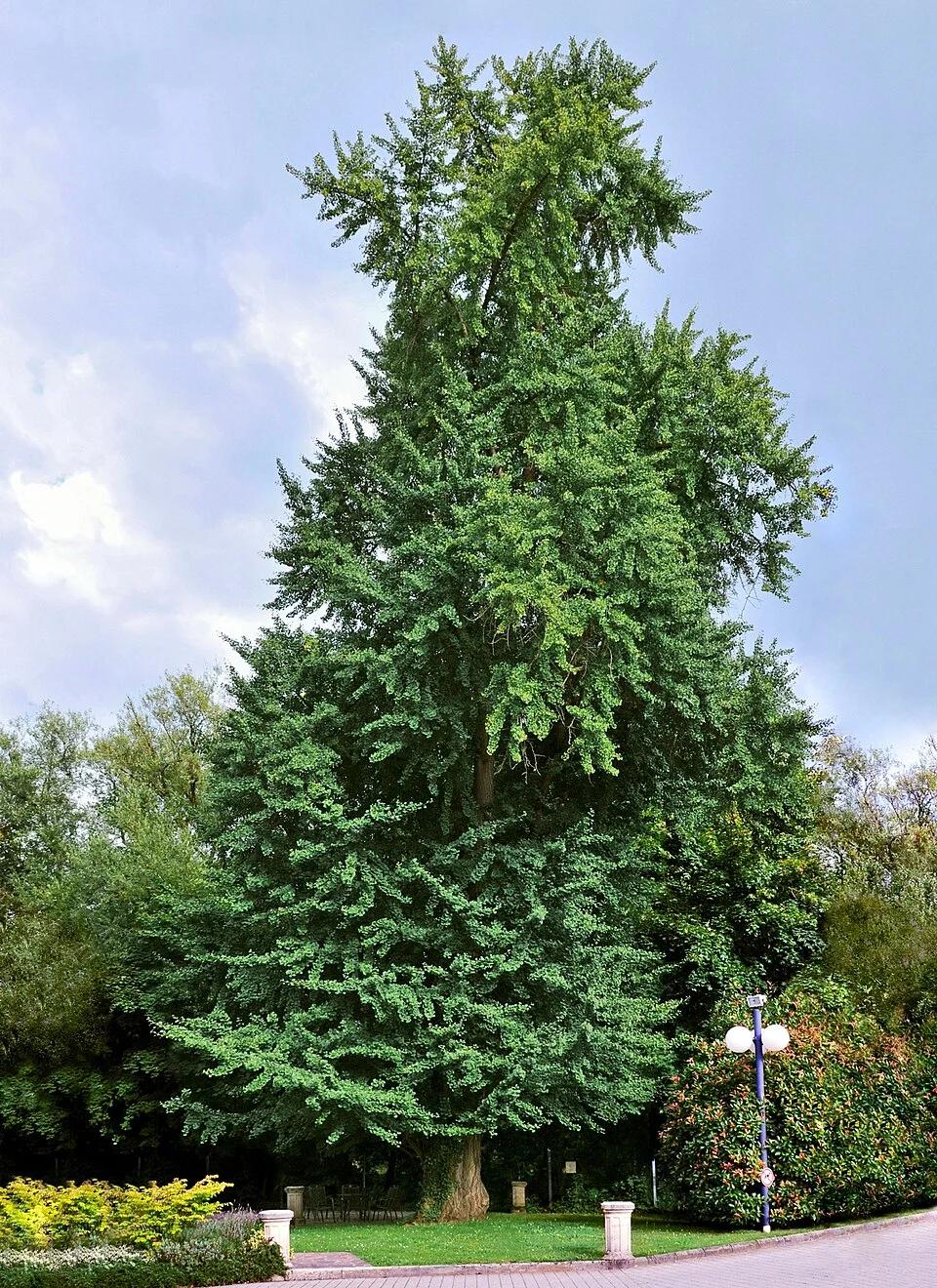
Ginkgo trees have distinctive fan-shaped leaves that often show two lobes and turn yellow in autumn. Male and female reproductive structures occur on separate trees. Female trees bear seeds with a fleshy outer covering; these are not botanical fruits in the flowering-plant sense. Native history and long cultivation in China connect the species with both biological and cultural landscapes.
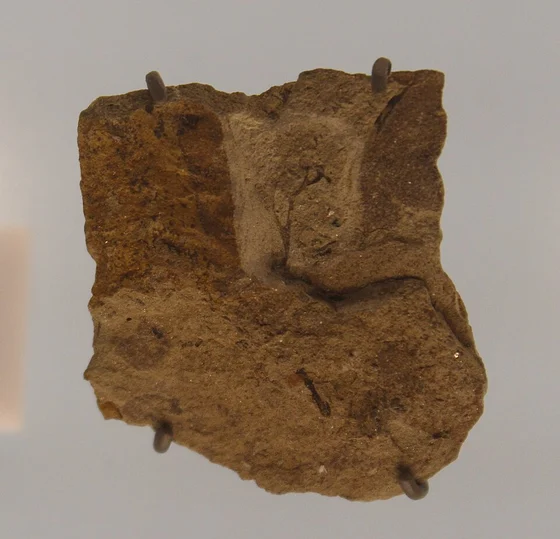
Similar leaves occur in an ancient fossil record, making ginkgo a familiar example in discussions of living fossils. That phrase should describe persistence of recognisable features rather than imply no evolution. The living species is not interchangeable with every fossil ginkgo-like leaf. Widespread planted trees also do not establish abundant natural populations, so horticultural familiarity and conservation of wild diversity need separate consideration.
Guan and colleagues' 2016 genome study examined material from Tianmu Mountain in Zhejiang, China. Seeds were collected from five large trees, with herbarium vouchers deposited at Zhejiang University. The principal paired-end DNA libraries came from the haploid nutritive tissue of one seed from tree TM011; additional seeds from that tree supplied longer-insert scaffolding libraries. Male and female reproductive tissues and seedlings supplied pooled RNA samples to help identify expressed genes. This sampling design produced a reference resource, rather than a survey of genetic variation across every wild and cultivated population.
The assembled draft spans 10.61 billion bases, including 493 million unresolved bases represented by gaps. The researchers predicted 41,840 genes, of which 30,209 had expression support and were assigned high confidence. Repeated sequences accounted for about 76.58 percent of the assembly; an alternative sequence-frequency approach estimated still more repeat content, illustrating how short-read assembly can incompletely recover such regions. Long terminal repeat retrotransposons were especially abundant, and insertions also contributed substantially to long introns within genes. A large DNA sequence is therefore not simply evidence for proportionally more functional genes.
Comparisons of duplicated genes led the authors to propose two whole-genome duplication events. These are interpretations of sequence patterns, with dates dependent on assumed rates; they are not direct fossil dates or the age of the living species. Their analyses also identified expanded gene families associated with defense chemistry and bacterial recognition. Such enrichments suggest candidates for understanding resistance, but do not validate the activity of every predicted copy or establish immunity to all pathogens. A tree inferred from 920 single-copy genes placed ginkgo closer to the sampled cycad than to the sampled pine. This is a study-specific relationship among living lineages, compatible with evolutionary change despite persistence of recognizable leaf form.
Origins & earliest records
The ginkgo lineage has a fossil history extending deep into the Mesozoic and beyond related forms, but the living species' exact origin is not dated here. Scientific naming and centuries of cultivation concern recognition and human movement. A leaf similar to Ginkgo biloba does not automatically document the same biological species.
Evidence & interpretation
Living specimens reveal leaves, separate reproductive sexes and seed structure. Fossils establish long persistence of ginkgo-like forms, while comparing species requires more than leaf outline. Cultivation complicates interpretation of natural distribution. The living-fossil label is descriptive shorthand and should not be used as evidence that the species has stopped evolving.
Selected bibliography
Documented works and useful reading. This is not a list of every appearance.
- 01
Ginkgo biloba: The tree that outlived the dinosaurs
Selected institutional scientific reading; not a complete bibliography.
- 02
Draft genome of the living fossil Ginkgo biloba
GigaScience 5:49, published 21 November. Complete main analyses, discussion and Methods; draft reference and computational functional hypotheses. CC BY 4.0.
- 03
Transcriptome Profile Analysis from Different Sex Types of Ginkgo biloba L.
Shuhui Du, Yalin Sang, Xiaojing Liu, Shiyan Xing, Jihong Li, Haixia Tang and Limin Sun, Frontiers in Plant Science7:871,16June2016; DOI10.3389/fpls.2016.00871
- 04
Resequencing 545 ginkgo genomes across the world reveals the evolutionary history of the living fossil
Nature Communications 10:4201, 13 September 2019; DOI 10.1038/s41467-019-12133-5.
Family, evolution & connections
Ginkgo among sampled seed plants — nuclear-gene topology
Seed-plant portion of Figure 2A; Pinaceae collapsed as one sampled clade. Fern/lycophyte outgroups omitted.
Scroll sideways to see all branches. With a keyboard, focus the tree and use the arrow keys.
- Sampled seed plants
- Sampled angiosperms
- Nuphar advena
- Amborella trichopoda
- Sampled gymnosperms
- Ginkgo/cycad branch
- Sampled cycads
- Zamia furfuracea
- Cycas rumphii
- Other sampled gymnosperms
- Cryptomeria japonica
- Nuclear gnepine grouping (plastid conflict)
- Sampled Pinaceae: Pinus taeda, P. contorta, Picea sitchensis, P. glauca
- Sampled gnetophytes
- Welwitschia mirabilis
- Gnetum gnemon
Published STAR coalescent nuclear-gene topology, compared with concatenation; 305 nuclear loci. Actual figure inspected. Plastid analysis places gnetophytes differently. Concatenation is sensitive to site-rate partition. Limited samples represent major lineages, not every living seed plant. No dates or direct ancestors inferred.
Six sampled gymnosperms in the 2022 nuclear-gene analysis
The six gymnosperm tips pruned from the 15-taxon Figure 1b; angiosperms, ferns and lycophyte outgroup omitted.
Scroll sideways to see all branches. With a keyboard, focus the tree and use the arrow keys.
- Sampled gymnosperms (nuclear Figure 1b)
- Ginkgo / Cycas pair (organelle conflict noted)
- Cycas panzhihuaensis
- Remaining sampled gymnosperms
- Gnetum and sampled Pinaceae
- Gnetum montanum
- Picea / Pinus pair
- Picea abies
- Pinus taeda
Selected branching topology from nuclear single-copy gene first and second codon positions (SSCG-NT12); Figure 1 caption reports maximum ML bootstrap and ASTRAL support. Nuclear/plastid and mitochondrial datasets disagree on the position of cycads. High summarized branch support coexists with substantial gene-tree conflict; incomplete lineage sorting is discussed as an explanation, not shown here as a dated event. Selected tips are sampled representatives, not all species or direct ancestors. Dates and whole-genome duplications are omitted.
Redwoods and selected plants — Fu 2023
All nine species depicted in Figure 1D; branch lengths, dates and gene-family counts omitted.
Scroll sideways to see all branches. With a keyboard, focus the tree and use the arrow keys.
- Nine-species Figure 1D topology
- Azolla filiculoides
- Remaining sampled seed plants
- Sampled angiosperms
- Amborella trichopoda
- Oryza / Vitis pair
- Oryza sativa
- Vitis vinifera
- Sampled gymnosperms
- Taxus and redwoods
- Taxus yunnanensis
- Three sampled redwoods
- Metasequoia glyptostroboides
- Sequoiadendron / Sequoia pair
- Sequoia sempervirens
195 single-copy ortholog groups aligned with MAFFT; RAxML gene trees combined in ASTRAL with 100 bootstrap replicates. A study-specific species-tree summary, not direct ancestry. Figure 1D’s green values are estimated times; other numbers count gene-family changes, not support. Figure 3 shows 48.25% discordance among 2,033 qualifying single-copy gene trees. Separate QuIBL, MSCquartets and PhyloNet tests favour incomplete lineage sorting rather than hybridisation in the tested datasets; this does not prove absence of every historical gene-flow event. No numerical node confidence is inferred from the illustration.
Taxonomic classification
A hierarchy of classified groups, not a chain of direct ancestors.
- kingdomPlantae
- phylumTracheophyta
- classGinkgoopsida
- orderGinkgoales
- familyGinkgoaceae
- genusGinkgo
- speciesGinkgo biloba
Sampled cycads in Xi et al. 2013
The inspected nuclear-gene figure pairs Ginkgo with the sampled cycads, Zamia furfuracea and Cycas rumphii. These extant tips are relatives rather than ancestors. The paper tests method and rate-partition sensitivity and preserves a nuclear/plastid conflict elsewhere in the gymnosperm tree.
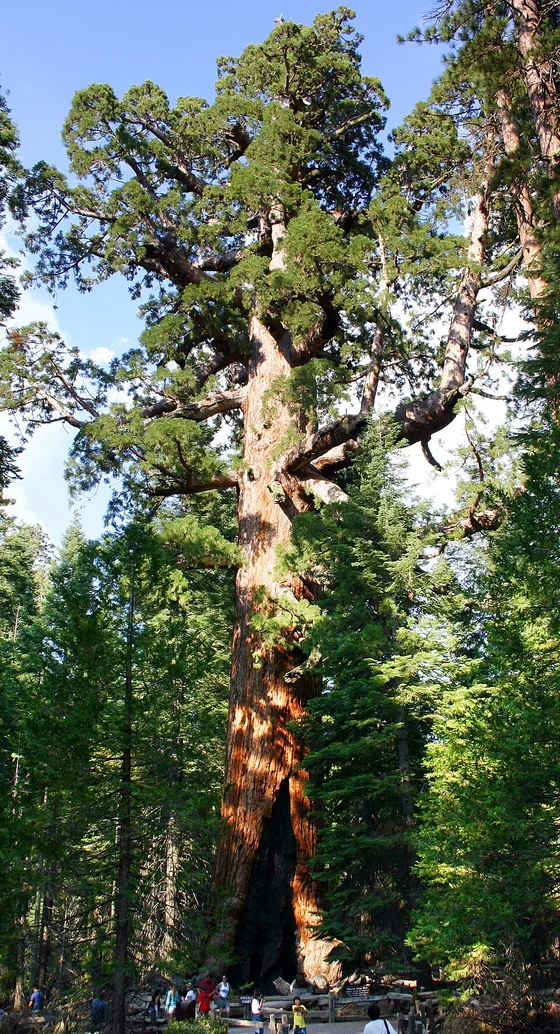
Giant sequoia
Figure 1D places Ginkgo outside the sampled Taxus-and-redwood clade. This nine-species analysis does not include every conifer or establish Ginkgo as an ancestor of sequoias.
Located primary passages
Specific passages supporting details in this entry, grouped by their published witness.
Transcriptome Profile Analysis from Different Sex Types of Ginkgo biloba L.
Shuhui Du, Yalin Sang, Xiaojing Liu, Shiyan Xing, Jihong Li, Haixia Tang and Limin Sun, Frontiers in Plant Science7:871,16June2016; DOI10.3389/fpls.2016.00871
- This study compares gene expression in male and female ginkgo buds and reproductive structures. It identifies candidate hormone-signaling and methylation-related genes and checks selected expression differences by another assay. Those differences provide leads for reproductive-development research; they do not by themselves demonstrate each gene’s causal role or resolve the chromosome mechanism of sex determination. The sampled trees and developmental stages constrain the comparison.
Not a complete review of assembly/annotation methods, other Results, supplementary tables or raw sequencing. Later chromosome-mapping studies not independently read in this supplement. Conclusions’ strong causal language is kept qualified by the Discussion’s stated hypotheses.
Resequencing 545 ginkgo genomes across the world reveals the evolutionary history of the living fossil
2019 original report.
- Resequencing 545 trees from 51 populations supports distinct Chinese refugial components and admixture in northern populations. Genetic similarities across distant locations support human-assisted dispersal, including multiple introductions overseas. Substantial genomic diversity accompanies the familiar morphology; morphological persistence does not imply genetic inactivity. Demographic dates are modeled using assumed generation time and mutation rate, and candidate stress-response genes require functional investigation.
Complete Introduction, all Results, Discussion and main Methods; captions 1–4 and Table 1.
No supplementary notes, raw data, code rerun or functional validation inspected. Inferred refugia and dispersal do not establish every tree’s documented provenance; dated results are not a current conservation census.
Encyclopedia background
An additional attributed reference, separate from the editorial profile above.
Read the open encyclopedia overview
Ginkgo biloba, commonly known as ginkgo ( GINK-oh, -goh), also known as the maidenhair tree, and often misspelled "gingko" (see Taxonomy below) is a species of gymnosperm tree native to East Asia. It is the last living species in the order Ginkgoales, which first appeared over 290 million years ago. Fossils similar to the living species, belonging to the genus Ginkgo, extend back to the Middle Jurassic epoch about 170 million years ago. The tree was cultivated early in human history, remains commonly planted, and is widely regarded as a living fossil.
G. biloba is a long-lived, disease-resistant, dioecious tree with unique fan-shaped leaves, capable of clonal reproduction, and known for its striking yellow autumn foliage and resilience in disturbed environments. It was known historically as "silver fruit" or "white fruit" in Chinese and called "ginkgo" due to a centuries-old transcription error. It is closely related to cycads and characterized by unique seeds that resemble apricots but are not true fruits.
G. biloba, once widespread but thought extinct in the wild for centuries, is now commonly cultivated in East Asia, with some genetically diverse populations possibly representing rare wild survivors in southwestern China's mountainous regions. Some G. biloba trees have survived extreme events like the Hiroshima atomic bomb. Others show extreme longevity; G. biloba specimens have been measured in excess of 1,600 years, and the largest living trees are estimated to exceed 3,500 years. Today, it is widely planted in cities worldwide for its pollution tolerance and ornamental value.
G. biloba wood is valued for its durability and used in crafts and sake-making, while its seeds are popular in Asian cuisine despite health risks, including potential carcinogenicity, allergic reactions, poisoning due to ginkgotoxin, drug interactions, and adverse effects such as bleeding and neurological symptoms, especially with excessive or improper use.
Ginkgo-based products are widely marketed for cognitive benefits, although clinical research shows limited medical effectiveness except possibly for dementia, with approval in the European Union but not by the United States Food and Drug Administration.
Text from Wikipedia contributors, “Ginkgo biloba”. CC BY-SA 4.0. Extracted introduction; formatting changed. Retrieved 5 October 2026. The source article may have changed since retrieval.
References
Sources supporting this profile. Linked pages have their own scope and editorial standards.
- ResearchGinkgo biloba: The tree that outlived the dinosaursResearch access: 2026-10-05
- ResearchGuan 2016 Ginkgo draft genome, CC BY 4.0Research access: 2026-10-05
Image credits
Reference illustrationGinkgo
Image associated with the exact linked encyclopedia article; consult credited file description for its interpretation.